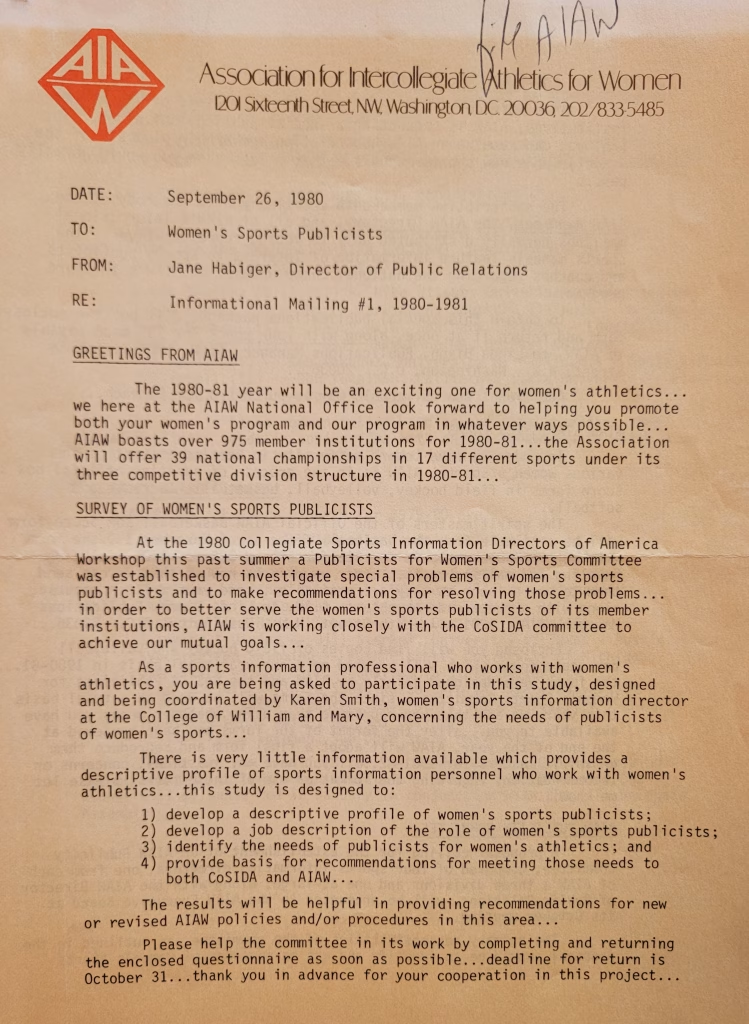
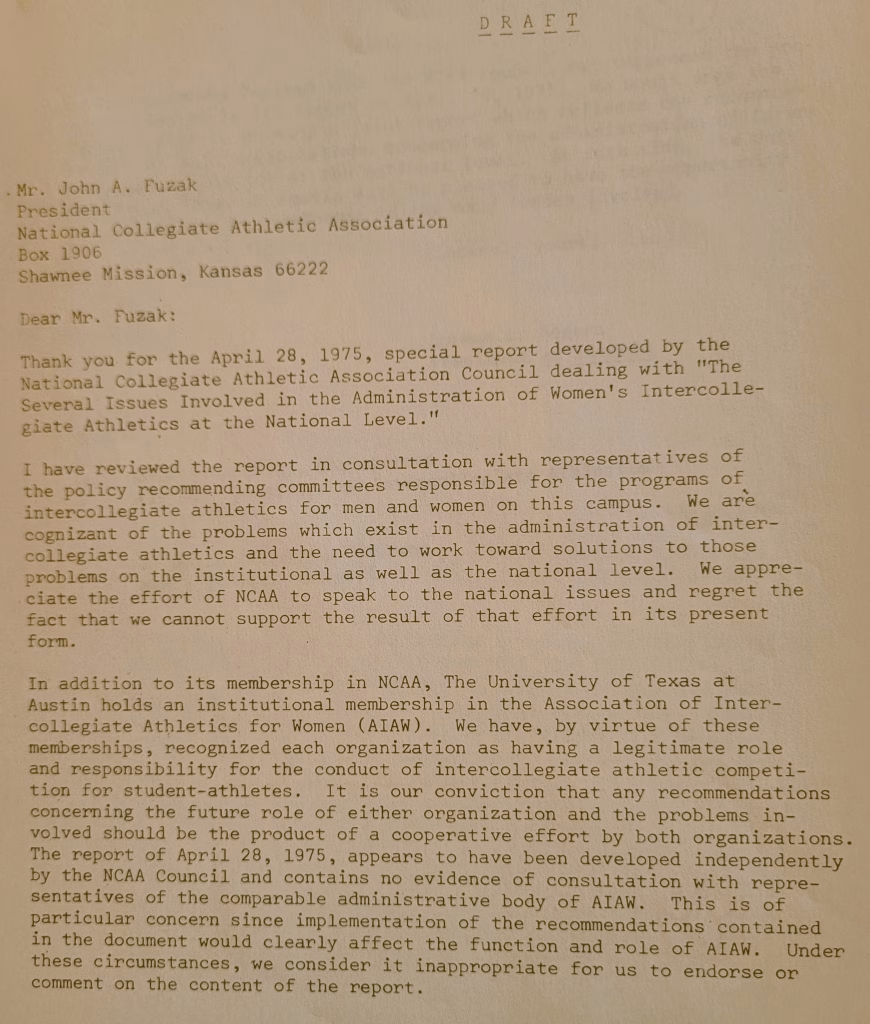
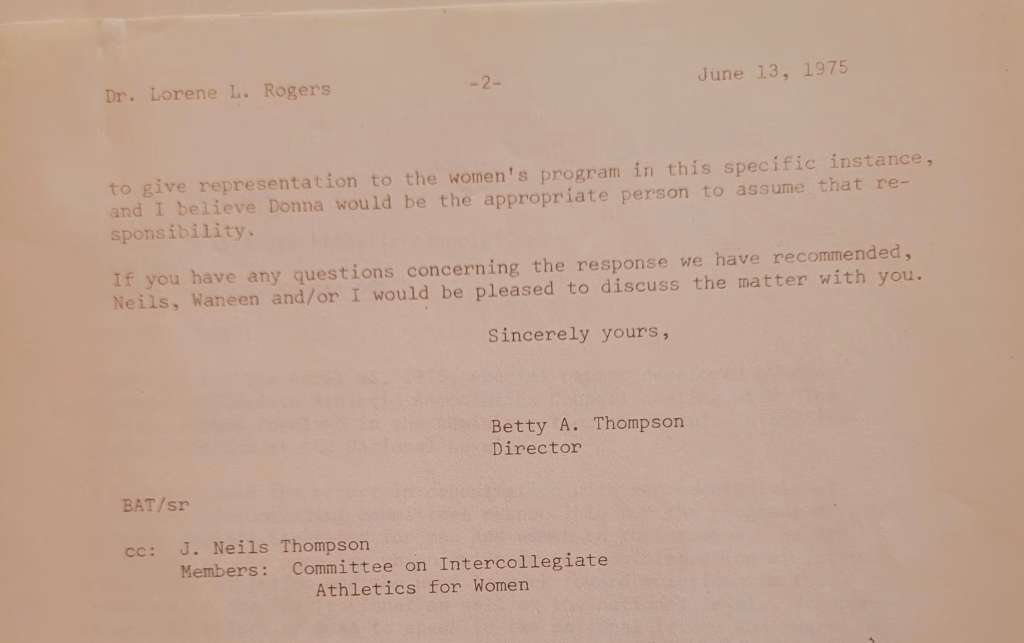
1971- 1982 AIAW leads the charge for Longhorn women in Sports.
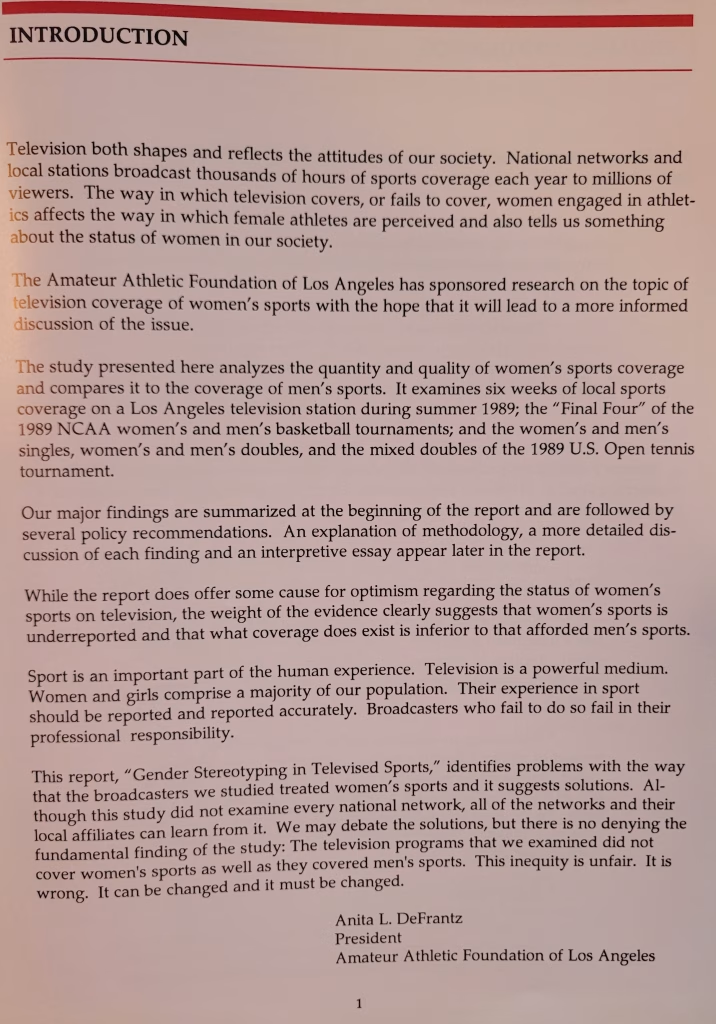
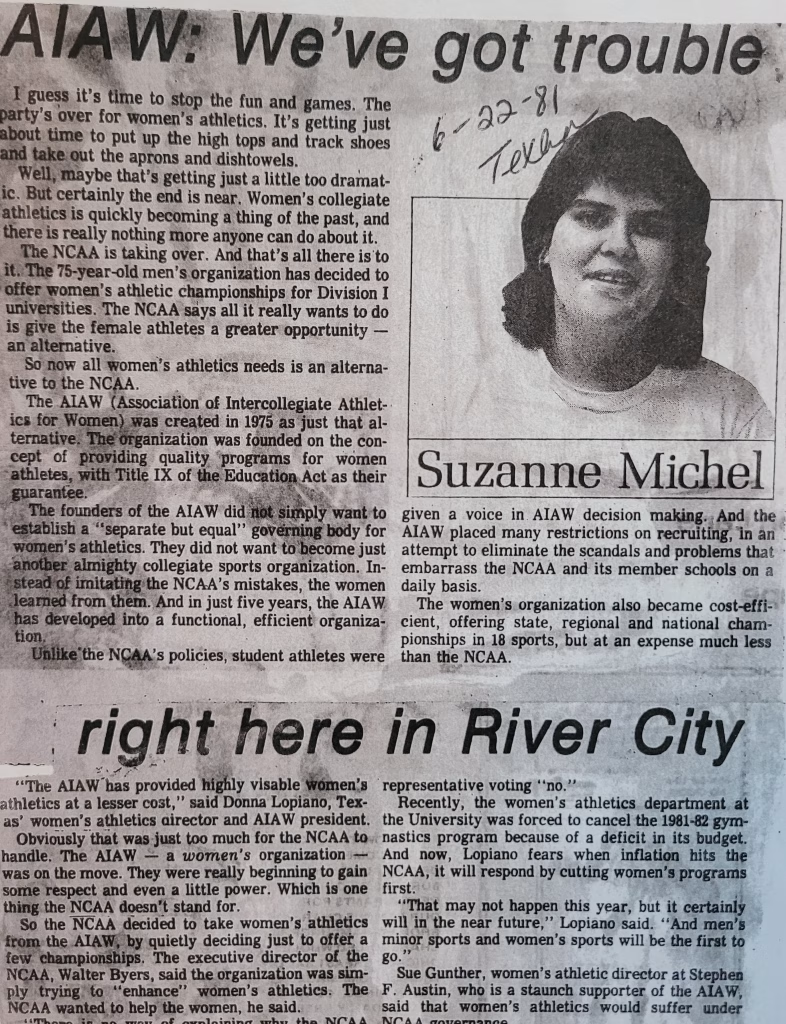
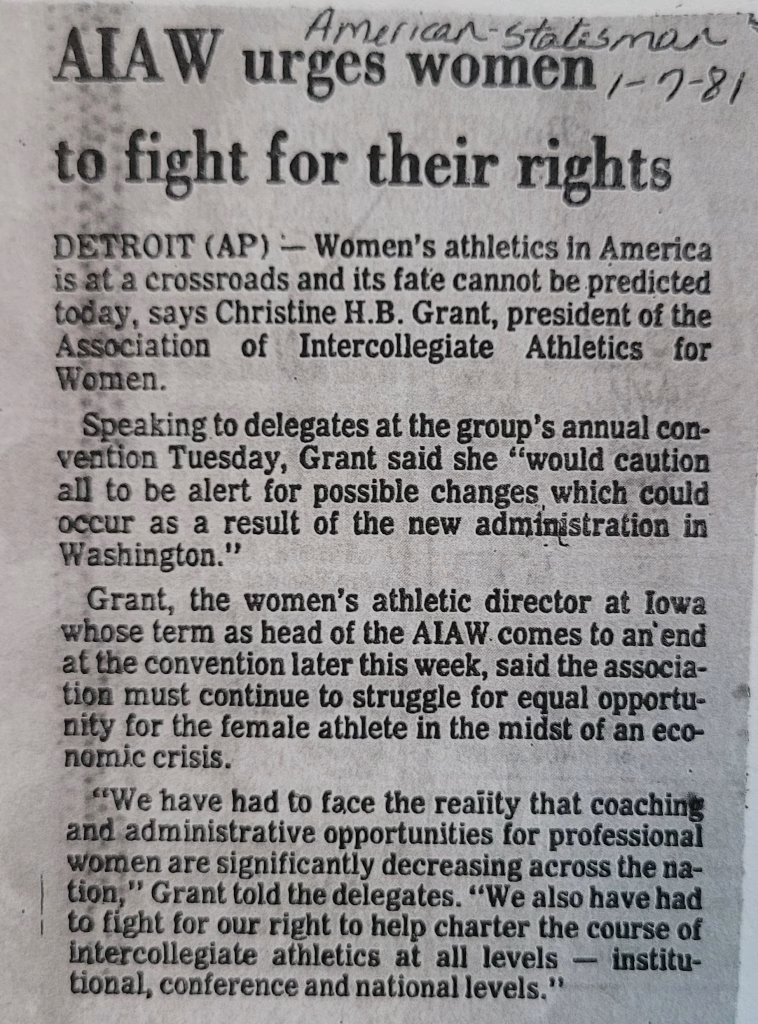
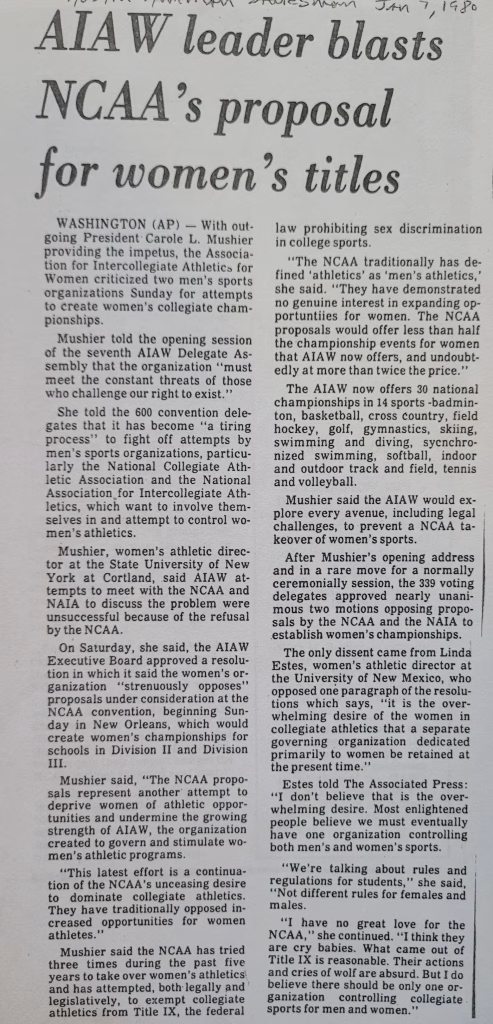
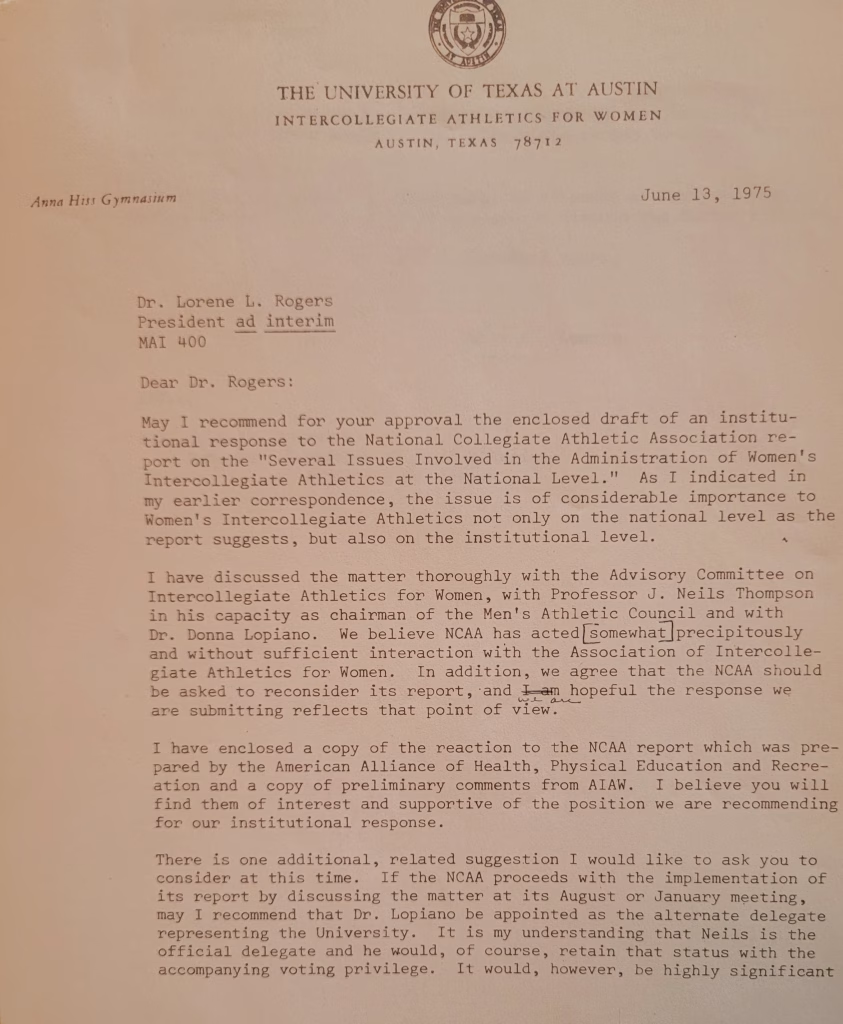
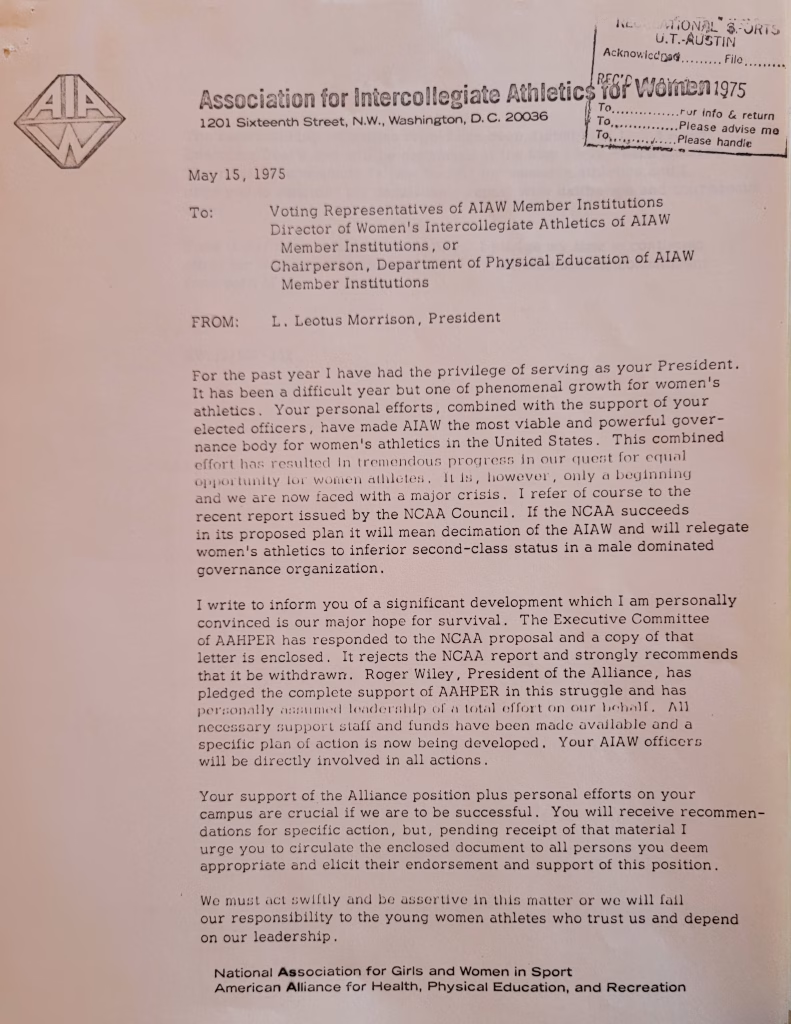
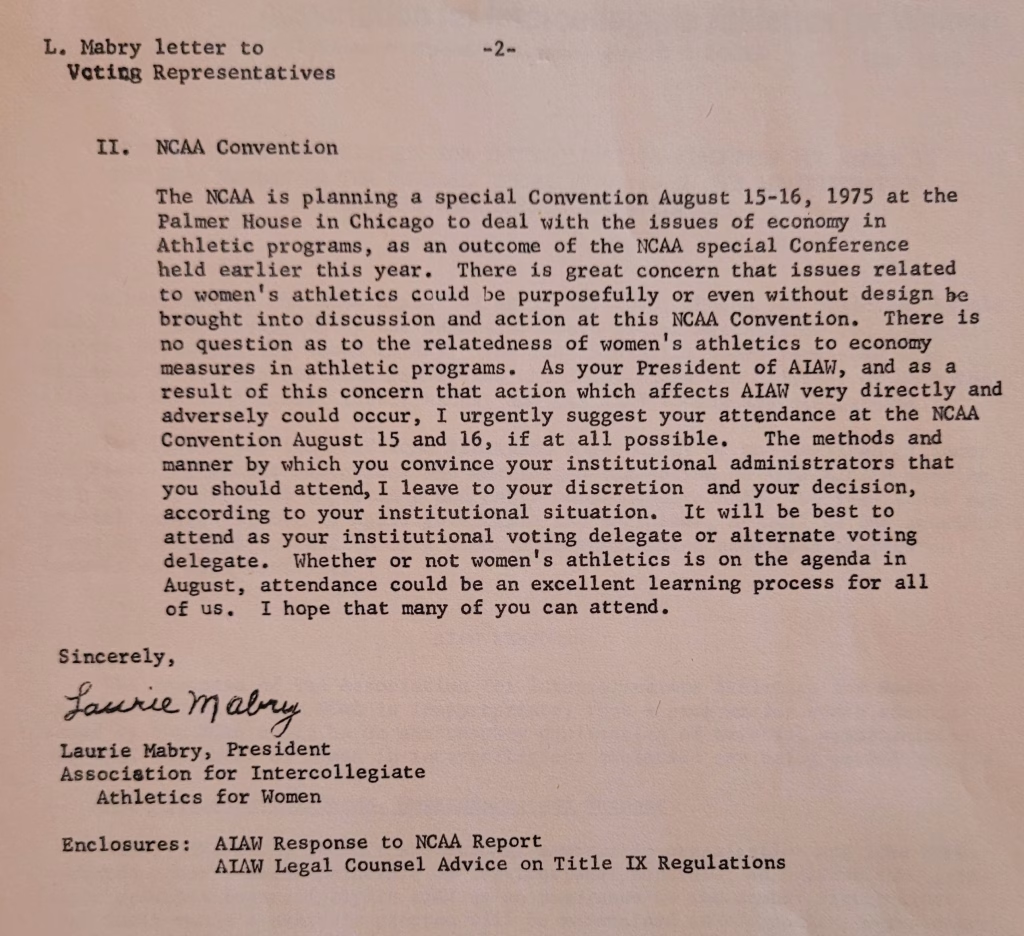
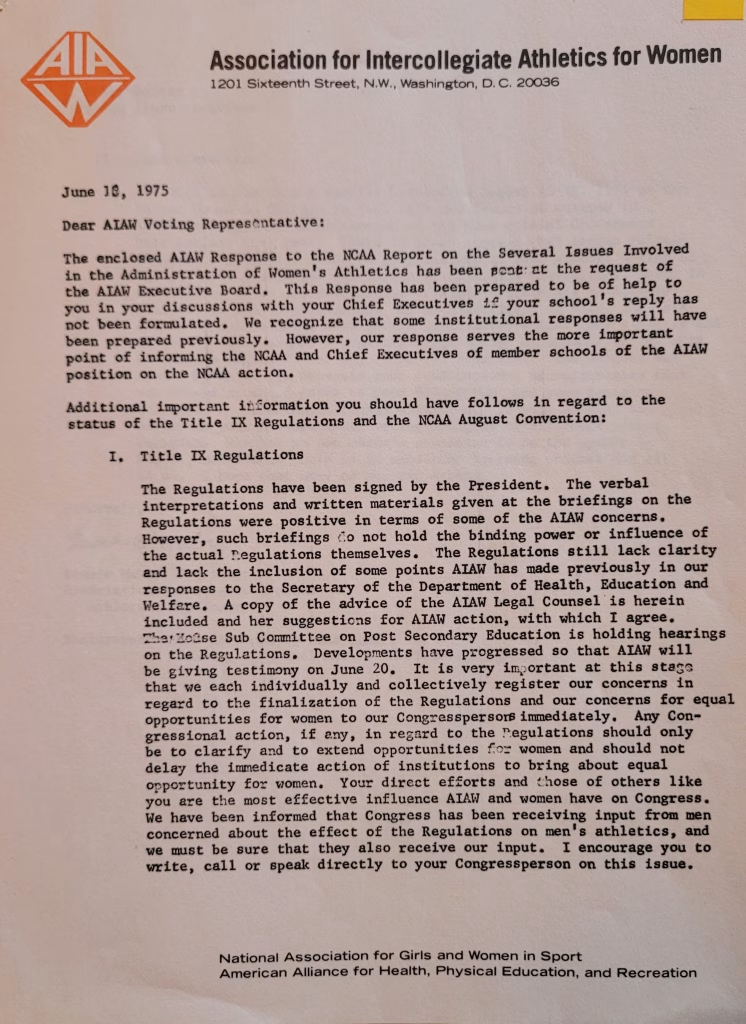
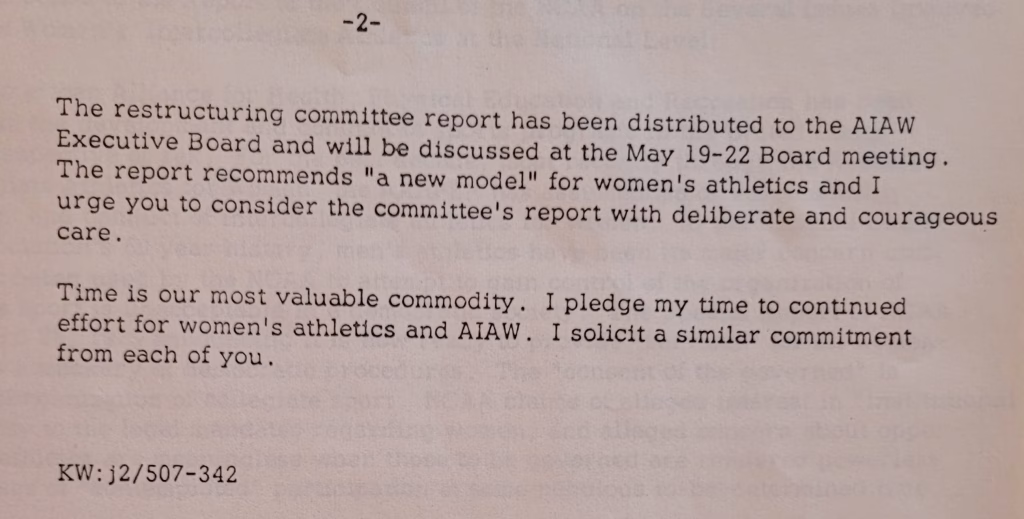
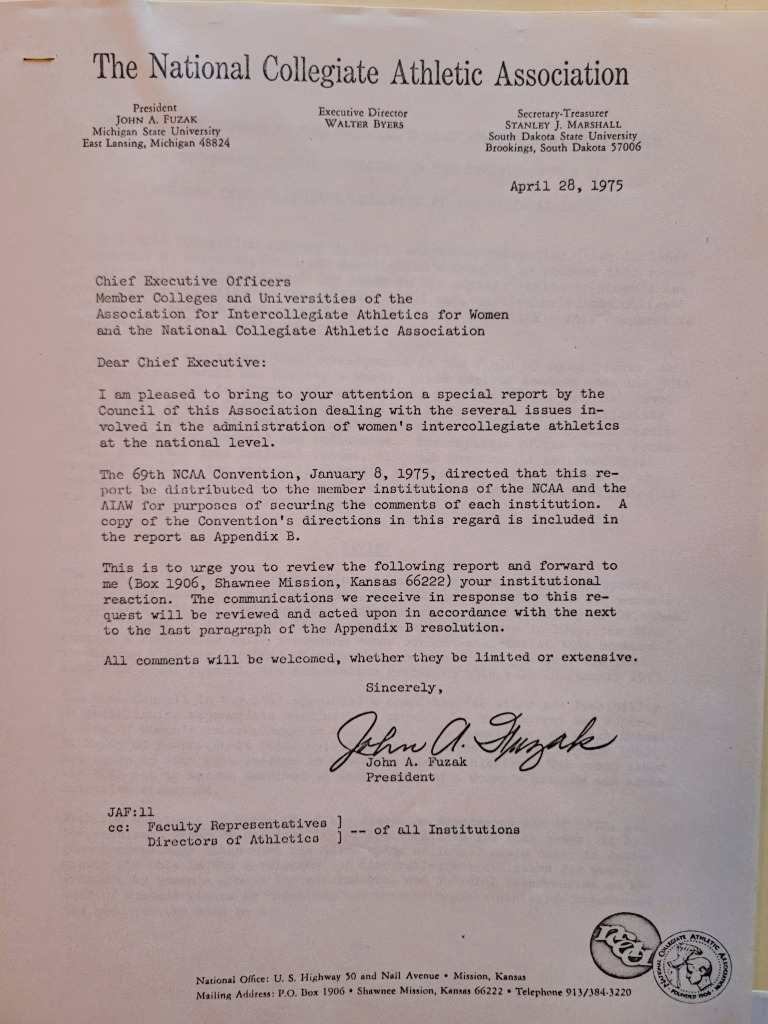
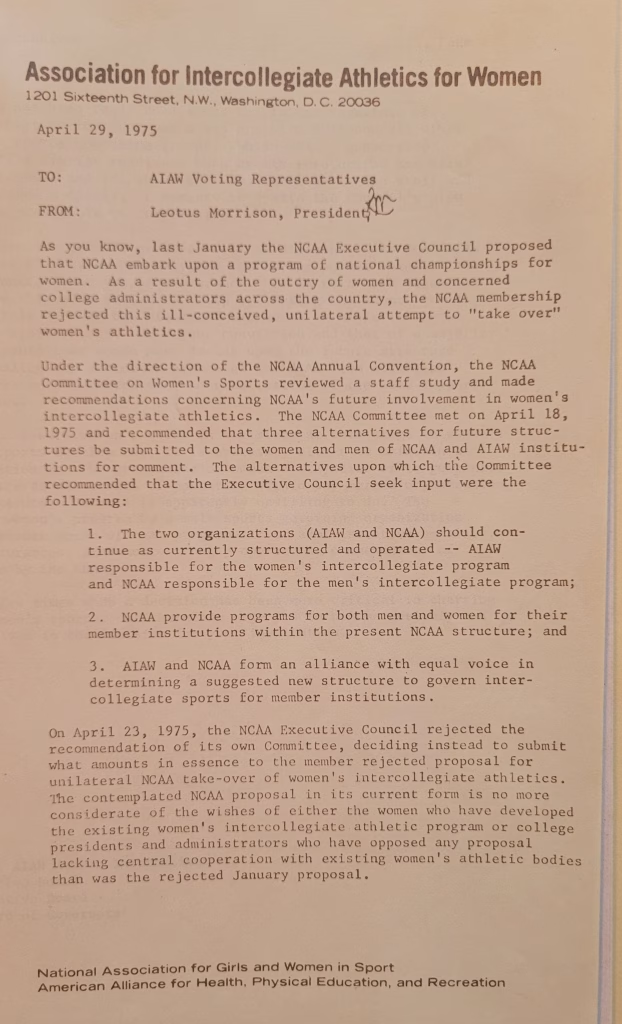
It took more than a stroke of President Nixon’s pen to give women players the chance to compete on equal footing with men. You might think that after Title IX was signed into law, along with Title IX rules issued in 1972 and regulations in 1975, the women’s collegiate programs, which already had an organization called The AIAW (Association for Intercollegiate Athletics for Women), would manage women’s sports while the NCAA continued to oversee men’s sports. However, the NCAA had other plans.
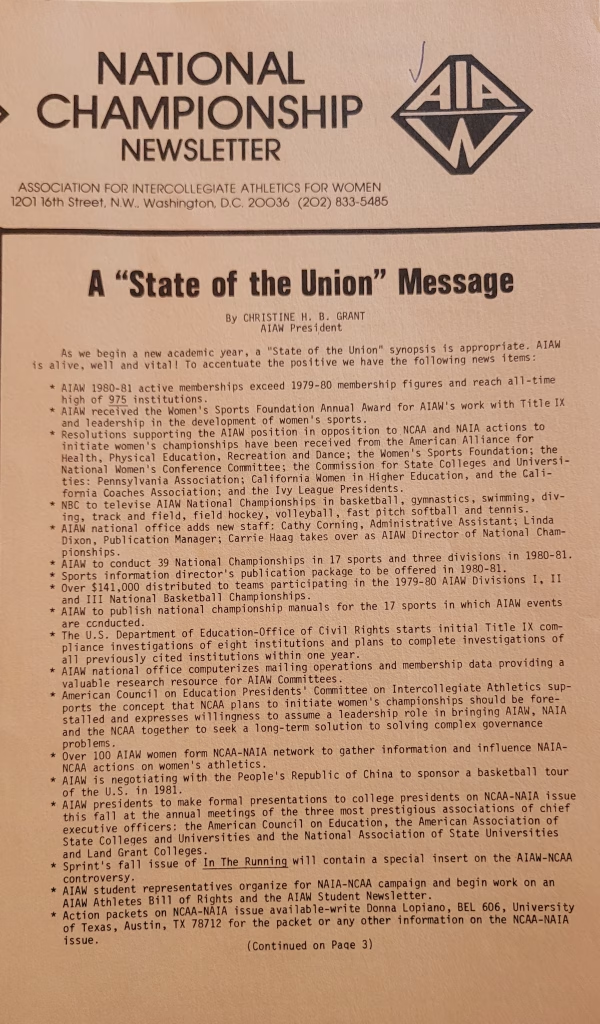
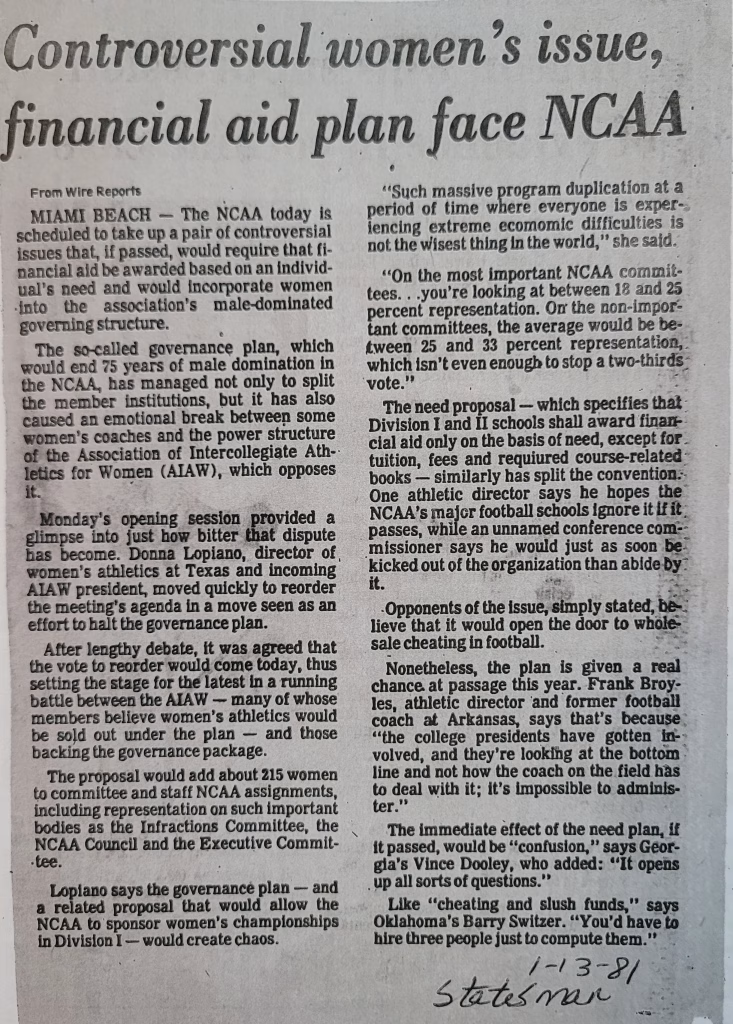
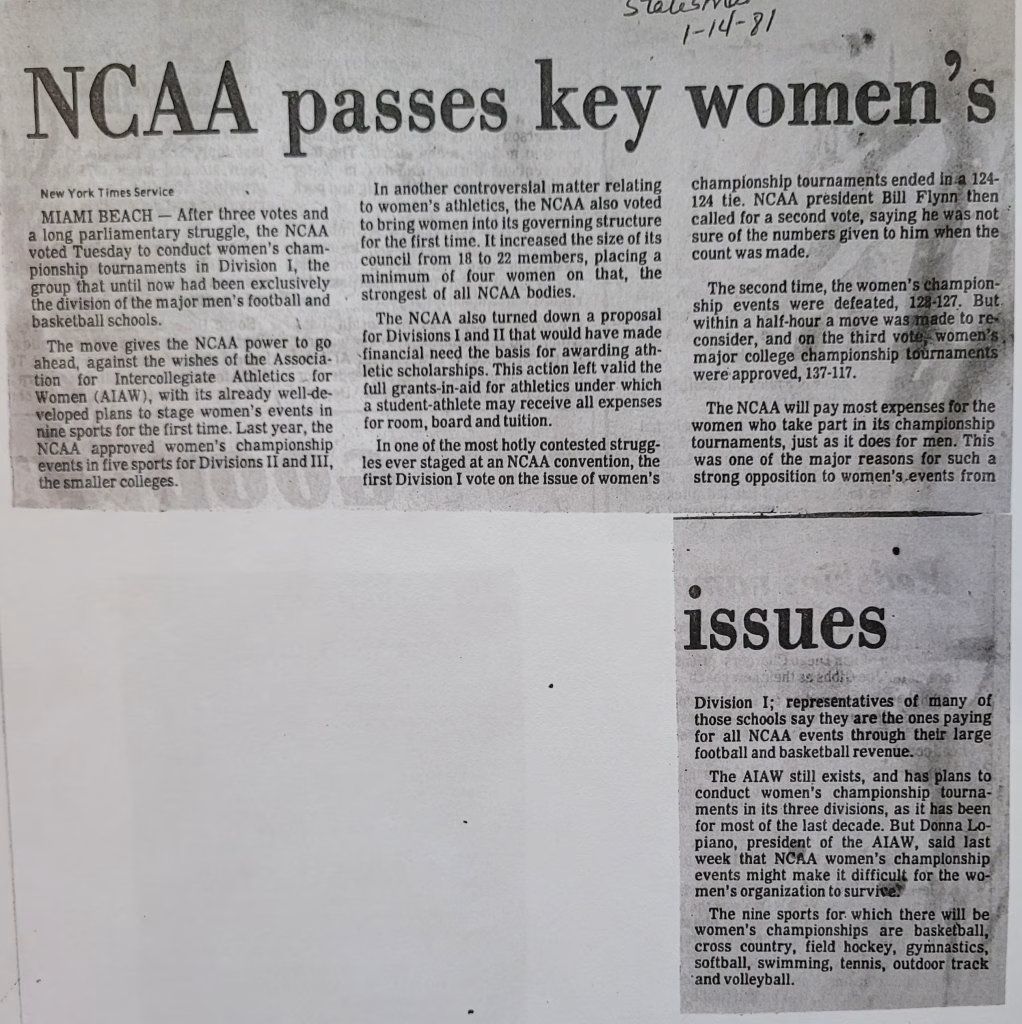
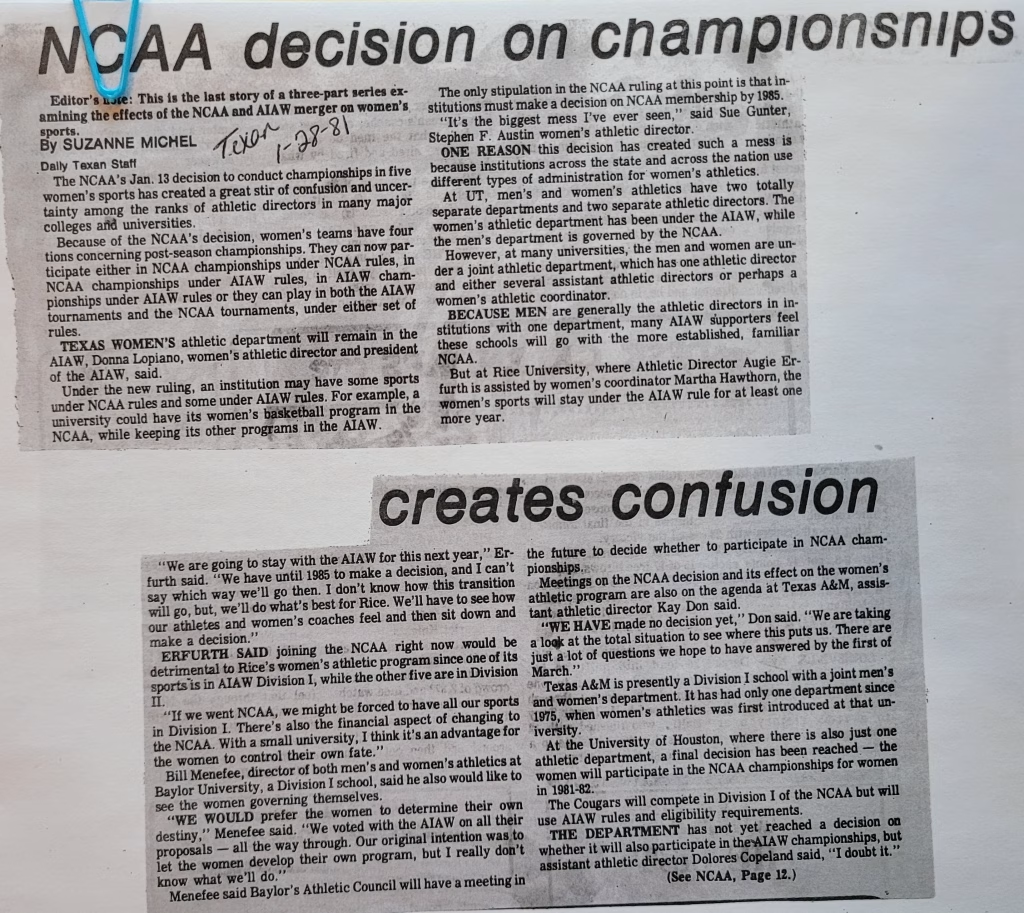
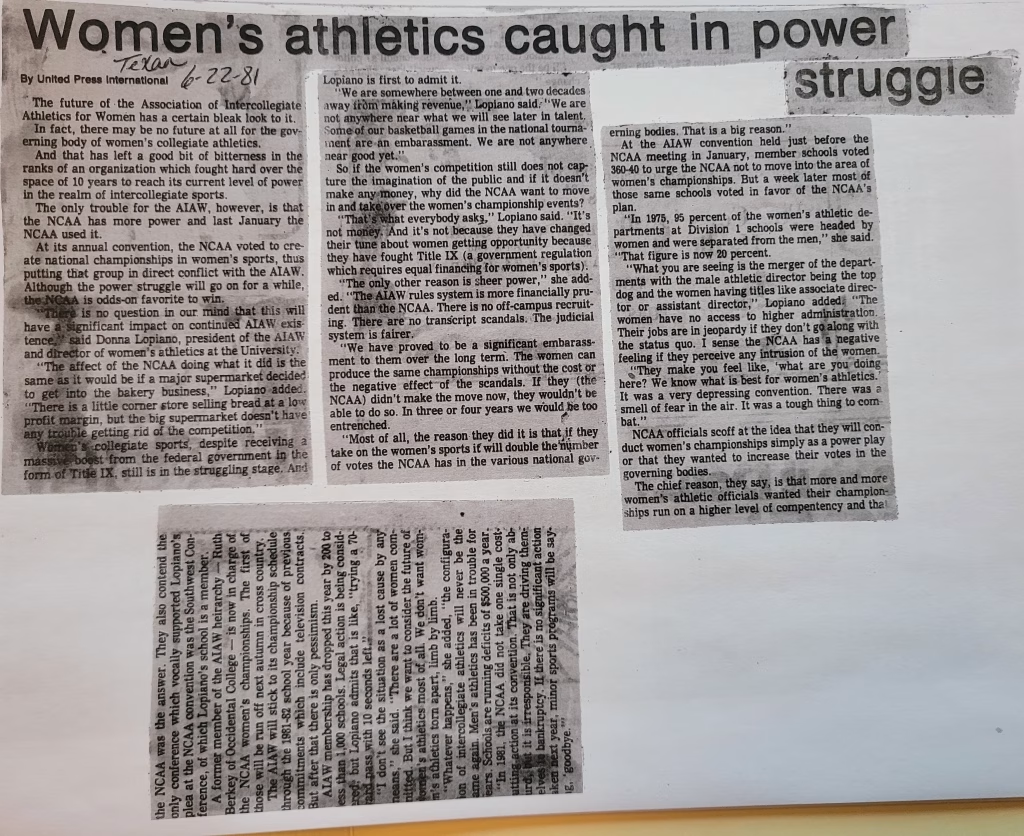
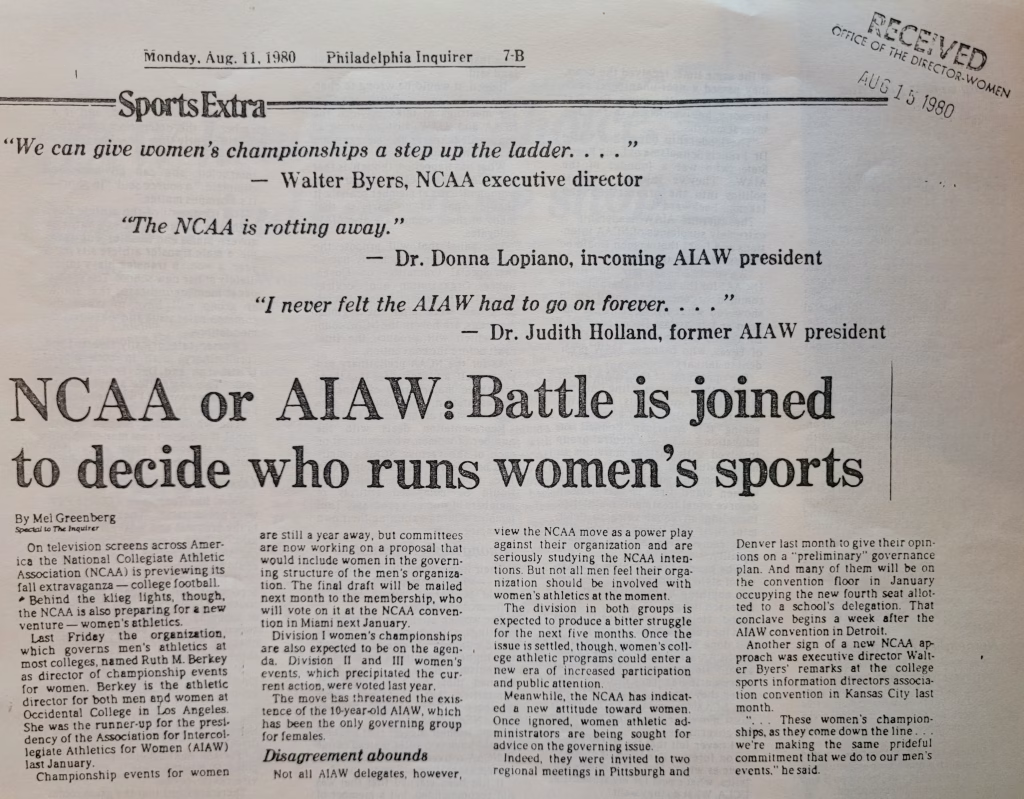
After exhausting all legal options to challenge Title IX, the NCAA changed its stance and announced in 1981 that it would hold national championships for women in a few Division I sports.
This move was a direct challenge to the female-led Association for Intercollegiate Athletics for Women and compelled schools to pick sides in a fight over the future of women’s sports.
Author Liz Clarke stated about the AIAW and NCAA battle, “Until then, the fault lines were philosophical. Schools had to decide what was the best path forward for women’s basketball: either a quasi-commercial model similar to the men’s setup or something else entirely, rooted in the AIAW ideal of strict amateurism, with rules developed by and for women.”
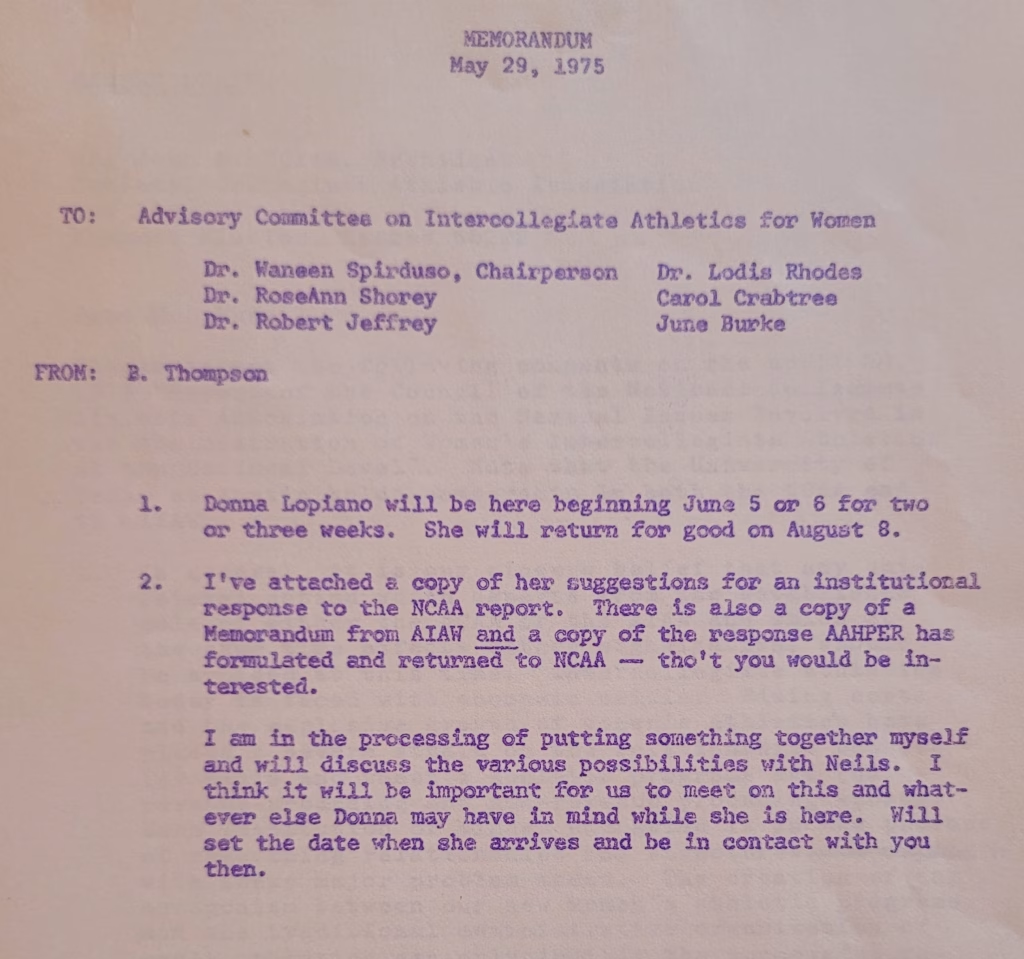
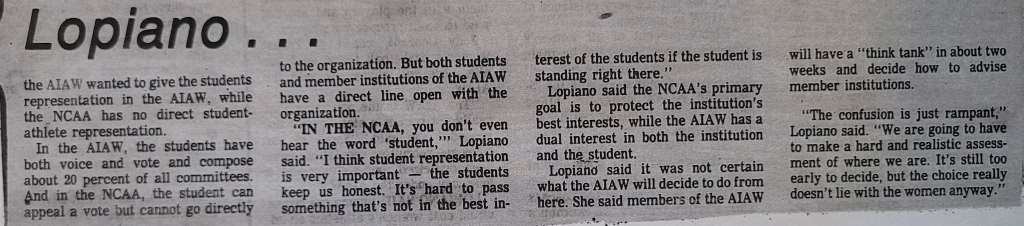
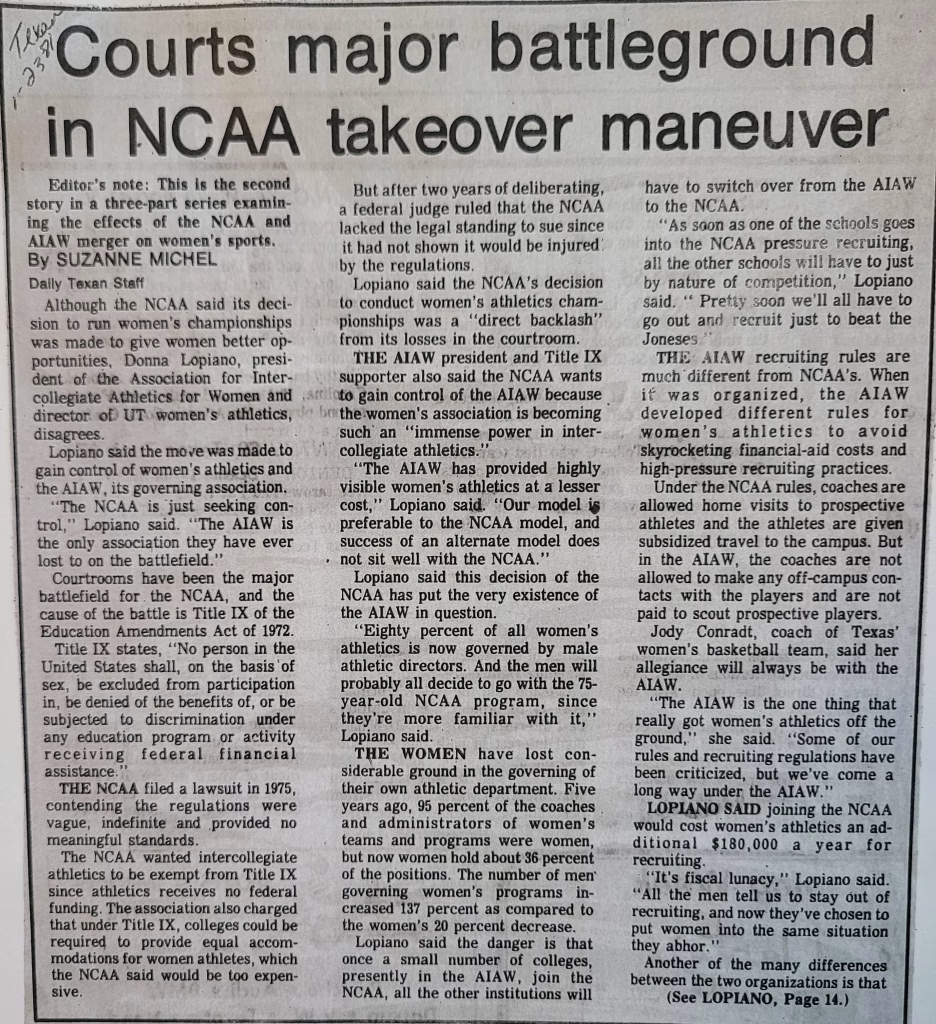
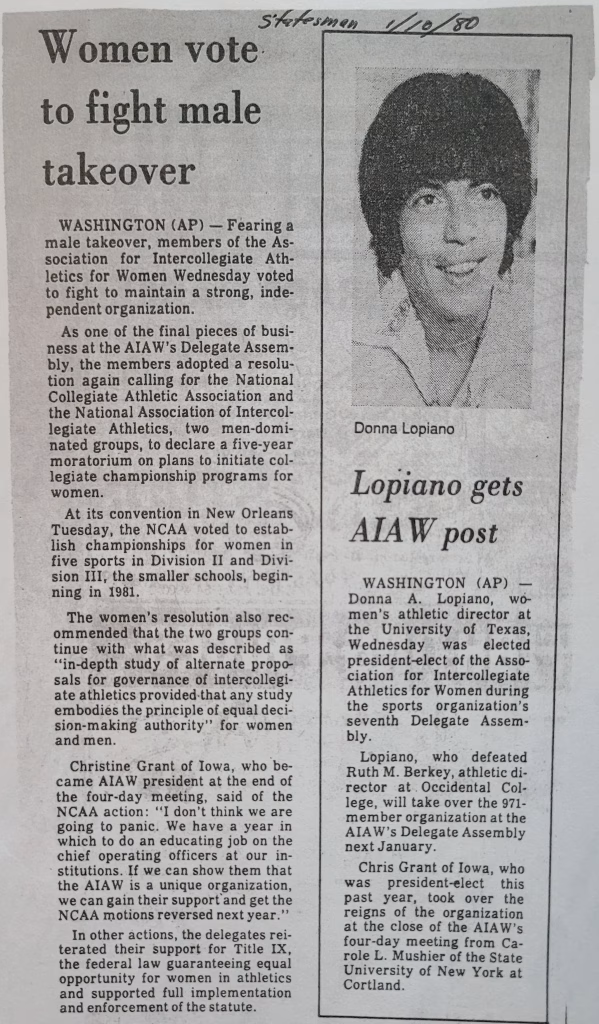
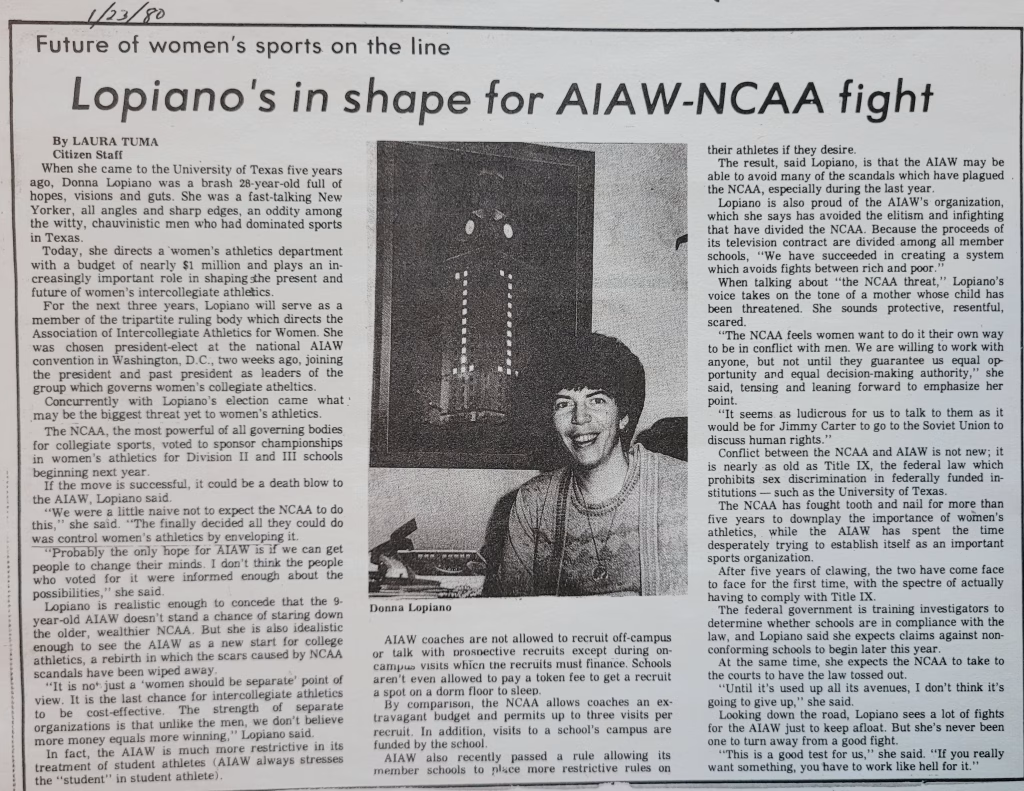
Donna Lopiano supported the AIAW’s goals for women in college sports. She fought a tough 12-year battle to uphold the AIAW’s values, but ultimately lost and accepted the NCAA as the primary organization for women’s college sports.
What I find interesting about this conflict between the two governing bodies is that our own Sherryl Hauglum, a TLSN Board Member, was right in the thick of this NCAA and AIAW battle during the final chapter of the AIAW’s existence. Sherryl was on the AIAW team that challenged Rutgers for the national championship.
The appeal of NCAA TV exposure and travel subsidies persuaded only three ranked teams to stay with the AIAW, reducing its 1982 tournament field to 16. Consequently, NBC canceled plans to broadcast the championship game between Rutgers and fifth-ranked Texas at the Palestra in Philadelphia. The game drew a crowd of 1,789, and Rutgers’ student radio station WRSU-FM was the only source of live coverage.
The NCAA and NBC broadcast the Louisiana Tech-Old Dominion game. The next year, the AIAW closed its doors, and the NCAA became the sole regulator of women’s collegiate sports.
Below are some pertinent points about the AIAW short but valiant battle to support collegiate women’s sports.
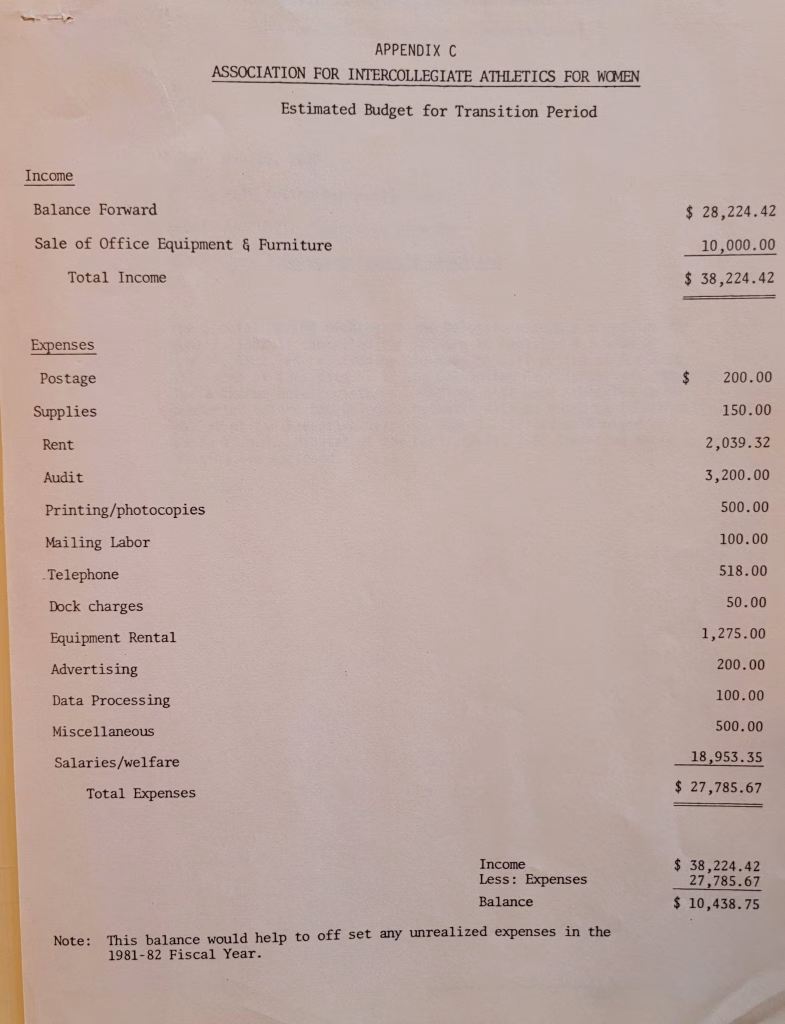
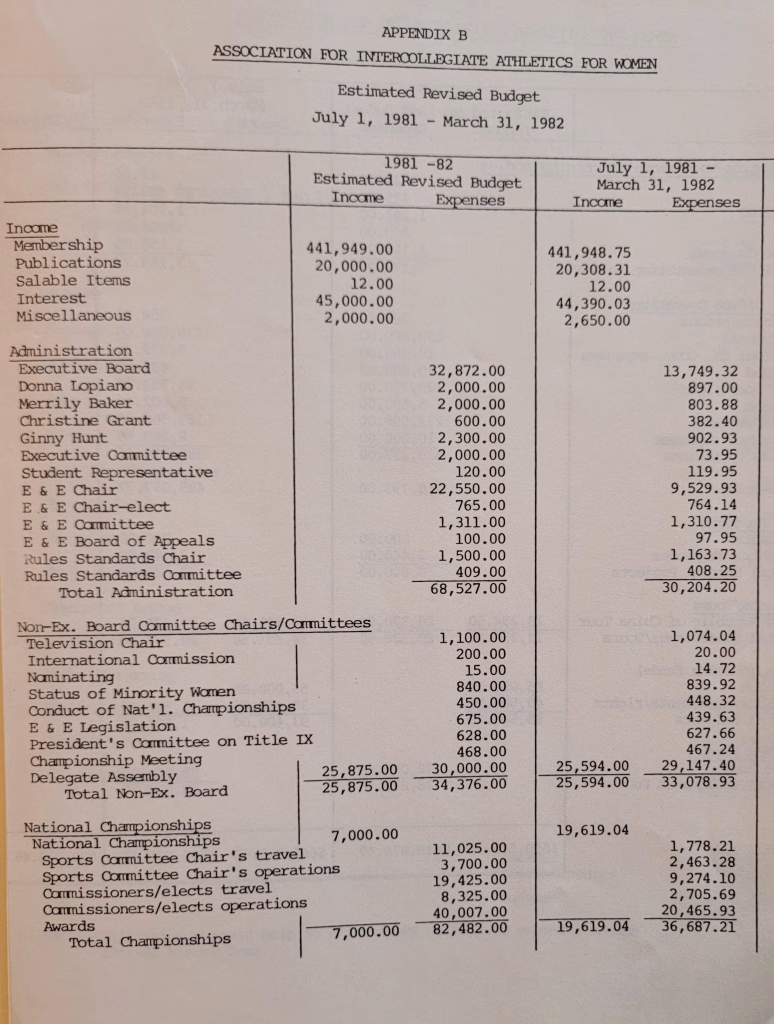
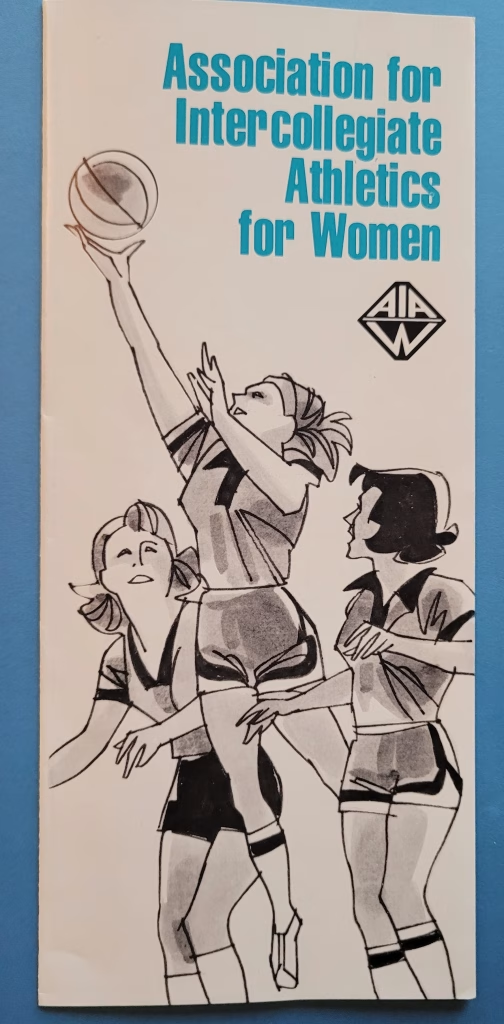
The AIAW (Association for Intercollegiate Athletics for Women) oversaw women’s college sports, prioritizing education, athletes’ quality of life, and mental health above all else. Donna Lopiano was a strong supporter of the AIAW, favoring its mission over the male-dominated programs backed by the NCAA. Over the next 12 years, the AIAW and NCAA clashed, with the NCAA prevailing and the AIAW shutting down in 1983.
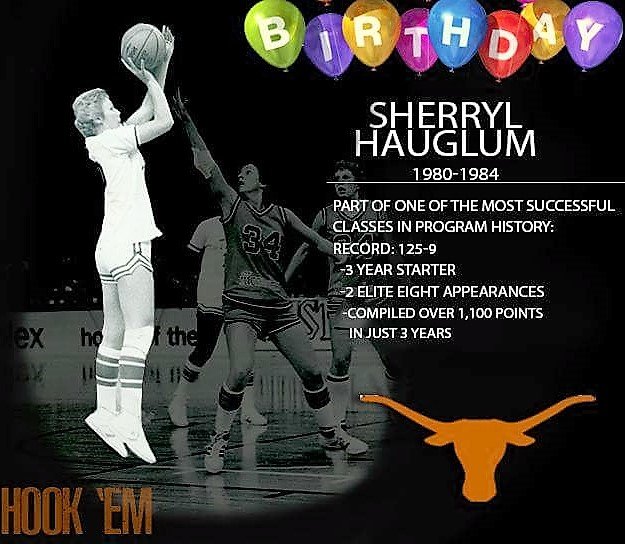
1980 Sherryl Hauglum 
1984 Sherryl Hauglum 
1984 Sherryl Hauglum 
1983 Sherryl Hauglum 
1984 Sherryl Hauglum 
Sherryl Hauglum and Jody Conradt 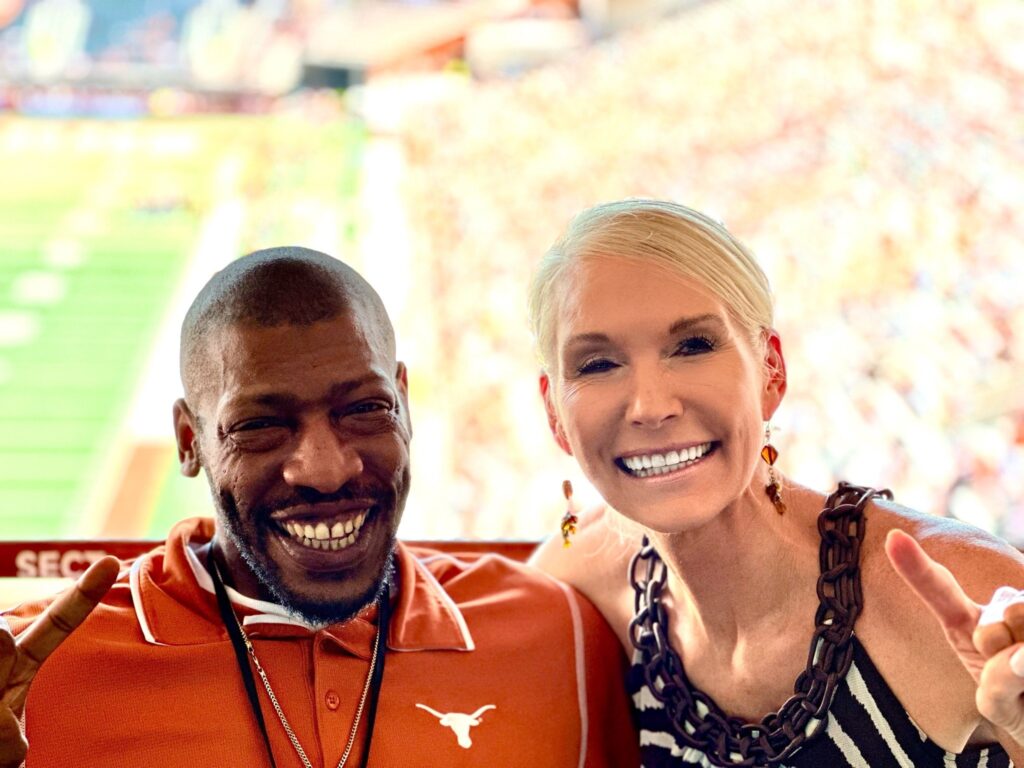
2023 Tyres Dickson Spring game 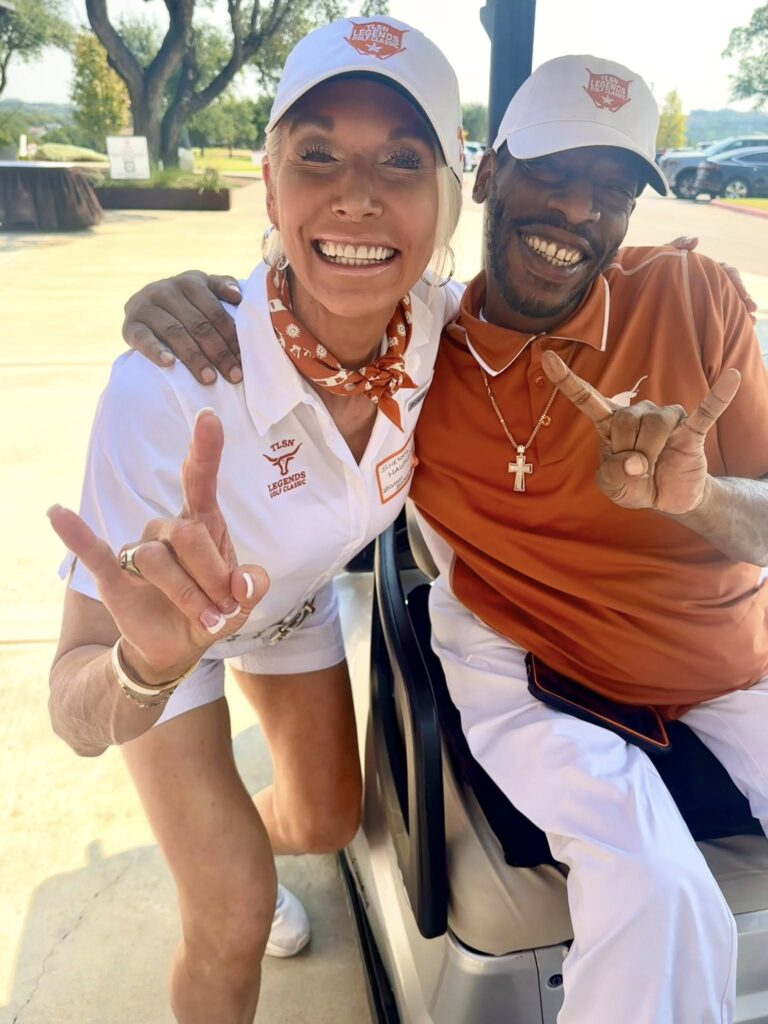
Tyres Dickson and TLSN Board Member Sherryl Hauglum

How the NCAA women’s
Final Four was born
A decade after Title IX, a battle for control of women’s
Basketball split loyalties and produced two national champions
Copy editing by Mark Selig. Design and development by Chloe Meister. Additional development by Jake Crump.
Rutgers defeated Texas, 83-77, in the 1982 AIAW women’s basketball championship. Forward Ann Pendergrass helped Louisiana Tech defeat Cheyney State, 76-62, in the first NCAA women’s championship in Norfolk in 1982. (Bryant/AP)
By Liz Clarke
March 31, 2022
It took more than the stroke of a pen to grant women’s basketball players the chance to compete on equal footing with men. ………
The NCAA didn’t stage its first women’s basketball championship until 1982, and only then, after trying for nearly a decade to scuttle Title IX, the federal law signed by President Richard M. Nixon in 1972, barring discrimination based on sex at institutions receiving federal funds. (The NCAA has staged its men’s basketball tournament since 1939.)
After exhausting all legal avenues to invalidate Title IX, the NCAA changed course and announced in 1981 that it would stage national championships for women in a handful of Division I sports.
The move was a direct challenge to the female-led Association for Intercollegiate Athletics for Women, which governed women’s college sports at the time. And it forced schools to choose sides in a battle over the future of women’s sports.
Story continues below advertisement
Until then, the fault lines were philosophical. Schools had to decide what was the best path forward for women’s basketball: either a quasi-commercial model similar to the men’s setup or something else entirely, rooted in the AIAW ideal of strict amateurism, with rules developed by and for women.
The final showdown was the 1982 women’s basketball postseason, when both the NCAA and AIAW staged national championship games on the same day, 300 miles apart.
As Louisville, South Carolina, Connecticut and Stanford head to Minneapolis for the 2022 Final Four, it’s worth remembering those dueling title games and how the decisions made then set the stage for what exists today in women’s basketball.
And it’s best remembered, on the 40th anniversary of those 1982 women’s basketball championships, through the words of coaches and players who defined those largely forgotten moments.
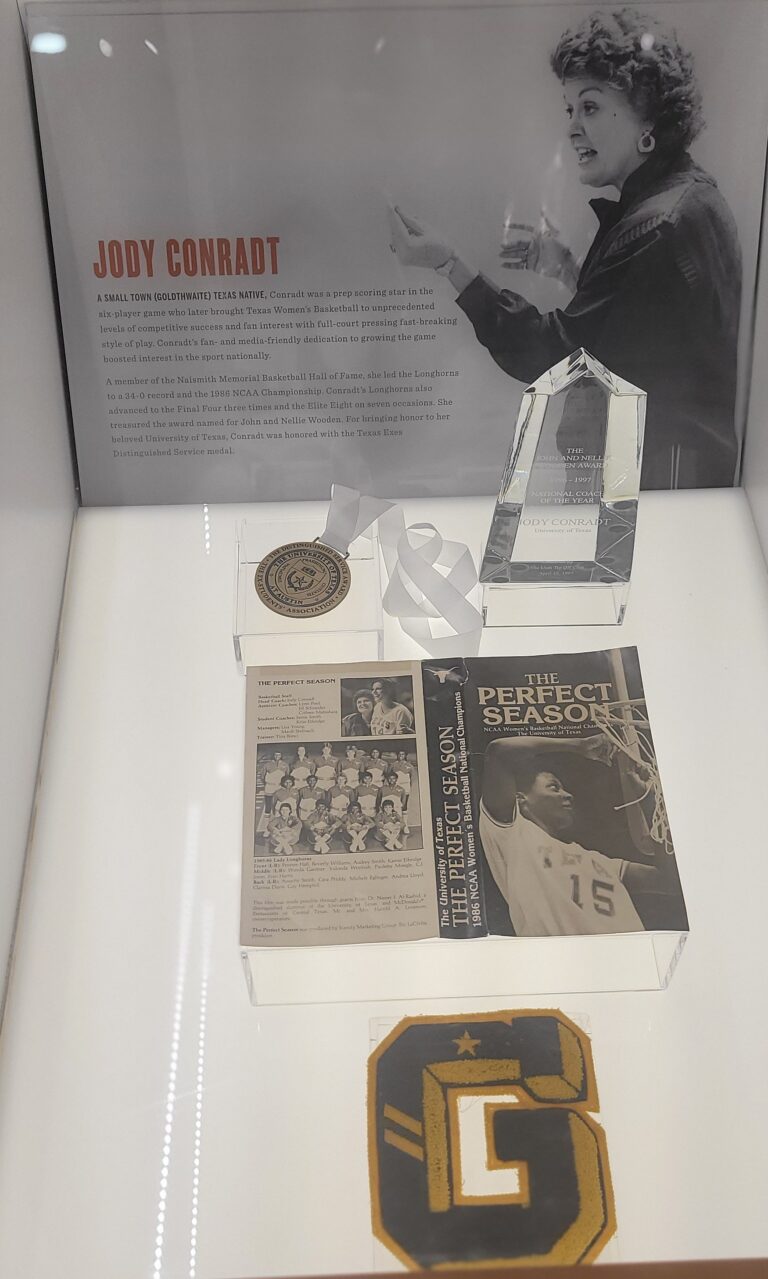
Jody Conradt coached the 1982 AIAW runner-up Texas Longhorns.
Louisiana Tech won the inaugural NCAA women’s basketball tournament a year after winning the AIAW championship.
C. Vivian Stringer coached Cheyney State to the first NCAA tournament championship game.
Sonja Hogg coached Louisiana Tech in the first NCAA championship game: “We had been outscoring teams by 20, 30 points, but Cheyney State had all-Americans, and we told our team, ‘Now look: If we get down, just settle in. They’re good. Stay calm. Stay patient.’ Thank goodness we did.” (Andy Jacobsohn For The Washington Post)
CHAPTER 1
‘I guess this means you’ll want rings?’
The lure of NCAA TV exposure and travel subsidies left just three ranked teams sticking with the AIAW, winnowing its 1982 tournament field to 16. As a result, NBC canceled plans to air the championship game between Rutgers and fifth-ranked Texas at the Palestra in Philadelphia. A crowd of 1,789 attended, and Rutgers’ student radio station WRSU-FM provided the only live account.
Although Texas was favored, Rutgers’ Lady Knights had the edge in size and experience, led by senior forward June Olkowski and twins Mary and Patty Coyle, who manned the backcourt. All three starred in Philadelphia’s girls’ Catholic League and were childhood fans of Rutgers Coach Theresa Grentz when she led Immaculata’s Mighty Macs to three AIAW championships from 1972 to 1974.
“The Palestra is a very, very special place in Philadelphia because the Big Five — St. Joe’s, Villanova, Temple, La Salle, and Penn — played there, and the girls’ Catholic League championship was played there. It was like a gladiator pit.”
“… We were at the shoot-around the day before when Jody [Conradt] and her team came in, and they had the most magnificent burnt orange warmups. I thought: ‘My God! I’ve got to get my kids out of here!’ I didn’t want them to see the Texas players. They were the full package!”
“Texas comes walking in in their beautiful warmups and matching shoes, and they all looked very intimidating. But [my twin] Patty and I were kind of laughing about it because we had on our pinnies and shirts and red shorts. When we played, I was just glad to have a pair of sneakers that didn’t have any holes in ‘em.”
“I didn’t know a great deal about Rutgers, but I did know about June Olkowski and the twins. They had a reputation in the Philadelphia area for being super competitive, super talented, and there was no backing down in either of them. Trust me: I saw double trouble in those twins throughout the whole game.
“… We had to rely on quickness and defense. We wanted to extend the court by playing the whole 94 feet under defensive pressure and score in transition. We were good at that, but I don’t think our experience matched that of Rutgers.”
“It was said that the Texas backcourt was going to dominate my twin and I. I didn’t understand that. Growing up in the city and the people that we had to compete against day in and day out, I thought, they’re not going to dominate us.
“… Us being from Philly, our whole family was at the game except my father. He was too nervous and couldn’t go. It was funny because he had given us so much of our confidence. His big thing was, ‘Dazzle them with footwork, and everything will take care of itself.’ But it’s the biggest game of our careers, and he’s not there. So one of my sisters, every couple of minutes, she’d run out to the pay phone and call and give him an update.”
Sherryl Hauglum
Texas forward (1980-1983)
“Rutgers made two no-look, behind-the-head passes during that game. The timing on their offensive plays was impeccable. They had obviously played together for a very long time to read each other so well. You could tell they had great chemistry.”
Story continues below
Theresa Grentz
Rutgers coach (1976-1995)
“The reason we were so successful is that Mary Coyle and Patty Coyle handled the ball. Texas put as much pressure on their ball-handling skill as Texas could. Had they been able to strip the ball, it would have been a fast-break free-for-all. But it became a matter of possession and shot-selection.”
Texas, which led 37-34 at halftime, got in foul trouble in the second half, and Rutgers pulled off an 83-77 upset that ended the Longhorns’ 32-game winning streak. The AIAW, which unsuccessfully sued the NCAA for using its wealth to drive it out of business, folded three months later.
Sherryl Hauglum
Texas forward (1980-1983)
“We were used to winning; we never went into a game thinking that we weren’t going to win. So, there was a sadness, a disappointment and kind of a shock. I was disappointed in my play. It was okay, but it wasn’t great, and I felt that I let my teammates down and let Coach Conradt down.”
Theresa Grentz
Rutgers coach (1976-1995)
“We win the trophy, and we’re on the floor, and the [Rutgers athletic director] comes down on the floor and congratulates me. He says to me, ‘I guess this means you’ll want rings?’ ‘That would be correct,’ I said.
“But Rutgers didn’t take us out to celebrate or anything. So, Karl and I, we were just married, took them to a restaurant. They were tired, but I told them, ‘You can have whatever you want.’ It took Karl and I two credit cards to pay the bill, but we paid it.
“And we had rings made and a ring ceremony. We got to ring the bell at Old Queens [an honor Rutgers accords undefeated or champion teams]. And Rutgers did give us sweaters. I still have the sweater that says ‘Champions’ on it.”
Theresa Grentz and her Rutgers team overcame a halftime deficit to beat Texas in the AIAW championship game. (Tom Costello/Courtesy of Whoo-Rah Productions)
CHAPTER 2
‘We could finally breathe’
Powerhouses Louisiana Tech and Old Dominion led the AIAW defections to compete in the first NCAA tournament, which had a 32-team field and a nationally televised final. Top-ranked all season, La. Tech was heavily favored, having returned nearly every starter from its unbeaten, AIAW championship season the previous year. In 1981-82, Tech’s roster was awash in talent, led by all-Americans Angela Turner and Pam Kelly, point guard Kim Mulkey, and backup center Debra Rodman, Dennis Rodman’s sister.
Its opponent at Norfolk’s Scope Arena was less anticipated: Cheyney State, a small HBCU 30 miles west of Philadelphia. C. Vivian Stringer was a 22-year-old assistant professor when she volunteered to coach the Lady Wolves in 1971, in addition to her teaching duties. She built Cheyney into a basketball power on a meager budget by instilling belief, toughness and pride while honing her coaching skills under mentor John Chaney, who coached Cheyney’s men.
A capacity crowd of 9,531 attended, and the final was aired on CBS. Tickets cost $5 to $7, and both teams had vocal cheering contingents at the Scope. Cheyney couldn’t afford to bus down a pep band, so Norfolk State’s band volunteered its services.
CHAPTER 3
‘We will never accept crumbs’
South Carolina Coach Dawn Staley sits at the dais the day before the 2022 NCAA regional in Greensboro, N.C., emblematic in many ways of the strides women’s basketball has made since that inaugural NCAA tournament in 1982.
Her top-ranked Gamecocks lead the nation in attendance, averaging 12,268 for home games, and she is among the nation’s highest-paid women’s coaches, signing a seven-year, $22.4 million deal last fall that she hopes serves as a benchmark for greater investment in the game.
There are other metrics for the sport’s growth under the NCAA.
The women’s tournament has expanded from 32 teams in 1982 to 68 this year.
Seating capacity for the Final Four has doubled, from the 9,500-seat Scope to the 18,067-seat Target Center in Minneapolis
Media coverage has grown exponentially — from 37 credentialed journalists that first year to 716 in 2019, the last pre-pandemic year. And every game of this year’s tournament is televised.
Another metric is the NCAA banner draped behind Staley at each tournament news conference, adorned with a dizzying array of #MARCHMADNESS logos.
The NCAA’s decision to let women promote their tournament with the men’s trademarked “March Madness” slogan — a first, this year — is one example of the low-hanging fruit among several meatier steps urged by the outside law firm that reviewed the organization’s policies after last year’s uproar over the subpar way women were treated in the 2021 tournament. The firm’s scathing report found the NCAA has historically undervalued women’s basketball in myriad ways, from marketing and promotion to broadcast contracts and revenue-distribution formulas.
It is a narrative now four decades old.
After her Lady Techsters won the 1981 AIAW championship, Hogg had championship rings made for the players. After they won the 1982 NCAA title, it took 35 years for the squad to get NCAA rings.
“Maybe they forgot?” mused Turner Johnson. “But better late than never. I was so proud of it.”
Largely lost, too, is Rutgers’ AIAW triumph. That’s why Geoff Sadow, who covered the team’s 1982 season as an undergraduate, has co-produced a documentary, “Forgotten Champions,” weaving an audio recording of the student-radio broadcast with the only known footage of the untelevised game, found in a tin canister in Grentz’s attic decades later and digitized for the purpose.
“This team deserved more accolades than it has gotten,” Sadow said.
The same could be said of each team that reached the 1982 women’s championships.
Laney wonders whether Cheyney State’s 1982 Lady Wolves will ever get their due for reaching the inaugural NCAA title game.
“You can’t forget the history that we made, and we made history,” Laney said. “That team should be inducted into the Naismith Hall of Fame. How do you not recognize the history that was made by this small historically Black college that no one expected to be there except for us and our fans and our families?”
It’s impossible to gauge how the trajectory might have differed — for better or worse — had women’s basketball continued to be run by a separate organization with the interests of female athletes at the forefront rather than by the NCAA, dominated by football and men’s basketball interests.
“I really think we lost 10 years in promoting women’s sports,” said Texas women’s athletic director Donna Lopiano, who also served as the AIAW’s final president. “As soon as women joined the men’s athletic establishment, everybody forgot about promotion and publicity, which is everything in terms of developing a brand and assigning value to the female athlete and value to her product. That’s exactly what schools didn’t do. They put all their money into football and basketball.”
That’s why, under Lopiano’s watch, Texas was among the AIAW holdouts in 1982, even though Conradt wanted to play in the NCAA tournament.
“From a coaching standpoint, I wanted to be there with the big schools and the bright lights and the potential for growth,” Conradt said. “As I look back on it now, I have totally different feelings. I am so proud of the fact that, to Donna’s credit and the University of Texas, we stayed with AIAW that last year, because it became a statement. It was a statement that, ‘Yes, women can control their own destiny. We are not dependent on the NCAA, a male-dominated organization, to create this opportunity for women’s basketball.”
And on it goes, with each generation of women’s players and coaches pushing for tougher competition, a place in bigger arenas, and a national audience despite the NCAA’s track record of selling them short.
“I’ve told my teams many a time,” Stringer said, “We will never accept crumbs.”
AIAW Athlete photos are below
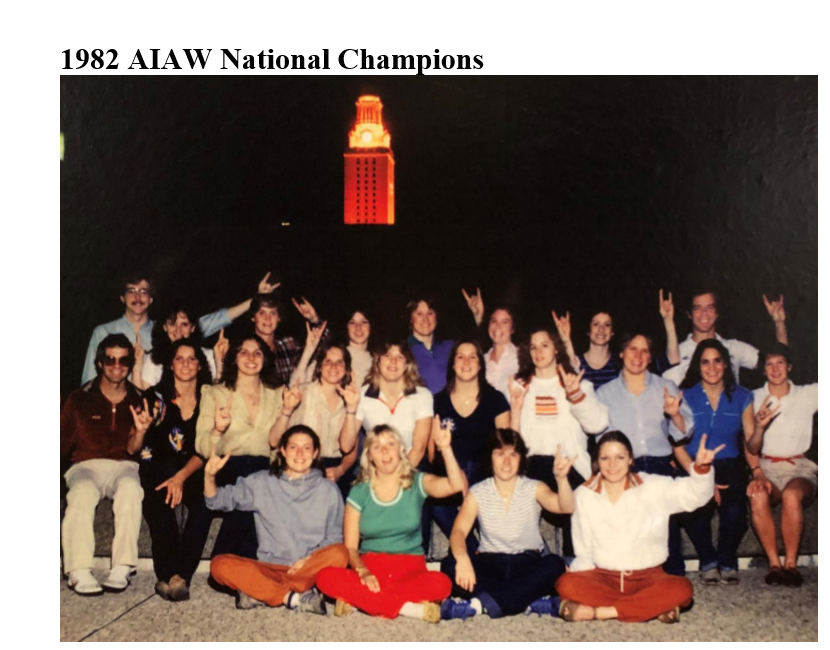
1982 AIAW National Champs. 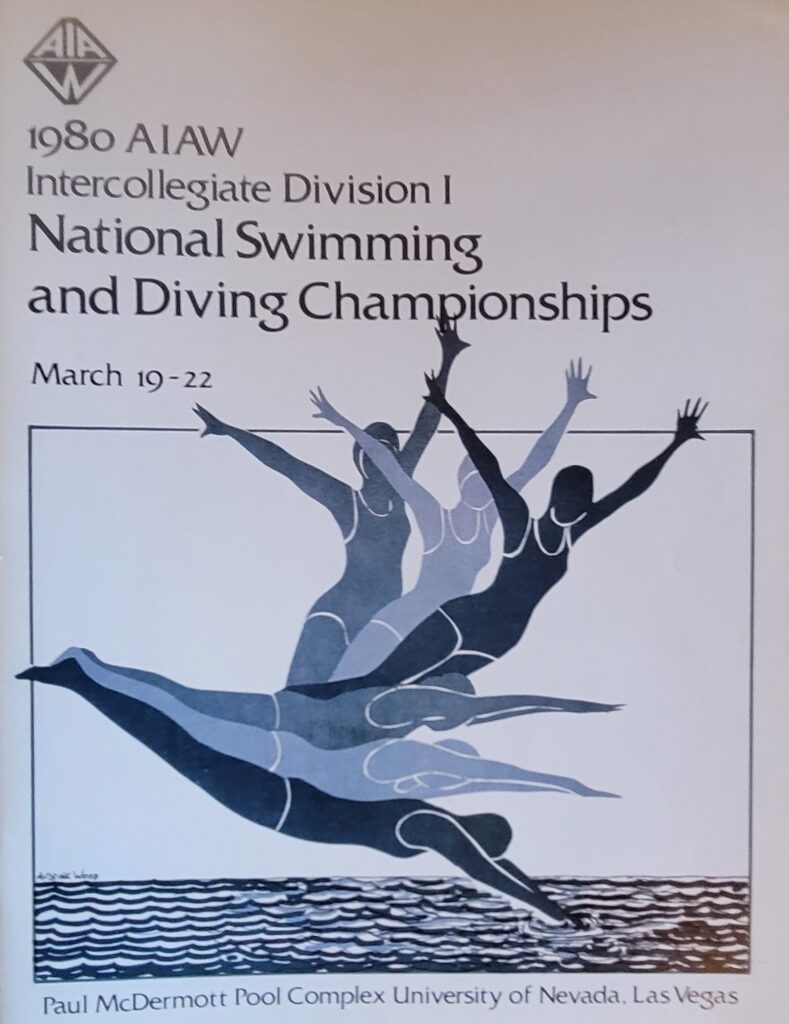
1980 women AIAW swimming champs 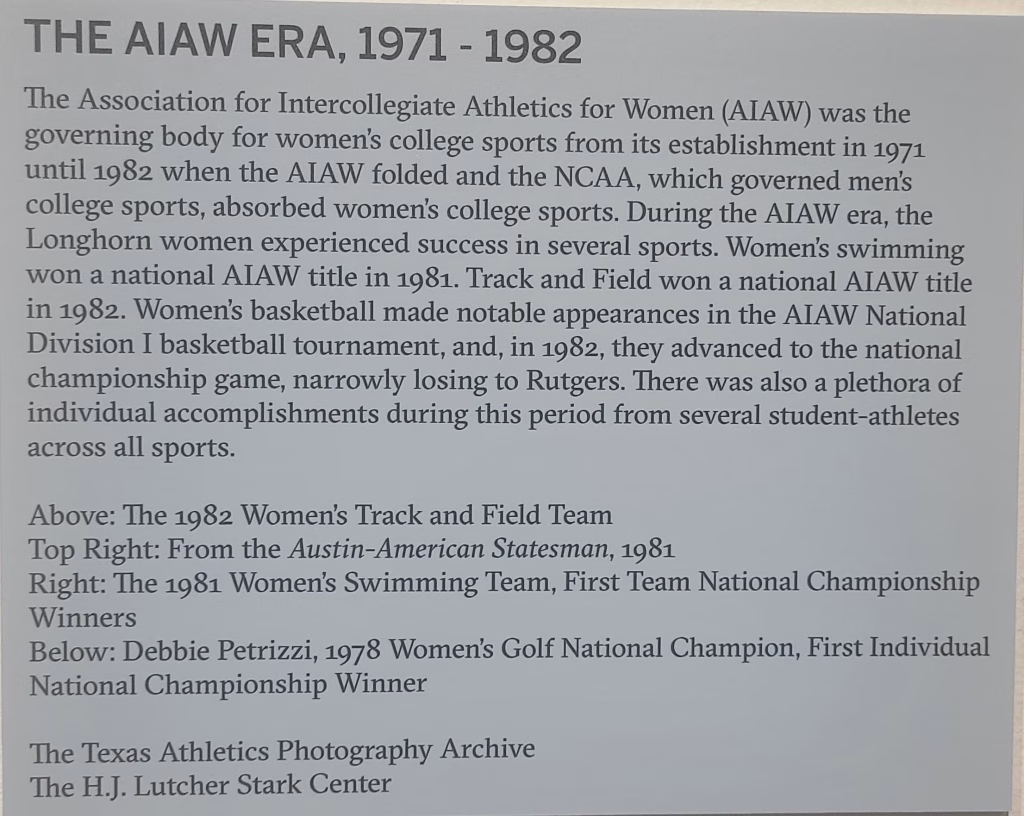
Stark womens exhibit and AIAW 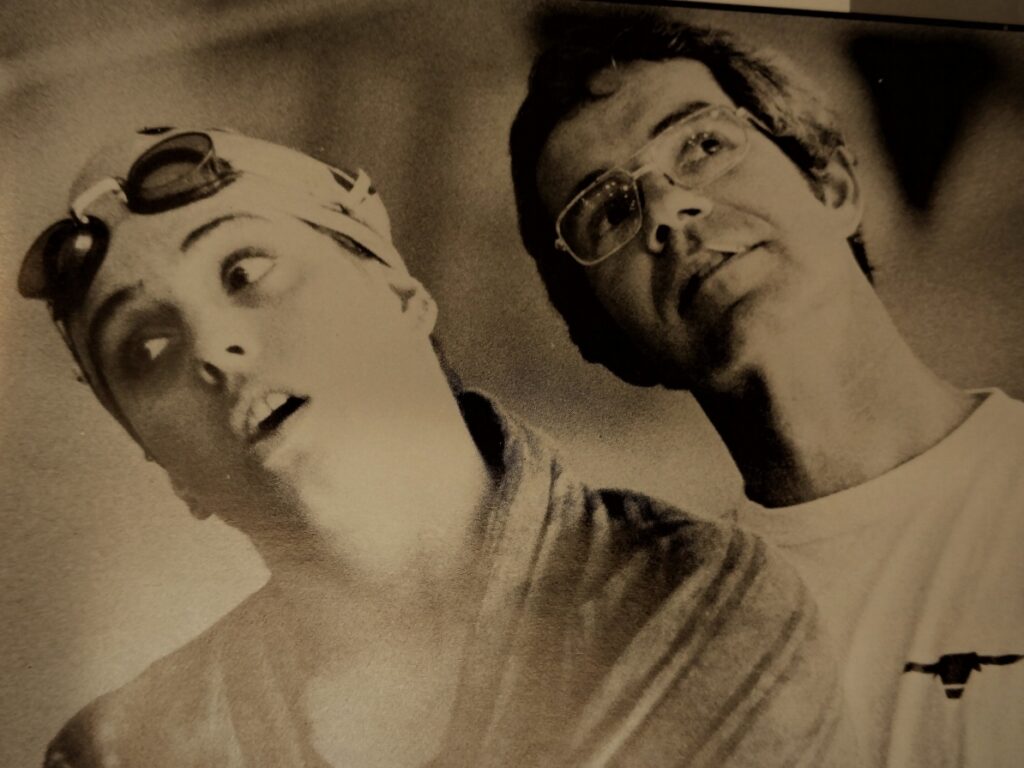
1980 Women’s swimming 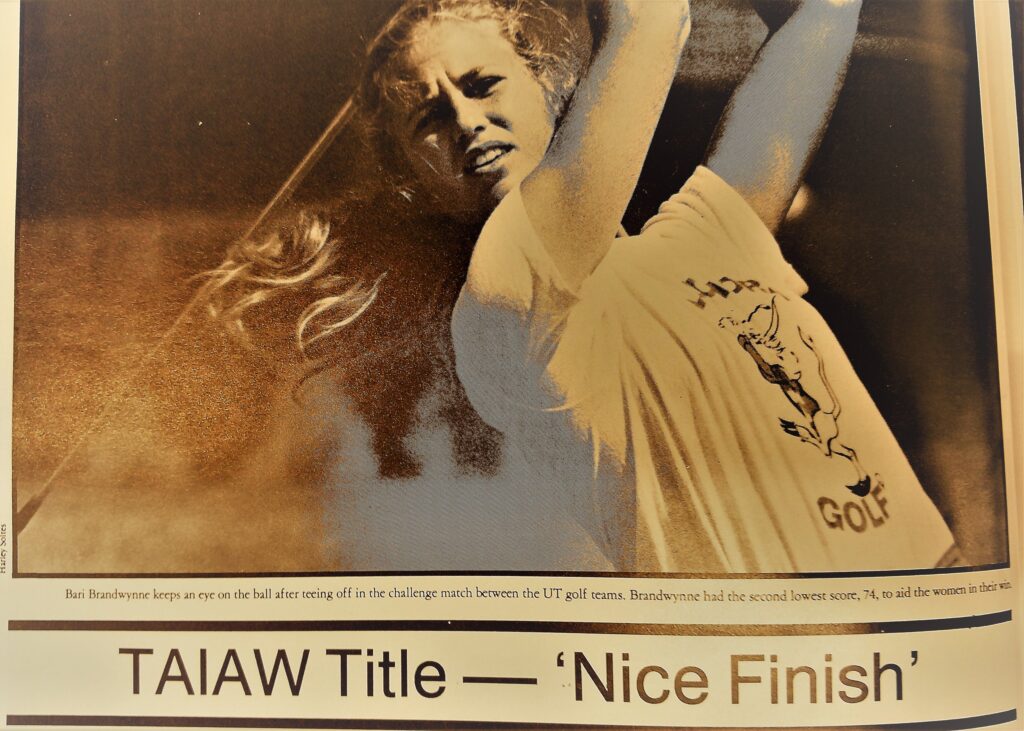
1980 AIAW title golf 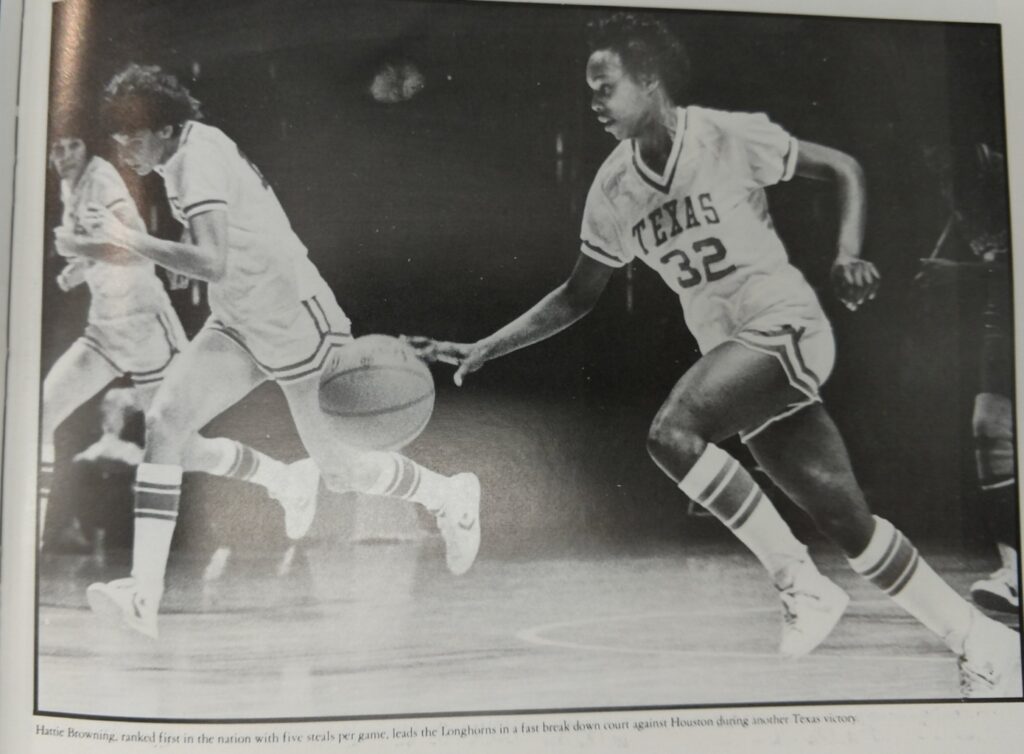
1980 Women’s basketball 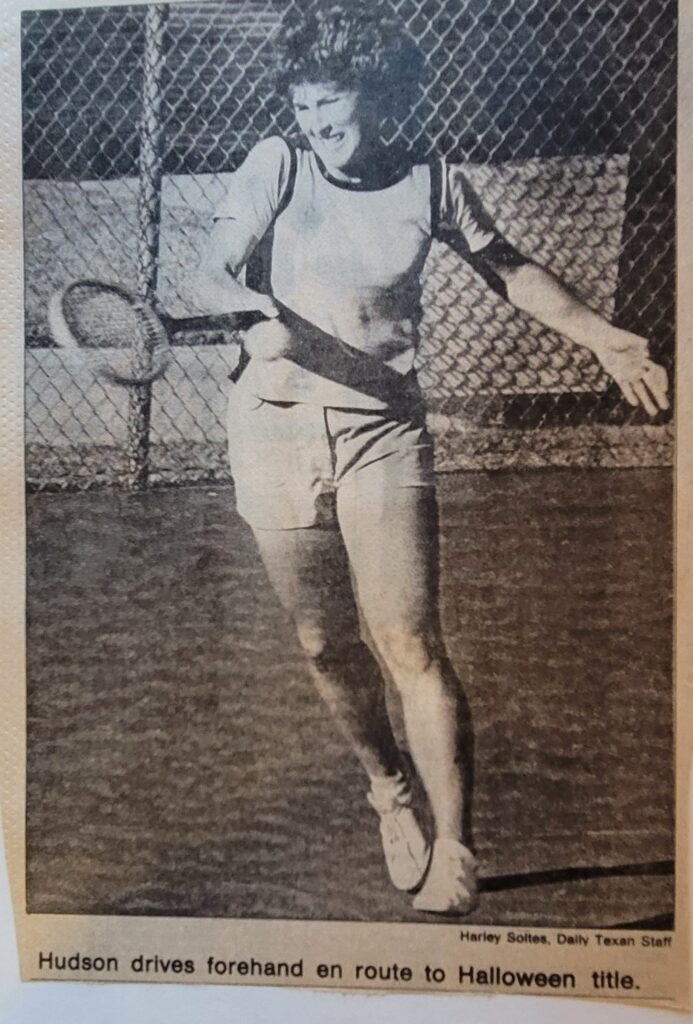
1980 Shelly Hudson tennis 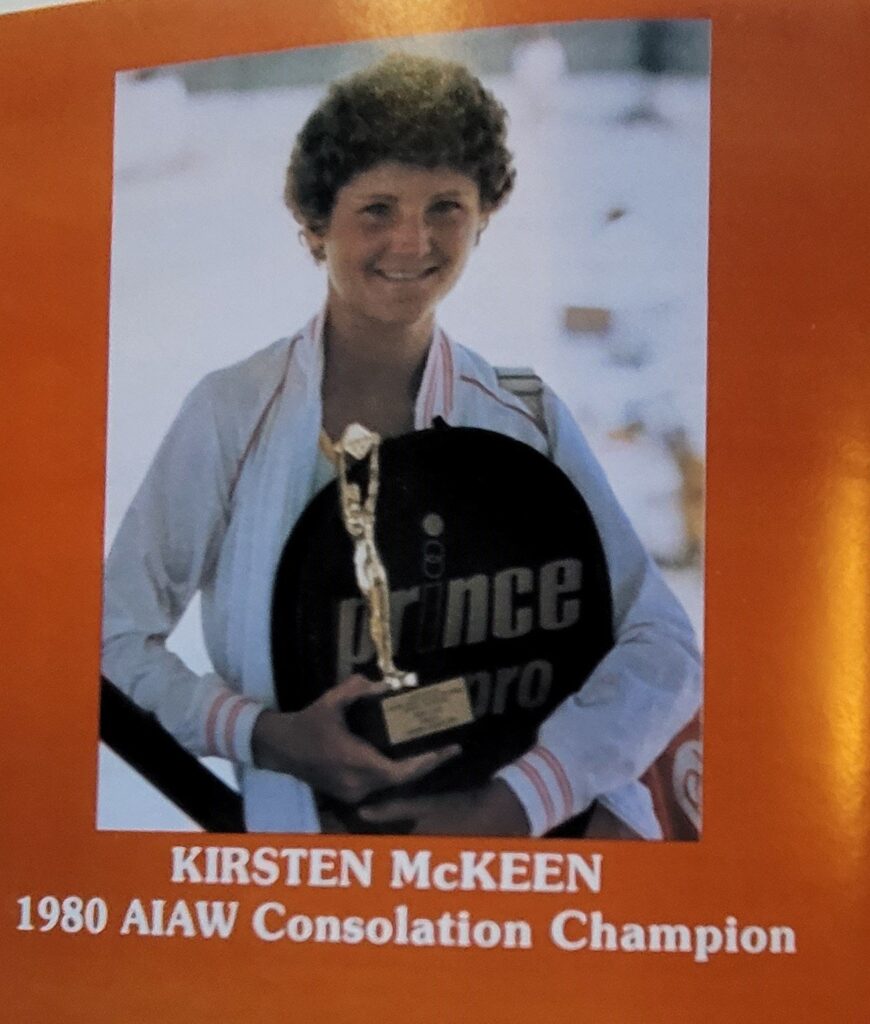
1980 Kristen McKeen tennis 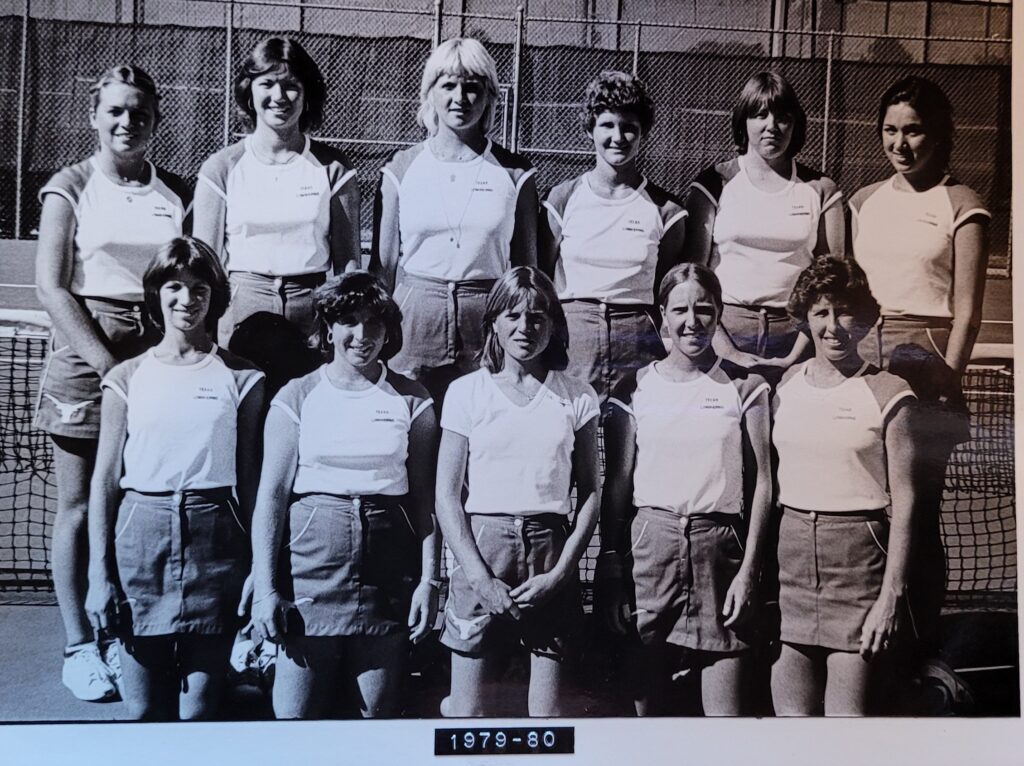
1980 women’s tennis 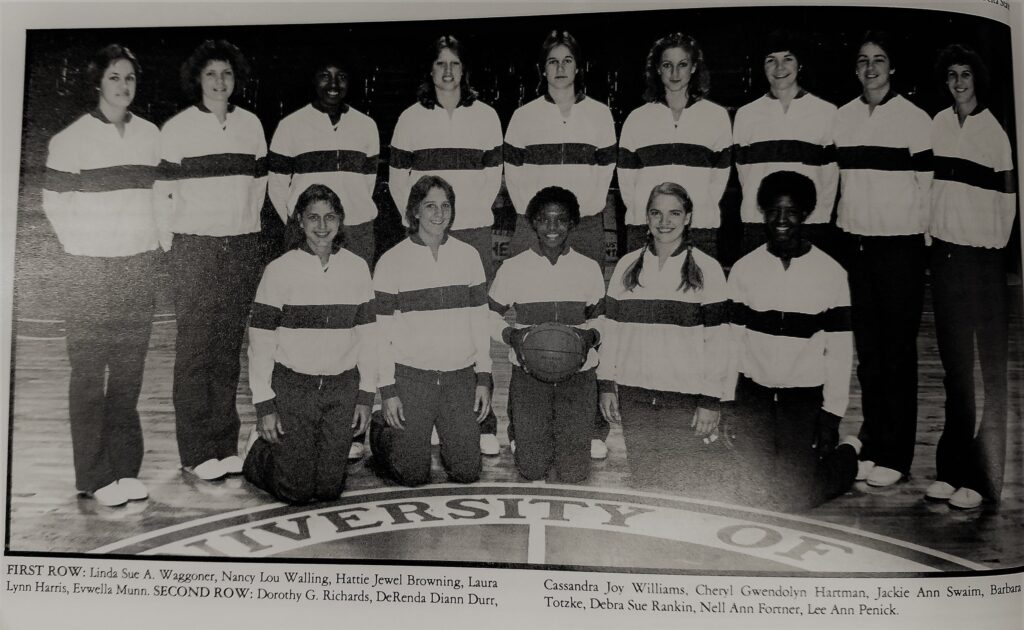
1980 Women’s basketball 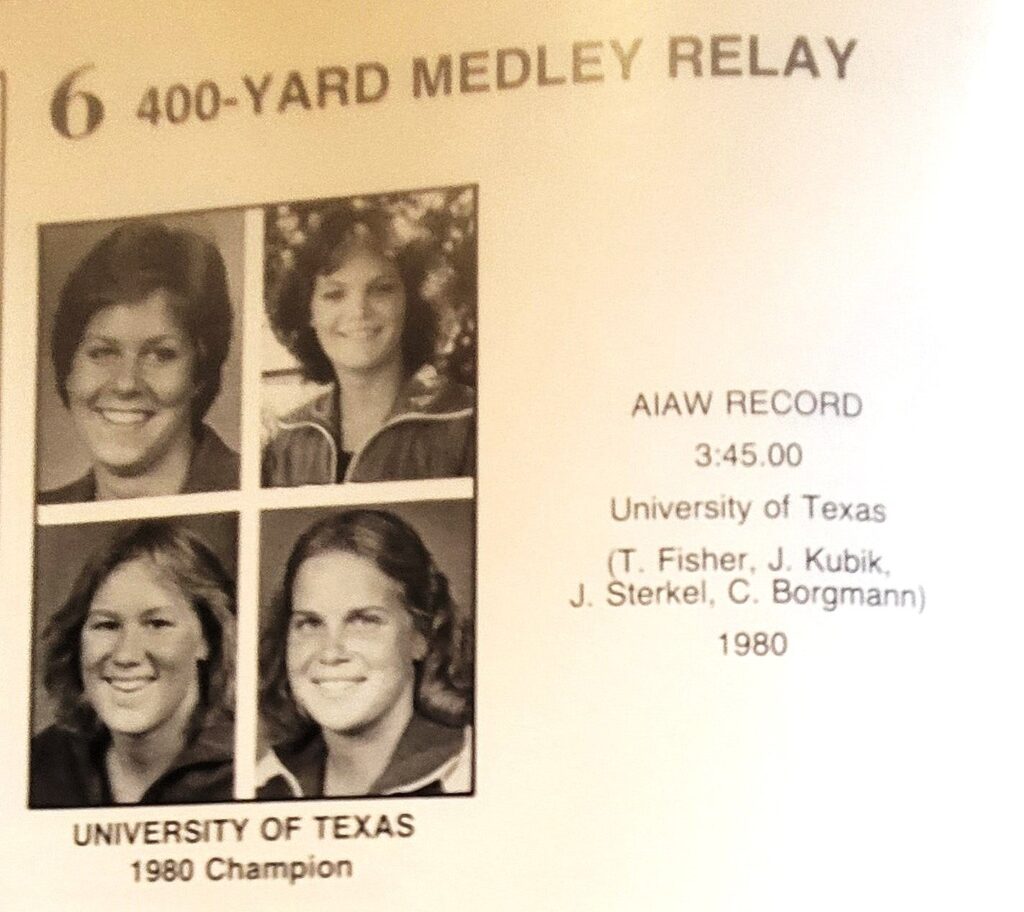
1980 Womens swimming 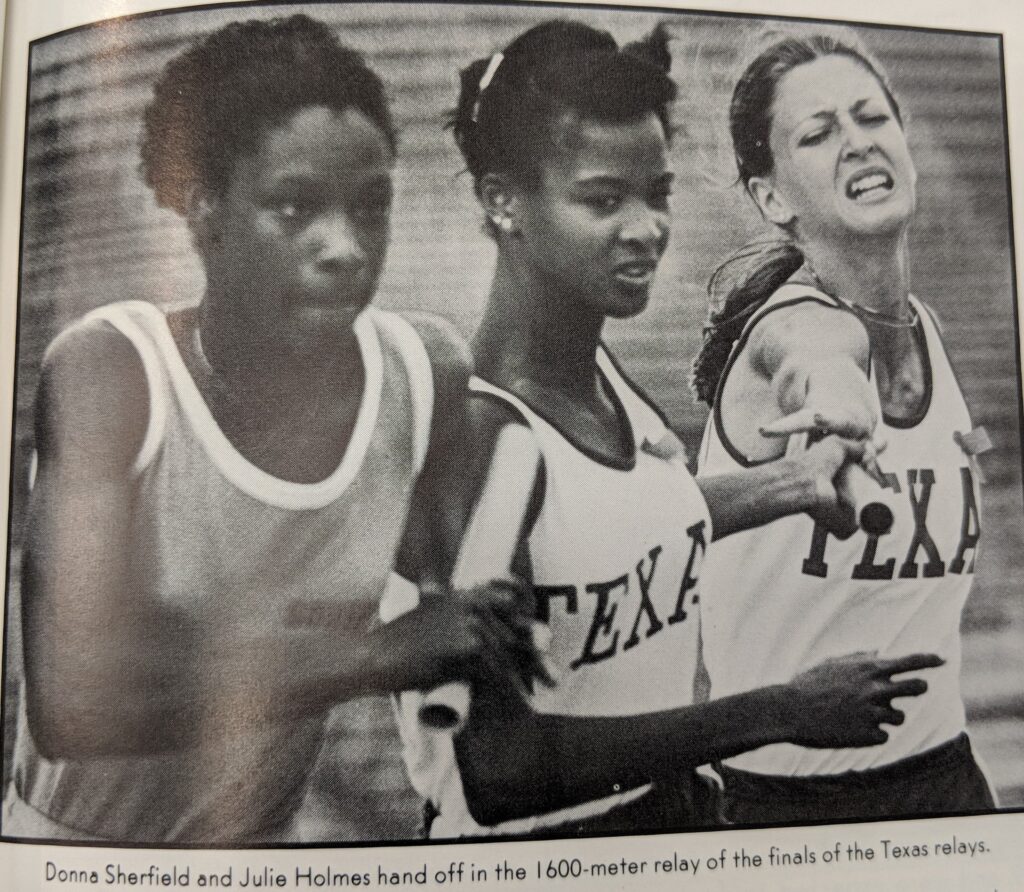
1981 women’s track – Donna Sherfield, Julie Holmes 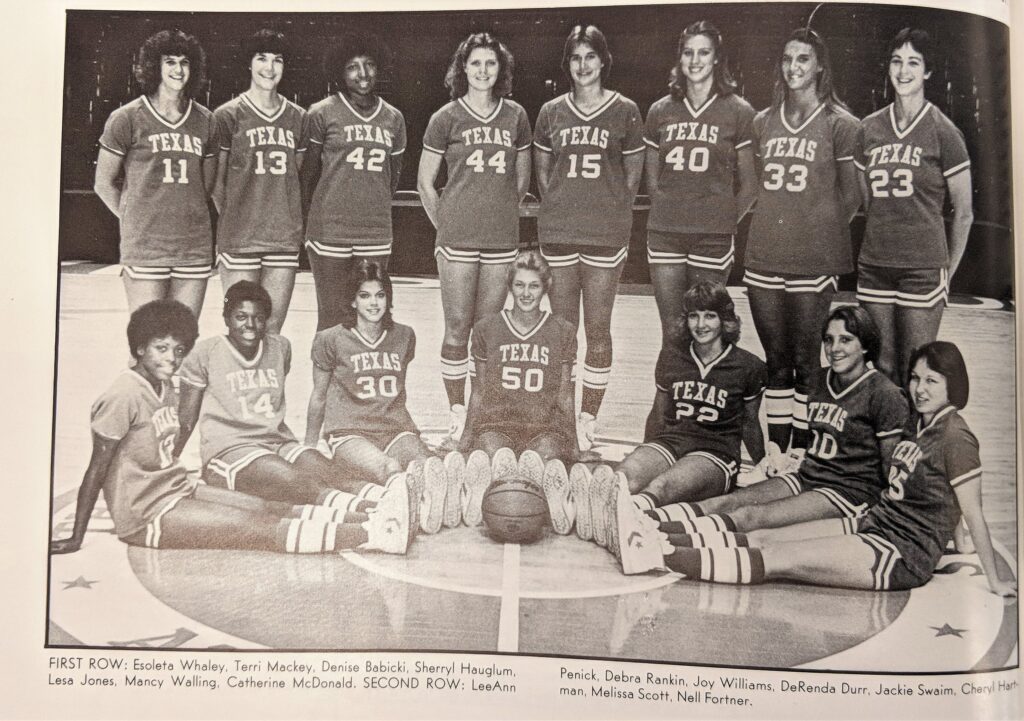
1981 women’s basketball 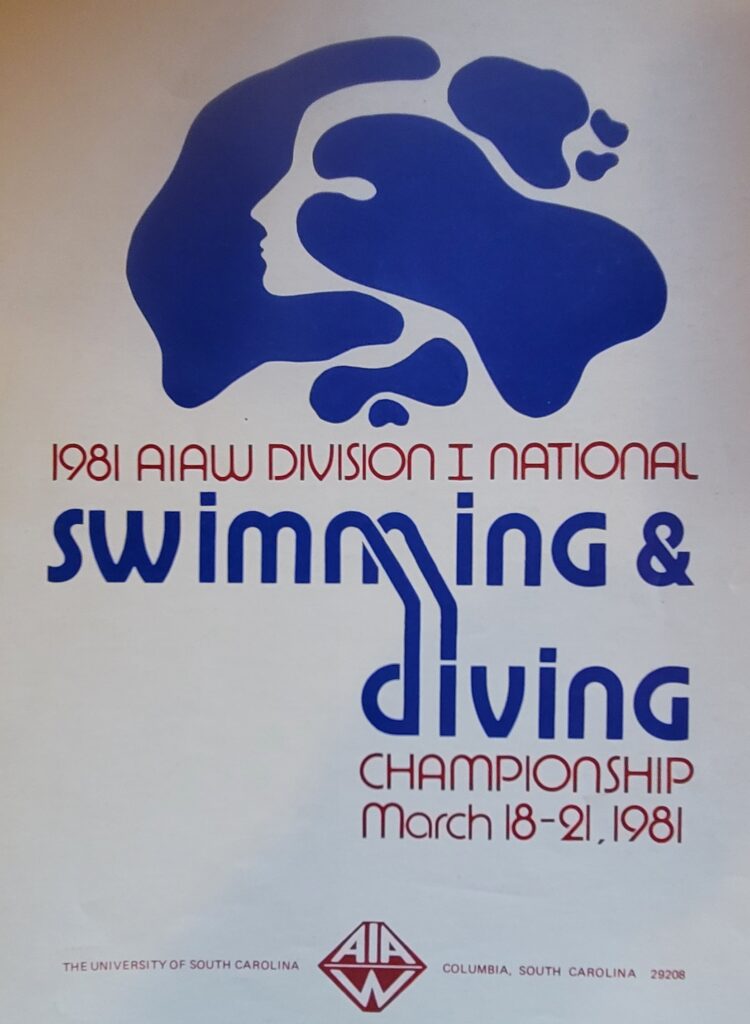
1981 swimming AIAW event 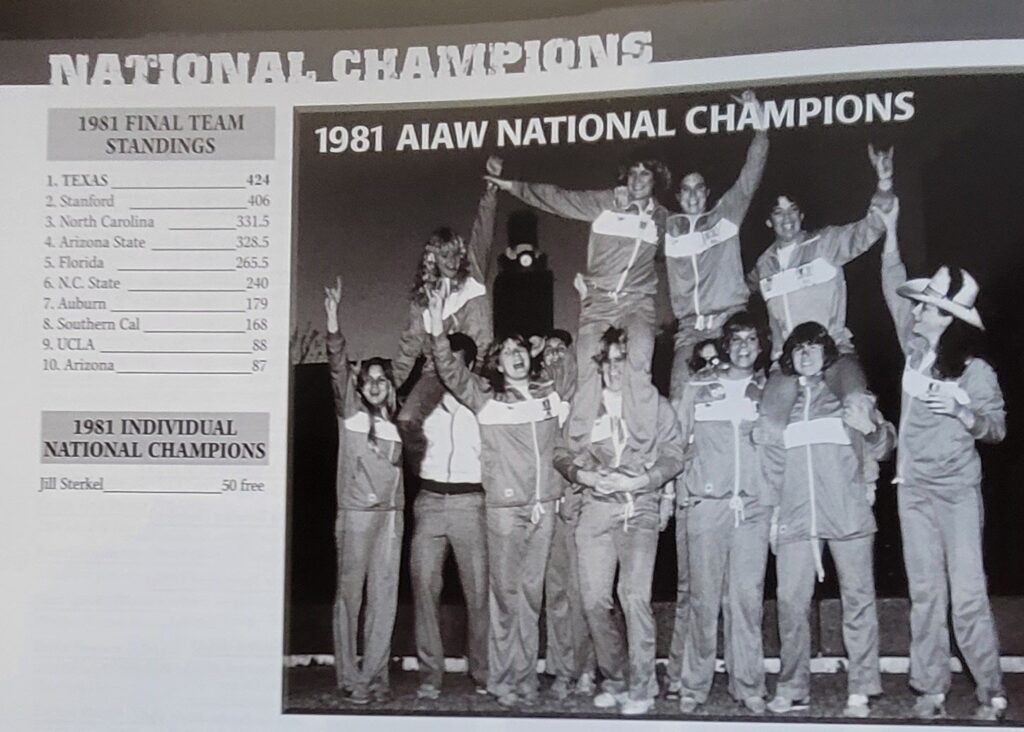
1981 women’s national champs AIAW 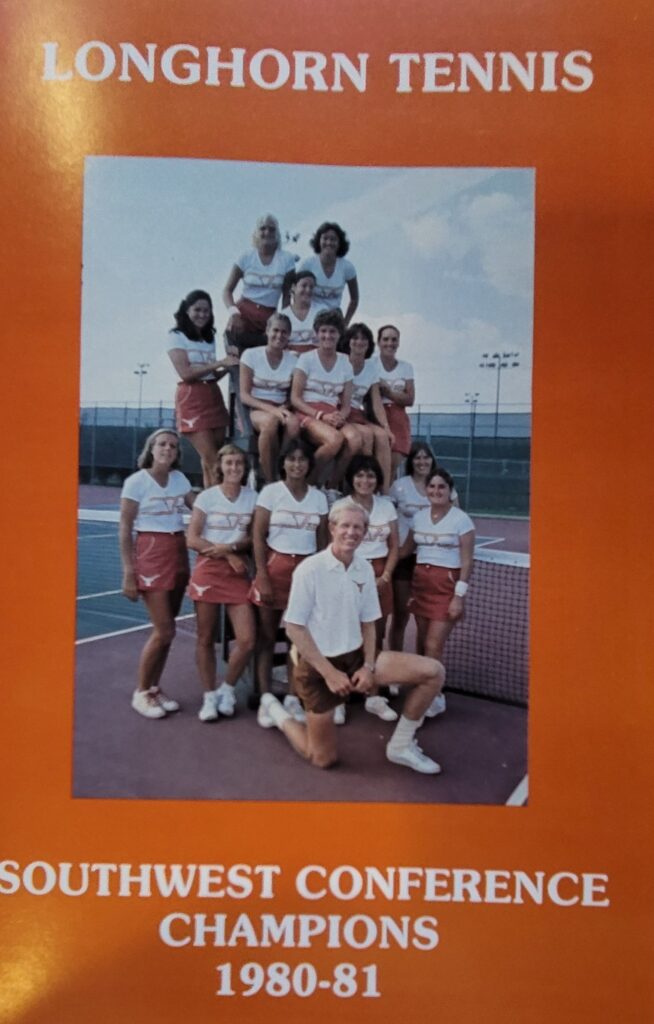
1981 women’s tennis 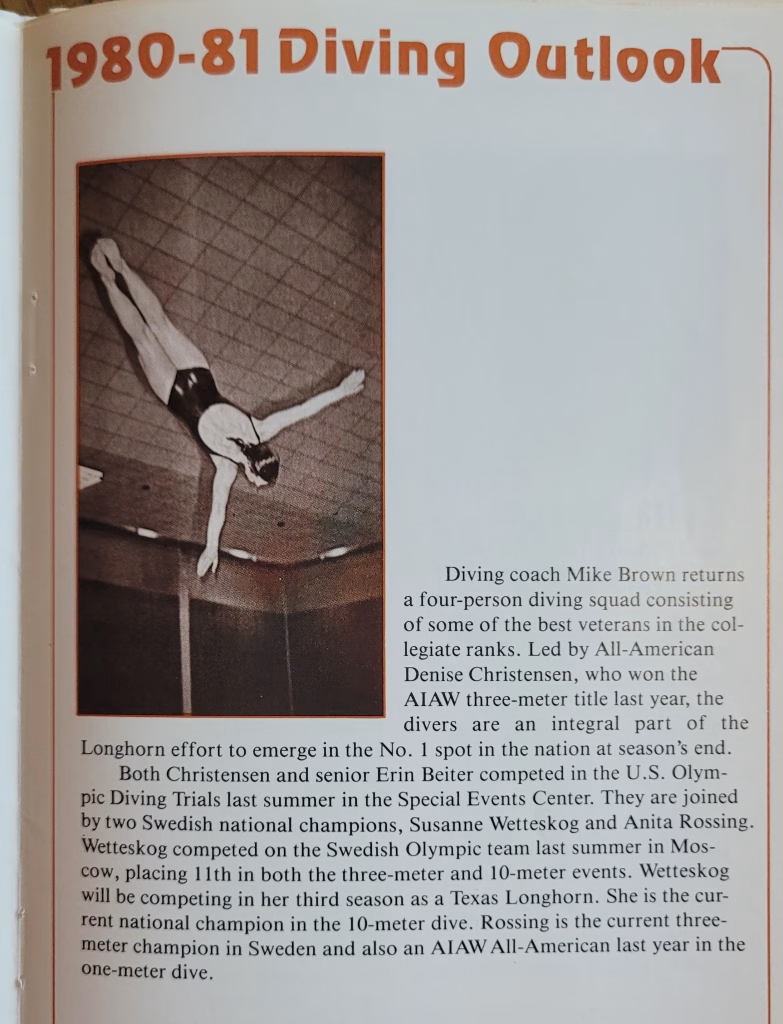
Womens AIAW diving 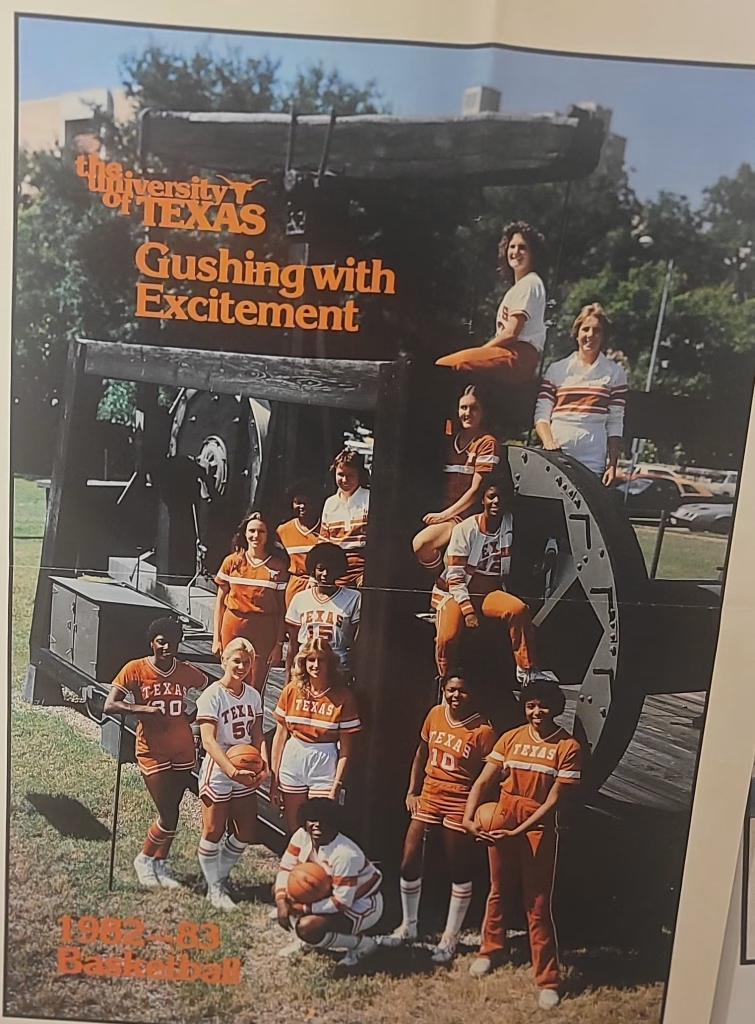
1982-1983 Stark womens basketball exhibit 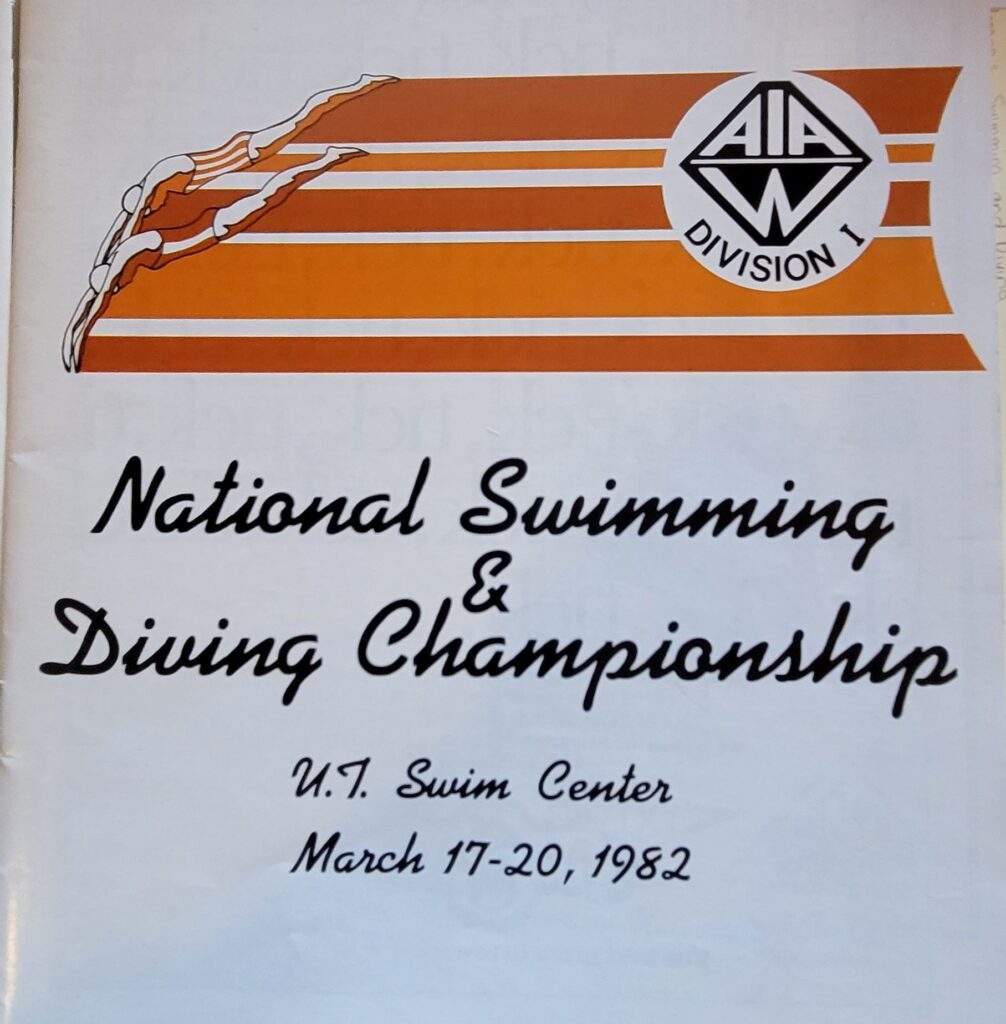
1982 Womens swimming 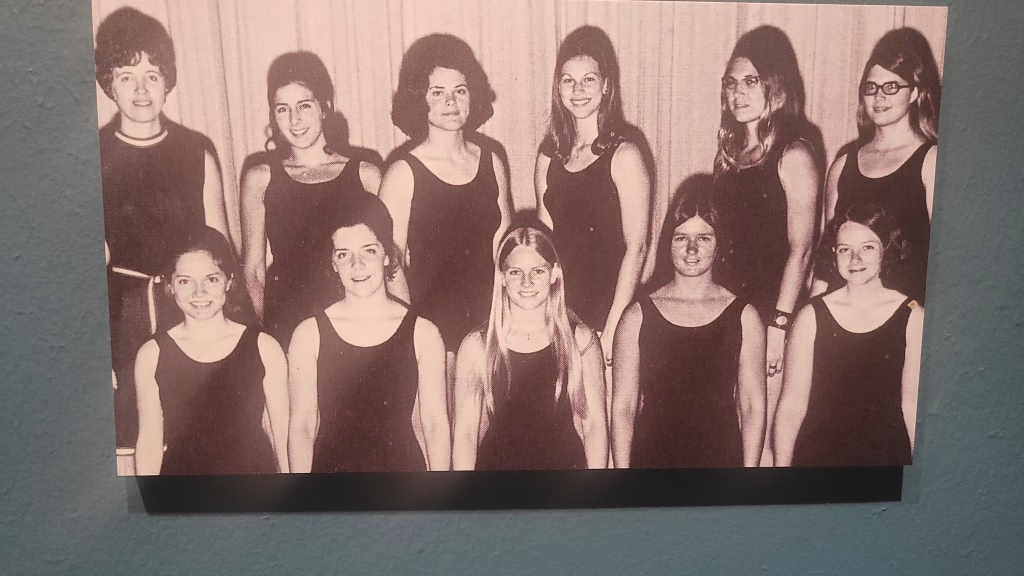
1970 Stark womens exhibit – swimming 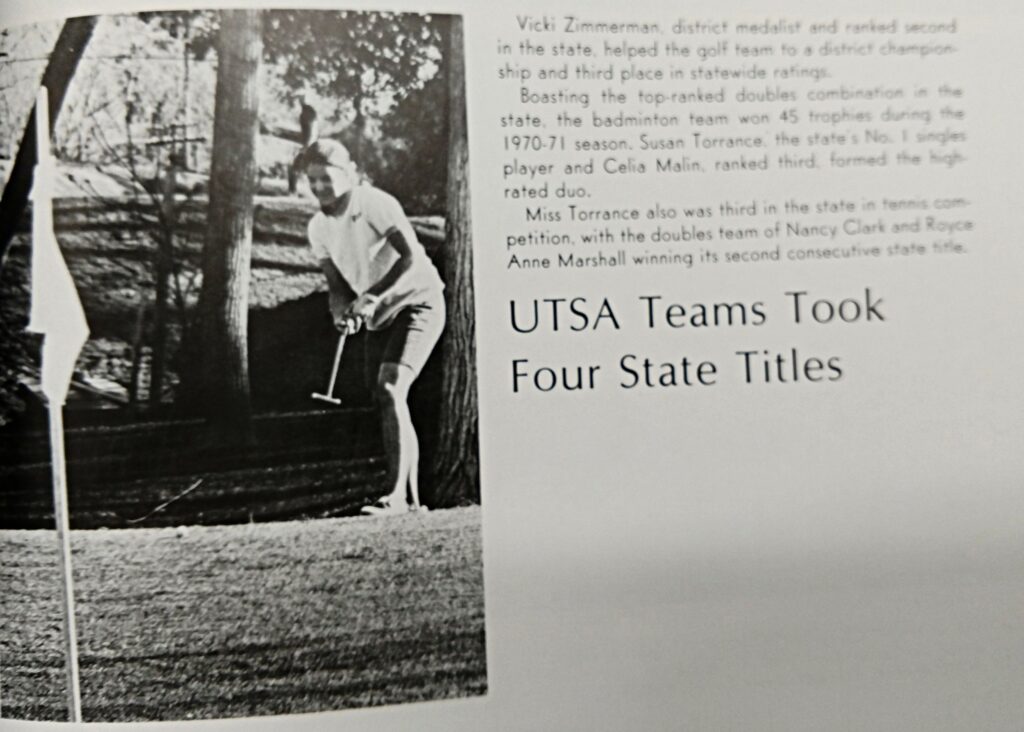
UTSA – University of Texas Sports Association 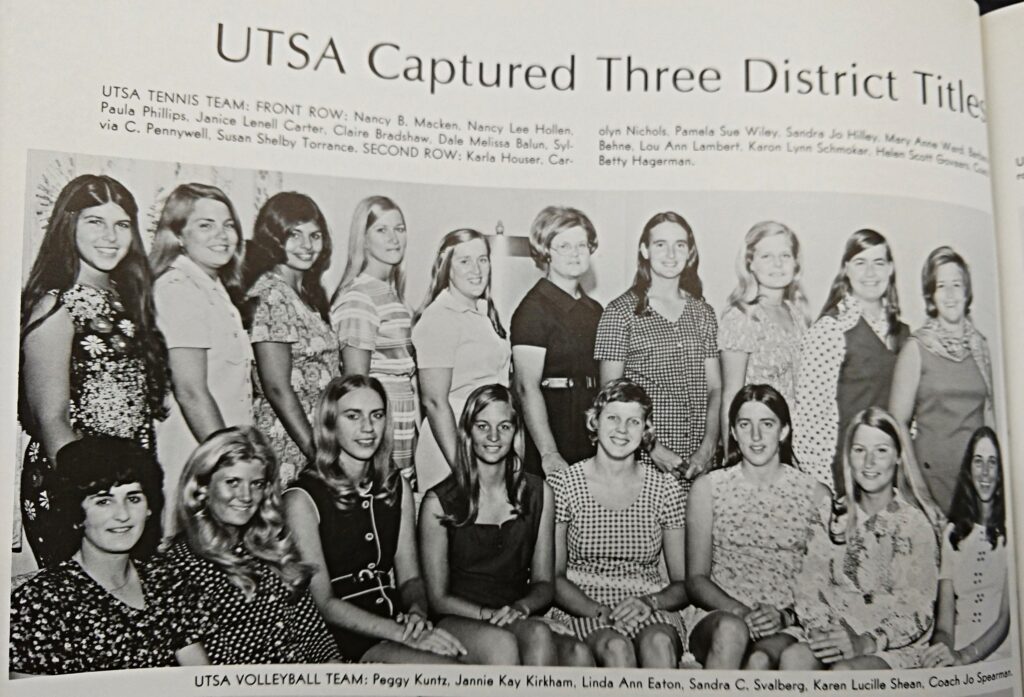
1972 UTSA – University of Texas Sports Association
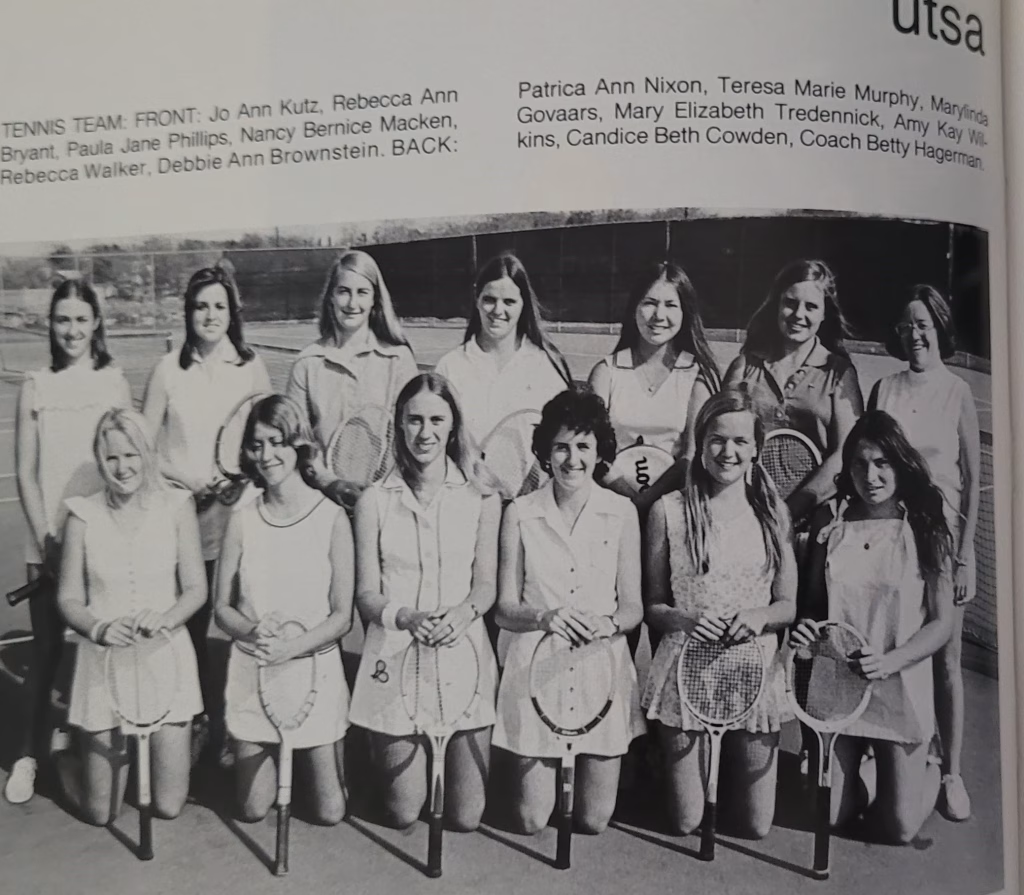
1974 Women’s tennis 
1975 women’s basketball 
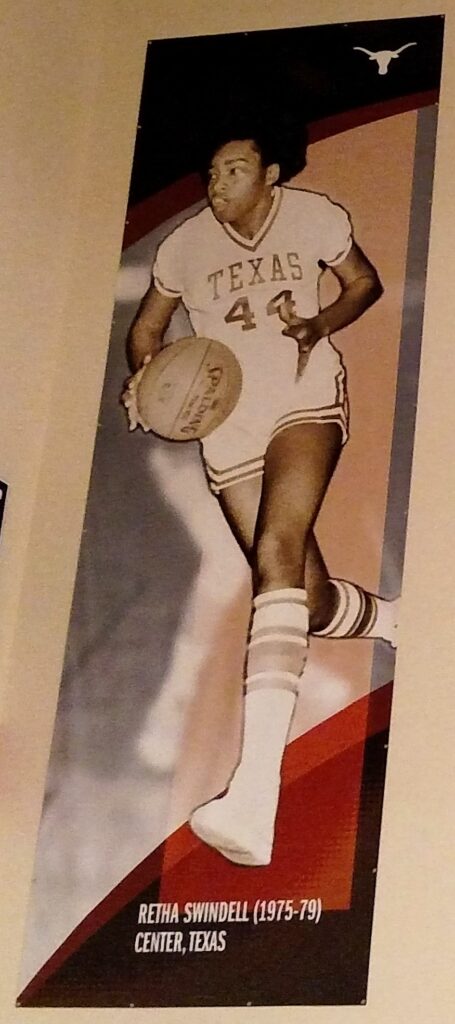
1975 Retha Swindell 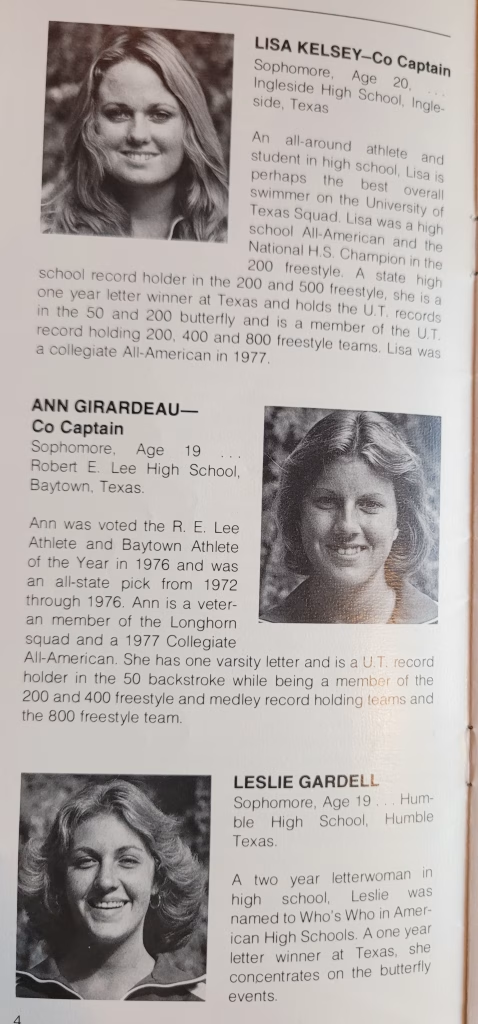
1977 Lisa Kelsey, Ann Girardeau, Leslie Gardell womens Swimming 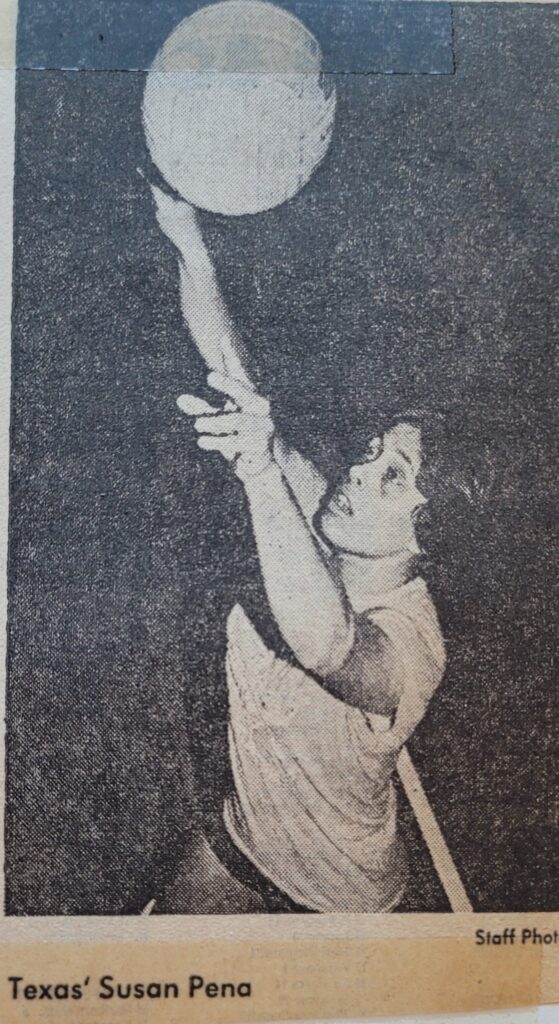
1977 Susan Pena volleyball 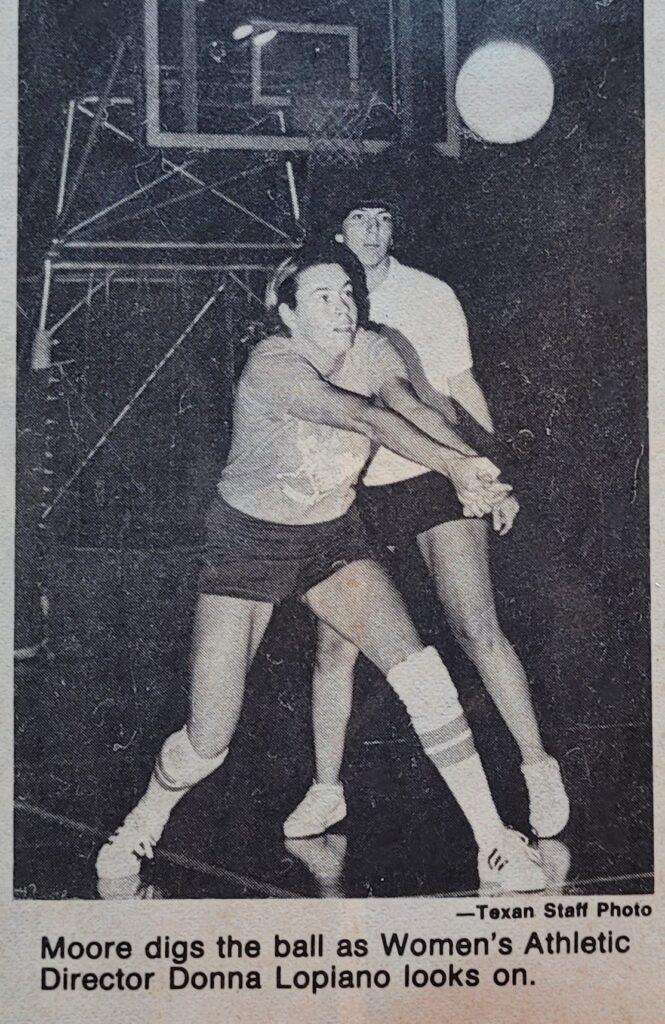
1977 Lopiano and Moore volley ball 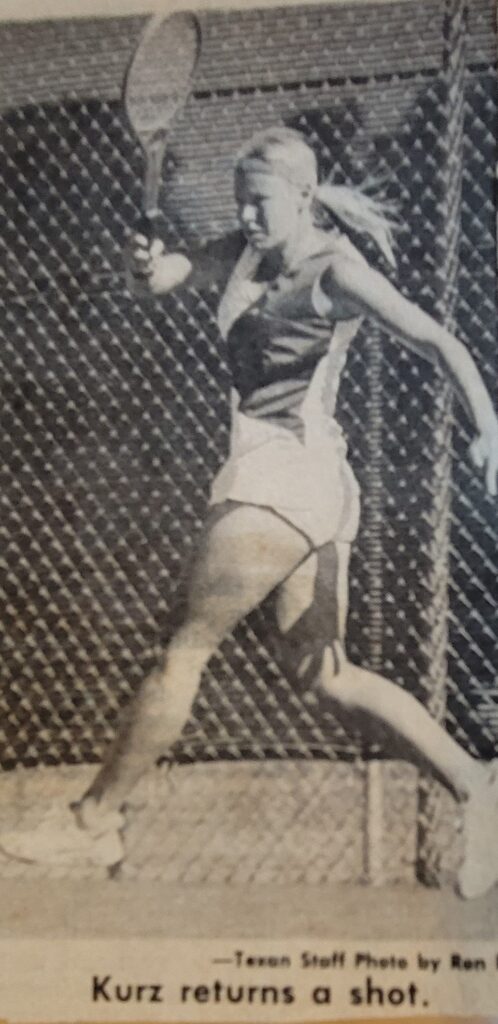
1977 Kurz Tennis women 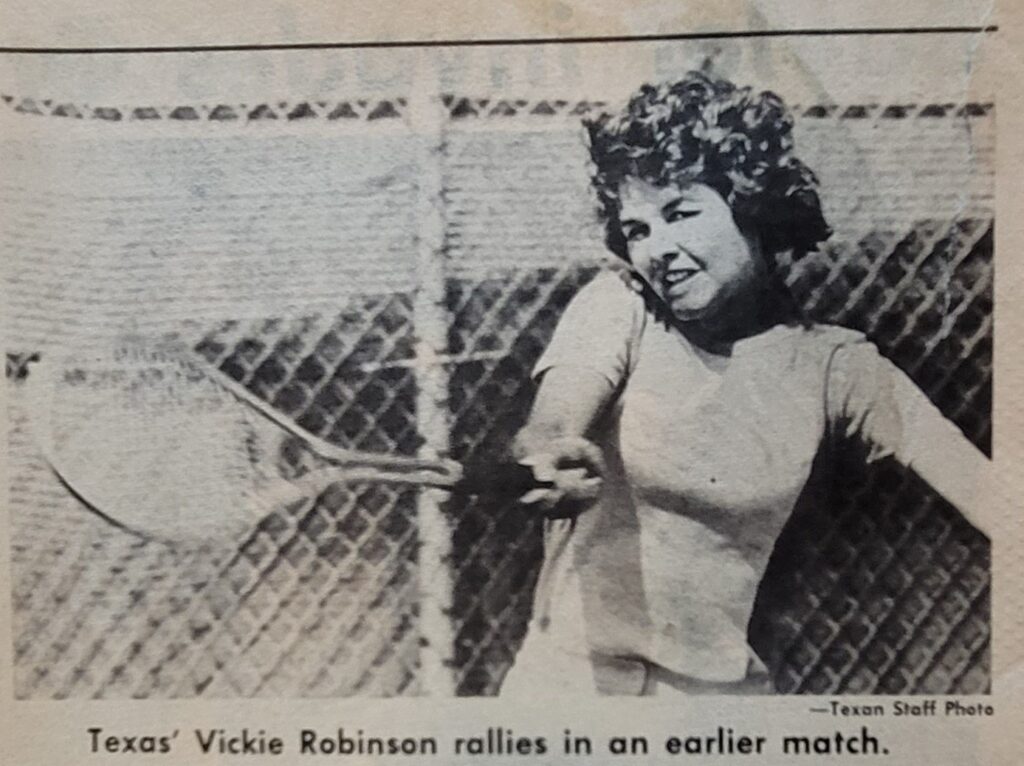
1977 women tennis Vicki Robinson 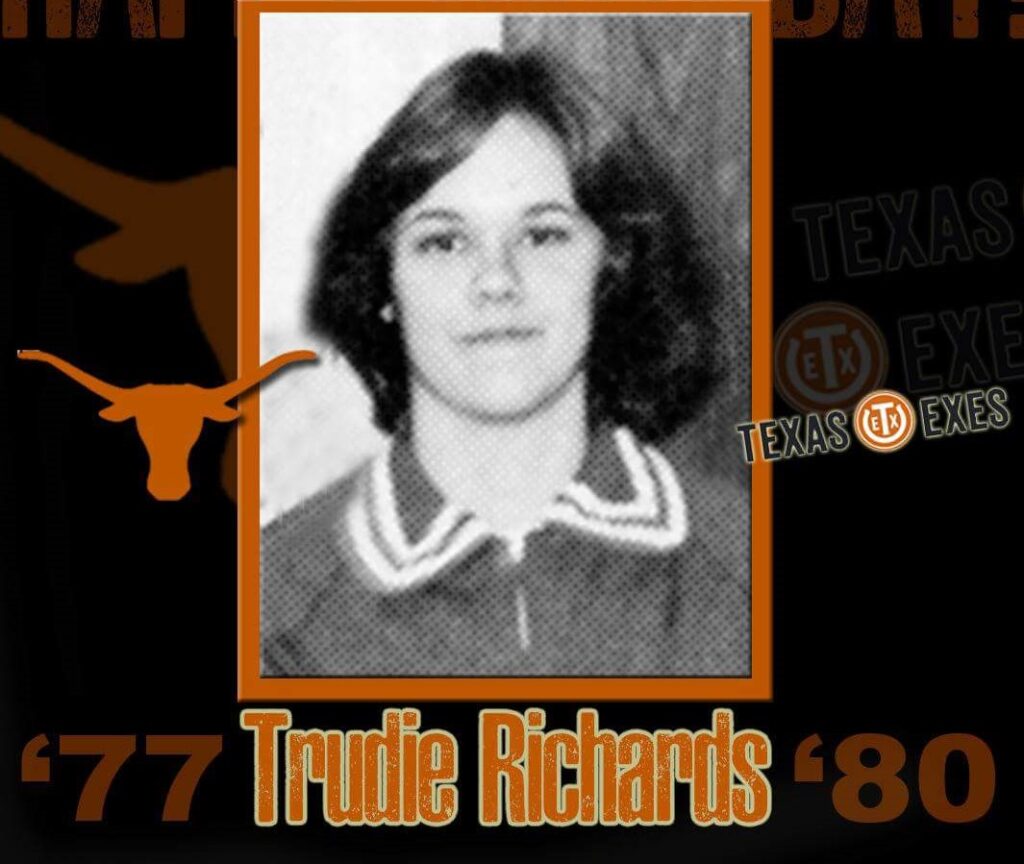
1977 Trudie Richards 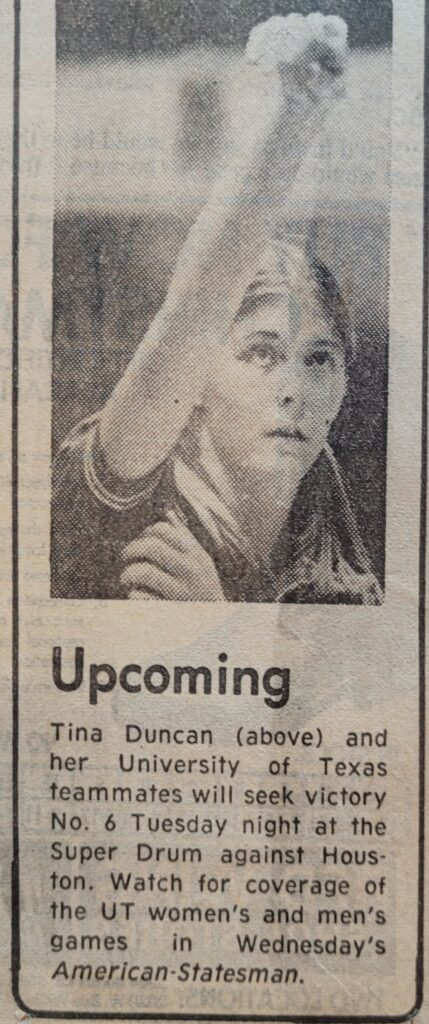
1977 volleyball Tina Duncan 
1977 Linda Andrews basketball 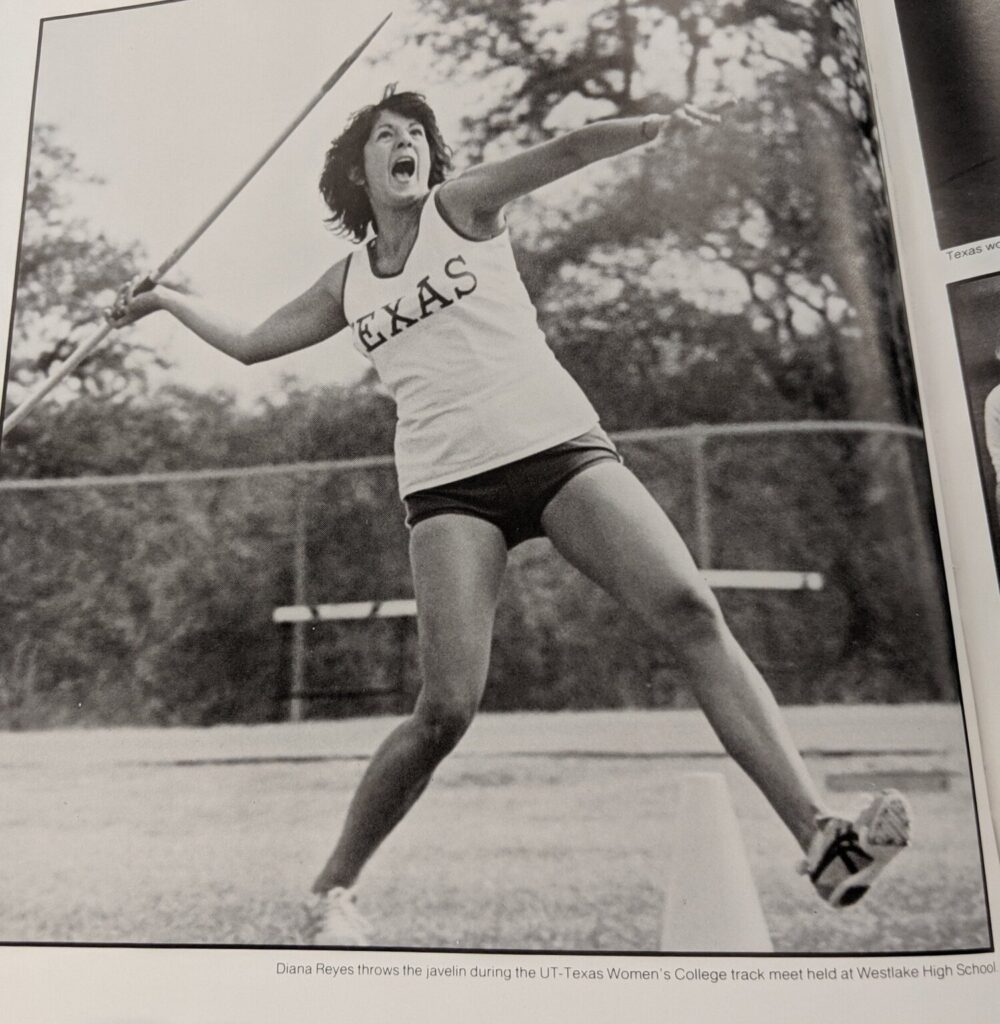
1977 Diane Reyes track 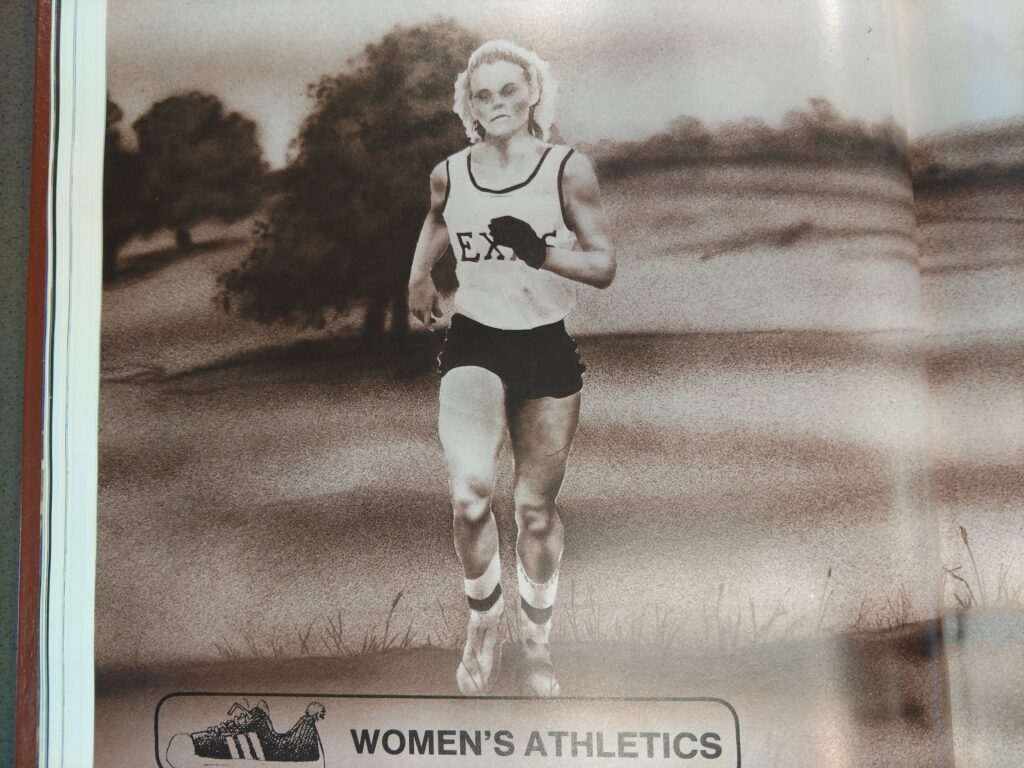
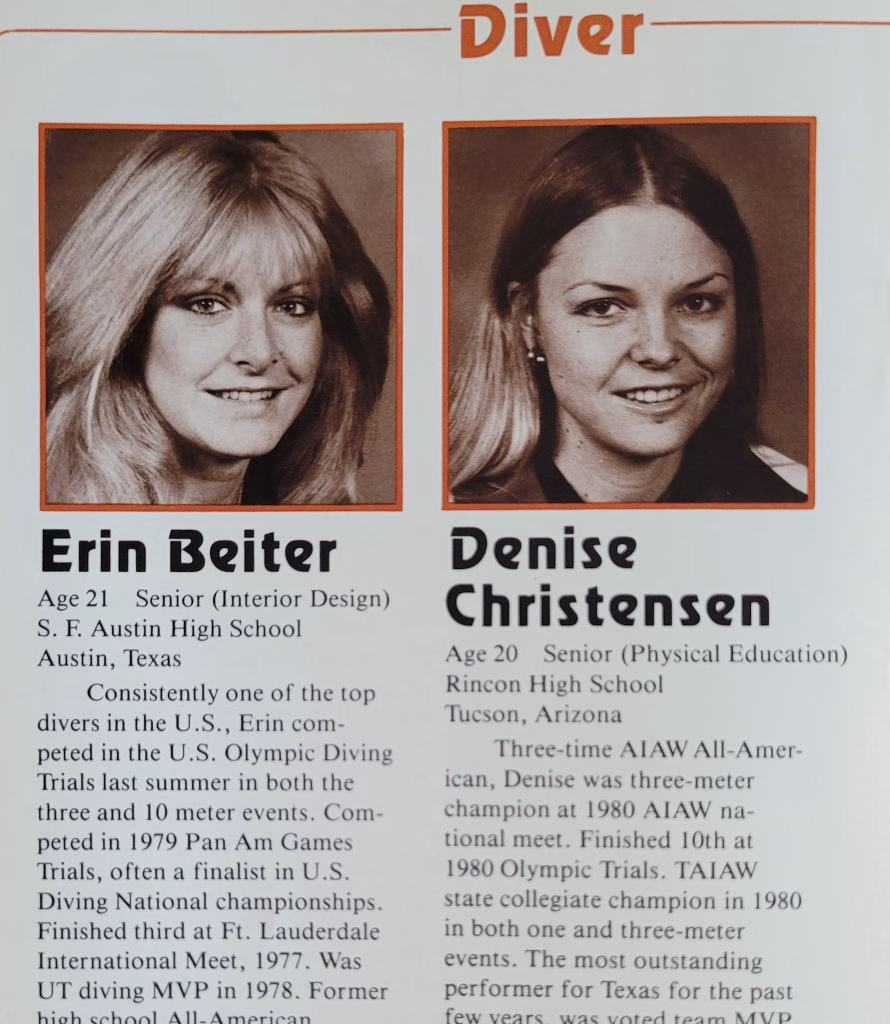
1978 Erin Beiter, Denise Christensen womens diving (474) 
1978 Weis womens golf 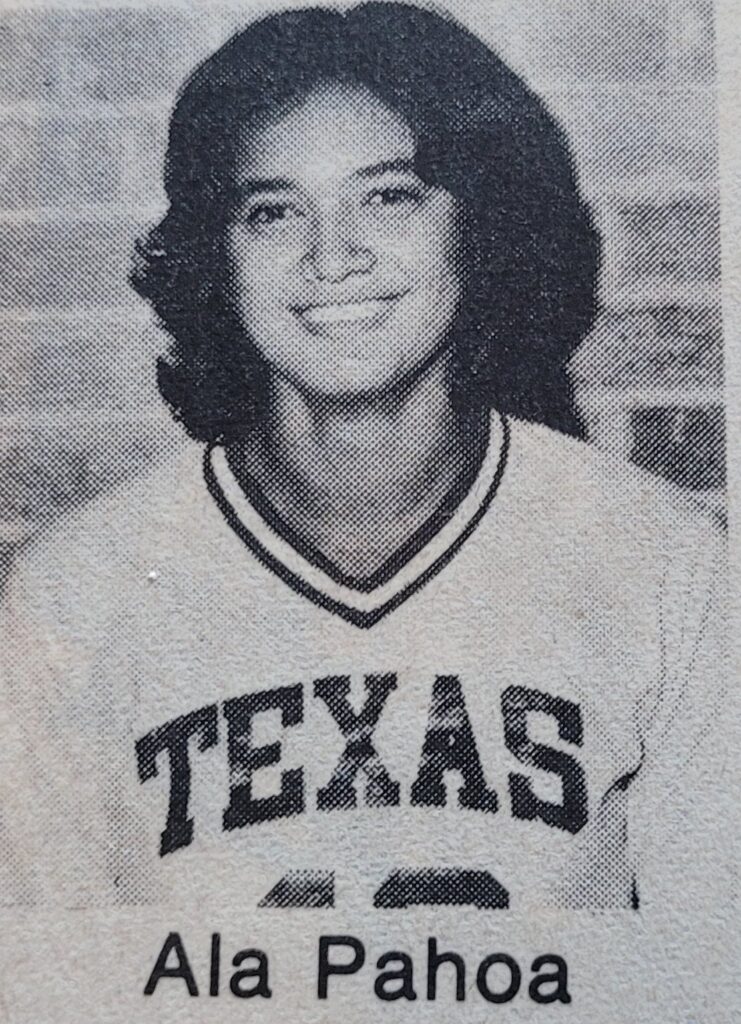
1978 Volleyball AlaPahoa 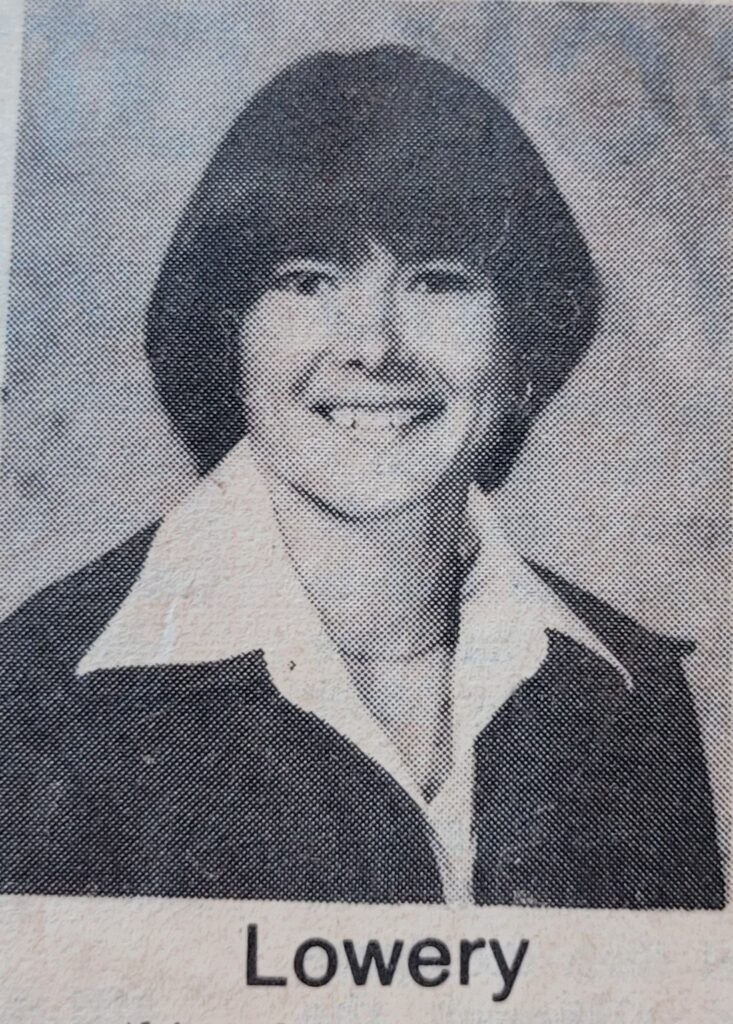
1978 volley ball coach Lowery 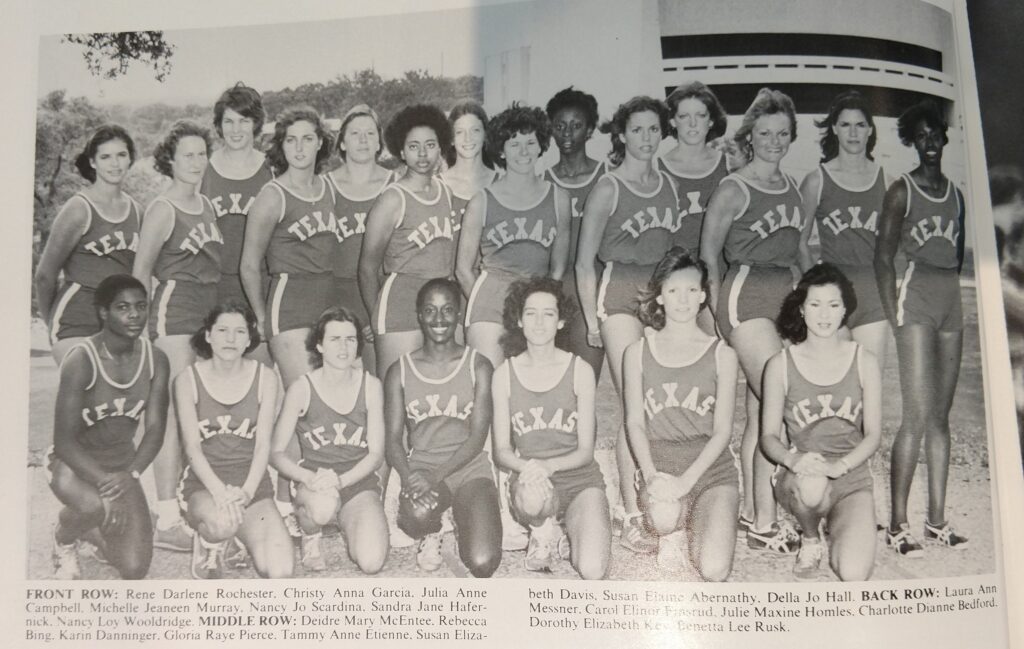
1978 women’s track
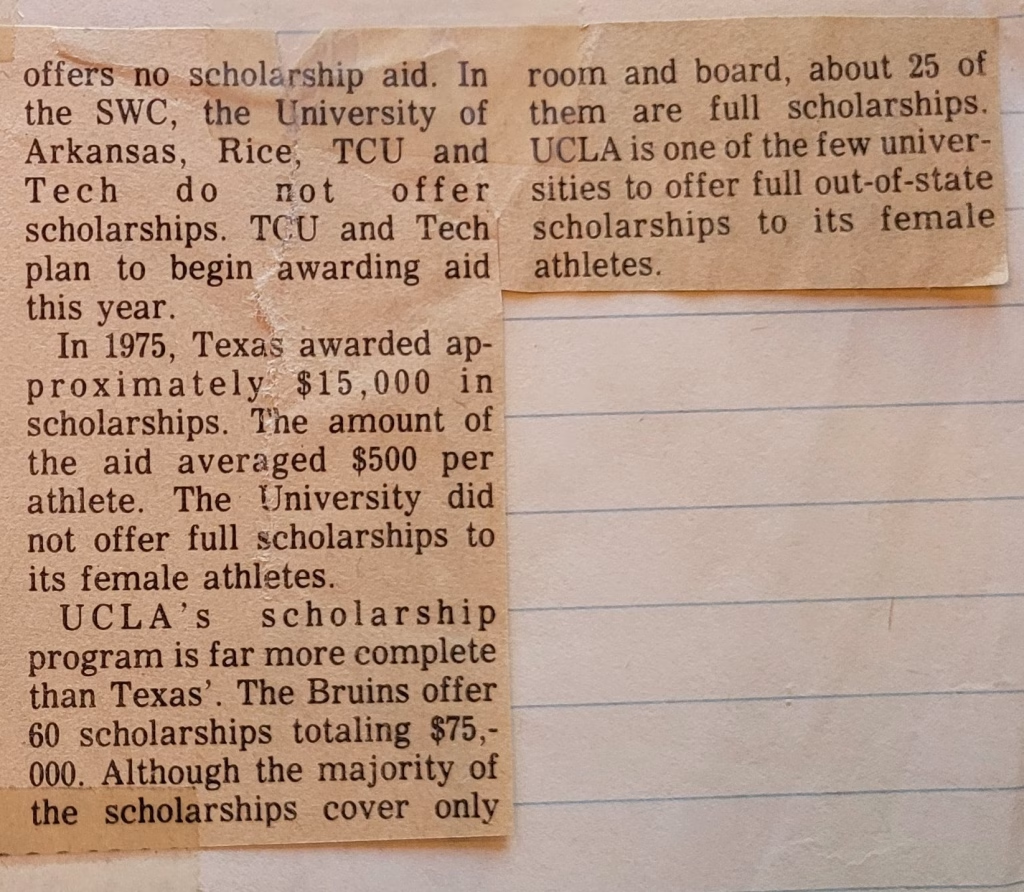
The first women’s scholarship sport-by-sport breakdown administered by the AIAW was in 1974. Scholarships were extremely limited — often 1–3 per sport in the first year.
Lopiano allocated scholarships strategically to sports she believed could win immediately.
(Sport‑by‑Sport Reconstruction) Photos are pending for the first women’s scholarship athletes
Swimming & Diving received the first scholarships because Lopiano considered it the sport most immediately capable of national competitiveness.
Cathy Carlson — first woman ever awarded an athletics scholarship at UT. Additional early scholarship swimmers in 1974–75 included: Sharon Jones, Nancy Patton, Linda McMillan, Debbie Meyer (not the Olympian — UT diver of the same name)
Women’s Basketball-Basketball was still transitioning from club status, so the first scholarships were few.
The first scholarship basketball athletes arrived in fall 1974. The core inaugural group included:
Retha Swindell (the first impact basketball scholarship athlete) Annette Smith (joined slightly later but part of the first scholarship era) Cathy Hardin, Debbie Milne
Volleyball-was one of the earliest sports to receive intercollegiate status (1966), so it was a natural early scholarship sport.
Volleyball received a small number of scholarships in 1974:
Kathy Gregory, Mary Jo Peppler (player‑coach influence; scholarship classification varies) Janice Larson
Tennis had strong club roots and was one of the easiest sports to elevate quickly.
The first scholarship tennis athletes in 1974 included:
Becky Vest Donna Fox Linda Cornelius
🏃 Track & Field / Cross Country
Track scholarships began in 1974 but expanded dramatically once Terry Crawford arrived later. The first scholarship athletes included:
Cynthia “Cindy” Gilbert Marsha Jones Patty O’Neal
Softball
Softball was added slightly later in the 1974–75 cycle. Early scholarship athletes included:
Debbie Richardson Karen Stewart
🎾 Additional Notes
Soccer, rowing, and golf did not yet exist as varsity sports. Scholarships were extremely limited — often 1–3 per sport in the first year. Lopiano allocated scholarships strategically to sports she believed could win immediately.
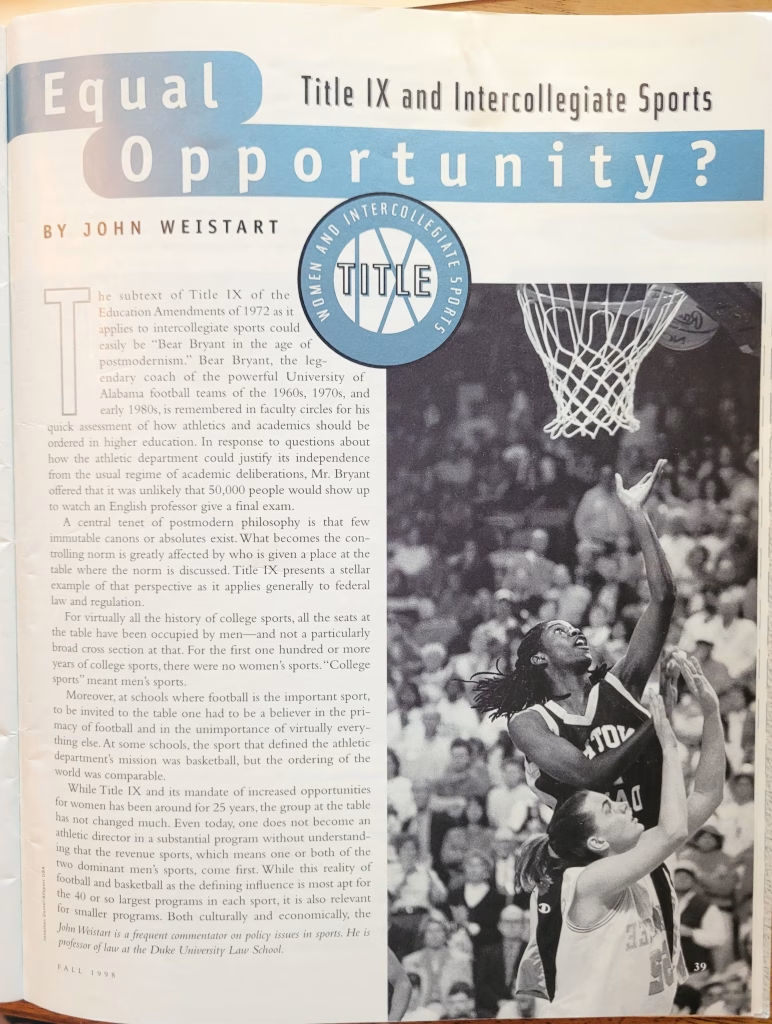
1979 AIAW women’s sports 
Susan Abernathy scholarship 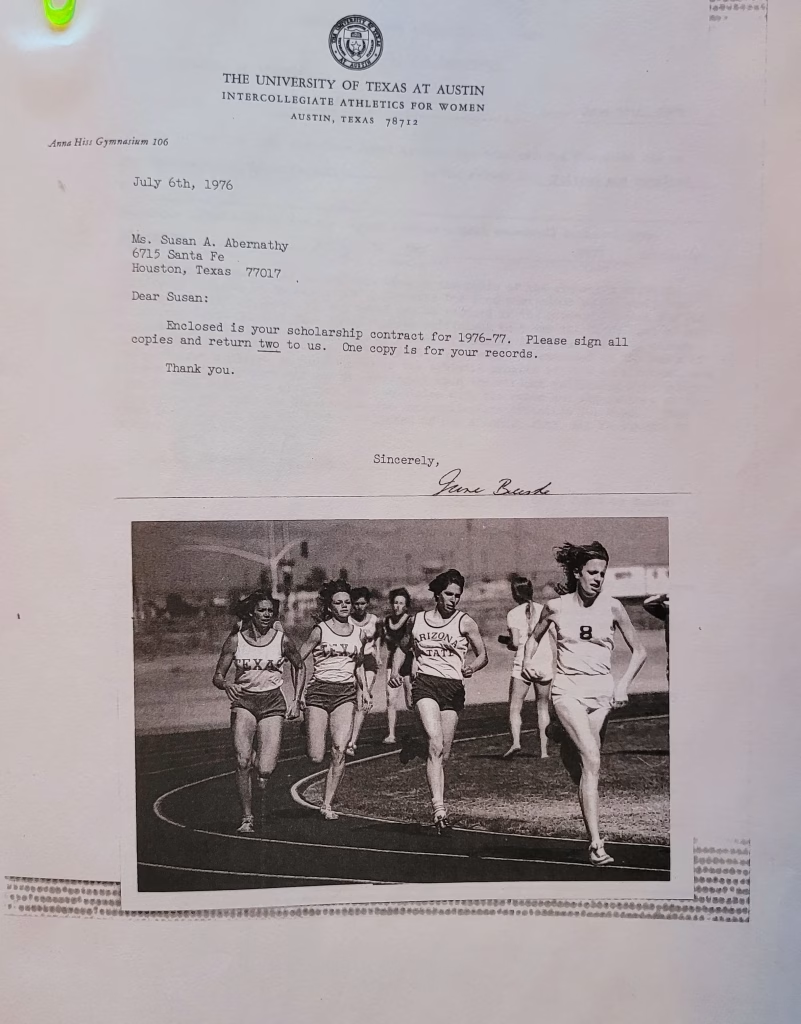
1976 Women’s sports track susan Abernathy and Scholarship 
2024 Texas Relay reunion- Jeff Kirk, Charlottes Bedford Anderson, alex Studstill, Susan Abernathy Murphy, Carol Sheffield Latin, Darlyn Cartwright, Rey Moreno, Dana Le Duc 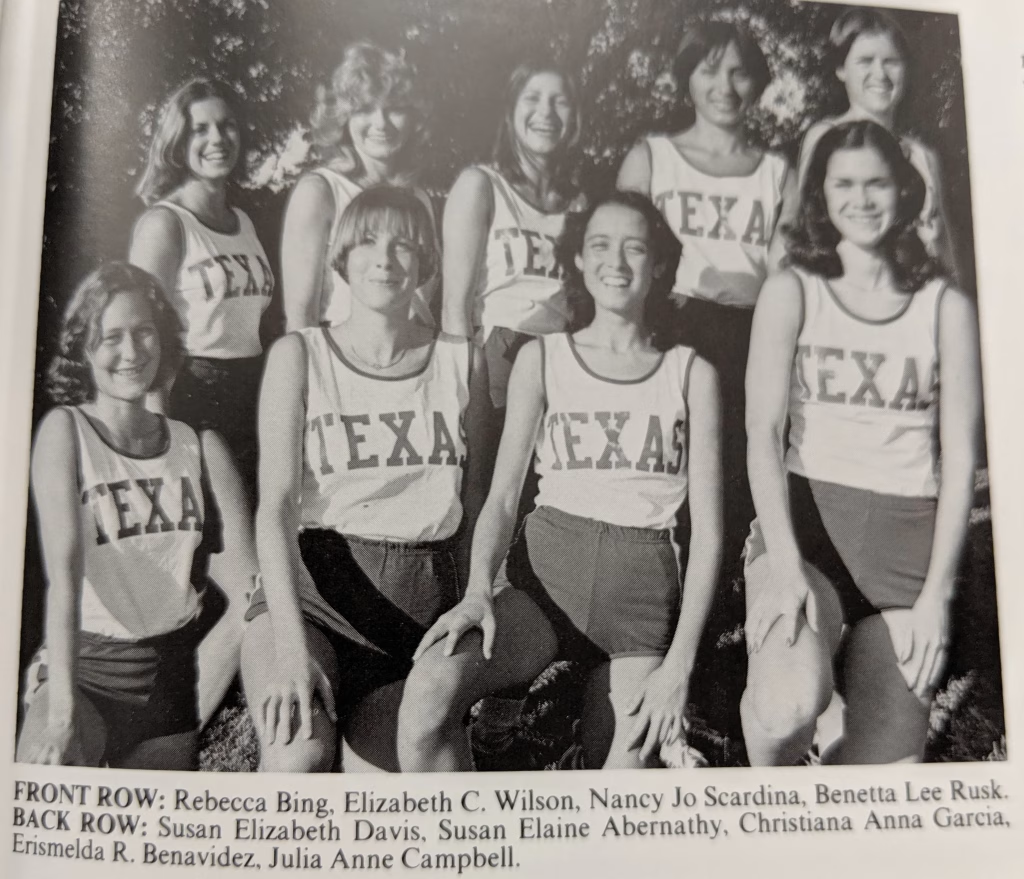
cross country 1978 womens cross Country front, Bing, Wilson, Scardina, Rusk back Davis, Abernathy, Garcia, Benavidez, Campbell 

AIAW Susan Abernathy women’s sports 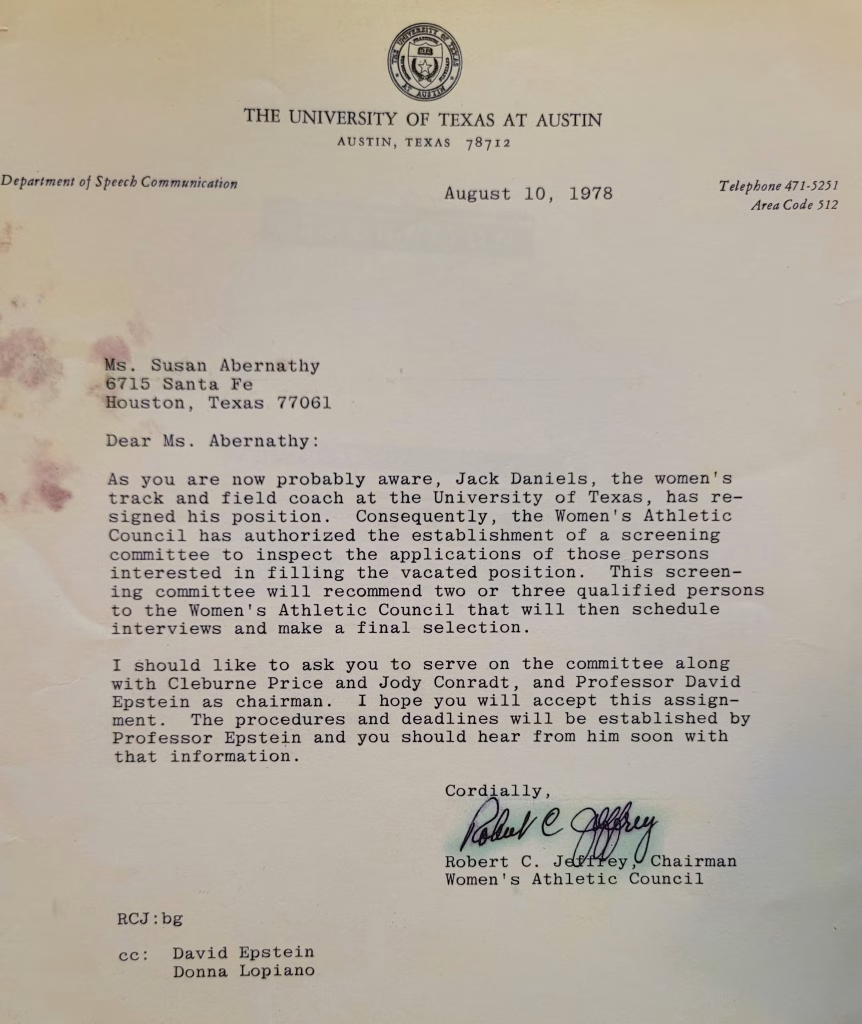
AIAW women’s sports Susan Abernathy ( 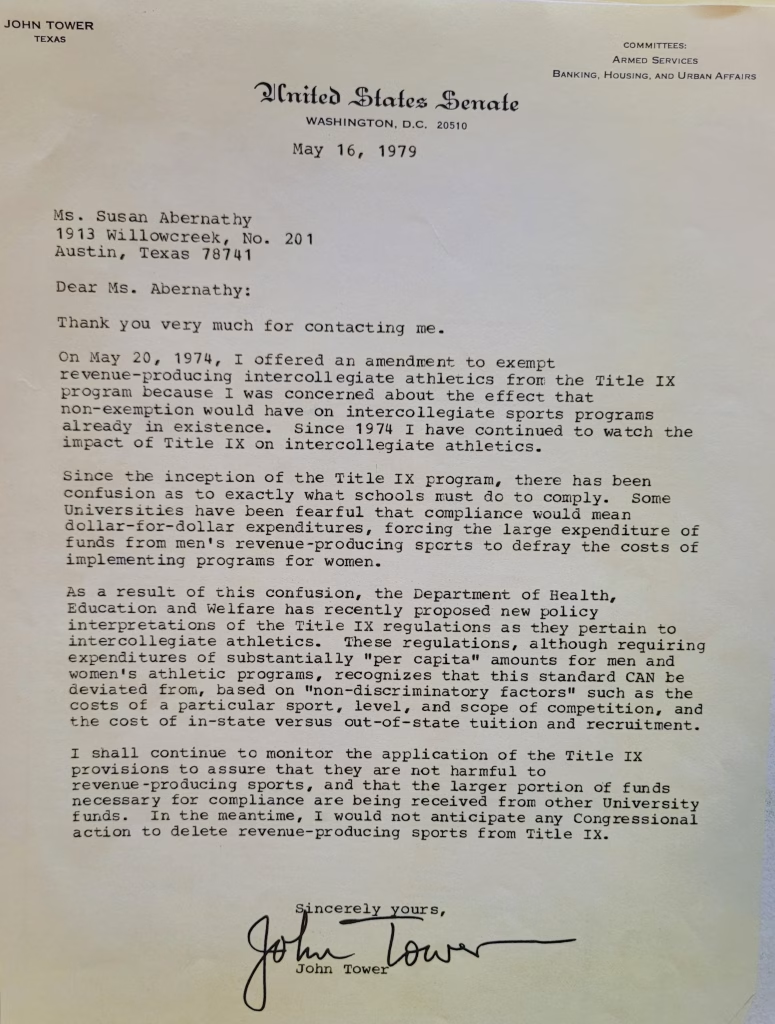
1979 AIAW women’s sports Susan Abernathy (50) Senator John Tower 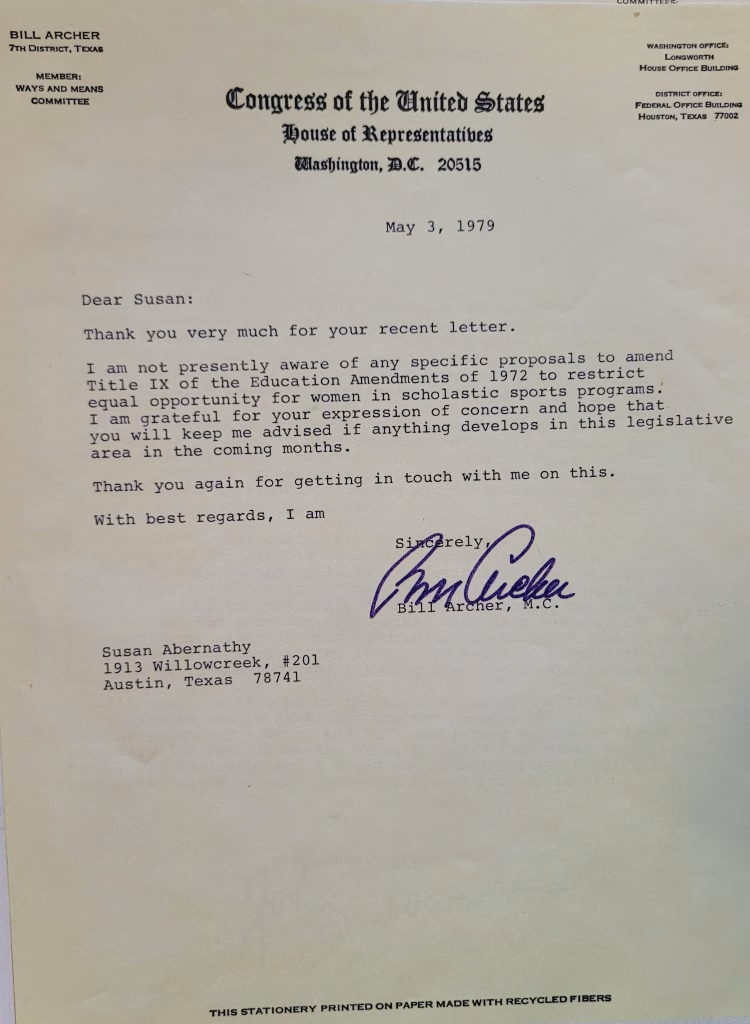
1979 AIAW women’s sports Susan Abernathy (49) 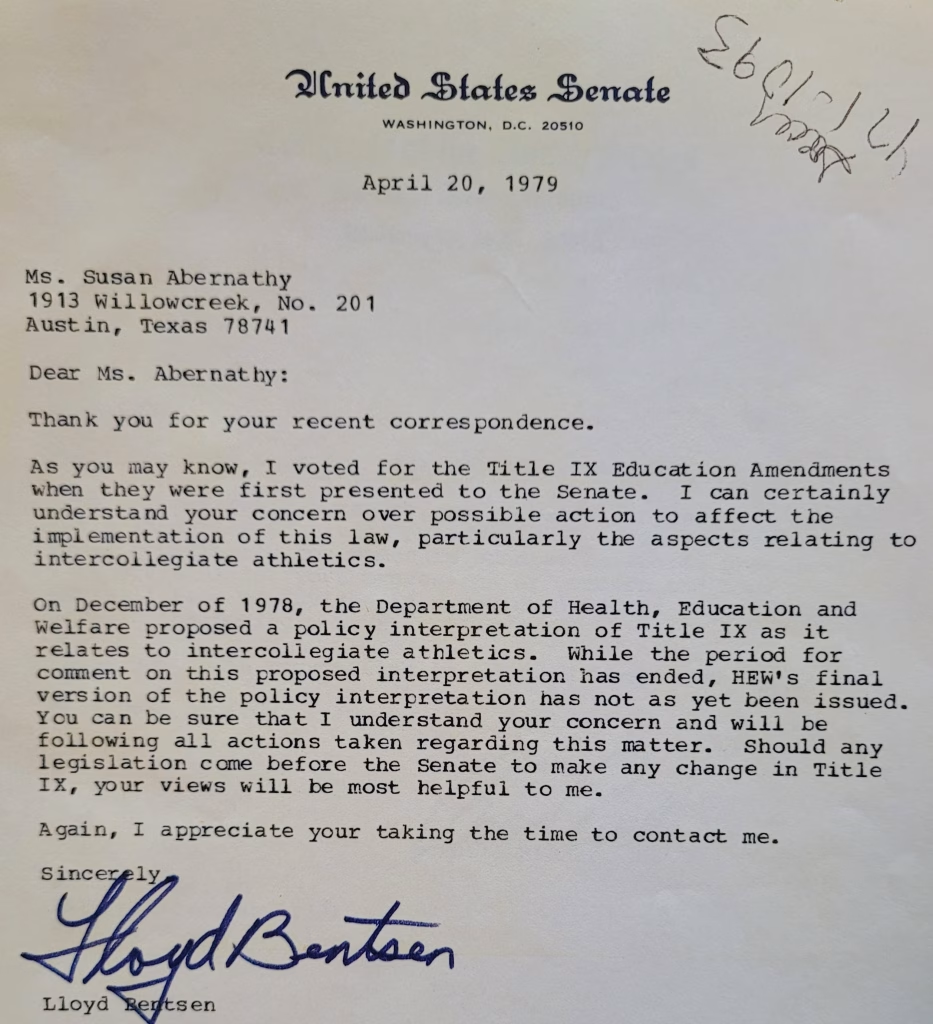
1979 AIAW women’s sports Susan Abernathy- Senator Lloyd Bentsen 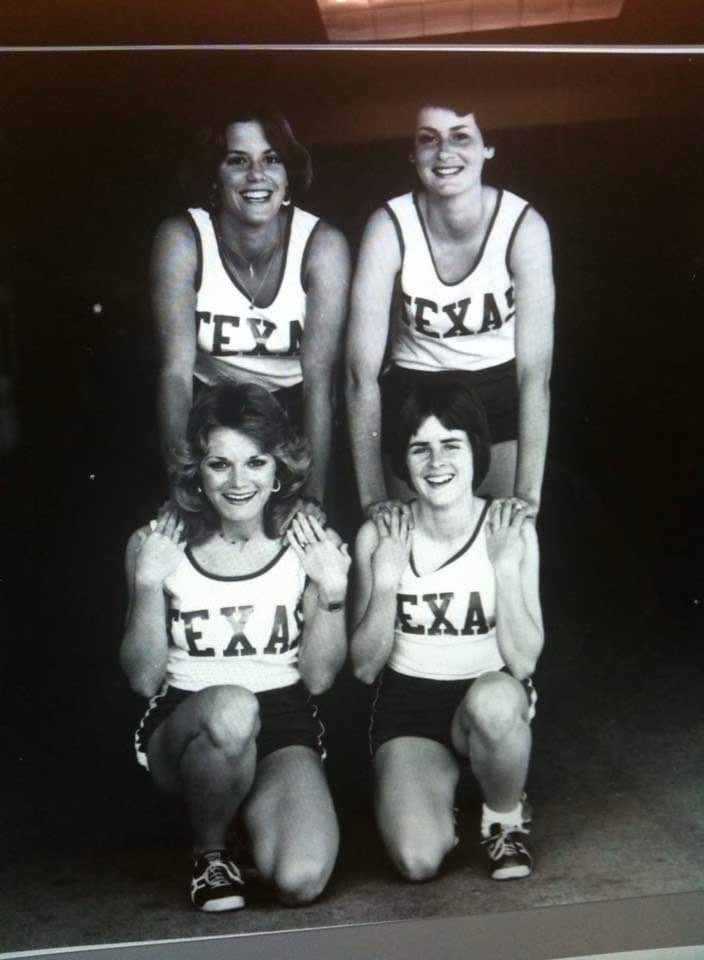
1976- Standing, Sue Davis Carter, Carol Sheffield Lapin, sitting, Susan Abernathy Murphy, Julia Campbell 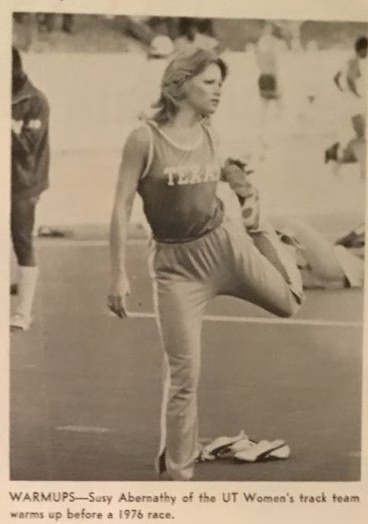
1976 Susan Abernathy warming up 
Husband and wife- Mike Murphy basketball and Susan Abernathy Murphy