1976: A SEASON IN DISARRAY By Larry Carlson
It has been fifty years. Nineteen-seventy-six marked America’s bicentennial. Americans celebrated star-spangled events across the nation. Culturally, Disco, stepping high atop platform shoes, was king. Rocky Balboa lost the heavyweight fight of the year but he captured Hollywood. And the nation’s imagination. So did a former UT coed with an enchanting mane of hair. Her name was Farrah Fawcett and she was every dude’s angel, not just Charlie’s. America’s greatest, most celebrated male athlete was Olympian Bruce Jenner.
A toothy peanut farmer would win the presidential election.
All in all, a cray year.
And, at the University of Texas, the one constant school that focused on changing the world — Longhorn football greatness during head coach Darrell Royal’s first 19 years at Texas —persistented consistent inconsistency that would lead to seismic change.
For those legions of fans who followed UT football, and for the remarkably skilled and talented athletes who devoted countless hours and long years to practice and play it, the season was a strange, perplexing and disappointing exercise.
Some who watched have forgotten. Others still wonder what went wrong and why. Among those who played who livelate 60sheir early 70sand early-70s, there is a mixture of insight, acceptance and wounds — physical and emotional — that in some cases haven’t healed. And there is still pride and joy.
For this article, I contacted and received invaluable interviews and cooperation from three senior starters — LB Rick Fenlaw, LB Bill Hamilton and TE Joe Samford –from ’76.
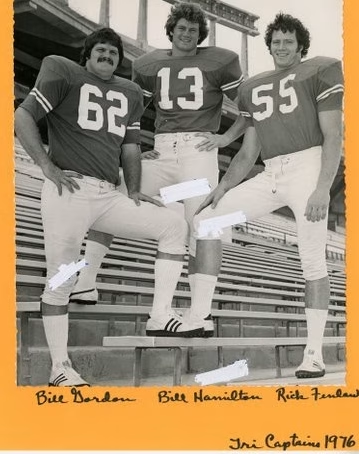
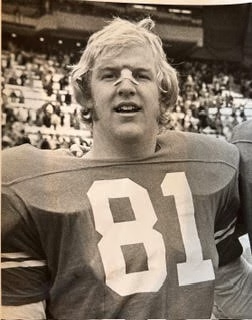
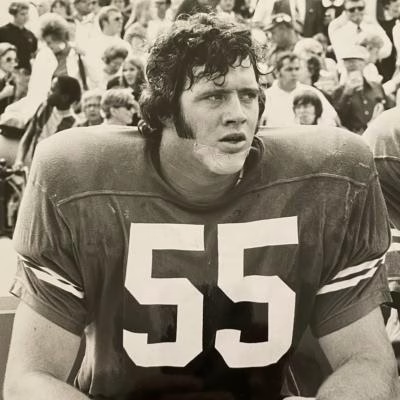

Let’s start with this. When I spoke individually with Fenlaw, Hamilton and Samford, each one recalled eager anticipation for their senior season, largely because of the wealth of bona fide, proven hosses in the Texas stable.
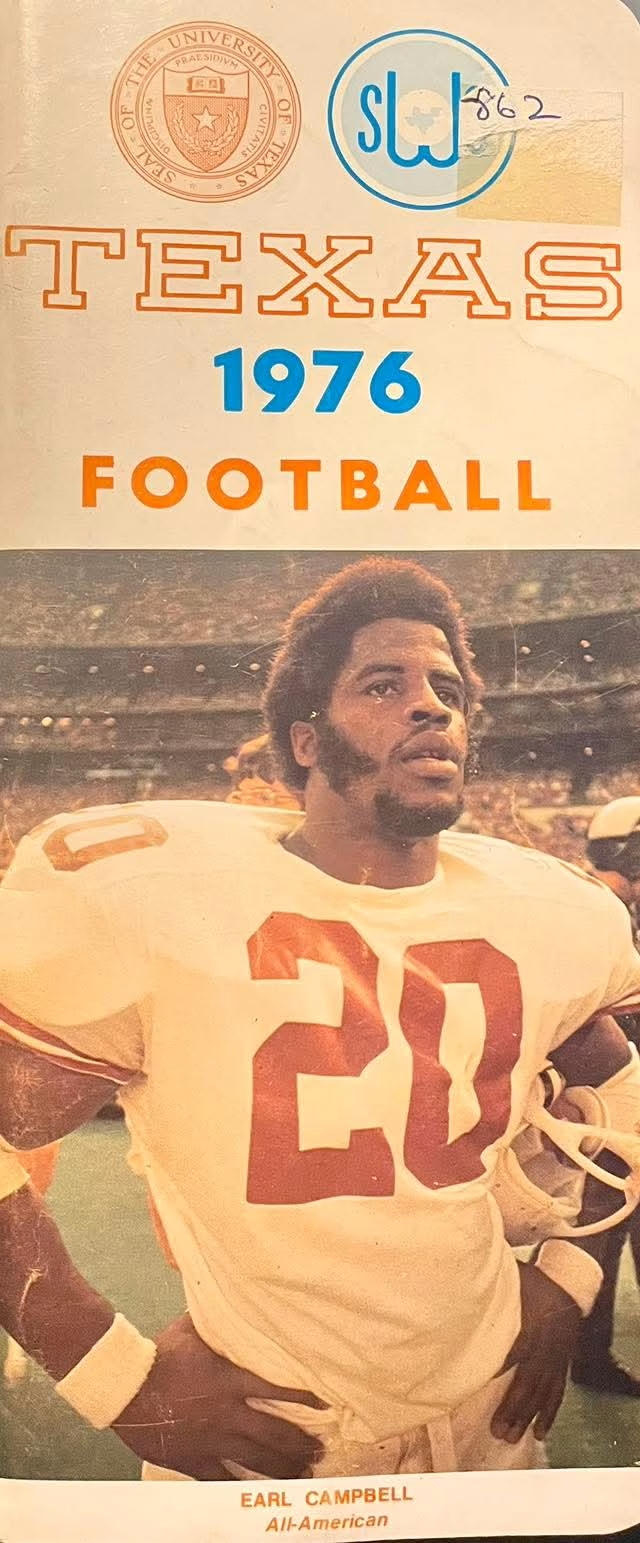
The riches began with Earl Campbell, the peerless fullback who had bulled and sped to more than 2,000 yards on the ground in his first two seasons.
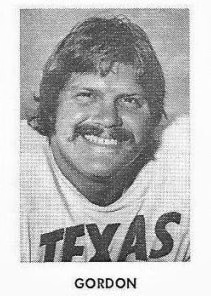
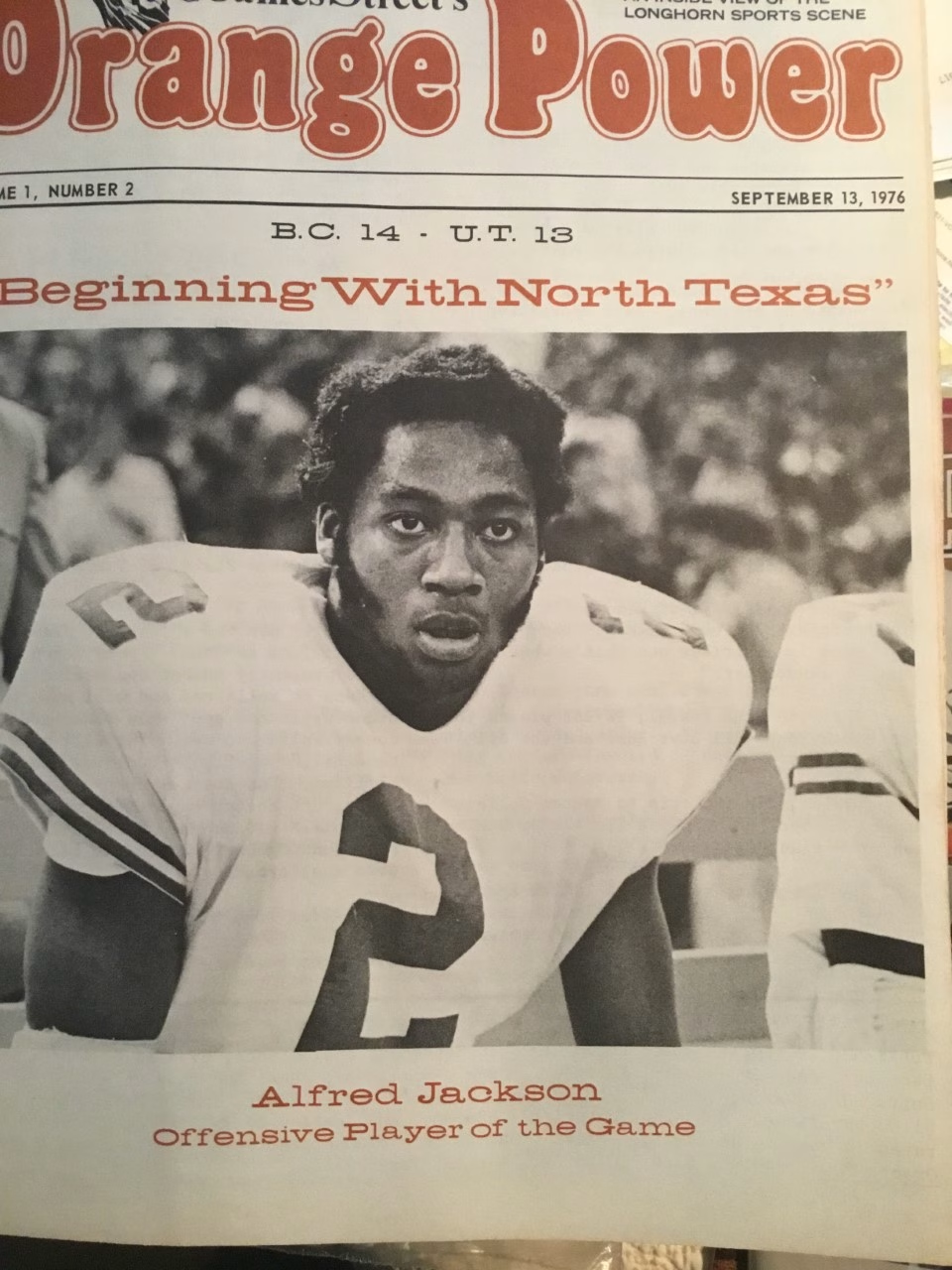
Other weapons on offense included halfbacks Jimmy Walker, Gralyn Wyatt, Johnny “Ham” Jones and Ivey Suber plus wideout Alfred Jackson. Blocking was stout, with captain Billy Gordon at center, along with Samford at tight end plus veteran interior linemen George James, Charlie Wilcox, Rick Ingraham and David Studdard. Prized punter/kicker Russell Erxleben, fresh off a UT record 55-yard field goal in the 38-21, come-from-behind win over Colorado in the Astro-Bluebonnet Bowl, was back as a sophomore. One highly anticipated freshman impact player, speedster Johnny “Lam” Jones, was fresh off earning Olympic gold in Montreal. That gave the 18-year-old Lampasas High grad “rock star” status, according to Samford. But Jones didn’t play the part. “I remember Johnny Lam as just being a really nice guy. I remember just watching him jog around the track or on the field,” Samford says. “He ran so effortlessly and — frankly — pretty. Just kind of glided around.”




It was a grand time to be a Longhorn in Austin of old. Still a college town. The Bucket topped the list for beer, girls and tunes. Scholz’s was always fun, especially on the first Wednesday of each month, with Bored Martyrs. Taco Flats, Jake’s, Louie’s and the Tavern (You’re never too far from 12th and Lamar) were dependable stops.
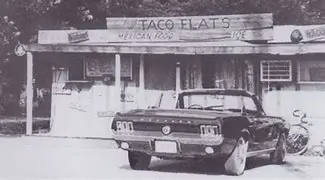
Music halls such as the Broken Spoke, Armadillo World Headquarters, Soap Creek Saloon and dozens more blared a variety of sounds for a variety of patrons.
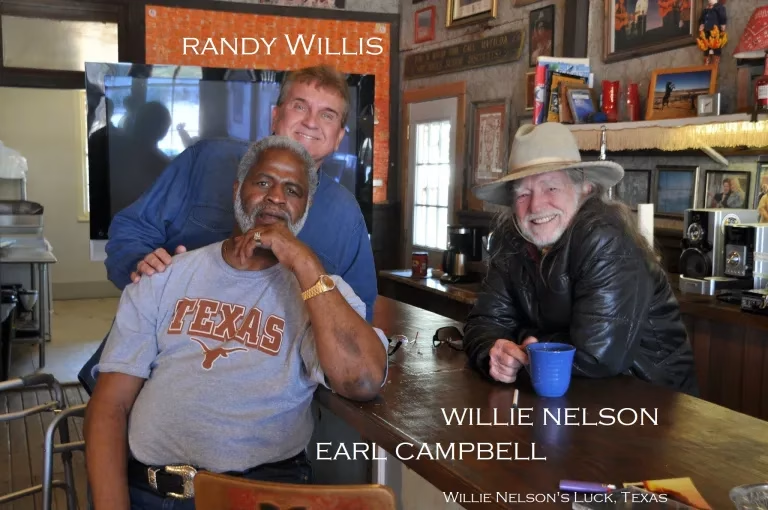
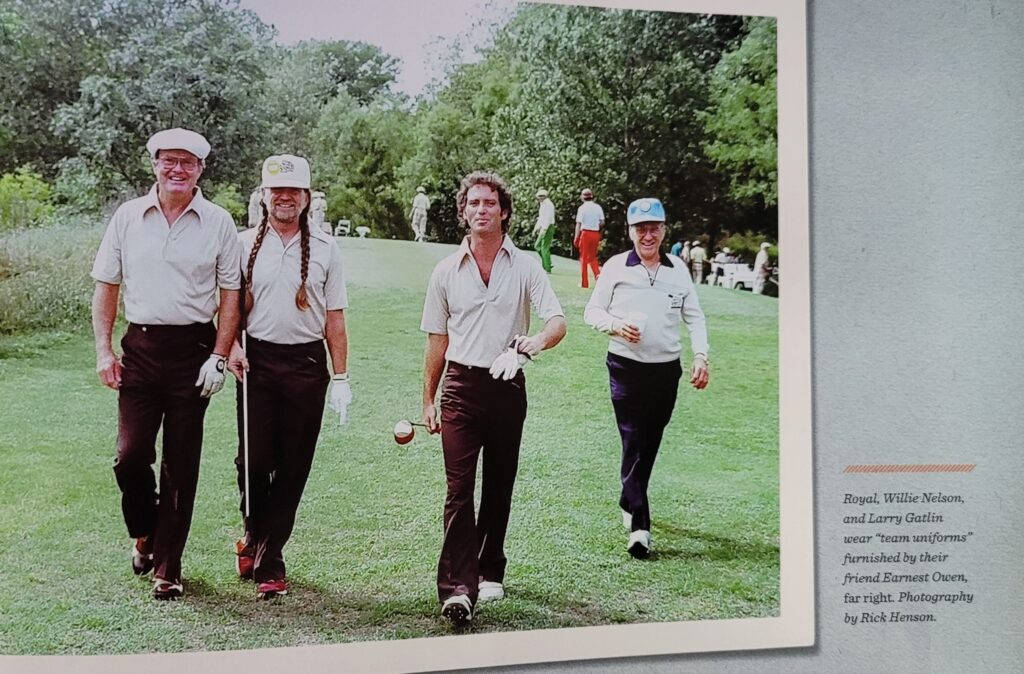
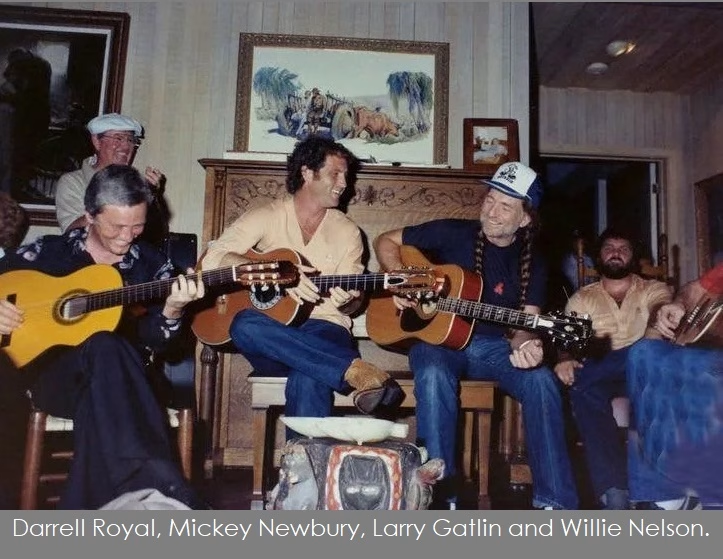
Heck, you could see stars, plenty of ’em, just hanging around Coach Royal: Larry Gatlin, Charlie Pride, Charlie Rich, Johnny Bush and Johnny Rodriguez. Plus that guy named Willie and the actor, James Garner.
Back to football, though. The defense was loaded for bear. The top four tacklers from ’75 — linebackers Fenlaw, Lionell Johnson, Hamilton and All-SWC DT Brad Shearer — all returned after having been in on well over 100 tackles each. Recalls Hamilton, another captain along with Fenlaw, “We had future pro players (he rattles off the names of Brad Shearer, Bill Acker, Steve McMichael, Rick Fenlaw, Glenn Blackwood, Rick Burleson, Ricky Churchman)…to name a few. We also had guys like Paul Jette, Mike Hartinger, Steve Straty (Hamilton described the fireplug playmaker as having “a heart as big as Texas), Robert and Allen Rickman, Morgan Copeland, Jim Gresham…who all had a lot of playing experience and started at various times.”

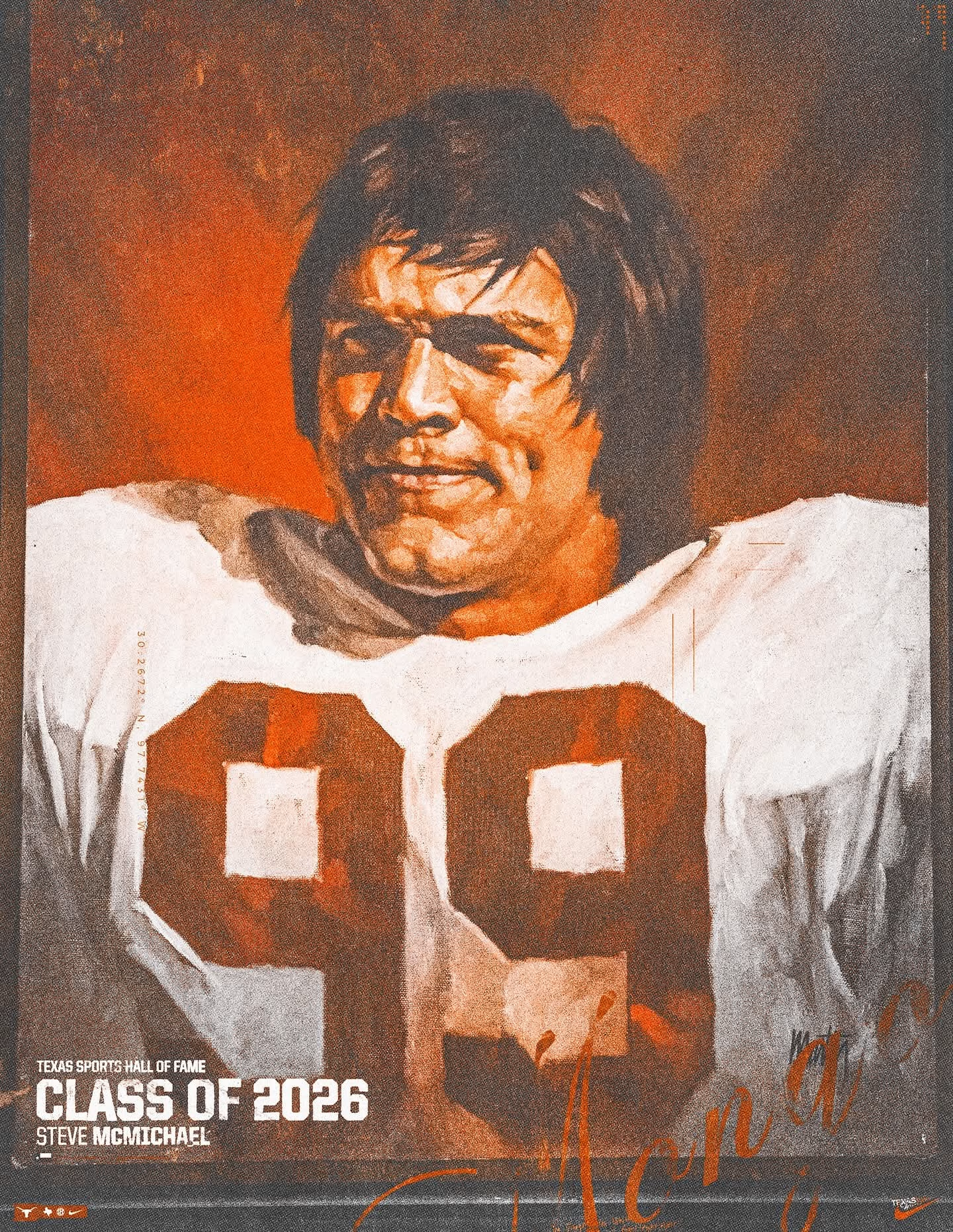
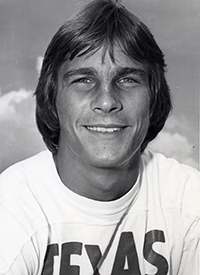
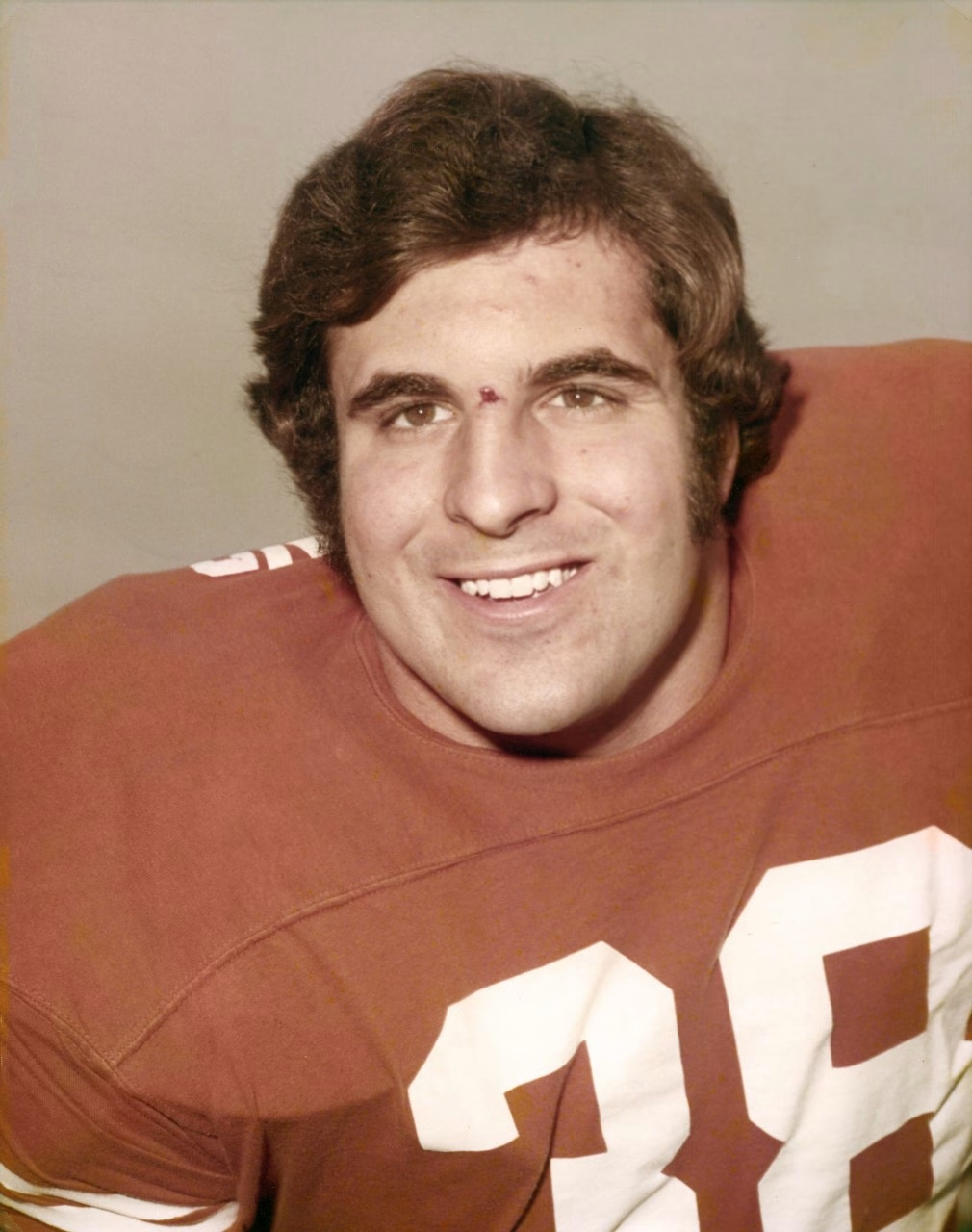
“That’s a lot of talent, and we were obviously thinking we’d be immensely successful,” Hamilton continued. “Unfortunately, we did not have an experienced wishbone quarterback, which was crucial.”
Hold on to that thought.
Despite what seemed like an obvious handicap in the signal calling position, the Southwest Conference beat writers picked Texas, 10-2 and conference co-champs a year ago, to win the ’76 title. It was not the first, nor hardly the last time the sports media members were collectively fooled.
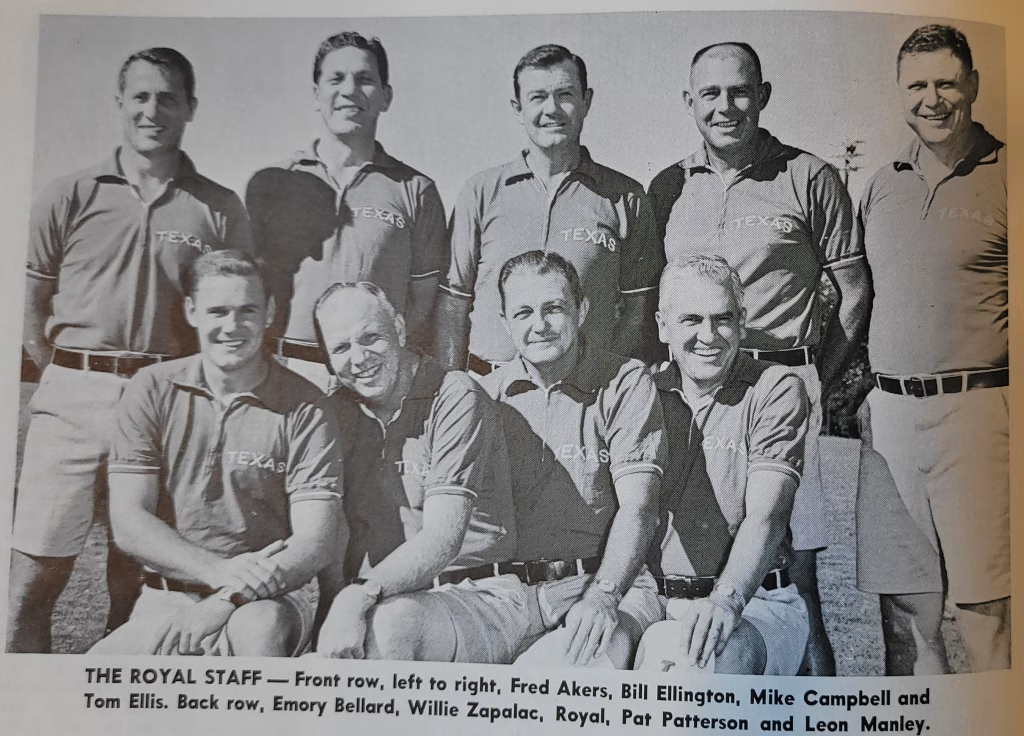
At least one other factor besides green-ness at QB, was impacting the offensive side of the ball. DKR had long relied on remarkable continuity with his coaching staff at UT. But that had eroded after ’74. O-line gurus Leon Manley (to Wyoming with Fred Akers) and Willie Zapalac (the NFL’s St. Louis Cardinals) had departed by ’76 and Spike Dykes, a favorite of the players, had been moved to defense. Don Breaux would be in his second season as an offensive coordinator for Royal. He carried impressive credentials in the passing game from stints at Arkansas and Florida and would ultimately work with Joe Gibbs to earn three Super Bowl titles with the Washington Redskins.
Skip forward now, from high hopes of August all the way to the year’s final month, December. As they had famously and victoriously done in 1969 and 1970, the Longhorns would close their regular season against Arkansas. But back in ’69 and ’70, the Horns entered and exited the game unbeaten and ranked number one. The ’76 squad was on a different path. Lost.
The Longhorns would come into the December night game at a low ebb. Lowest of all lows for Longhorn players and fans is a loss to aggy. From 1957-1974, Darrell Royal’s Texas teams beat A&M 17 times and lost once. But in ’75, a second-ranked aggy team had bested a UT unit without its All-America QB, Marty Akins. Now,one week before the matchup against Arkansas, again without an experienced quarterback and this time without Earl Campbell, UT gifted A&M seven fumbles and lost, 20-3. The last time the Ags had won two straight in the series dated to1909, and A&M had won in Austin only once previously since 1922.
The Thanksgiving week loss sank Longhorn football below sea level. With only the Razorback faceoff remaining, UT had no chance for a winning season. That dark scenario of tragedy had never been staged during DKR’s magnificent two-decade run on the Forty Acres. The preseason box office favorite was now wallowing in the mire…four wins, five losses and a tie. No Royal team at Texas had ever been defeated five times, no Royal outfit had failed to field a winning record. What in the hell had gone wrong? And why, dammit?
Could Columbo, one of TV’s ace sleuths of the day, have solved the riddle wrapped inside an enigma? Nah, lose the trenchcoat and yankee-ness. Maybe laid-back Jim Rockford should have been consulted at his rusting seaside mobile home at 29 Cove Road. After all, Rockford’s real-life alter ego, James Garner, an OU grad like DKR, was a friend of Royal’s and made semi-regular visits to Austin to visit his pal.
The clues pointed fingers of blame at Royal and Breaux, evidence dating back to the closing curtain of ’75. Akins, DKR’s lone three-year wishbone starter at QB, was gone.
A quick flashback: Texas had signed Ted Constanzo, an all-state QB from San Antonio in February ’75. A good passer, not known for running ability, Constanzo was forced into the role of second-team QB as a freshman because veteran Mike Presley elected to give up on his battle with Marty Akins for the starter’s reins and left the team before the ’75 season to focus on graduation. Presley’s departure might have cost the Horns an outright conference title. Akins, running and pitching his way to status as the first wishbone QB to earn All-America status, injured a knee early against TCU in late November. Constanzo came on in relief and Texas beat the Frogs, 27-11.
When 9-1 Texas, ranked fifth, journeyed to College Station to duel with the unbeaten, second-ranked Aggies, Akins was determined to give it a go against a stout, talented A&M defense. The Ags quickly went for the bad knee and Marty was carried off the field. Things would have been interesting with a healthy All-American at QB for Texas. Or with Presley. But Constanzo’s inexperience and lack of speed were red meat for the Farmers. Texas mustered but six first downs and big Earl got only 15 touches for 40 yards. Pressured heavily, Constanzo completed just 3 of 8 passes and had three swiped as A&M won, 20-10. Royal was now 17-2 versus the Ags. The maroons would lose big at Arkansas the following week, splitting the SWC crown between Texas, the Razorbacks and A&M. But Texas without Akins at the wheel hadn’t been dangerous.
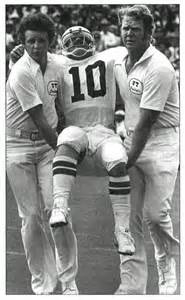
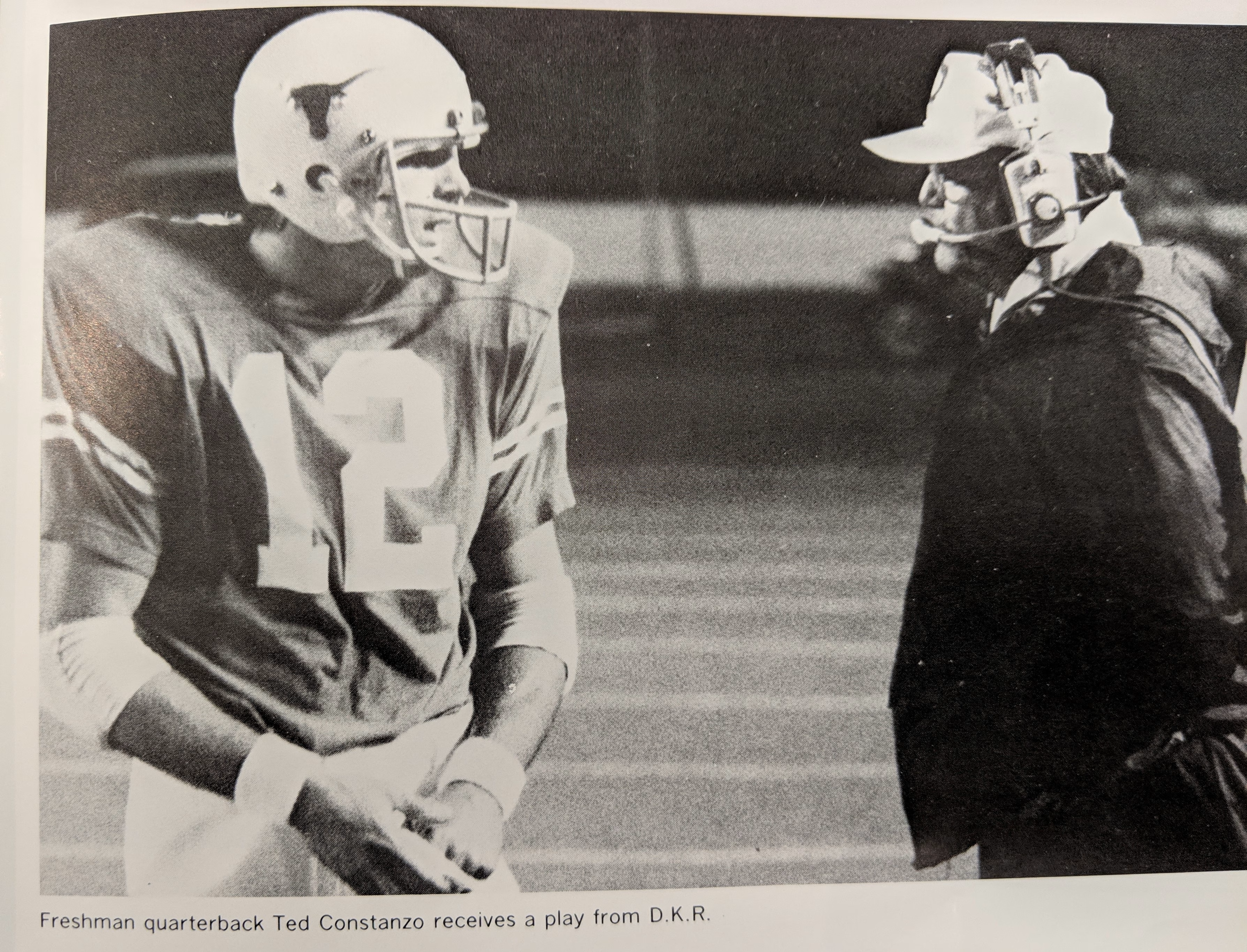

So Texas entered spring ’76 with a muddy picture at quarterback. The wishbone would return for its ninth year at the Forty Acres. But who would operate things? It wasn’t as simple as just handing off to the Tyler Rose and asking the solid front wall to mow down defenders and clear his path.
A walk-on from San Antonio’s Highlands High, Mike Cordaro, apparently impressed Breaux with a tight spiral as he ran the attack team. He and Constanzo competed throughout spring and summer. Third-year man Randy McEachern fell out of the race with a knee injury requiring extensive surgery.
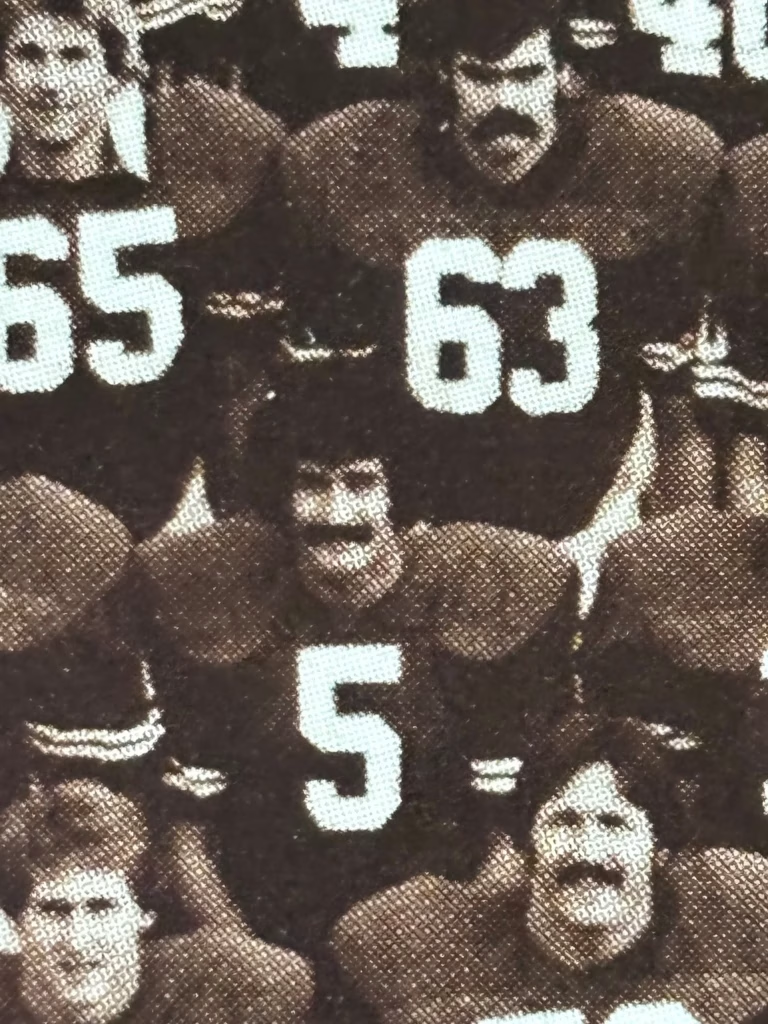
Royal was dismayed with the offense in spring. A heavier Earl Campbell pulled a hamstring and missed a lot of work. DKR told reporters that, except for the spring of ’65, this was the “sorriest” spring ball he’d seen as UT coach. “And you know how that one (a 6-4, bowl-less season) turned out,” he warned.
But hold everything. Let’s get with the obvious. What were Royal and Breaux thinking? Sure, hindsight is easy. But neither of the top two quarterbacks was a fit. That was apparent.
Insiders were wondering at the time. Three freshmen QB candidates would not get even a look-see until August. But maybe licensed private investigator Jim Rockford coud have, would have — for his $200 per day cost plus expenses — pointed out what was under the coaches’ noses. Maybe he could have just reminded DKR of his own dazzling history of resourcefulness in shuffling the deck in the QB room.
It wasn’t like this was gonna be his first rodeo of pondering-osa. Eight years earlier, Royal had made the excruciating decision to pull super-athlete SuperBill Bradley in the second game of the wishbone’s debut in ’68. Former seventh-stringer James Street was thrust into a mess. It was the right call. For Royal, for Street, for Bradley (a future multi-year Pro Bowl safety in Philly), for the Longhorns. Street went 20-0, Texas won two natties and six straight SWC championships. Darrell’s rep at the top of college ball’s coaching royalty was never glossier.
And just four years earlier, after wishbone wizard QBs Eddie Phillips and Donnie Wigginton finished their eligibility with the ’71 season, Royal decided to rob his ’72 defense of All-SWC DB Alan Lowry. To Royal it seemed natural to transplant the senior-to-be on offense, at QB, where he had excelled in high school at Irving. Lowry, a two-sport hoss, skipped baseball and missed yet another trip to Omaha. He worked on the intricacies of the ‘bone. The results? Well, damn…Lowry tossed only one TD pass that fall. But he rang up eleven touchdowns while rushing for more than 700 yards, setting a UT QB mark that would be eclipsed by Akins in ’75. Aided greatly by blasts up the middle by soph FB Roosevelt Leaks, Lowry led Texas to its fifth consecutive SWC championship, then was Cotton Bowl MVP as UT beat Bama and “The Bear.” Not bad. The Lowry-less secondary? Hell, they did just fine, thank you very much.
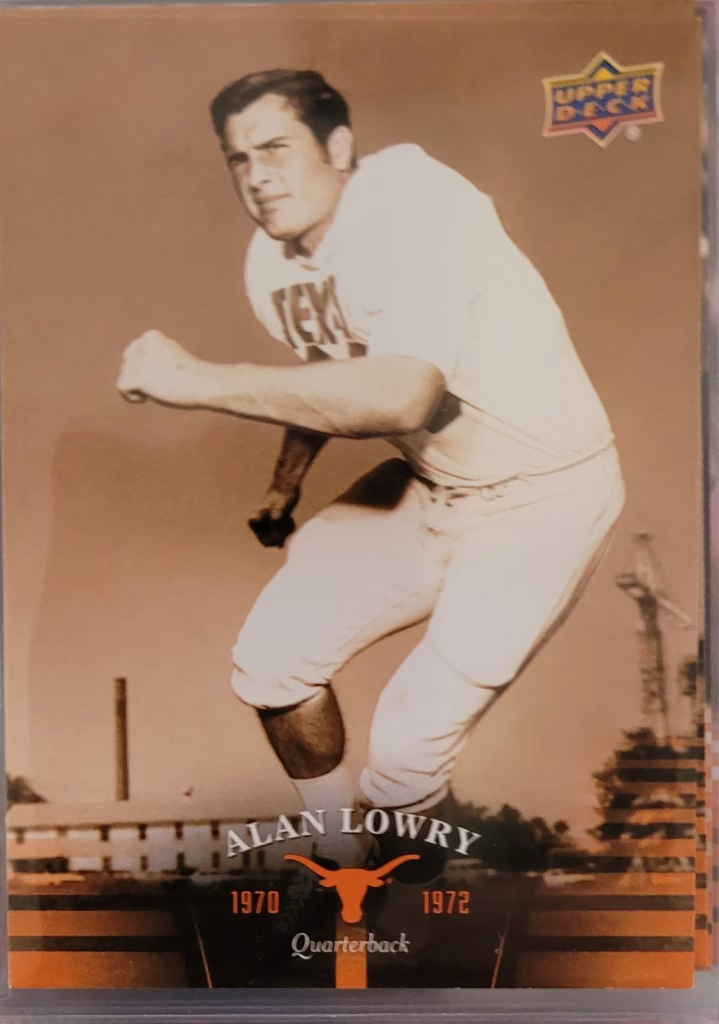
So, in winter and spring of ’76, what were Royal and Breaux waiting on? The coaches certainly knew, as did the veteran players, that Texas had two very accomplished senior defensive starters who came to the Forty Acres with excellent QB credentials. One was Paul Jette, the “covered ’em like white on rice” DB. He had been a hotshot QB/DB for his dad at Devine, just southwest of San Antonio. (Note: UT also had a soph-to-be who had been a success as a king-sized QB for the Seguin Matadors. His name was Russell Erxleben and the very confident punter-kicker made it known that he was not happy about no consideration for the QB lottery. But Erxleben was simply too valuable as a two-pronged weapon to put at risk pn every offensive snap).
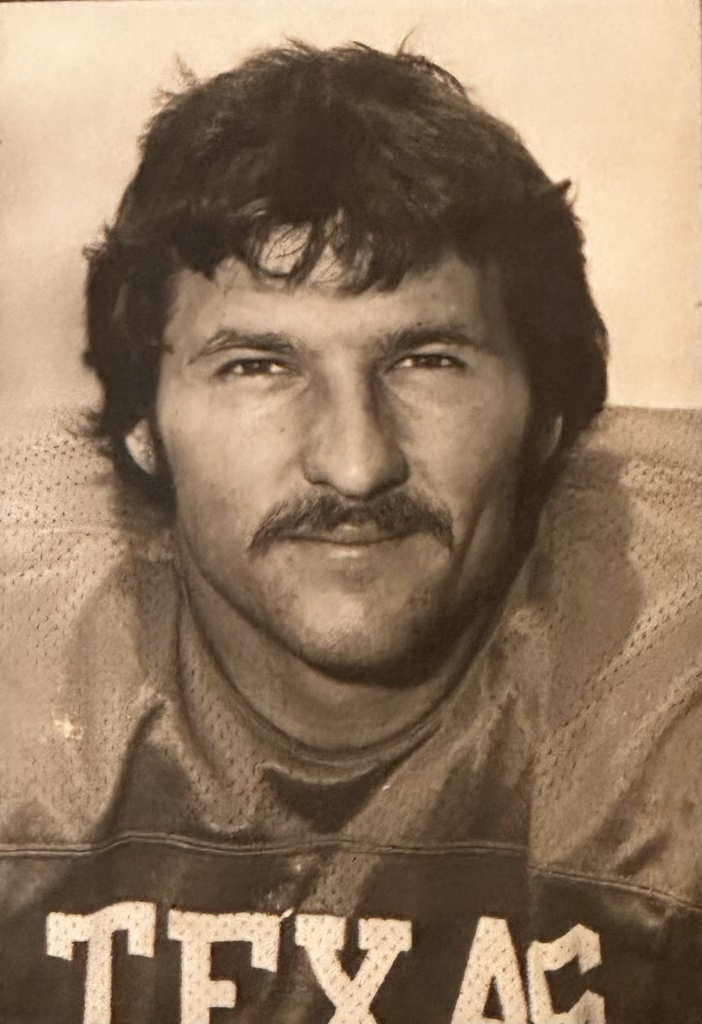
The rational choice, at least to this writer and more than a few other observers at the time, was the aforementioned Bill Hamilton. Yes, he was a stud linebacker with three years experience. But know this: Hamilton, at 6-3, 210, towered over Jette (and Lowry, from ’72), and came to Texas as a much-touted QB. He hailed from Las Cruces, NM, the jewel of the Mesilla Valley just a long bomb from the badlands of El Paso. Texas assistant David McWilliams had almost earned New Mexico residency while bird-dogging Hamilton for three years. Bill didn’t run the ‘bone for his hometown “Bulldawgs,” instead running what he describes as a balanced “50-50” attack.
He had the goods for the QB job. So it was that it was Bill Hamilton directing the UT freshman unit against the varsity in September ’73. All was going as planned until star linebacker Wade Johnston landed on one of Bill’s wrists. Just like that, taped up with a semi-cast a day later, Hamilton was suddenly in residency as a linebacker against Baylor’s frosh. “I guess I made a million tackles or something,” he laughed when I phoned him. He was quickly notified that he’d be traveling to Miami for the varsity’s opener, as a linebacker. Bill would excel as a ‘backer that freshman season, another championship year. He would see some reps at QB the ensuing spring but…did the wrist ever really heal? Besides, Marty Akins and Mike Presley formed a damn good 1-2 punch at QB. And Hamilton, a baller at linebacker, would just get better and better in ’74 and ’75.
There are no indications that Royal seriously considered a reprise of the ’72 experiment that launched Lowry. “If the coaches did (discuss the possibility), they never talked about it openly,” Fenlaw says.
” You would’ve had built-in leadership,” Samford told me, vouching for Hamilton and/or Jette as man under. “You had guys who already understood and appreciated contact…that you’re gonna get hit (at QB) when you have the ball and when you don’t.”
I asked Hamilton if he thought about it, about playing quarterback in ’76 when his team had no clear-cut bell-cow QB in spring or summer.
“It crossed my mind a few times,” the Doctor said, good-naturedly. But he figured the coaches valued his presence at LB more than they mulled the potential at QB.
Fenlaw has no doubts about how Hamilton’s hypothetical quarterbackin’ days might have evolved. “Billy’s such a good athlete and competitor,” Fenlaw states. “I promise you he would’ve done well, he would’ve figured it out somehow. I think he would have been a great quarterback.”
Samford can testify in the case for Hamilton for quarterback. He remembers playing catch with him. “The guy had an arm,” Joe says, easing out the words in his Nacogdoches drawl. “There’s no doubt that Bill would’ve been exceptional as the logical transitional piece,” Samford concludes. And as for Jette: “I remember talking to Paul about it (converting to QB). He would’ve done it in a heartbeat.”
A big part of Darrell Royal’s legacy is a reputation as a gambler and innovator, when he had to be. Sure, he was known for a conservative nature in his first decade at Texas, utilizing the “three yards and a cloud of dust” grind-it-out offenses. Yes, he had often disdained the aerial aspects, saying that “three things can happen when you throw the football…and two of ’em are bad.”
But DKR had gone all in on the revolutionary wishbone formation in ’68, following three straight 6-4 seasons that had boosters many miles beyond restless and critics saying the game had passed him by.
He had also converted the biggest gamble of his career. It was an illogical fourth-and-three, “53 veer pass,” that defied the odds in ’69’s “Big Shootout” and stole a national championship away from Arkansas. He had also rolled the dice with all UT’s chips on the felt to make the aforementioned bets on James Street, then Alan Lowry.
Samford recalls, too, the less publicized venture from his freshman season (’73) when swift and svelte Jay Arnold, a fine DE at 190 pounds, made the jaw-dropping transition to defensive back. Arnold led the SWC in interceptions and made all-conference.
So what was DKR waiting for in ’76, in a quandary at quarterback?
Wasn’t it time to be aggressive? Hamilton? Jette? One of the freshmen, come August?
Had the greatest Longhorn coach lost his “joie de vivre” for the game? Or his ability to make tough choices? He seemed to be standing on eleven at the blackjack table.
Was he risk averse or was this actually his biggest gamble of all, betting the entire season on a shaky quarterback situation? What would the next card be?
Choices can be tough. Napoleon even waxed philosophical on the topic.
“Nothing is more difficult, and therefore more precious, than to be able to decide.”
Thus spake the Emperor.
“I just kept waiting for that move,” Joe Samford told me.
Royal never budged.
In essence, the football season would be spelled out by the season opener, then the extra-dramatic Texas-OU battle a month later, Thanksgiving week’s aggy game and the strange season-and-era ending game played way down the calendar
in December.
When August drills melted into September prep, the darkhorse, Cordaro, emerged with the QB1 role, first time a walk-on QB started for Royal. Earl Campbell was practicing gingerly, the hammy still bothering him as the Horns opened on the road at Boston College. It was a night game on Sept. 11 in BC’s cozy stadium in Chestnut Hill.
Fifth year senior and captain Rick Fenlaw was out due to ankle ligaments damaged in two-a-days plus what Hamilton calls a “terrible blood vessel injury to his right arm.”
Interviewed last week, Fenlaw laughed at his buddy’s description and said he had ruptured or broken the bursa on an elbow and admitted “it swelled up like crazy and was bright red and blue.” But Rick had an air of John Wayne stoicism in his voice, saying, “it looked worse than it felt.”
Fenlaw had been around the block, had even seen considerable game action way back in ’72, the first season freshmen were allowed on varsity. That was the Lowry team that went 10-1 and beat Alabama in the Cotton Bowl. A veteran’s veteran now, the rangy 6-3 Amarillo product packed a stealthy punch that belied his 190 pounds. Fenlaw, picked in the NFL draft after the season, earned a UT degree in journalism but entered the oil and gas business and stayed in that field for more than four decades.
He remembers walking out for the coin toss with Hamilton and Billy Gordon. It was a nice, 68-degree New England evening. But Rick was in street clothes, and in fact, would also be sidelined in UT’s next game.
The hometeam Eagles won the toss and got the football. On their second play, a maroon-clad halfback left the visitors behind on a 74-yard touchdown run.
“Losing Rick had a lot to do with the problems we experienced against Boston College,” Hamilton says, looking back now from his home at Lake Belton. The retired orthopedic surgeon had gone on from his playing days to UT’s Medical Branch in Galveston. Then Doctor Hamilton practiced, mostly in the Temple-Waco area, for almost forty years.
But in spite of Fenlaw’s absence — Rick says his replacement, Morgan Copeland (he would be a captain in ’77) played very well — the Horns’ defense gave up only seven more points after that opening gash. Offense and special teams were more challenging for the visitors. Campbell lasted for just 5 carries and 23 yards. His replacement, freshman FB Jimmy Johnson, at least 40 pounds lighter than Earl, played well, plowing for 69 yards on 15 tries. But Texas was shut out the first half and it was only late in the game that UT got the chance to win. The Horns had fumbled six times and lost three. At about the four-minute mark, Lam Jones zipped 18 yards for a score to put Texas within a point of a tie, at 14-13. An option play for the lead was stopped.
Erxleben, who had missed just three of 13 field goal attempts as a freshman, but missed from 29 and 35 this night, got a shot at redemption when Cordaro — who himself had lost a bobble inside the BC five earlier — passed Texas, and Erxleben, into Erx’s range .
Watch the grainy video on YouTube, and you see Erxleben swing his thunderfoot into the ball on a 53-yard try….wait, wait, coax, hope…then actually fall onto his face, not his knees, in shock and disappointment. The ball had drifted left and BC players swarmed the field. The Eagles had not toppled a top ten foe since 1940. Now they had slain the mighty Longhorns.
Literary types call this foreshadowing. So, too, did the Horns’ stellar DB and return man, Raymond Clayborn. Sitting next to Kirk Bohls, the Austin American-Statesman writer, a weary RayClay offered this forecast: “It’s gonna be a long season.”
Adds Fenlaw, now: “We were all stunned.”
Soul searching was big in Austin after the Horns escaped North Texas, 17-14 and gazed into the abyss during an open week. Then the Longhorns cooked Rice for the eleventh straight year, winning 42-15 in Houston. It was time for Texas-OU. Back when the Friday night downtown Dallas crowds were beyond rowdy and loud, out by the intersection of Commerce and Akard streets. Arrests by the Dallas PD always ran into the hundreds.
Quick refresher: Royal, the former OU All-American, had won 12 of his first 14 streetfights against the ol’ alma mater, from 1957-1970. Next up, the Okies blistered Texas by a 127-40 margin for three seasons and then nipped the Horns, 16-13 and 24-17, in particularly soul-crushing verdicts. The new wiseguy and bully in the series was OU’s youngish, brash, fourth-year head coach, Barry Switzer. He supposedly had just two rules for his players on what some were calling a “bandit team.”
1. Show up on time. 2. Kick ass. It seemed to be working rather well. The Sooners ate everybody’s lunch the past two seasons, winning national titles in ’74 and ’75.
The atmosphere during game week ’76 was noxious and fiery.
Bill Hamilton well recalls the animosity between head coaches. “Coach Switzer had done some underhanded things that he later admitted in his autobiography (“Bootlegger’s Boy”) that really got Coach Royal fuming mad. And he made some comments about Coach Royal not wanting to do the hard work of recruiting, and that Coach liked to listen to too many country and western artists or pickers, like his good friend, Willie Nelson.”
Royal indeed accused OU of spying on Texas practices. He even challenged Switzer to take a lie-detector test. That challenge went unmet.
Gasoline hit the flames when Robert Heard of the Associated Press reported a comment Royal said he had intended to be off the record. The Texas coach called his Oklahoma counterparts “sorry bastards” and said he did not trust them on anything.
A sarcastic symphony of “sor-ry bas-tards” rained down on DKR from the OU half of the Cotton Bowl during warmups. The third-ranked Sooners had an unreal assortment of speed, power and more speed in the backfield. The Horns’ defensive boss, Mike Campbell, would have to have his unit, a very good one, running on highest octane. Yes, All-American Joe Washington was now in the NFL, and, according to Longhorn fans, had probably taken a pay cut, but OU featured marquee stars in Elvis Peacock, Horace Ivory and Kenny King. The starting QB, Dean Blevins — later a TV sportscaster –would forevermore be tagged by some UT boosters as “Blue Balls” Blevins because he was sidelined by a swollen testicle. His replacement, San Antonio freshman blue-chipper Thomas Lott, much, much faster but making his first start, would fill in. (Writer’s note: It was apparently the year of the San Antonio QB in college football. Not only Lott, Cordaro and Constanzo were from the Alamo City. A guy named Tommy Kramer — he had led Robert E Lee High to a state title and was destined to quarterback the Minnesota Vikings for more than a decade — would be honored as college football’s first team All-America quarterback at season’s end. And he was from Rice!)
Barry Switzer and a grim-faced Royal flanked President Gerald Ford as the three strode to midfield for the coin toss. Ford, an All-America choice at Michigan, knew something about rivalries but had to be puzzled by the lockjaw of both coaches.
There would be no postgame handshake, either.
Spoiler alert, here. It turned out to be the equivalent of one of the era’s Frazier-Ali bouts, 15 rounds of beating the hell out of each other. But this ended in a draw.
It was a game played in the proverbial phone booth, with no room for razzle dazzle.
“Both teams had young, inexperienced QB’s so handing the ball off time after time again was the route both coaching staffs took,” says tight end Joe Samford from his East Texas home. “Pound the ball and hope for an explosive play, a missed tackle.”
And Samford recalled that fumbles were plentiful. Texas juggled the ball seven times, losing four. The Okies turned over two of their four fumbles. Lott hit just two of six passes and had one picked off by Mike Hartinger. For Texas, Cordaro had three completions out of eight attempts, also losing an interception.
Overall, UT moved the ball better, grinding out ten first downs. The Longhorn “D” repeatedly smothered the OU backs, racking up an incredible eleven three-and-outs.
I asked Fenlaw if the pressure to deny OU any ground — the Sooners earned only two first downs in the game’s first 55 minutes — was intensified whenever the defense huddled as the struggle went on.
“There were no ‘win one for the Gipper’ speeches,” he says, matter of factly. “We just knew we had to stop ’em.”
Oklahoma coaches had notified game officials that Earl Campbell took a quick, premature start on many plays. And they wanted it called. The OU bench regularly erupted, multiple players screaming, pleading for a call. They got it, on five occasions, several times when Earl broke for first downs and once on a 17-yard gain. When asked about it, Samford said he had no recollection of those penalties, adding that OU could well have picked up any tendencies simply enough via game film, without spying. “It was easy for Earl or anyone to fall into that rhythm because we never changed the snap count. We always went on ‘one,’ 99 percent of the time.” History of the Red River Rivalry is at the link https://texaslsn.org/texasou-games/
Erxleben nailed a 37-yard FG just before halftime and blasted a 41-yarder home early in the fourth, and as the clock ticked away, it seemed as if UT would deny OU the end zone and earn a colossal triumph for DKR. But at the Texas 37, Longhorn halfback Ivey Suber had the ball knocked away at the 5:23 mark, just as the Horns looked to seal the win.
The exhausted Texas defenders gave way almost as grudgingly as they had all day. But ten plays got Oklahoma the touchdown that looked to propel them past their rivals.
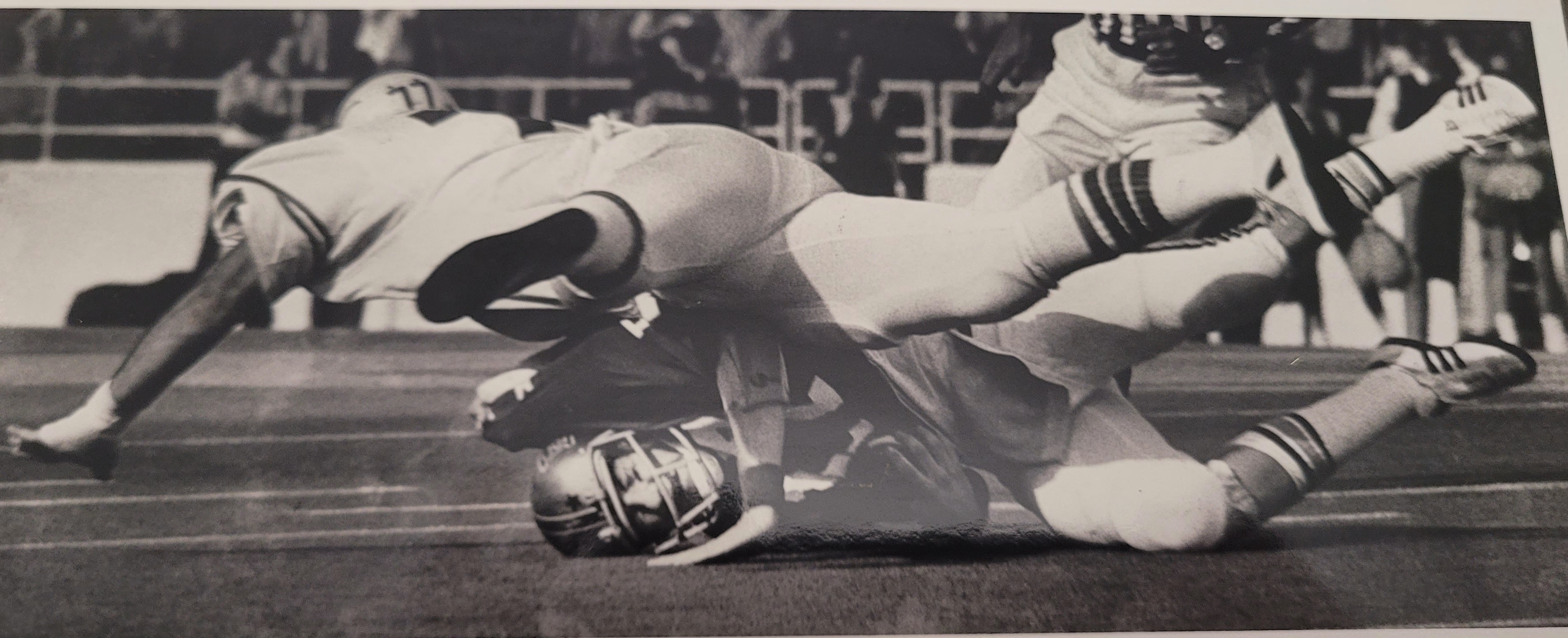
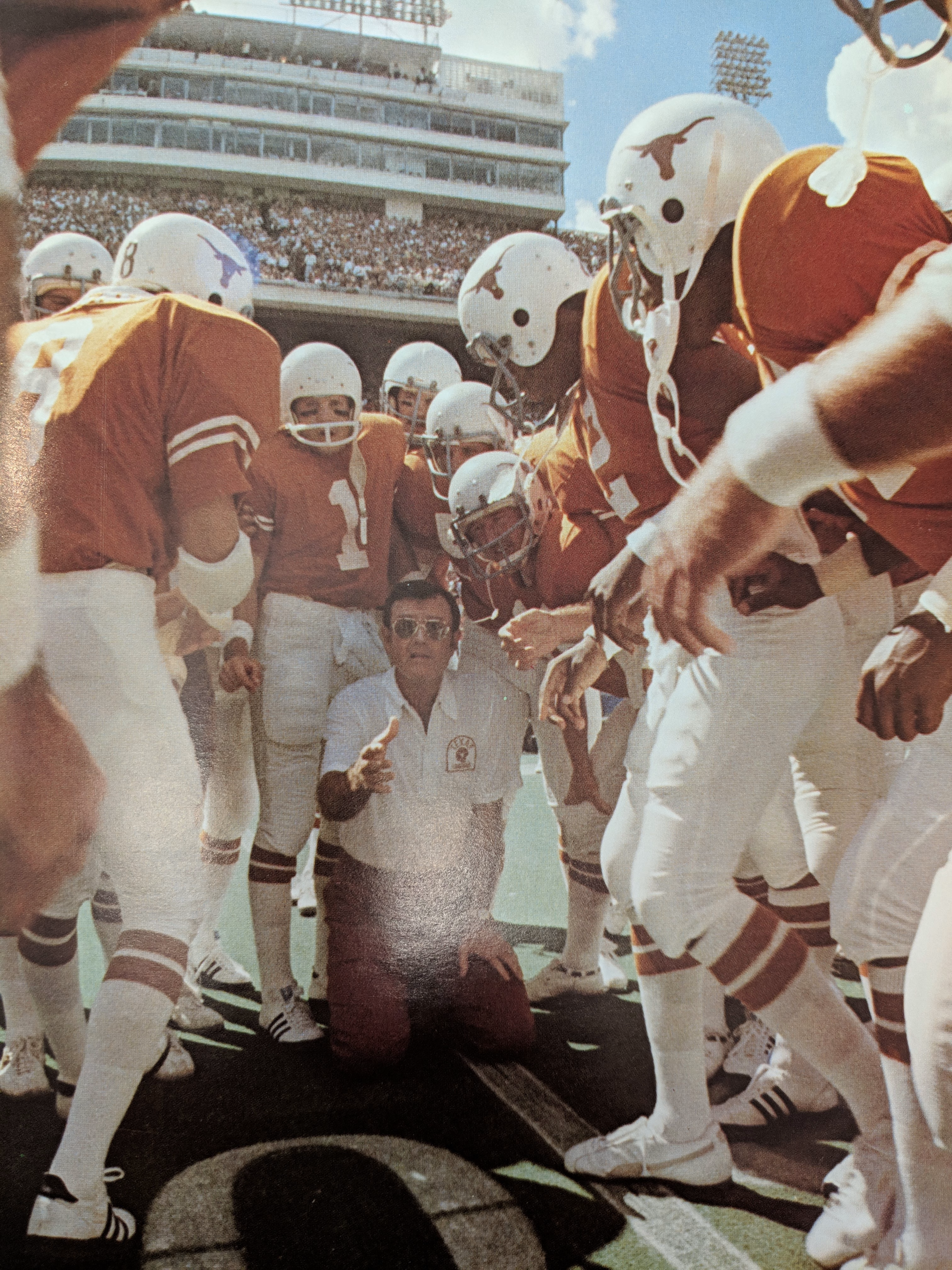


Texas would not die. Linebacker Lionell Johnson had led the Horns with a mind-boggling 23 tackles, and teammate Bill Hamilton vividly remembers what has to be the ultimate in “Texas fight,” as the Sooners prepared for the game-winner, “Lionell lines up over the center and he was talking to the snapper, saying ‘You’re going to snap it over the kicker’s head.” Then Hamilton chuckles and adds, “I don’t think it would be polite to mention what he really said.”
Like magic, Johnson’s prophesy/threat came to pass. The holder couldn’t harness the high snap, chased it down and tried to throw for a two-point conversion. He connected with UT safety Steve Collier instead. The scoreboard was stuck at 6-6.
The Horns got within range of a 61-yard field goal try but Cordaro was sacked and the distance for the kick ballooned to 70 yards. Royal decided to punt, rather than risk a loss on a fluke final play. Erxleben punted away for the ninth time. The pigskin landed in the end zone as the clock ran out. When I ran into Ted Constanzo at a Christmas party several years ago, I asked him about his memories of that strange, haunting day.
Normally, the Cotton Bowl erupts in wild, ecstatic cheers from half the crowd at the final gun. Not that day. The final play stuck most with Constanzo. “It was eerie,” Ted said. “Seeing Russell’s punt go dead, then just hearing silence.”
You could say for either team that they could have, even should have won. But it was the worst tie ever. Nobody was lifted by a three-touchdown rally in the fourth quarter. No moral victories, no victory, period. Zero celebrations.
“I just felt so bad for Coach Royal,” Fenlaw says, looking back. “It really got to him, the ‘sorry bastards’…that kind of summed it up. It got to us, too.”
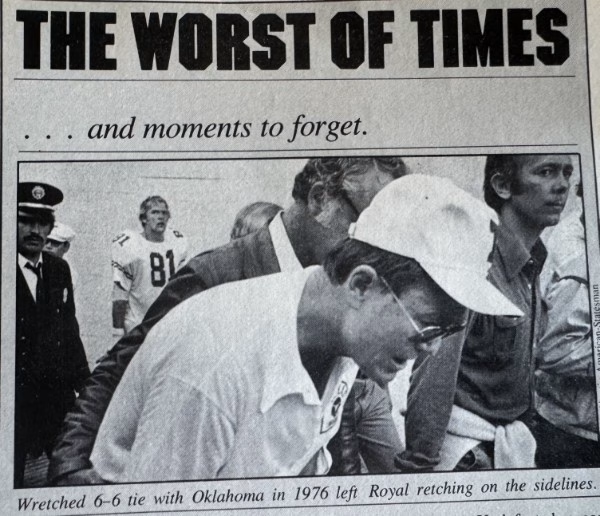
Every picture tells a story. And dozens of photographers snapped some variation of the now infamous postgame pic of DKR, bent over, retching. A Texas Monthly photo, used six years later in a retrospective article and interview with Royal, shows one version of the moment when UT’s coach heaved. In the background, a single player, Joe Samford, appears as an almost ghostly visage in white. Just two months after the tie, there would be much speculation that the photo image of Royal, distressed, captured the bitter moment in which DKR crystallized his thoughts of having had enough of coaching, of Switzer, of the new wave of recruiting and the future of college ball.
The young, first-year UT beat writer, Kirk Bohls, followed Royal later to the team bus. He flashed back to the scene this week, almost fifty full years later. “You’re retiring after the season, aren’t you?” Bohls remembers asking. “He looked at me. I was thinking of the scoop of my life,” Kirk smiles. Said DKR: “Hadn’t even thought about it,”
A week later in Austin, still no offense but still no defeat. SMU’s kicker missed an extra point and three make-able field goal tries. When the Mustangs scored and got within a point in the final minute, Clayborn’s tip of a two-point pass made for a 13-12 escape.
A headline in the Austin American-Statesman dramatically summed up the longing of the Longhorn fanbase. “Marty, Marty…Wherefore Art Thou, Marty?,” it read.
A visit to Lubbock and Constanzo at QB seemed to revitalize the Texas offense. He directed three long TD drives but the fifth-ranked Red Raiders scored last to earn a stirring, 31-28 victory.
Then the season hit another level of rock-bottom back at home before a capacity crowd against Houston. The Cougars ended Texas’ 42-game win streak with a 30-0 humiliation. It was UT’s second SWC loss and title hopes, however faint already, were dowsed. With Earl Campbell shelved all of November, the Longhorns were slogging in quicksand. Texas rushed for an all-time low 24 yards. Two weeks later in Waco, after having whipped a TCU team that would go 0-11, the run game somehow got even more puny. The Bears held UT to an embarrassing 14 yards and defeated Texas, 20-10. The TCU game had been notable in that Royal went with freshman Mark McBath at QB. The Corpus Christi teen would remain the starter now. He could move well and steer the wishbone better than the others in the QB room. The stat sheets, though, didn’t reflect that outside the TCU game, played in Fort Worth after a healthy snowfall had frosted the field but was scraped to the sidelines. The McBath move made sense but it was late. Perhaps the head coach was angling for a head start on ’77.
The home loss to A&M was predictable but humbling. Texas had previously lost to the Farmers in Austin just once since 1922. And two straight losses to A&M? Unthinkable. It hadn’t happened since before World War I, when the corpulent William Howard Taft filled the White House and did once get stuck in the bathtub.
Not having a healthy, full-speed Earl Campbell all season was a blow that cannot be over-emphasized. Other Longhorn runners were dinged up, too. And the racehorse, freshman Johnny Lam Jones, was frequently forced into a workhorse role.
“We had absolutely no consistency or continuity in our backfield,” Samford points out, citing uncertainty at quarterback and Campbell’s hamstring.
Bill Hamilton echoes the tight end. “We became almost too predictable because we couldn’t run the ball effectively without Earl,” he said. “I think it would have been difficult for any quarterback to run the wishbone without the caliber of fullback like Earl was.”
Football, it has been said a jillion times, is a game of inches. Another cliche is that injuries are part of the game. And a basic truth, not just a cliche, is that adjustments are a complex, vital component of the game.
This begs the question: Did the somewhat revamped offensive staff make enough sound adjustments as the season wore on?
To begin with, Texas went seven games with QBs not well-suited to run the ‘bone due to lack of experience and running ability before going with McBath, a good runner, in the final four games. In spite of little success through the air in ’76, it’s a fact that Constanzo and Cordaro were more adept as passers than runners. (Note: In contemparary college ball, both might likely have found new homes at other schools.) So with the ground game’s limitations borne of Campbell’s injury, why didn’t UT air it out more than the ten times per game they averaged? Texas regularly split two receivers out wide all season. Sometimes they flexed the tight end. Practices were open to the media and it was apparent that, under the tutelage of Don Breaux, the Horns did spend considerable practice time on throwing the ball. Why, when defenses stacked the box to beat down the oh so predictable runs, did the Horns stay so buttoned down? Defenses knew Texas had QB questions. They knew UT’s plan was to run, and option mis-reads by the quarterbacks became plentiful. Except for third-and-long, opponents did not respect the pass. Defenders were invited to stack the box and shut down the middle. Was doing the same thing over and over while expecting a different outcome indeed the definition of insanity? The pattern brewed up easy gameplans for enemy defenses, and made work harder for UT’s veteran line, for the backs, for the whole unit.
Bill Hamilton has an interesting twist on DKR’s axiom about the “two out of three things are bad” warning against throwing the pigskin. “But a lot of bad things can happen when you run the ball, too. You can lose yards, you can fumble. Or you could also run for positive yardage,” the “Doc” says. “So, three things can happen when you rely on running the ball, and two are bad, also.” As an aside, Hamilton jokes that it’s a good thing Coach Royal didn’t hear that, laughing “I would’ve never played a down at Texas for that heresy.”
Whatever the odds on running or passing, the Longhorn offense in ’76 found the going tough. Three-and-out became almost the norm, providing little rest for the defense. In only five games did the Horns score more than two TDs.
“As far as the talent we had at quarterback and on our offense, I think going to a more balanced offense like they did in ’77 (the “I” formation and variations under Coach Fred Akers) would have suited us much better,” Hamilton opines.
On the other side of the ball, the usually reliable and frequently outstanding “D” allowed just four opponents to exceed two touchdowns. All of those occasions came during the back end of the season when injuries and wear were factors. Bottom line: The proud Longhorn defense enabled Texas to stay in virtually every game, in spite of the offense’s low production and sputtering ways.
So the calendar flipped to December. Christmas carols and holiday tunes reigned. Congress Avenue sported its usual festive Yuletide decor. It wasn’t just Christmas in the Austin air; there were rustlings and whispers that Coach Royal might be on the verge of retirement.
When I asked Hamilton if he felt that all the trappings of the OU game perhaps sapped DKR and hurried his resignation, Bill said he agreed. “Coach Royal was so used to winning, that having a mediocre 5-5-1 season was so terrible for him to endure. The fact that he’d been coaching (at Texas) for 20 years was probably a grind,” Hamilton reasoned. “He also had some personal tragedies in his life (one of the adult children of Darrell and Edith Royal had died in a vehicular accident in ’73) that must have affected him, and all of it together must have worn him down.”
“I think we all knew that something seemed off about Coach Royal ever since the OU game,” Samford says. “He just seemed different. To me at least. Were the players all wringing their hands and and whining about it together? I’d say ‘no.’ But I can tell you it was in our heads.”
When the curtain-closer, the career swansong for the seniors arrived, it was a pleasant night, 59 degrees in The Capitol City. But maybe there was an aura of something different going on, a signal to the end of an era. Samford says he recalls thinking the lighting was weird, that the setting was a tad strange. It was a nationally televised game, Keith Jackson at the mic.
Texas, Earl suited up and seemingly in knock-on-wood good health, was rocking. Because of the Earl threat to Arkansas, McBath was killing it on keepers. Texas scored — at least a little — in each of the first three quarters and led the Porkers, 13-6 going into the season’s final quarter.
Then Erxleben hit his third field goal of the evening and Texas had breathing room.
Somewhere along the way, the clock misfired and lost five or six minutes of time. Royal and Frank Broyles, longtime best buds, let it go.
The Texas defense was in control, paced by Fenlaw who led the Horns with 13 total tackles, leading the way in his final UT game. Campbell had 131 yards, the equal of Arkansas’s total. McBath — with 118 rushing yards — ran in for a TD that increased the burnt orange’s lead to 22-6, but the Razorbacks answered. So, too, did Texas. Earl bashed in for another score and things were settled at 29-12, Longhorns. A jubilant Fenlaw even did a little country jig for ABC’s sideline cameras, and it was shown many times, years later, when the Longhorn Network replayed the game. “I’ve had so many people call up, laughing,” Fenlaw relates, laughing himself. “I was just so happy we were beating Arkansas.”
Samford, too, has a humorous story as a result of the heavy rotation of that game on Longhorn Network. Years after it all went down, Joe noticed the introduction of the offense on the telecast. Keith Jackson had no qualms with telling the audience that Jimmy Walker was from Newton or that McBath was a Corpus Christi guy. But Samford noticed that the famed announcer got shy with his hometown. “He didn’t try ‘Nacogdoches,'” Samford chuckles. “He just said, ‘Joe Samford…tight end.'”
Sensing the magnitude of the moment, of the victory, Texas players gave Royal a ride off the field. He and Broyles, golf competitors for decades, sank their 18th hole putts, then told their players they were stepping down.
Talking to the media, Royal didn’t clarify much. “This season had nothing to do with my decision to quit coaching,” he stated. “I don’t think I’m too old to get the job done. But I became a head coach when I was 29 years old and I’ve used up a lot of ammunition.”
Darrell K Royal had “set down his bucket” in his words, on his terms. He was 52.
His retirement at that age is difficult to reckon with in retrospect. For comparison, Royal’s pal Bear Bryant left the game at 69. Nick Saban was 72 when he walked away in Tuscaloosa. Bobby Bowden was 80 and Joe Paterno was 85.
But it is impossible to walk in another’s shoes.
The UT senior players of ’76 had experienced so many good, great times at the Forty Acres. The final season was not easy for them, for any team member, to absorb.
But asked about his reflections, Joe Samford recalls watching Earl Campbell block an Arkansas punt as a freshman and marvels at a 300-yard game from the great Roosevelt Leaks. “Just too many great memories to try and list,” Joe sums up.
“I cherish the camaraderie between the players, coaches, fans, benefactors, clergy, all of the faculty, the media and the close relationships we had with each other,” a grateful Hamilton wrote to me “It was a magical time for most of us, and I treasure it as one of the most consequential periods of my life.”
I’ll give the last word to Rick Fenlaw, who was going to make the St. Louis Cardinals NFL team in ’77 but wrecked a knee on special teams in exhibition game number FIVE. Yes, the pros used to do that. But one particular thing Rick said in our 45-minute phone chat, mostly filled with mirthful laughter, was his response when asked to look back at that epic Texas-OU game of his senior season for a lasting reflection.
Said Fenlaw, evenly, “I wish we could go back and do it again.”
(TLSN’s Larry Carlson is a member of the Football Writers Association of America. He teaches sports media at Texas State University and believes the annual Texas-OU football game is by far the greatest spectacle in the world of sports.)
In A Nutshell: The ’76 UT Season
By Larry Carlson
Boston College 14 Texas 13
Stud kicker Russell Erxleben set records and missed only three field goal attempts as a freshman in ’75. On this cool night in Chestnut Hill, MA, he missed all three of his shots, from 29, 35, and on the game’s final play, from 53. Texas lost three fumbles in the first start for walk-on QB Mike Cordaro. Earl Campbell played only briefly before exiting because of a hamstring that had been tender since spring.
It was BC’s first win over a top ten team since 1940. Linebacker Rick Fenlaw, a captain along with LB Bill Hamilton and C Billy Gordon wore street clothes for the coin toss, out with an ankle injury. Recalling the flight home, he says simply, “We were all stunned.”
Texas 17 North Texas 14
Disbelief from the previous week turned to outrage among UT fans. The now 19th-ranked Horns needed a second half comeback to survive the Mean Green. That, in spite of 203 yards on 32 pops from a limping Campbell. After trailing 7-3 at half, the Horns scored two third-quarter TDs. One came just after Earl’s longest run in a UT uniform. The romp was dubbed, “longest college football run by a one-legged man.” Big number 20 limped 83 yards before being downed at the four. His performance made the difference between Texas being 1-1 instead of 0-2 Two weeks, two touchdowns per game for UT.
Texas 42 Rice 15
An open week had helped, perhaps. And playing the Owls was uaually a tonic. Played in Houston, this was the eleventh straight year for Texas to beat Rice. The Owls’ All-America QB, Tommy Kramer, threw for 397 yards but the yardage did little damage. Quarterbacks Cordaro and Ted Constanzo completed 9 of 15, but with two picks, and combined for three short TD runs, as the Steers cruised in their SWC opener. But OU loomed ahead.
Texas 6 OU 6
A bloodbath of defensive excellence and overly cautious playcalling by two head coaches who hated each other’s guts but who had untested QBs at the helm for the State Fair clash. Mike Campbell’s Longhorn “D” gave up just 95 net yards rushing to the highest octane backfield in college ball. Russell Erxleben’s two field goals were almost enough. But UT lost its fourth fumble (out of seven, overall) late in the fourth.
The Okies, perhaps psyched out by Texas LB Lionell Johnson, flubbed the PAT.
(See accompanying story for full game details.)
Texas 13 SMU 12
The October night game was backdrop for a scene from Peter Fonda’s “Outlaw Blues,” being shot in Austin. It was a dull contest that boiled down to contrasting talent levels among the kickers. SMU’s dude shanked his lone PAT and chili-dipped chip shots from 33, 37 and 27 yards. Erxleben smacked home field goals of 52, then 67 yards (breaking his own record) and nailed his only extra point try, following Johnny Lam Jones’ 63-yard fourth-quarter sprint. The Mustangs scored in the final minute and went for the win but
Clayborn broke up the would-be winning pass. SMU’s young coach, Ron Meyer, dished praise, then topped it with sour grapes. “The kid (Clayborn) made a great play. He had to,” Meyer said. “I was looking for the yellow flag,. “You don’t see yellow flags in Austin.”
Texas Tech 31, Texas 28
Tech had reached it’s highest rank ever, at number five. Texas was 15th, after beating two of the conference’s weakest teams. Earl started hot, with 65 yards on just seven carries but soon was sidelined. The hammy again. Still. Cordaro threw a pick that Tech converted into a 7-0 lead and UT went with Constanzo. He guided the Horns to their sharpest, steadiest scoring drives of the season — 65, 72 and 66 yards — with excellent accompaniment from Campbell’s freshman backup, Jimmy Johnson. At 190 pounds, he weighed 40, perhaps 50 pounds less than Earl. But on this night Johnson scored 3 TDs, including a 60-yard burst, and totalled 101 yards. One complication: Texas quarterbacks did not complete a pass all day. The only UT connection was Lam Jones’ toss to TE Joe Samford for 21 yards. Another complication: Tech’s standout QB, Rodney Allison, was on fire all night. And he rallied the Raiders to a late touchdown that flipped the see-saw scoreboard and negated UT’s valiant effort.
Houston 30 Texas 0
Constanzo was rewarded with a start against #19 Houston in UT’s sold-out Memorial Stadium. But neither he nor Cordaro nor any Horn in uniform could provide any spark offensively on the first Saturday of November. The D kept Texas alive as long as it could but a 10-0 halftime deficit ballooned into a 30-0 final, the worst conference whipping ever put on a Royal squad. It was UH’s first rodeo, its initial season in the SWC and UT had no answers. Texas gained an all-time low 24 yards rushing. And the incredible 42-game unbeaten streak at home was over with the first Austin loss since ’67.
Texas 34 TCU 7
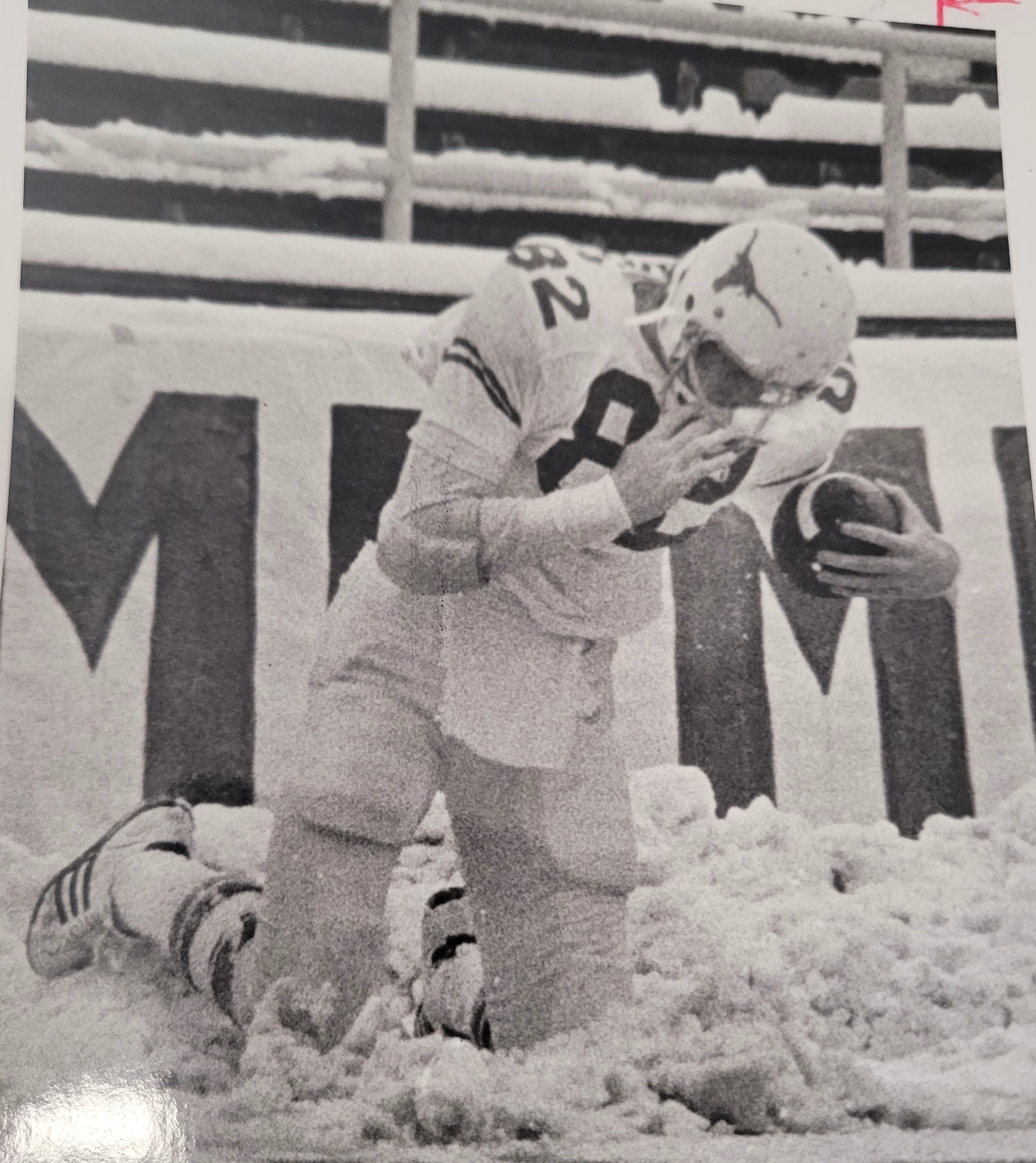
The Longhorns won easily in freshman Mark McBath’s first start at QB. The Corpus Christian was solid in his debut in spite of a less than tropical setting. Four inches of snow had to be scraped off the floor of Amon Carter Stadium. On a nasty day of 32-degree weather, fans stayed away in droves. At 0-8, TCU was ranked number one in the syndicated parody poll called “The Botton Ten” and would win the poll’s sarcasm-dipped crown at season’s end, winless. The crowd, two weeks late for Halloween, came mostly disguised as empty seats. As a result, the lightest attendance for any Longhorn football game in modern times was just 16,523 that gray, ugly day.
Baylor 20 Texas 10
The Longhorn offense sank to a new low against Baylor. Rulers of college ball’s ground game from 1968-1975, they did even less than against UH, netting 14 yards rushing on 37 plays. McBath’s loss of 21 yards while looking to pass — he was 4-6-1,138 yards — made a painful stat even worse. Before upsetting Texas in ’74, Baylor had won 3 of the last 34 against UT. Now the Baptists were two outta three. You’ve gotta believe that things in Waco were hoppin’ that night. At both Dairy Queens.
A&M 20 Texas 3
No Earl Campbell for the fourth straight game. Without him, there just was no running threat, in spite of McBath’s agility and quickness on keepers. The Horns went to the air, disastrously. The stat line for McBath was 4-17 with three interceptions. Mix in four lost fumbles, fold in eleven penalties and voila…recipe for disaster. It was a tight, 9-3 game at half but A&M had more ammo and defeated UT for the second straight year for the first time since…1909. President William Howard Taft was turning over in his size XXL coffin.
Texas 29 Arkansas 12
The December date had looked smart when the game was moved there. Texas and Arkansas held 2/3 of the ’75 SWC crown and the Hogs had gone to the Cotton Bowl. The Steers had earned a New Year’s trip to Dallas six of the previous seven years.
Now, though, neither team had fared worth a damn. Texas (4-5-1) was seeking to avoid a losing season. The Razorbacks (5-4-1) just hungered, as always, to beat UT. They had lost eight of the last nine duels.
It was in the air, more Octber-ish than Christmasy, that DKR might be coaching his final game. Ditto for his Ozark counterpart, Frank Broyles. Could that happen?
Big Earl was deemed healthy in his burnt orange jersey, first time in ages. He bowled over Arkies for 131 yards and McBath did a creditable Akins impression for 118 steps. Erx beat Steve Little, three field goals-to-two, and the Longhorn defense shined as brightly as the tower did when the clock ran out, cheating fans and players of several minutes. The coaches agreed to let it go. The clock ticked on.
It was over. Texas was victorious…and maybe this Campbell-McBath duet could hit jazzy notes in ’77. But it wouldn’t be the same. Ever. Royal had set down his bucket.
*****************************