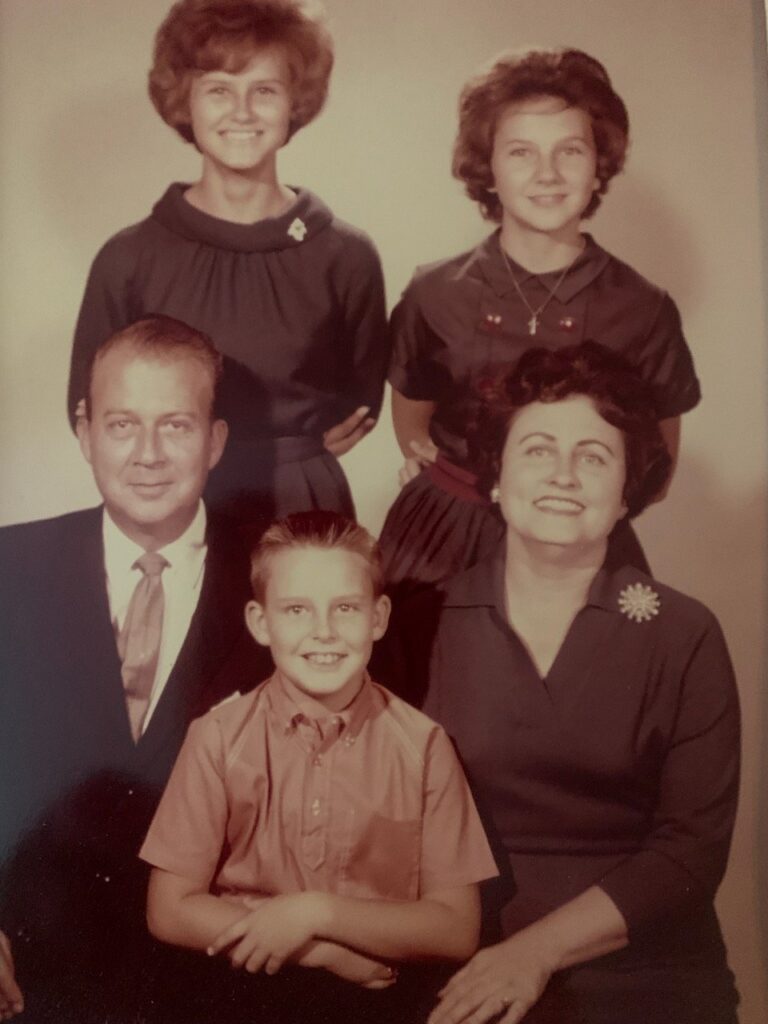
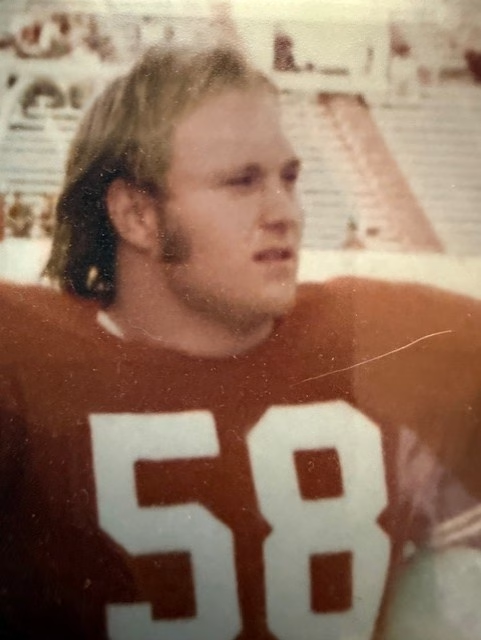
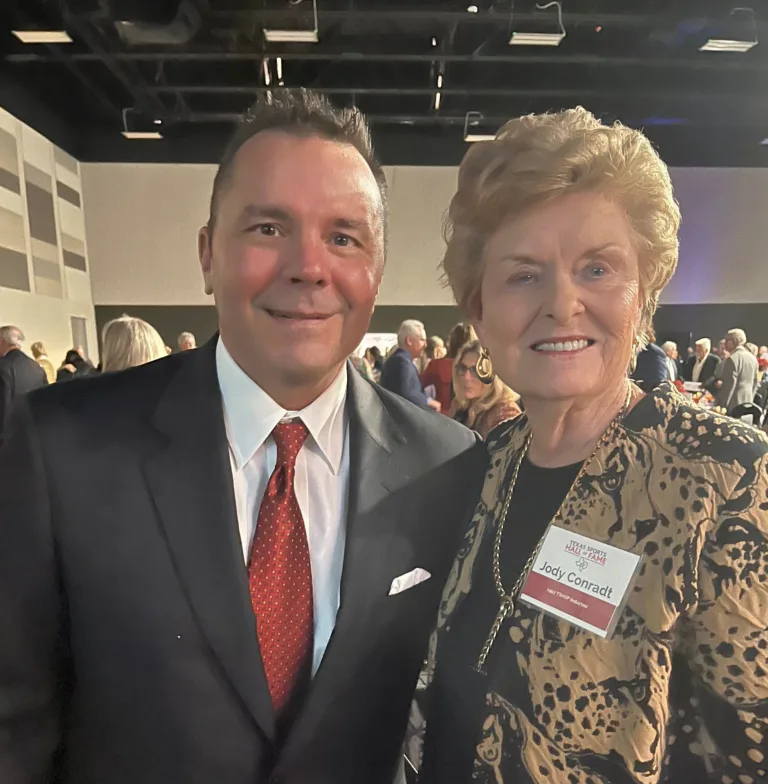
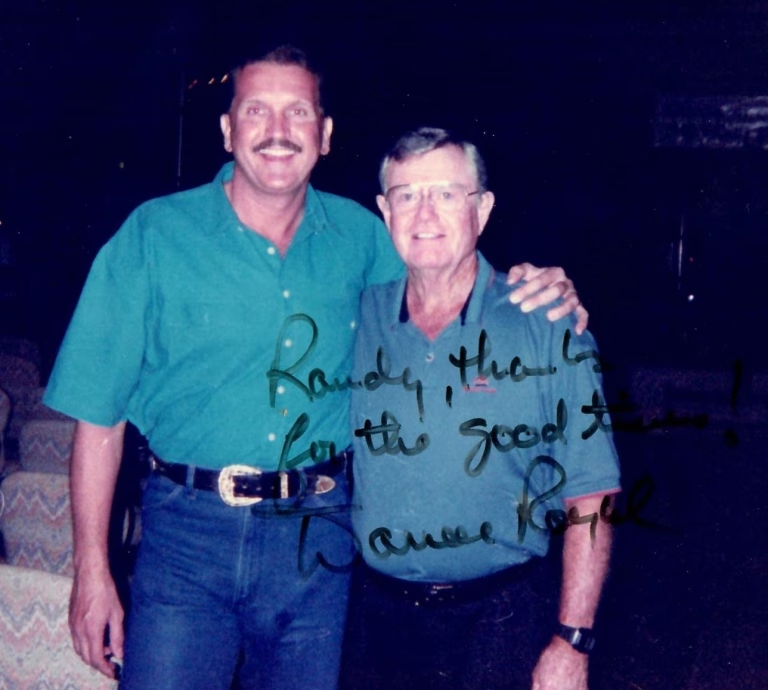
Randy Willis is a Texas cultural icon.
He was the right person at just the right time, when Longhorn football, molded by Coach Darrell Royal’s vision, and a fresh wave of Western music from Waylon, Willie, and the Boys were making a big splash on the national stage.
Randy was added to the TLSN history of Longhorn Sports primarily because of his relationship with Coach Royal and Earl Campbell at the following links:
https://texaslsn.org/the-belt-buckle-coach-royal-and-coach-bryant/
https://texaslsn.org/randy-willis-the-eyes-of-texas-are-upon-you/
https://texaslsn.org/randy-willis-bio-becoming-a-longhorn/
https://texaslsn.org/edith-thomason-royal/
https://texaslsn.org/randy-willis-and-earl-campbell/
https://texaslsn.org/my-memories-of-dkr/
But there is much more to Randy Willis than a friendship with Royal and the sounds of music. Randy’s whole family is deeply rooted in a special bond, strength of character, sacrificial, and bonded. Below are 3 articles written that represent significant moments in the lives of his family . Enjoy ! ALL ARE WORTH THE READ!!!
Christmas Day 2025,1956 and 1941 by Randy Willis
Christmas 2025
I sometimes wonder which of my six grandchildren was most like me when I was a child.
It’s the youngest, two-year-old Violet, on the left, who may fit that description.
Mama used to say I was like a “Bull in a China Closet.” Although Violet is more like a Sherman tank in World War II.
She has no fear. I overheard her sister, four-year-old Juliette on the right, tell her, “I’m not going upstairs alone.”
Violet said, “I’ll go with you.” I pity any goblins lurking around the corner.”
There’s a difference; she’s not clumsy. She climbs anything, refusing help up or down.
My basketball coach, Carl Davis, once told me, “I was so clumsy he expected me to trip over the center line on the basketball court at any moment. Coaches had a unique way of motivating you back then.
Coach Davis also told me, while running wind sprints during two-a-day football practice, “You know, Willis, you run really fast. The only problem is you run too long in one place.”
Today, as I write what I believe to be the highest good for my grandchildren, I’m reminded of a story I wrote in one of my novels.
✯ ✯ ✯
I was once told a story of a woman who wanted to know what her son would become.
She put what little money she had on her kitchen table, along with a bottle of liquor and a Bible.
As her son approached their home, she hid in a closet.
She figured if he took the money, he’d be a gambler; if he drank the whiskey, he’d be a drunkard, and if he picked up the Bible, he might just become a preacher.
When the boy saw all this, he picked up the money quickly and stuffed it into his pockets; he then drank the entire bottle of the Devil’s poison; and, finally, he put the Word of God under his right arm and staggered out the door.
His mother exclaimed, “Oh, no, a politician.”
Have a blessed New Year.
Randy Willis
Christmas Day, 1956 by Randy Willis
Clute, Texas
Photo: left to right: My grandmother Lillie Hanks Willis, Daddy, Julian Willis, Mother Ruth Willis, me, age 6, Randy Willis (on the floor), Buddy Duke, Jerry Duke, Marjorie Duke, and Dorothy Curbelo.
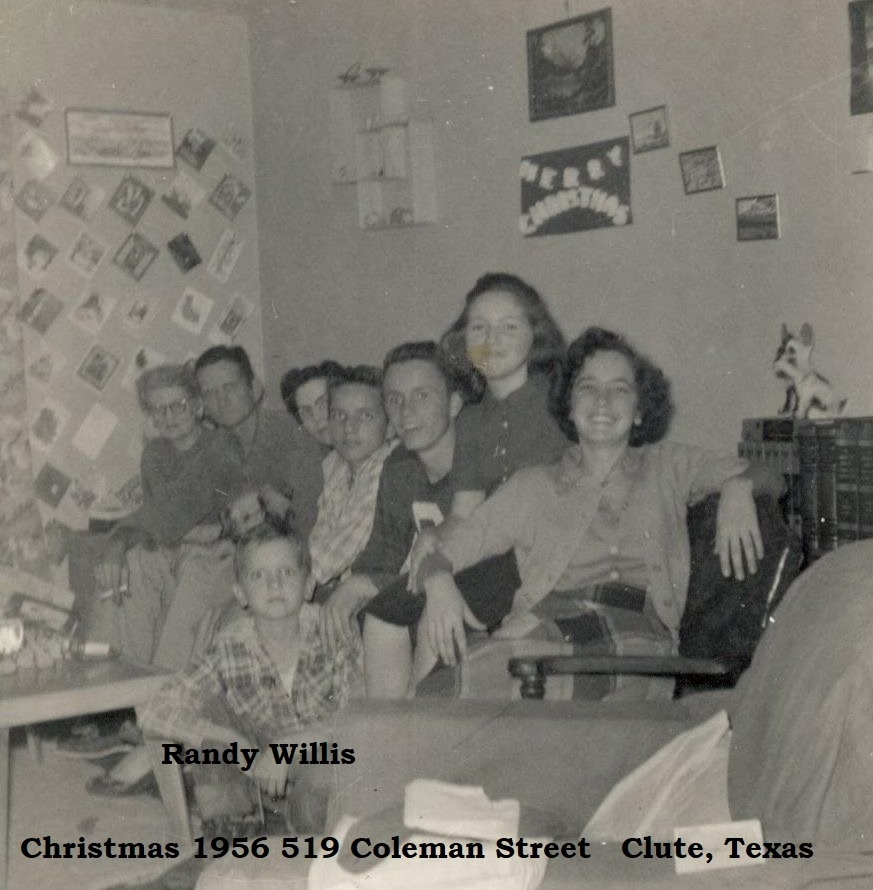
Only two of us remain, Marjorie and I.
This photo is a snapshot (pun intended) of much of my life as a boy.
On the far right is our library: the Encyclopedia Britannica.
The Annual Britannia Book of the Year, along with the 1956 Sears, Roebuck Catalog, were “dream” books to me.
I thumbed through them often, but it would be Daddy’s Zane Grey’s Western novels and later Mama’s Reader’s Digest that would captivate my mind.
Mother’s “whatnot” shelf, to the right of the Christmas cards, was the most braggadocious thing we owned.
Yes, one book has been and remains the center of our lives: the Bible: God’s “owner’s manual” and love letter to you and me.
Twenty-one months later, my life would forever change.
✯ ✯ ✯ ✯ ✯
Every Sunday morning, Sunday night, and Wednesday night, we were at Temple Baptist Church in Clute. It seemed to me that everyone attended church.
On a hot August Wednesday night, my mother could not attend church. So, I walked to church from our home on Coleman Street with my twelve-year-old sister Marjorie. I was eight years old.
I had no intention of that night being any different from any other. It would remain etched into my heart, mind, and soul until this very day.
I cannot recall a word Pastor Bill Campbell said in his sermon. But I remember vividly another voice that spoke to my mind—my heart—my spirit. It was not an audible voice.
It was a still, gentle voice, tender but ever so clear, telling me to go forward and accept Christ as my Savior.
I recall my response to the Holy Spirit as if it were five minutes ago. “Lord, I’m too shy. I would if my mother were here to go with me.”
I felt someone touch my left shoulder. My sister Marjorie was sitting in the back row with her friends. She could not have seen my face, for I was seated near the front.
She said, “I’ll go with you if you want me to.” I immediately stood, walked with her to the front of the church, and made my decision public.
I know you do not have to have an experience like that to be saved. Nevertheless, I’m so grateful for that experience; it has never left my mind or my heart.
Merry Christmas! And may Christ, our risen Lord and Savior, bless you and yours.
Randy Willis
✯ ✯ ✯ ✯ ✯
Beckoning Candle: Christmas Day 1941 by Randy Willis
December 25, 1941, The Ole Willis Home Place on Barber Creek, Longleaf, Louisiana
Rand Willis arises before sunrise, nestles beside the fireplace, with hot coffee—as alone as the morning star.
The wind whistles through the dogtrot and awakens Julian. He struggles upright, half asleep, and rubs his eyes as he pours a cup of coffee.
“It’s our first white Christmas! Grab some firewood—please. And check on the horses, mules, and the dogs, too.”
“Yes, sir, Daddy. Merry Christmas!” Julian shivers as he chips through the frozen water trough with a horseshoe. He gathers the firewood, now covered in two feet of snow. Icicles adorn the trees overhanging Barber Creek. It is cold and rather barren, but it has the loveliness of a Christmas card. And, like a Christmas card, it will hold that image in Julian’s mind for years to come.
Rand’s eldest son, Howard, drives his International Harvester truck. It can be heard a mile away as it plows through the snow on the red dirt road. The family knows no snowfall will prevent Howard from delivering a Christmas tree to the homestead. He always brings a real tree, not one of those artificial, awkwardly bent imitation trees. Those imitations lack texture, fragrance, and fullness.

“Think that is a big enough tree, Howard?” Julian asked.
“I wanted one bigger than the Jones up the road,” Howard grins.
Let me help.” Julian and Howard drag the Christmas tree out of the truck bed.
“Think that is a big enough tree, Howard?” Julian asked.
“I wanted one bigger than the Jones up the road,” Howard grins.
Let me help.” Julian and Howard drag the Christmas tree out of the truck bed.
Howard’s wife, Zora, cries out, “I need help, too.” Rand clasps her. “Ah-ha! All my favorites: freshly baked pies, peach preserves, and okra in mason jars. Oh, my, and even your famous buttermilk pie.”
Rand’s wife, Lillie, collects each family member’s handcrafted decoration for the tree. “Let’s hang them.” The aroma of cedar, sugared fruit, and gingerbread brings back memories of Christmases past.
Today is Rand and Lillie’s grandson Donnie’s fourth birthday, to boot. “Can I play with my birthday gifts, Grandpa?”
“Yep, but keep the stick horse at a trot. Let him get used to this colder weather, eh? See what else Santa left you. The new game Shoot the Moon and a wooden jigsaw carton puzzle.”
Good, long-time neighbors, John and Ruth Duke, arrive with their two kids, Johnnie Ruth and Jerry. They bring a pumpkin pie and two fruitcakes.
Miss Ruth always spikes her fruitcakes with a bit of rum. “It’s no different from using cooking sherry and, therefore, is not an affront to the Lord,” Ruth says. “It provides moisture and helps preserve the cake.”
Rand fidgets. “The better part of valor is not to mention that to Lillie. Her definition of what constitutes a mortal sin may be different from ours. Let me taste-test the cake for moisture.” He pinches off a nibble and smacks his lips in approval. “Now, indeed, that’s the moistest cake ever! I may have another slice or two later.”
Johnnie Ruth, and Donnie sit on the floor. Donnie prefers Conflict, a military board game—Johnnie Ruth, paper dolls. Howard reaches and hangs the star of Bethlehem on the tree.
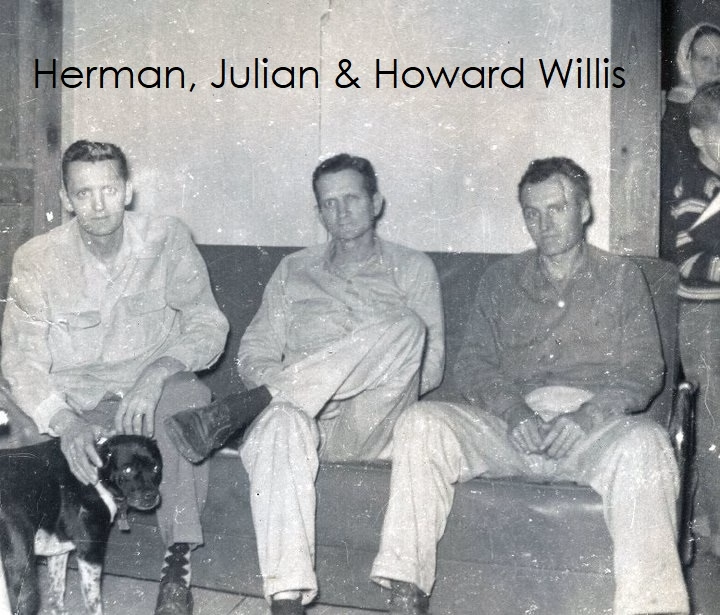
“It almost touches the ceiling.” His brother Herman carved it from a piece of hickory. Christmas stockings stuffed with nuts, candy, and fruit hang on every available nail. Lillie had placed books, tablets, pencils, wooden soldiers, and even a rockin’ horse under the tree.
The children’s faces glow from the fireplace. Herman stokes the fire with a piece of pine-kindling.
The sunrise colors glisten in the snow. “Who can paint like the Lord of creation?” Lillie proclaims.
Donnie and Johnnie Ruth grab some firewood from the barn and are off to go sledding. They slide down the hill to the banks of Barber Creek.
“You kids, get back up here,” Lillie yells. “That’s too dangerous. Ten more feet, and you’d both be frozen lollipops!”
Julian blows in his horse’s nose to calm him. It’s not the first time the animal has experienced snow. However, it has been a long time. Any sudden change in the weather makes horses skittish. They need reassurance from their master that all is well and everything is still okay. The Comanche used to do this in Texas. Helps you bond with the horse.
“I’m going to churn ice cream in my new pewter pot,” Lillie promises. She stirs snow, milk, cream, butter, and eggs. She also prepares Rand’s favorites, especially dewberry pie and a cup of kindness called Community Dark Roast coffee.
Rand grins. “I hung some mistletoe.”
Lillie looks him in the eyes and kisses him on the cheek. “The kids.”
“We have enough to feed Camp Claiborne’s 34th Red Bull Infantry,” Rand says. The nearby U.S. Army military camp accommodates 30,000 men but does not give Lillie a sense of safety. A world war is still raging, and every American is on alert.
Lillie’s eyes sparkle. “Please play my favorite Christmas carol—O Holy Night?” Rand’s father bought him a fiddle on a cattle drive from East Texas when he was barely twelve. He spent his evenings teaching himself the fingering and bowing techniques.
“How can I refuse a woman of such virtue—and one so beautiful? Our home overflows with your sweet joy.”
Lillie hugs him. “Will it be our last Christmas with our sons?”
The snow drifts against the windows and doors. It begs for entrance into their lives. It’s like the events of the previous three weeks. “There’s nothing as peaceful as Louisiana Longleaf pines covered in a fresh layer of snow,” Rand muses. “Ah, if only the world were that way.”
Rand’s eighteen-year-old nephew, Robert “Bobby” Willis, Jr., enlisted on July 31, 1940, and reported aboard the USS Arizona battleship at Pearl Harbor on October 8, 1940. A surprise military strike by the Japanese Navy Air Service on the morning of December 7, 1941, detonated a bomb in a powder magazine. The battleship exploded and sank. Hundreds of marines and sailors were trapped as the ship went down.

Robert Kenneth “Bobby” Willis Jr., was the first soldier killed in action in World War II from Rapides Parish. The Pineville American Legion Post was named in his honor. It no longer exists. He was killed on December 7, 1941, and was entombed in the USS Arizona at Pearl Harbor.
The family held out hope, but those hopes were vanquished a week ago, like a shadow darkening all elements of light. Rapides Parish Sheriff U. T. Downs, Robert’s pastor from First Baptist Church, Pineville, delivered a Western Union telegram to Robert’s father.
Downs struggled to speak with tears in his eyes. “It has been confirmed that Robert was entombed in the USS Arizona at the bottom of Pearl Harbor. I just can’t tell you how grieved I am to bring this news to you, especially so soon after Thanksgiving. This is the part of my job that I dread the most. If there’s anything I can do for you folks, just say the word.”
Howard and Zora took Donnie to the Pringle Picture Show in Glenmora to see How Green Was My Valley. “We need to seem as if nothing has changed for Donnie’s sake,” Zora insists. “I fear that we will be one of many, many families who will receive telegrams before this war is over. Our hearts are broken, but we must carry on.”
Julian now works with the horses and mules—plenty of grain, hay, and water. He grooms their coats of hair and checks to see if they are sound and well-shod. He’s gentle with horses, the elderly, and children but as tough as rawhide on no-account men. “I wish I could ride you guys into battle, but an airplane will have to do.”
Two stray goats, covered with ice, nudge their way into the barn. Julian jumps up to shoo them back outside. “Get out of here. You’re going to break Daddy’s deer-horn hat rack I made. It’s his Christmas gift.” The goats resist but then yield when Julian gives each a swat.
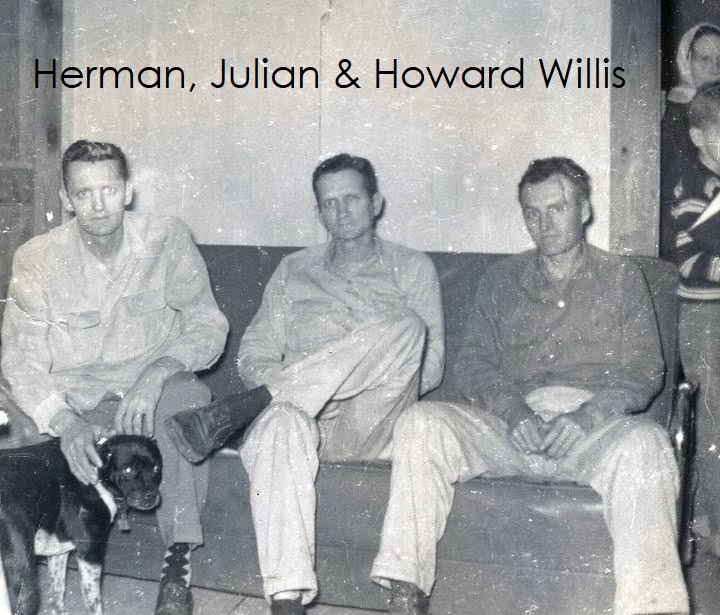
Herman, quiet and soft-spoken, takes off without saying a word—impeccably dressed, as always. Howard and Julian help their father with the firewood.
“You two should find him—now! Take my Ford,” Rand insists.
They pump ten gallons of gas into Rand’s ’40 Ford Coupe at Bob Johnson’s Grocery Store at Shady Nook. “Where do you think he’s at?” Howard asks.
“Charlie’s Cafe in Glenmora is the closest—let’s try there first.”
“He just left, but not until he whipped two men for making fun of his khaki pants,” the owner tells them when they arrive.
“Did he say anything?” Julian asks.
“He mentioned he would never be back, and he preferred Boom Town’s honky-tonks. Not sure which one, but they’re all outside Camp Claiborne’s main gate. Those places will thrive as long as that base keeps bringing in new boys who are wet behind the ears and willing to waste their pay during a weekend pass. Check ‘em one by one.”
This time, one man lay on the floor, needing medical attention. “Let’s check the Wigwam in Forest Hill,” Julian says, “before someone kills him or, God forbid, wrinkles his pants. I played steel guitar there several times in Horace Whatley’s band. It’s a rough joint.“
The sounds from the beer joint are loud. It is known for live music and its jukebox. The noise shakes the windows as they drive into the parking lot. Chicken wire fencing wraps around the bandstand to keep the band from getting hit with beer bottles.
As they enter, the bartender yells. “Break ’em up before they destroy the place!” Three men hold Herman while two others land repeated punches and kicks. The jukebox blares Jimmie Davis’s hit—I Hung My Head and Cried.
Bleeding like a stuck pig, Herman calls out, “Are y’all going to help me or just stand there, whistlin’ Dixie?”
“I’ll take the three holding him, you the other two. Use that chair, Howard.”
After a melee of about ten minutes, they settle with the barkeeper for fifty bucks in damages and haul Herman outside to his truck. His lip is busted, his nose is bleeding, and one eye is starting to seal shut. He refuses to show any sign of weakness or pain, although he wheezes when drawing in a breath between bruised ribs.
They arrive home in time for a delayed supper. Rand examines Herman’s cuts and bruises. “Save all that anger for the Japs and Hitler.”
Lillie brings clean towels. “My three sons fighting in the Devil’s playground and on Christmas Day! May the Good Lord find mercy to forgive you for such behavior!”
Rand smiles. “At least they didn’t go to the Duck Inn…it provides more than liquor.” Her grimace reveals she does not find humor in his observation.
Lillie pulls her collar up, tightens her scarf, shoves her hands deep into her pockets, turns her face, and walks outside into the biting wind. “I need to gather more snow for the ice cream.”
She returns—but with no snow. “It’s suppertime.” Her words are all that is needed for family and guests to gather around the candlelit table.
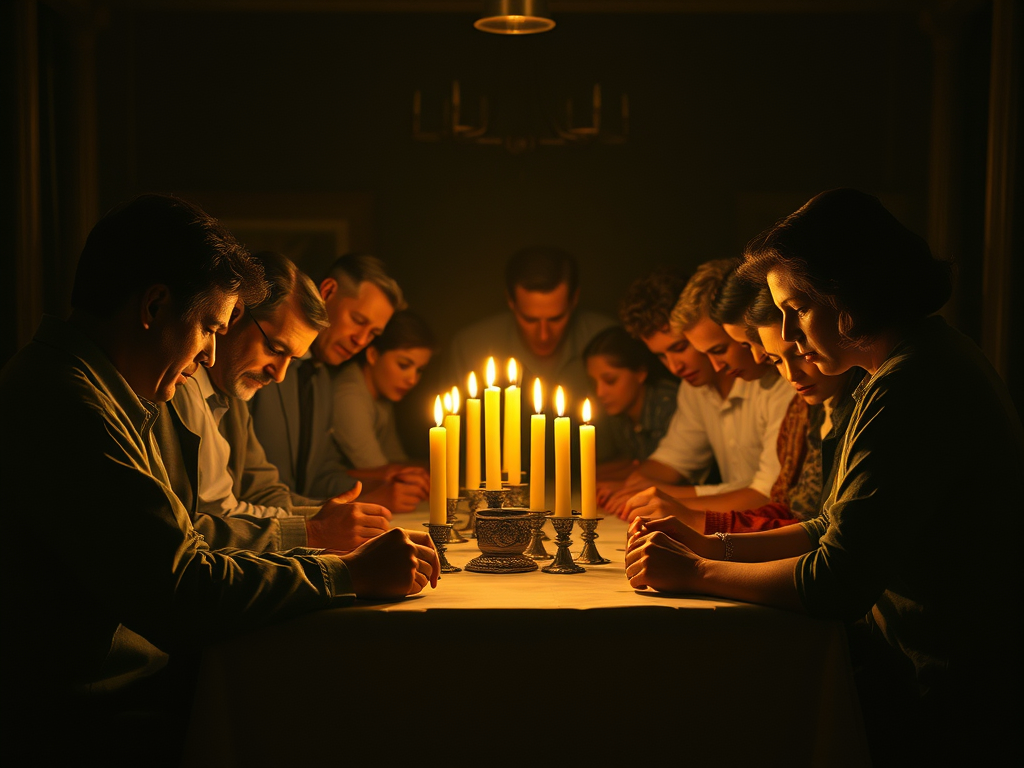
As Rand says grace, light dispels the darkness in their hearts just as the Star of Bethlehem did long ago. The reflection on Lillie’s face from the beckoning candle contradicts the devastating news from Hawaii.
Rand bows his head as everyone joins hands. “Lord, we know the world will still turn, the songbirds will again make joyful sounds, and this too will pass. Keep our sons in the hollow of Your hand. Bless this food—and bless our nation. In the name above all names—Jesus.”
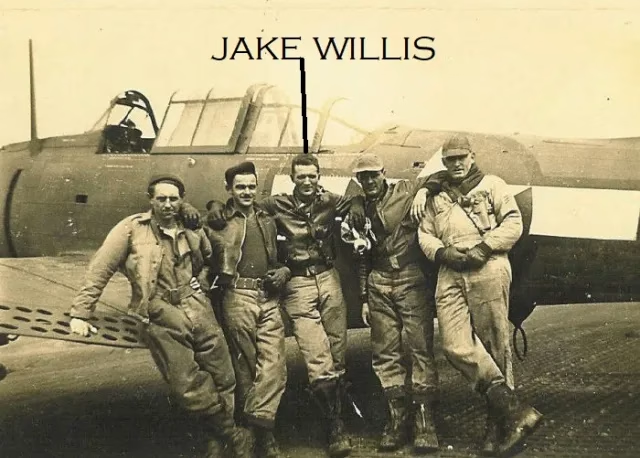
American men from coast to coast stepped forward to retaliate against the attack on U.S. soil. Shortly after Thanksgiving, Julian enlisted in the U.S. Army Air Corps. And Herman in the ground forces Army.
Three weeks ago, President Roosevelt’s words on the radio became their heart cry. He declared, “No matter how long it may take us to overcome this premeditated invasion, the American people in their righteous might will win through to absolute victory.”
Howard went with his brothers and did his best also to enlist. However, the recruiter didn’t even need to wait for the results of a physical. He immediately saw that Howard had a deformity that would make him 4-F. Howard had a severe head injury caused by a blow from a split-rim truck wheel. It had exploded while Howard was filling a tire with air in Glenmora.
He tried to disguise the injury by pulling a cap down over his hair and forehead. The recruiter was not new to his job. He pulled off the cap and surveyed the scar. Then he motioned a thumb over his shoulder. This indicated Howard was “out” of the running. Rand tried to assure Howard he could still serve the nation in other ways. For a scrapper and brawler like Howard, those words brought little appeasement.
They continue to enjoy what will probably be the last Christmas as a united family. This could last for perhaps years to come. Howard stokes the flames in the fireplace with a kindling-stick from a busted chiffarobe.
Rand raises his fiddle. “Join me in the family key.”
Everyone joins in.
“O holy night, the stars are brightly shining,
It is the night of the dear Savior’s birth;
Long lay the world in sin and error pining,
‘Till he appeared and the soul felt its worth.
A thrill of hope the weary world rejoices,
For yonder breaks a new and glorious morn.”
Rand leafed through his great-grandfather Joseph Willis’s six-inch thick leather-bound journal written long ago as the long day ended.
“What would Joseph Willis do?”
Epilogue
The Ole Willis Home Place on Barber Creek near Longleaf, Texas August 5, 1906
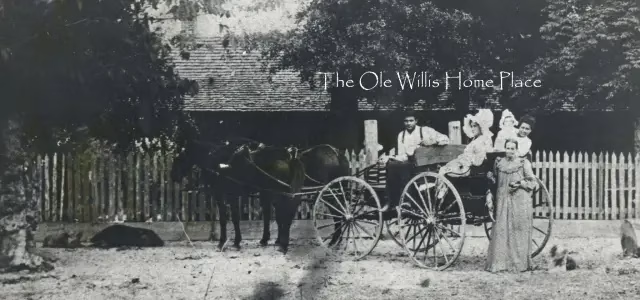
Photo: Robert Kenneth Willis Sr. (1877 – 1951) has the reins. Robert’s first wife, Eulah Hilburn Willis (1884 – 1919), is in the back …seat. She died during the 1918/19 influenza pandemic. Julia Ann Graham Willis (1845 – 1936) is standing and holding a fish. Robert and Eulah’s baby girl Flossie Litton Willis (August 5, 1905 – September 1985) is held by an unknown lady.
Flossie told me before her death that this photo was taken on her first birthday. “After Eulah’s death, Robert [my grandfather Randall Lee “Ran” Willis’s brother] married May Johnson and had three sons. One of those sons, Robert Kenneth “Bobby” Willis Jr., was the first soldier killed in action in World War II from Rapides Parish. The Pineville American Legion Post was named in his honor. It no longer exists. He was killed on December 7, 1941, and was entombed in the USS Arizona at Pearl Harbor.
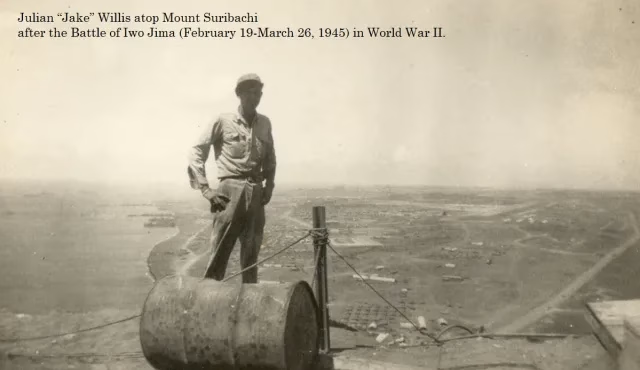
My dad was Julian “Jake” Willis. He placed a copy of his first cousin’s obituary on top of Mount Suribachi on Iwo Jima. He kept another. His first cousin was Robert K. “Bobby” Willis Jr. The Japanese had occupied Mount Suribachi days before.