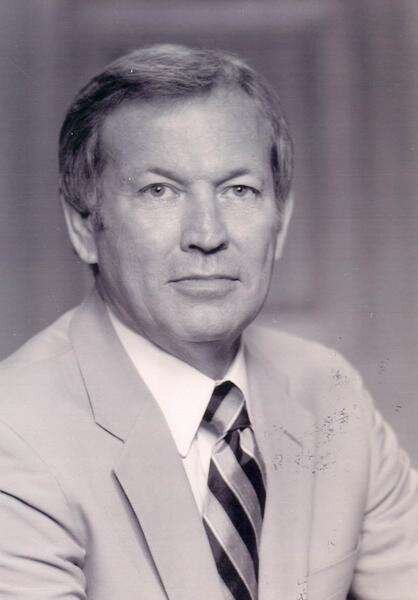
James Means has passed away

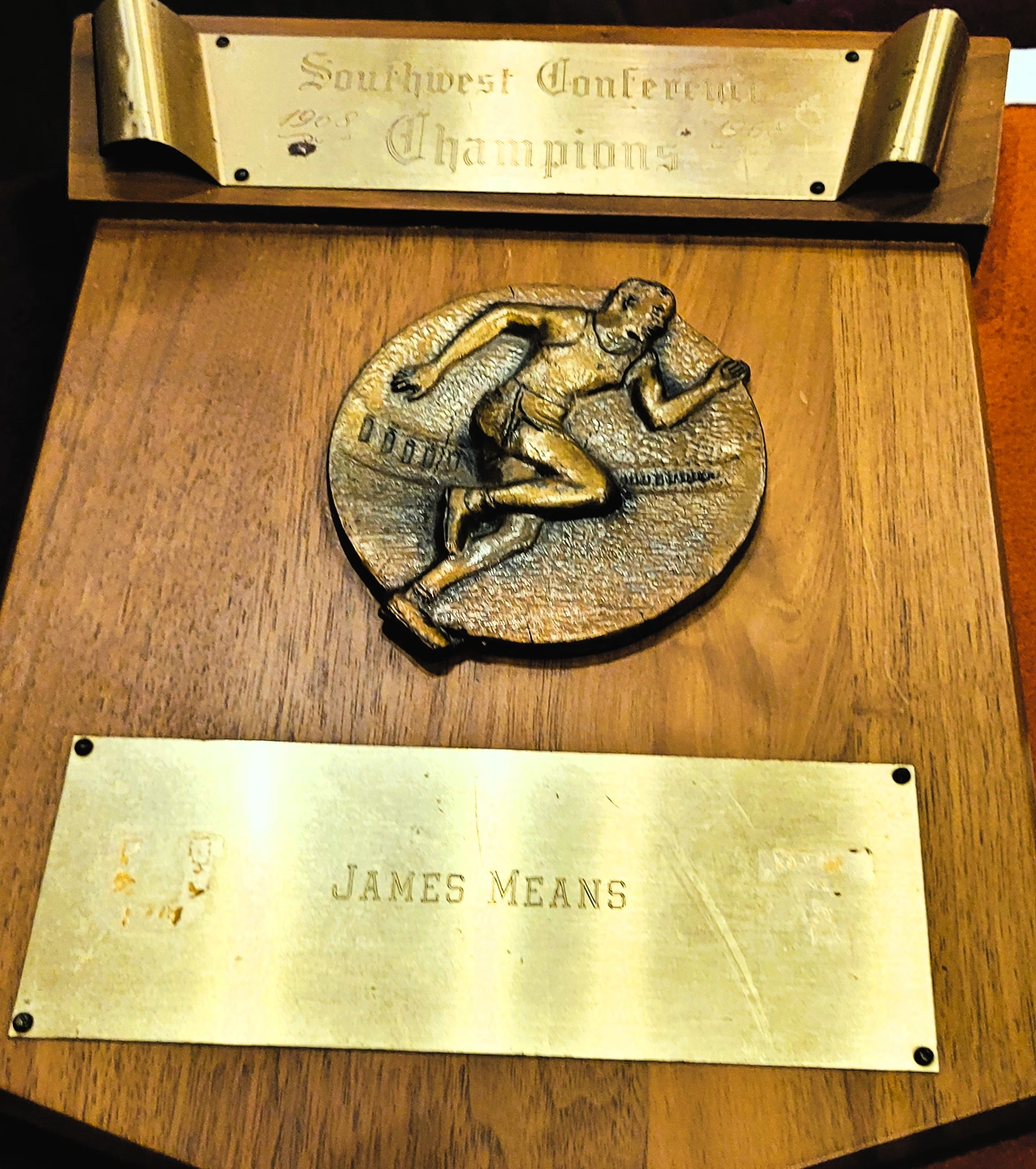
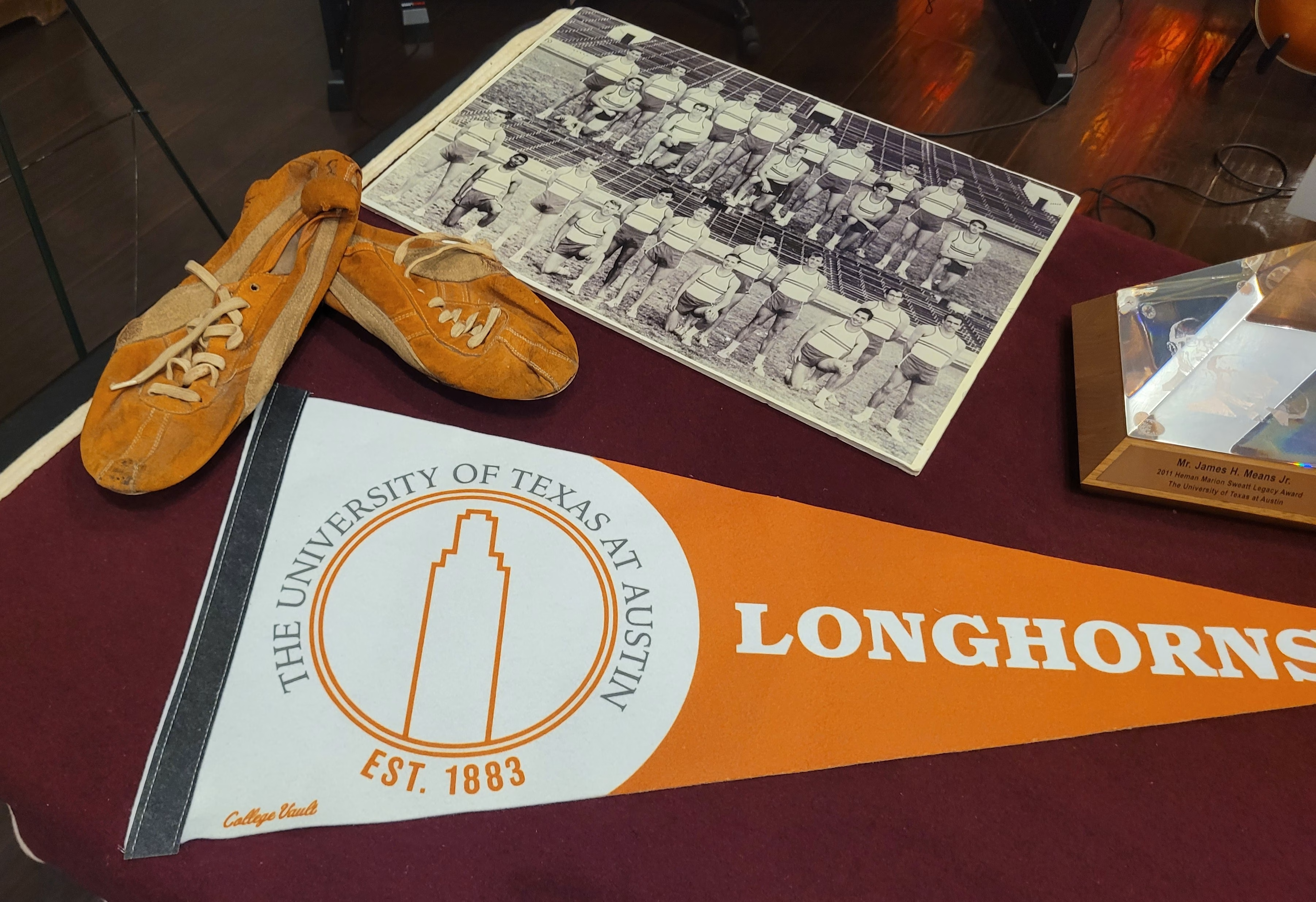
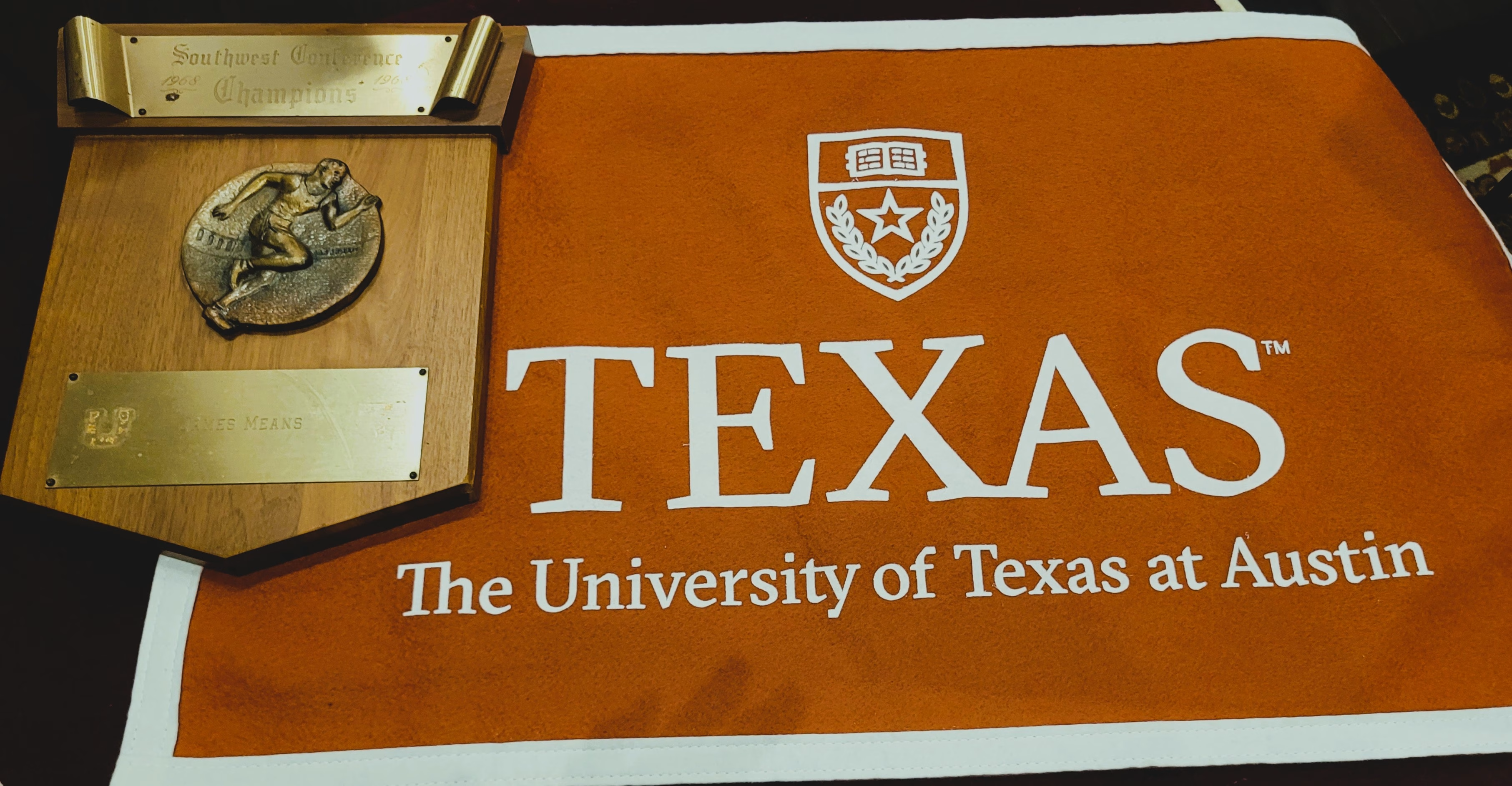
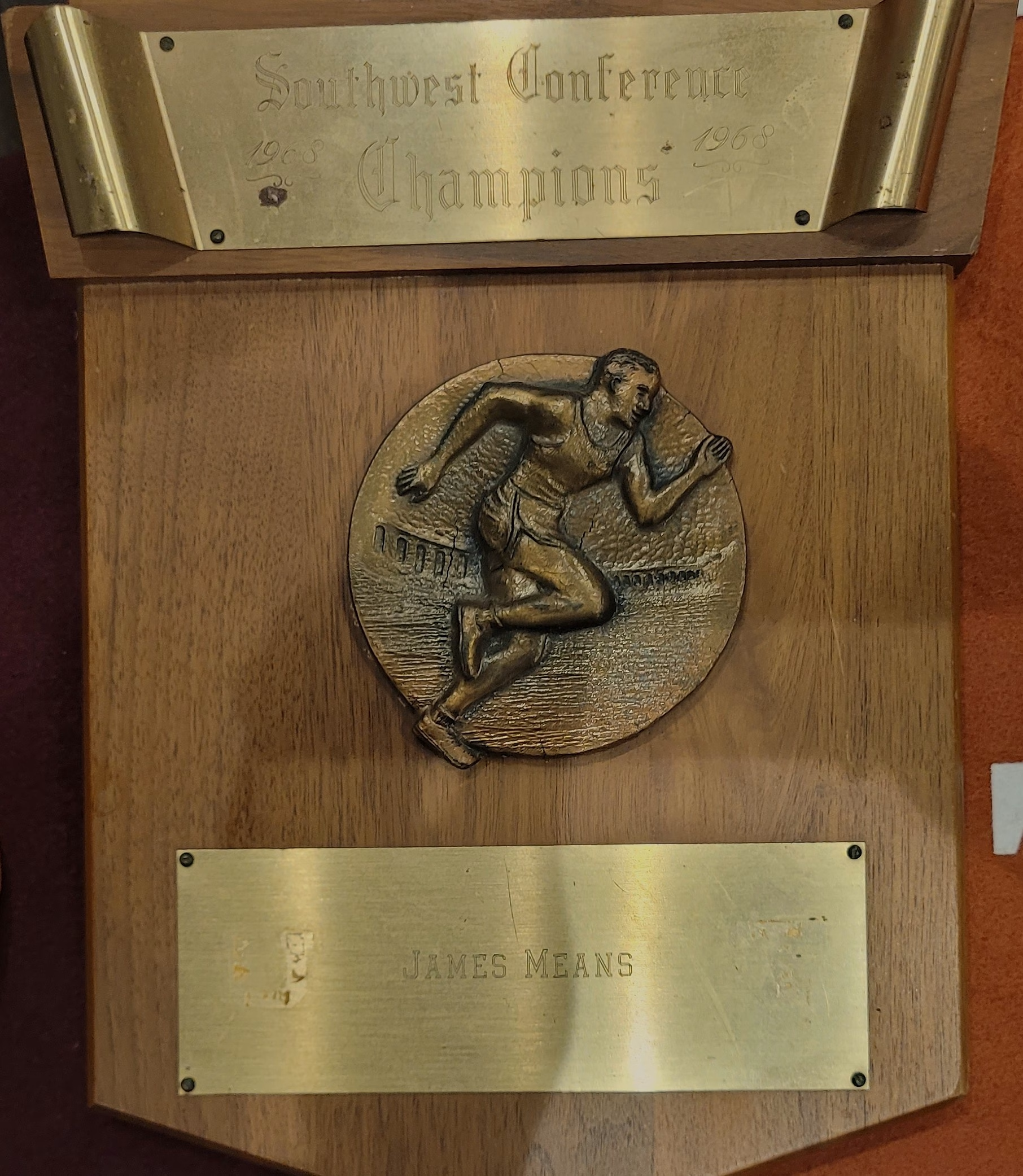
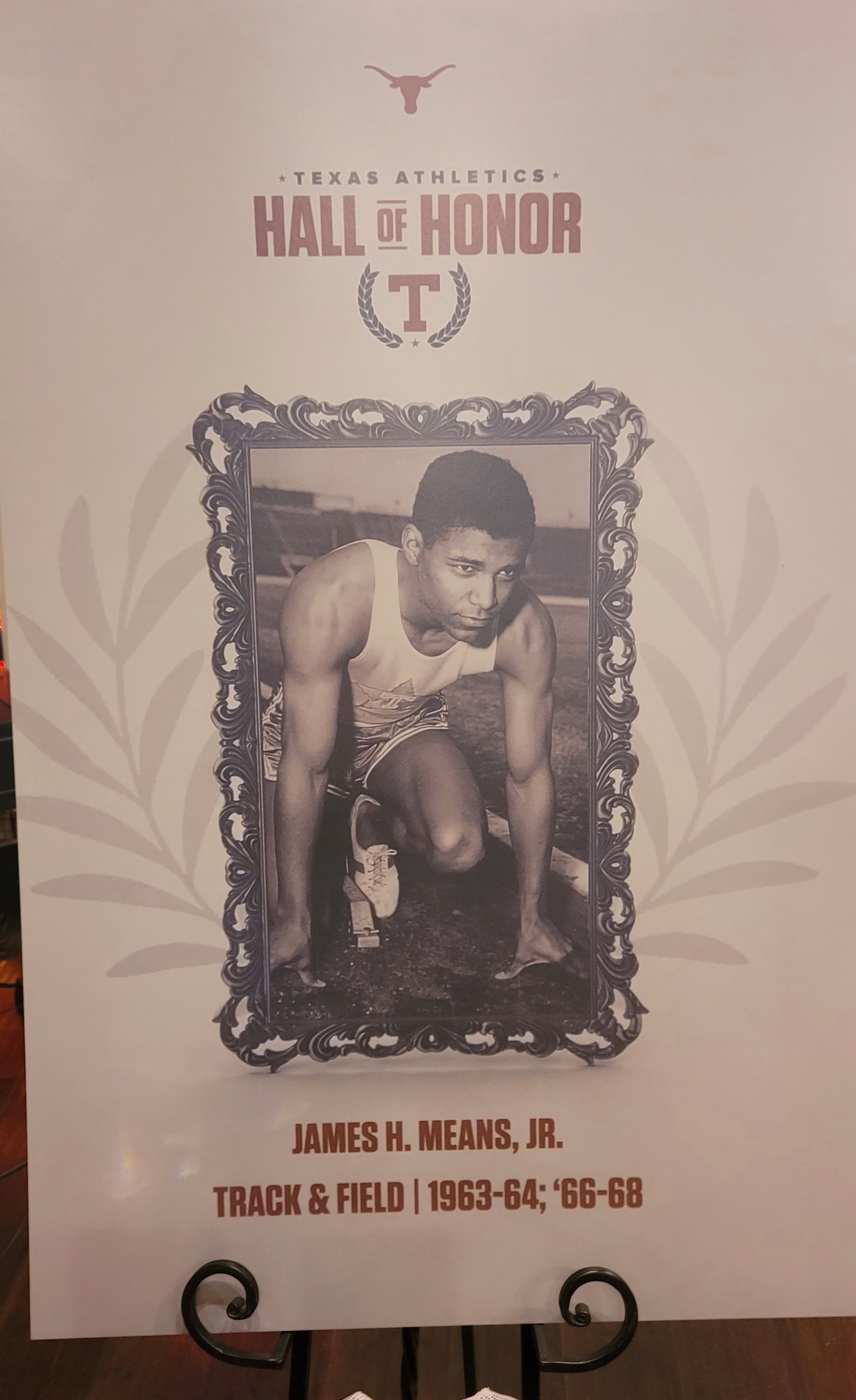
“James Means” broke racial barriers and stands as a symbol of integration and courage in Longhorn history.
James Means Obituary
Read more about the Life of James H Means Jr. on his King-Tears Mortuary Remembrance Page.
To plant trees in memory, please visit the Sympathy Store.
Jim Raup says James and I were good friends at Austin High. We were never teammates because he was track, and I did other sports. He was a great guy-so outgoing and friendly. He is and was a civil rights pioneer at AHS and especially at UT. His accolades and accomplishments were immense and richly deserved..Rest in Peace, friend. I know your last years were hard. I am so proud to have known you.
Loyal Forever and Hook `em!
Jimmy Raup
AHS Class of 1963
Jason Smithey says-
I was a three-time recipient of the James Means “Spirit” award on the UT track Team in 1994,1995,and 1996. Thank you for your contribution before me, our beloved UT, and our Track and Field team.
Jason Smithey
RIP, James, you were a good man.
Daniel F. Kaspar
UT Track, James Means 1st to Integrate the SWC, 50 Years Ago
by David Webb
On February 29, 1964, James Means came out of the blocks in the heats of the 100, 200 and led off the UT sprint relay (as he then did for four seasons) at a very cold weather meet in Amon Carter Stadium in Fort Worth. This marked the first participation in a Southwest Conference event by a black athlete. If you hear it said or written that Jerry Levias of SMU or John Westbrook of Baylor were first, it is not so. Westbrook was the first football player in a game, Levias was the first football player after him, and a star, but both first played in 1966, almost 3 years after James Means. Several witnesses to this, in addition to me, are copied on this email.
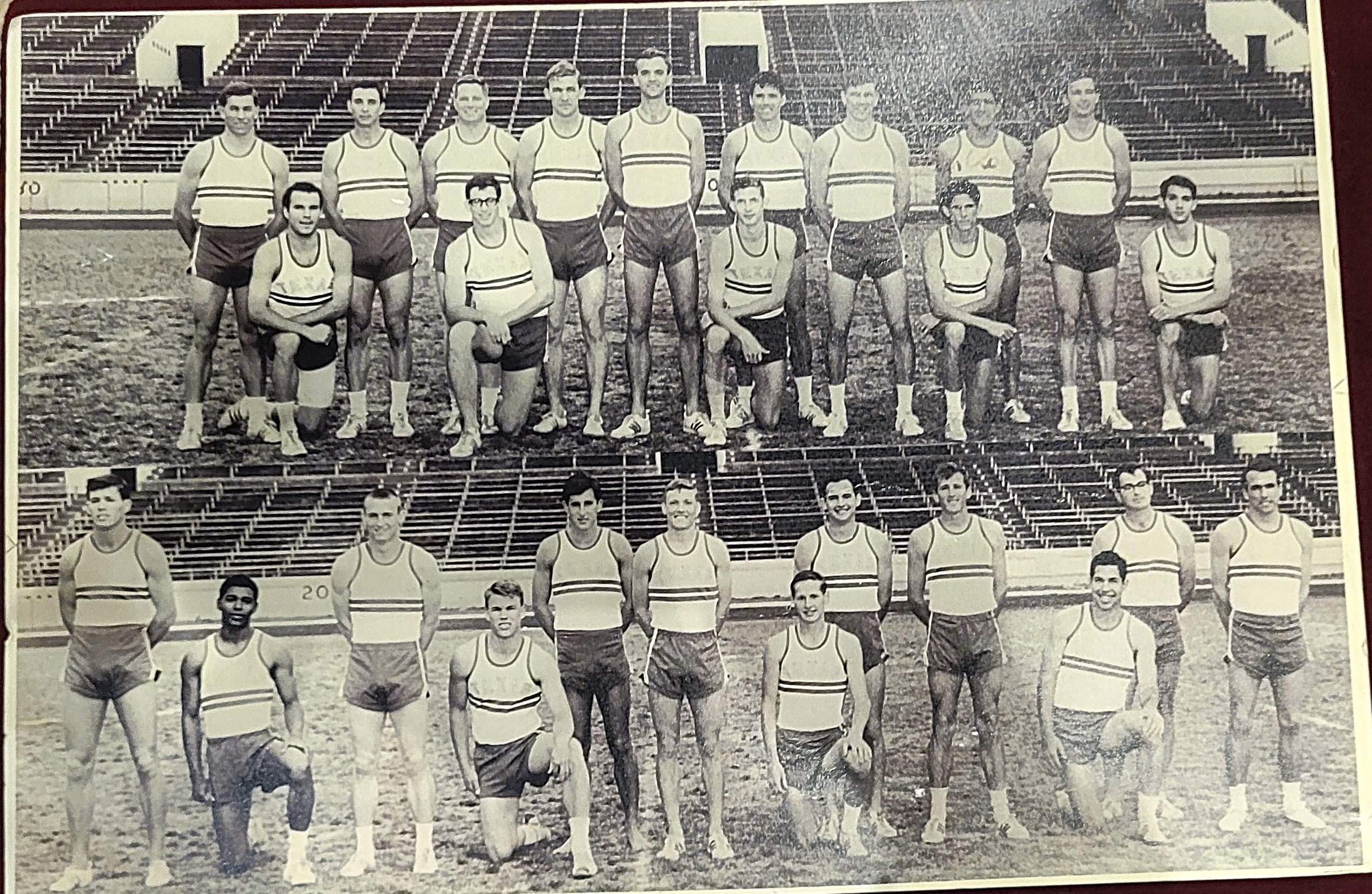
James was also a star. He steadily progressed a from a 10.2 walk-on sprinter to 9.5 in his fifth year, after taking off the 1965 season because he felt he was not making progress. The next year, James was both the first black at Texas to earn a scholarship and the first to then become what we used to call a “Letterman.” James ran 9.5 his senior season in 1968 and narrowly missed 1st in the SWC 100 that year. In 1969, he ran on the U.S. Army sprint relay, leading off for Olympians Mel Pender and Charlie Greene.This is the guy for whom the “James Means Spirit Award,” given annually to a track /field athlete, was named. He was my roommate on the track trips for the three years our seasons overlapped. When I called him today to congratulate and reminisce, I asked if any UT Coaches or Staff spoke to him in the Fall of 1963 about any issues or if he was was ever hassled about race by any teammate, other schools’ runners or fans. He said no. It apparently happened that smoothly in track and UT was, not early in all things, but in this, was first.Congratulations, James!
The university’s first black varsity scholarship athlete was track star James Means, an Austin high school student who planned to attend UT in the fall of 1963. His mother, Austin civil rights activist and teacher Bertha Means, called Frank C. Erwin Jr., who was then a new member of the Board of Regents, to protest the fact that her son was ineligible for varsity track only because he was black. A few months later, the Board voted unanimously to integrate athletics, stating that extracurricular activities would be open to all students without regard to race or color.
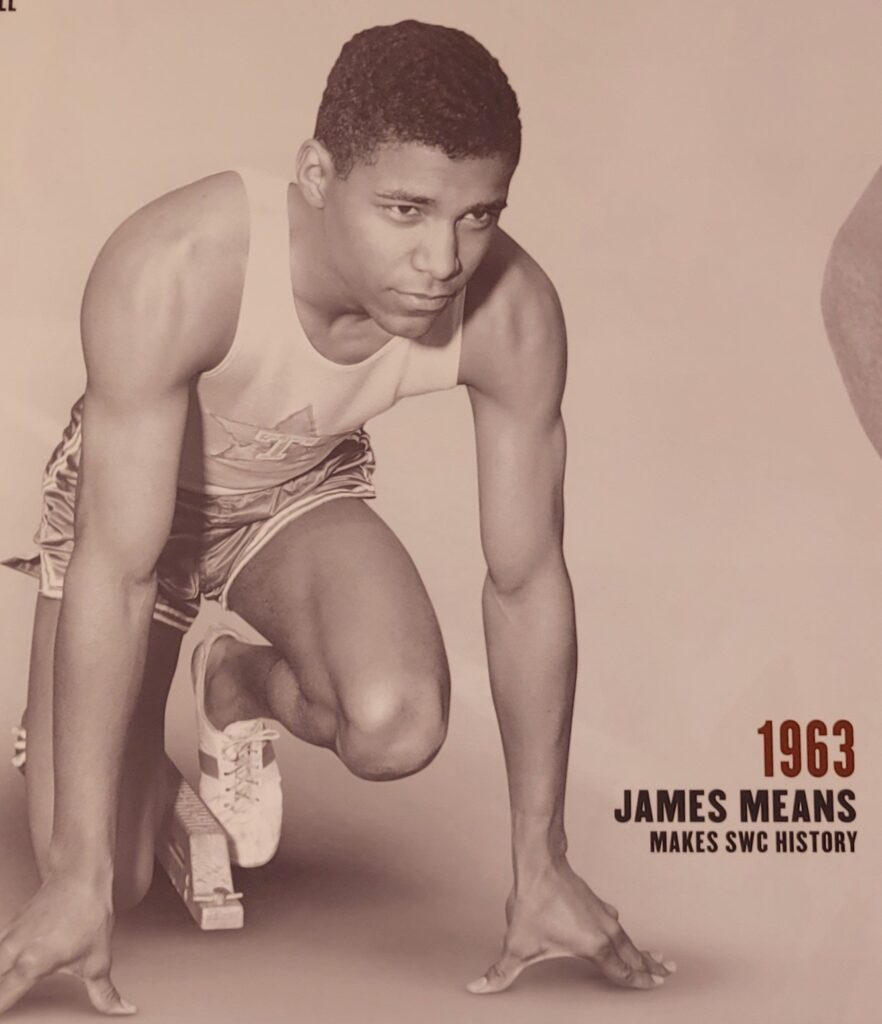
By the early 1960s a majority of students favored integration both on the playing field and off. In May 1961 the Regents received a Student Assembly and faculty petition with 7,000 signatures to support “the immediate integration of all housing and athletic programs.” A concurrent petition from students opposing integration contained only 1,300 signatures.
Back in the 20th century, the Southwest Conference (1914-1994) was one of the premier college athletics groups in the United States. Schools included the Universities of Arkansas, Texas, Texas A&M, Baylor, Texas Tech, Texas Christian, Rice, and Southern Methodist. In the early days, my own alma mater, Oklahoma, was in that group. Football was king, and still is, though the conference melded into the Big 12 a few years ago , and the evolution of college conferences continues at a mind-boggling rate. However, over fifty years ago the Southwest Conference was also burdened with the stigma of segregation in its enrollment and coincidentally with the lack of the diversity in its athletic teams. Hispanic athletes may have participated to a limited extent, but the line was clearly drawn regarding descendants of former slaves. Wanting to confirm this statement about Hispanic athletes at UT, I wrote to Ricardo Romo. See his reply at the end of this posting.
In 1963 Lyndon Johnson, a native of Texas, became president in the aftermath of John Kennedy’s death, and Johnson began making integration of the nation a believable option for all citizens. At the Texas Relays in April of 1962 there were freshly painted-over signs in the football stadium that had promoted segregated washrooms. Johnson’s daughters were students at the University of Texas at that time, so when I witnessed those painted over signs, it was understood that those things could no longer be allowed to exist with an administration committed to a path toward civil rights and freedoms.
This story about the first African American athlete to play in a Southwest Conference athletic event comes from David Webb, a retired attorney from Houston, Texas, who was on that team. He writes about his teammate James Means who was that athlete who stepped forward. Following David’s account I have added the ‘official story’ of that time, as published in Know a University of Texas Online Journal.
UT Track, James Means 1st to Integrate the SWC, 50 Years Ago
by David Webb

On February 29, 1964, James Means came out of the blocks in the heats of the 100, 200 and led off the UT sprint relay (as he then did for four seasons) at a very cold weather meet in Amon Carter Stadium in Fort Worth. This marked the first participation in a Southwest Conference event by a black athlete. If you hear it said or written that Jerry Levias of SMU or John Westbrook of Baylor were first, it is not so. Westbrook was the first football player in a game, Levias was the first football player after him, and a star, but both first played in 1966, almost 3 years after James Means. Several witnesses to this, in addition to me, are copied on this email.
James was also a star. He steadily progressed a from a 10.2 walk-on sprinter to 9.5 in his fifth year, after taking off the 1965 season because he felt he was not making progress. The next year, James was both the first black at Texas to earn a scholarship and the first to then become what we used to call a “Letterman.” James ran 9.5 his senior season in 1968 and narrowly missed 1st in the SWC 100 that year. In 1969, he ran on the U.S. Army sprint relay, leading off for Olympians Mel Pender and Charlie Greene.
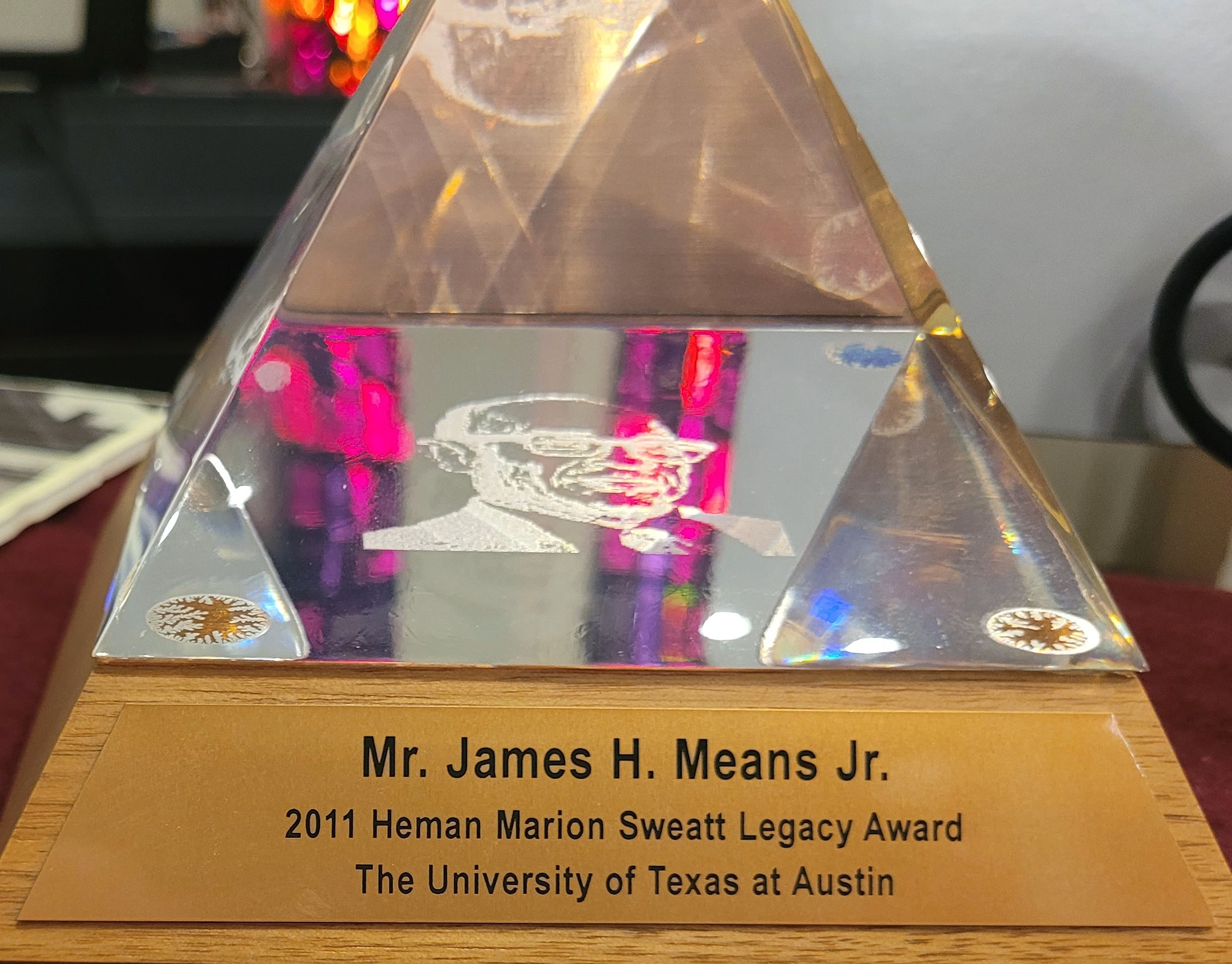
This is the guy for whom the “James Means Spirit Award,” given annually to a track /field athlete, was named. He was my roommate on the track trips for the three years our seasons overlapped. When I called him today to congratulate and reminisce, I asked if any UT Coaches or Staff spoke to him in the Fall of 1963 about any issues or if he was was ever hassled about race by any teammate, other schools’ runners or fans. He said no. It apparently happened that smoothly in track and UT was, not early in all things, but in this, was first.
The name “James Means” is shorthand for the athlete who integrated Texas Athletics and the Southwest Conference. When Longhorn fans or Texas track historians say “James Means,” they’re pointing to a very specific legacy:
- First African American student-athlete at the University of Texas (1963–64).
- First African American competitor in any sport in Southwest Conference history (Feb. 29, 1964).
- First African American to earn an athletic scholarship at UT (1965–66).
- Sprinter and relay runner with a career-best 9.5 seconds in the 100-yard dash.
- Letterwinner and contributor to two SWC championships (1966, 1968).
- Texas Athletics Hall of Honor inductee (2023).
Sunday, March 30, 2014
Vol. 4 No. 21 James Means, University of Texas, the First African American Athlete in the Southwest Conference
Back in the 20th century, the Southwest Conference (1914-1994) was one of the premier college athletics groups in the United States. Schools included the Universities of Arkansas, Texas, Texas A&M, Baylor, Texas Tech, Texas Christian, and Rice, and Southern Methodist. In the early days, my own alma mater Oklahoma was in that group. Football was king, and still is though the conference has melded into the Big 12 a few years ago , and the evolution of college conferences continues at a mind boggling rate. However, over fifty years ago the Southwest Conference was also burdened with the stigma of segregation in its enrollment and coincidentally with the lack of the diversity in its athletic teams. Hispanic athletes may have participated to a limited extent, but the line was clearly drawn regarding descendants of former slaves. Wanting to confirm this statement about Hispanic athletes at UT, I wrote to Ricardo Romo. See his reply at the end of this posting.
In 1963 Lyndon Johnson, a native of Texas, became president in the aftermath of John Kennedy’s death, and Johnson began making integration of the nation a believable option for all citizens. At the Texas Relays in April of 1962 there were freshly painted-over signs in the football stadium that had promoted segregated washrooms. Johnson’s daughters were students at the University of Texas at that time, so when I witnessed those painted over signs, it was understood that those things could no longer be allowed to exist with an administration committed to a path toward civil rights and freedoms.
This story about the first African American athlete to play in a Southwest Conference athletic event comes from David Webb, a retired attorney from Houston, Texas, who was on that team. He writes about his teammate James Means who was that athlete who stepped forward. Following David’s account I have added the ‘official story’ of that time, as published in Know a University of Texas Online Journal.
James H. Means Jr., UT’s first African American student athlete, to be inducted into Hall of Honor
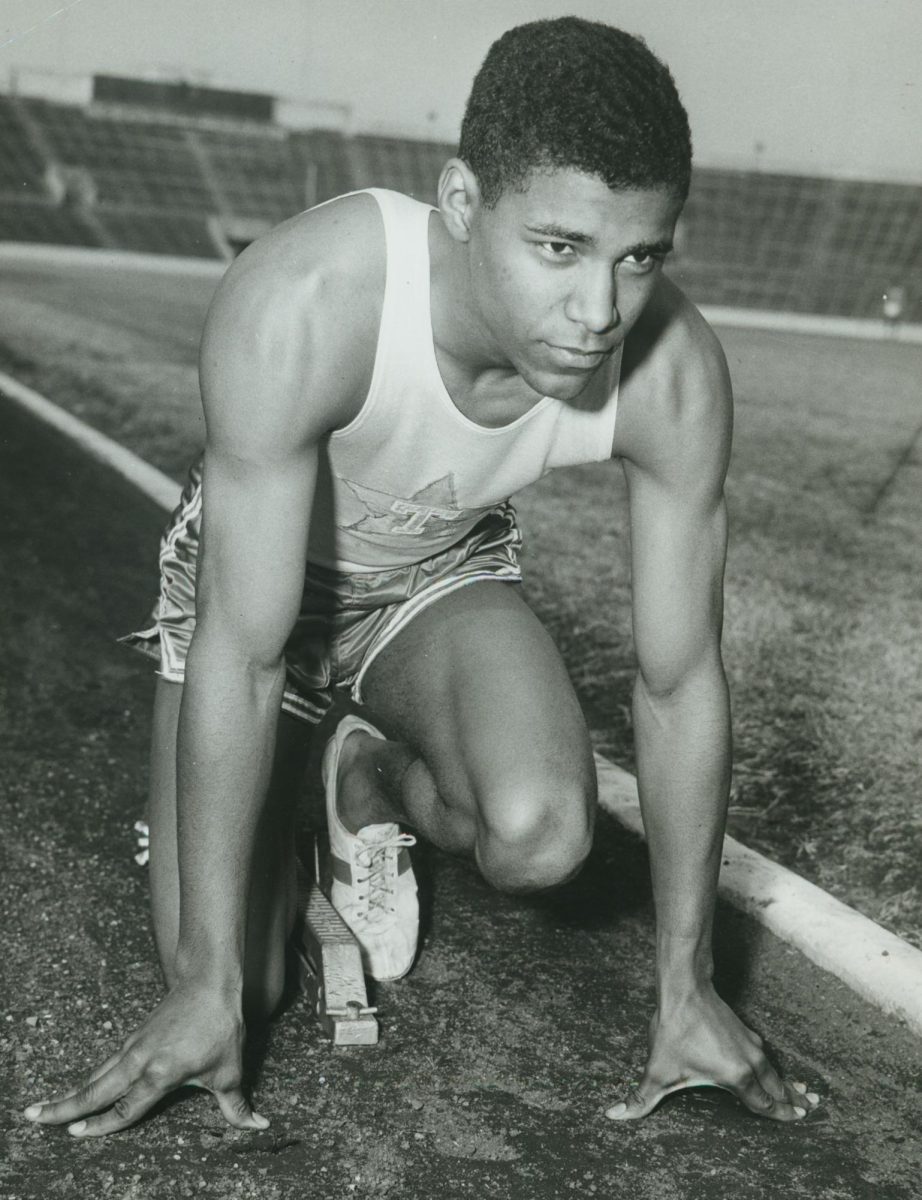
The path was never a typical one for James H. Means Jr. Now, nearly 60 years after his remarkable career running track at Texas, he’ll get his flowers.
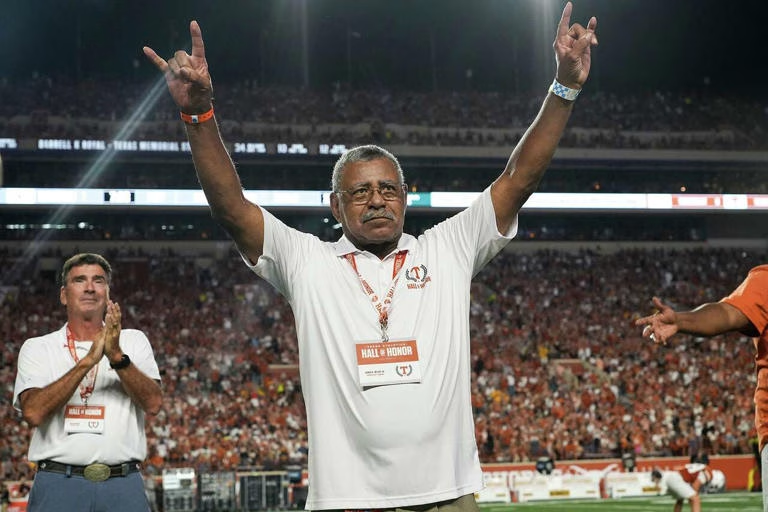
This Friday, Means is set to be inducted into the Texas Athletics Hall of Honor along with 10 other former Longhorns, a nod that’s long overdue given his contributions to the University.
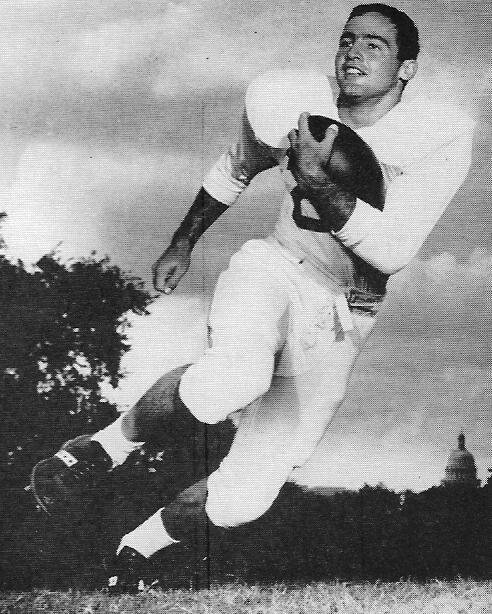
Means walked on to Texas’ freshman track and field team in 1963 and, in 1964, he made history running for the school’s main team at the Fort Worth Recreation Meet. There, he became not just the first African American student-athlete at Texas, but the first in the entirety of the Southwest Conference.
Means was a pioneer for the widespread integration of college athletics in the southern United States, opening the door for countless student athletes of color. In addition to his trailblazing efforts, Means was a star on the track for the Longhorns.
After sitting out for a year in 1965, in 1966 Means also became the first African American student athlete to receive a scholarship at Texas. He was a letterwinner from 1966-68 and his talent as a sprinter helped the Longhorns in winning a pair of Southwest Conference Championships in 1966 and 1968.
A lifelong Austinite, Means worked for his family’s taxi business, now called Austin Cab. His mother, Bertha Sadler, who passed away in 2021 at the age of 100, was revered in the community as an activist and educator. Her petitioning to Texas Regent Frank C. Erwin Jr. regarding her son’s inability to run track played a pivotal role in the inclusion of student athletes of color.
Means and the 10 other Longhorns getting inducted will join the Hall of Honor this Friday and will receive a special salute at halftime of the Texas football game versus Wyoming at Darrell K Royal-Texas Memorial Stadium on Saturday.