THE GOOD, THE BAD, AND THE UGLY: Longhorn Flashback to ’66 By Larry Carlson
Good, Bad, and Ugly theme song is in the link below.
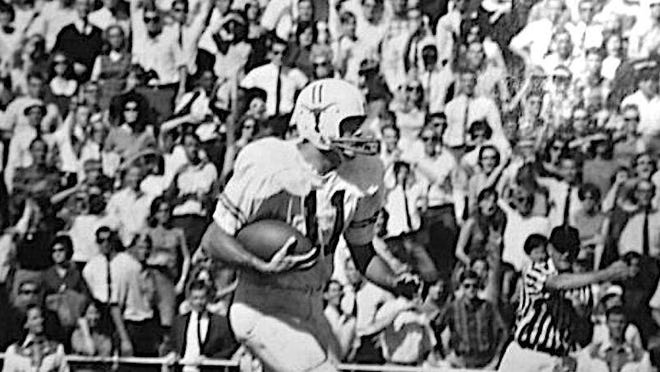
Dig out a time capsule from sixty years ago, and you’ll be reminded that one of the biggest movies came from rugged Clint Eastwood. It was entitled “The Good, The Bad, And The Ugly.” Texas football would sample some of all those things from the groundbreaking “Spaghetti Western” in 1966
The Longhorns were unaccustomed to being unranked as the season began. But Texas had endured an off year in ’65, sputtering to a 6-4 record and no bowl game. That followed a sensational stretch from 1961-1964 that yielded the program’s first national championship, three Southwest Conference titles and four New Year’s Day bowl games amid a glossy 40-3-1 record.
Much of the preseason chatter surrounded the most celebrated sophomore that Darrell Royal, now in his tenth season on the Forty Acres, had coached. He came from Palestine in East Texas. Bill Bradley was already called “Super Bill.” The teenager was shifty and quick, had thrown high touchdown passes with each hand and was an ace as a punter. He would quarterback these Longhorns and launch towering punts off his left foot when not leading the Horns to touchdowns.
The Horns were set to open the season with a marquee home date against ninth-ranked USC, coached by DKR’s buddy, John McKay. This was a year before OJ Simpson would play for the Trojans — he was toiling as a sophomore for City College of San Francisco as a sophomore — but the Los Angeles dudes were loaded with talent.
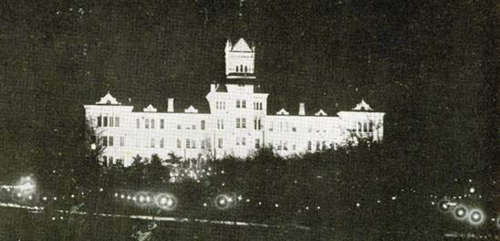
Kickoff would come 47 days after Austin and The University had been devastated by one of the worst mass shootings in American history and among the first. A student named Charles Whitman killed 17 people on August 1, wounding another 31 in his rampage from the deck atop UT’s iconic tower.
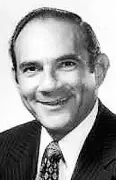
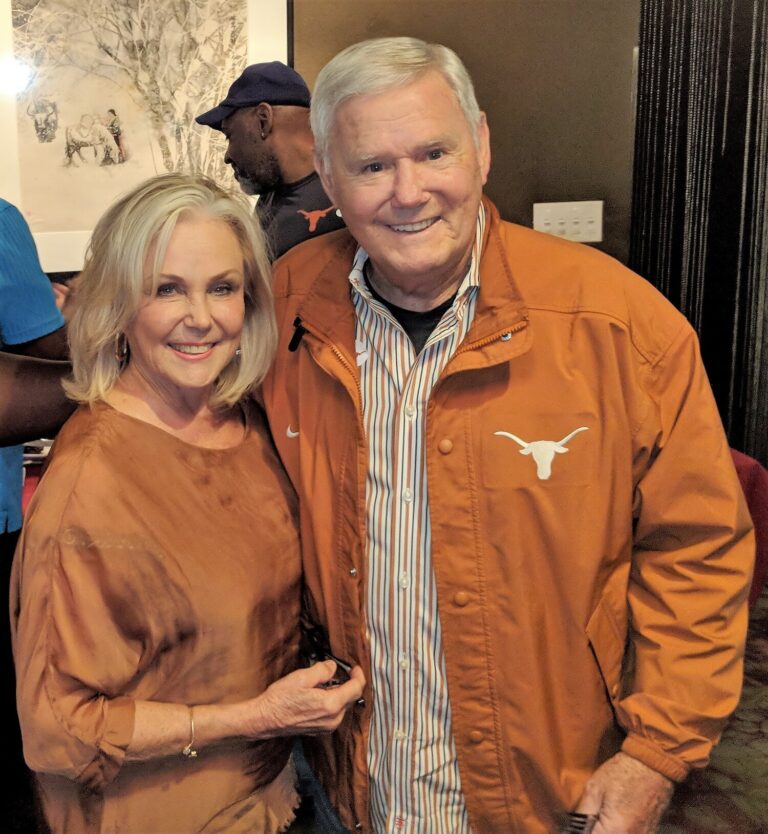
One Longhorn, young defensive lineman Gene Powell, upon finding out about the shooting that began in late morning, had hurried to his job at KTBC-TV on E. 10th to operate cameras and assist all day in the newsroom. Powell, of Weslaco, would go on to become a noted developer and later serve as a member — then the Chairman — of the UT Board of Regents.
When he looks back at the events of that infamous day and the following weeks, he says he didn’t feel the Whitman shooting had any lingering aura for students, including teammates, by the time Texas and USC teed it up. “It was big to me,” he says. It was a terrible day.” But few of the players had been on campus that day. “We barely had a summer program…everybody went home and worked.”
One ominous note for the cautious Royal was the fact that he would be starting seven sophomores. Powell vividly remembers that the Longhorns were juiced to host the Trojans for the nationally televised afternoon brawl. He recollects later having to get two stitches in a busted lip. “And I didn’t play,” he laughs. The pep in pre-game warmups was sufficient for folks to draw blood. “We were hitting like Monday practices,” Powell says.
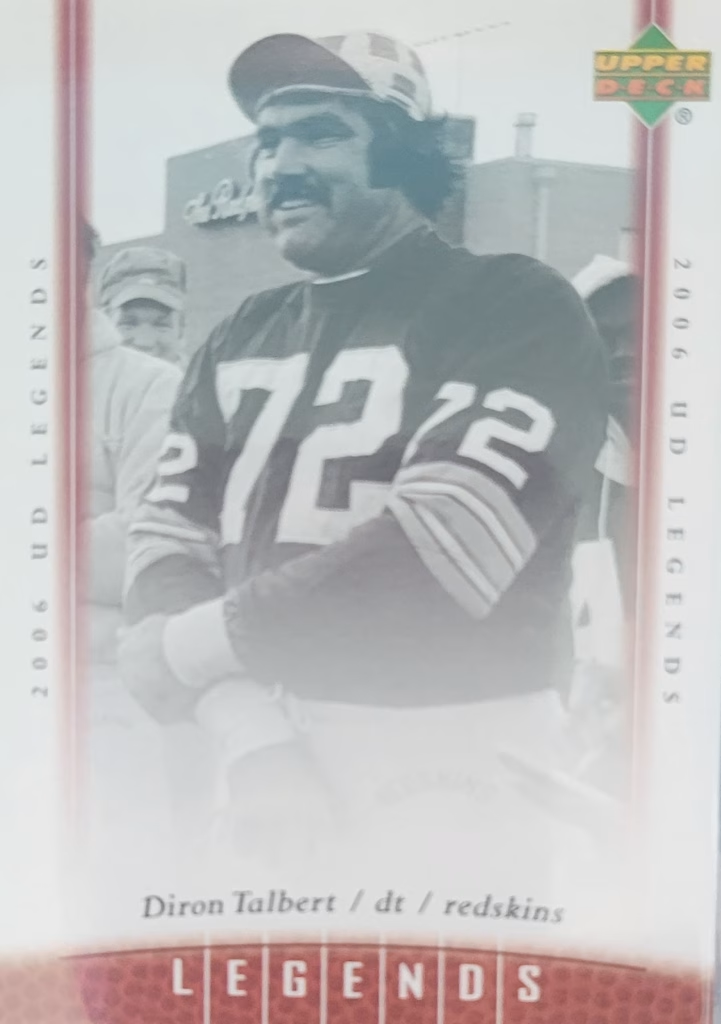
Bradley and the Texas offense were held in check during the first half. But the Horns’ defense, anchored by senior Diron Talbert, a Texas Football magazine coverboy that summer, was stout, too. The Trojans led, 10-0 at intermission.
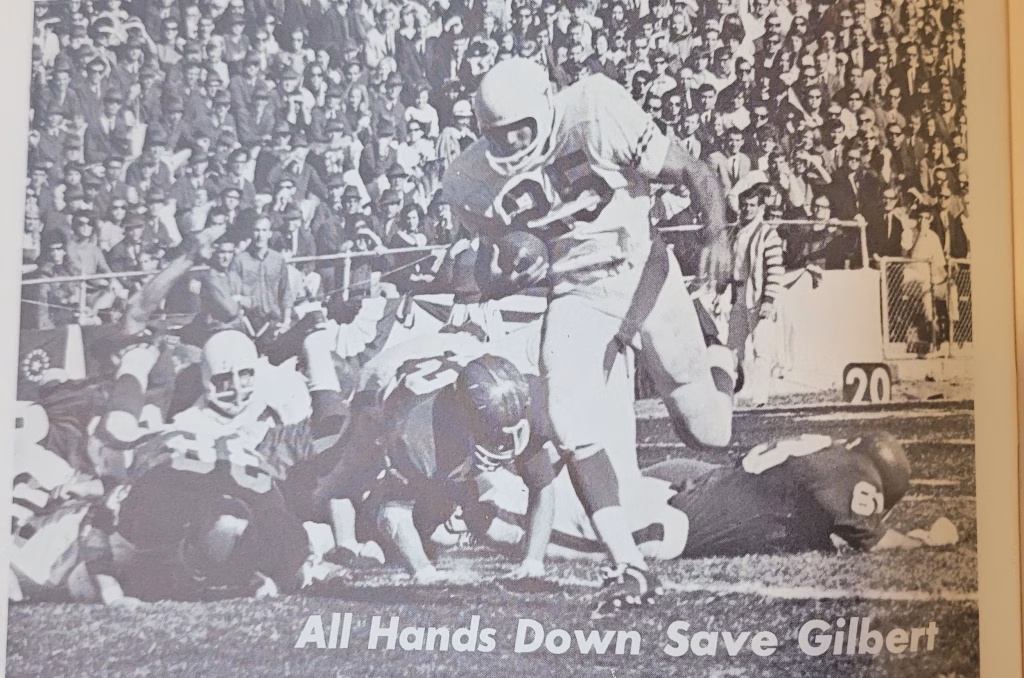
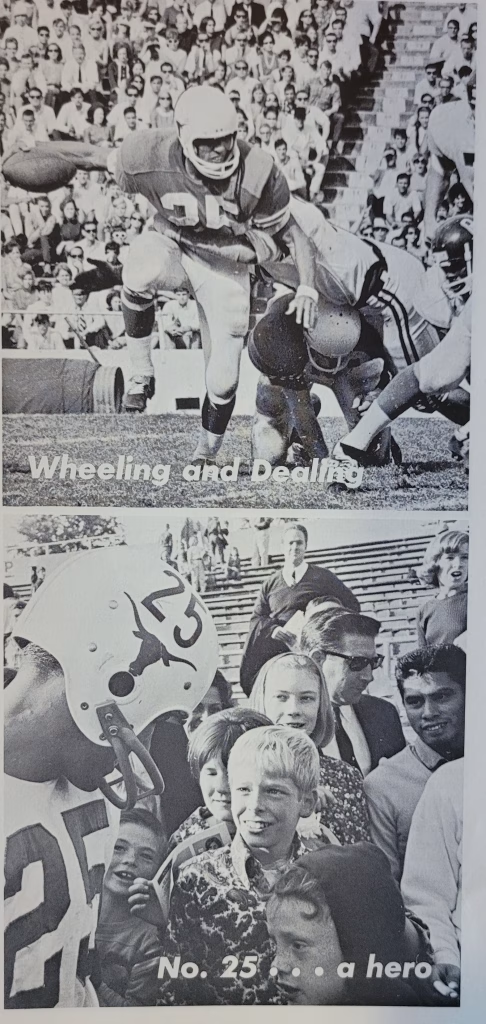
Coach Royal, in an effort to jump-start the offense, replaced halfback Jim Helms with Houston (Spring Branch High) sophomore Chris Gilbert. He motored to 103 second half yards on 14 carries. Texas’s defense pitched a second half shutout and the offense got a TD early in the fourth period but UT lost, 10-6.
n several ways, the game was a portent of things to come in the season. The games would be tight. Only one regular season game — a 35-0 blowout of Indiana in which Bradley injured a knee — was decided by more than 12 points. Five contests had one-score margins. And, in Gilbert, a star had been born. He would become his school’s first 1,000-yard rusher, earning All-SWC honors as a soph.
Gene Powell recalls that the UT team did not get its dauber down following the tight opening loss. The Steers were ready to play when they journeyed to Lubbock to open the conference campaign. Powell chuckles when flashing back to the game’s highlight play, one that set the tone for an important Texas victory. He says Greg Lott, back in his hometown, was paired with Gilbert as UT’s return men for the kickoff. The speedster eyeballed Tech’s kicker, one he was familiar with, and asked Chris to switch spots with him so he could patrol the northwest corner of Jones Stadium. Lott looked like a prophet when the ball came to him at the 12-yardline. And he looked like a hero as he sprinted down the Texas sideline to cash in an 88-yard TD return. The stirring romp earned Lott a bit of immortality, and permanent bragging rights in his home on the South Plains. But Powell laughs heartily about the way Lott remembers his short-lived ebullience. Teammates gleefully clapped him on the shoulder pads. But as Lott’s story goes, DKR asked what happened to result in the end zone switcheroo with Gilbert, then told him in no uncertain terms that if he ever ignored another assignment, he would not play again.
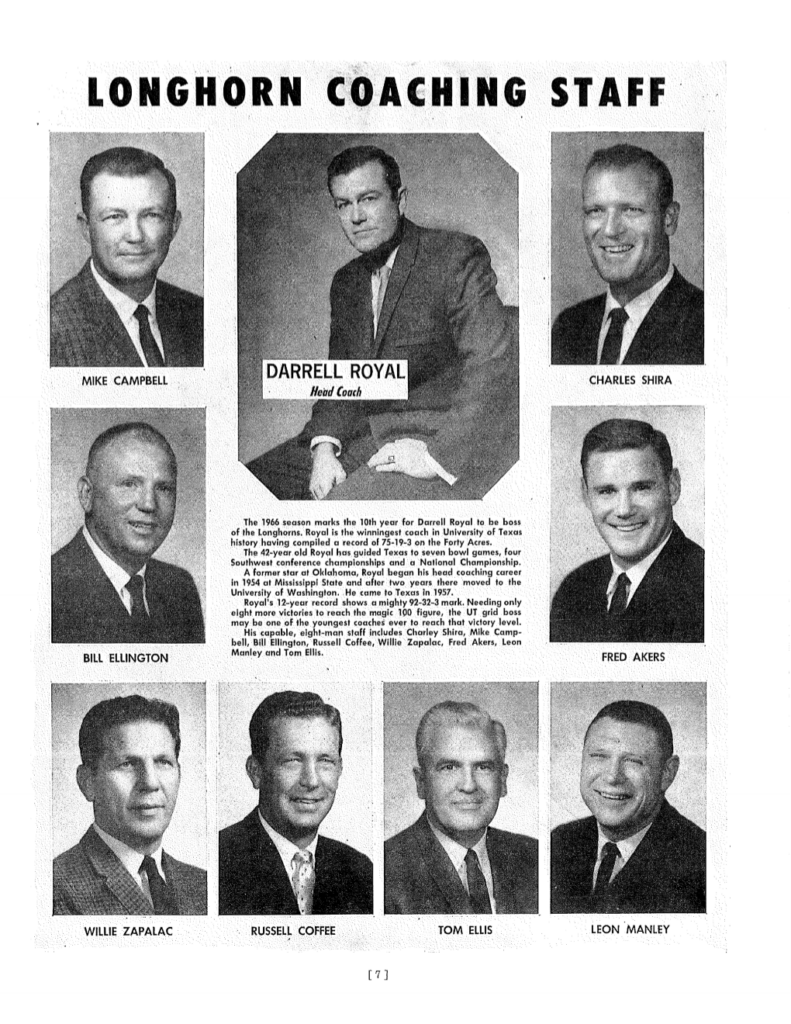
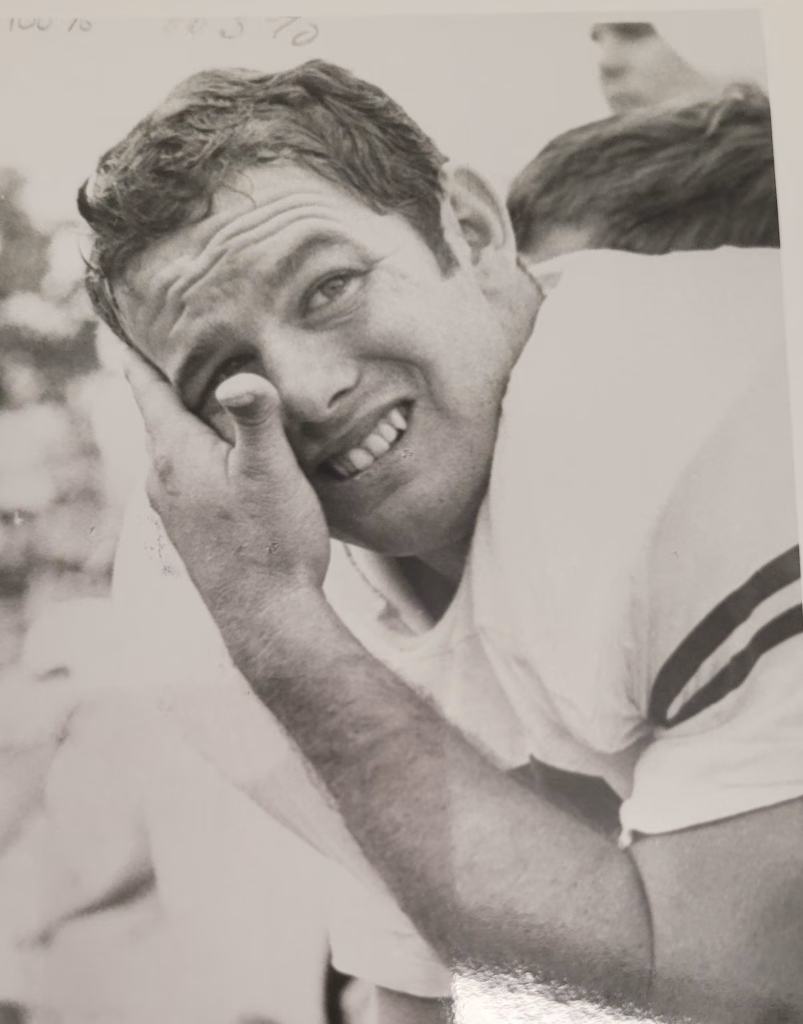
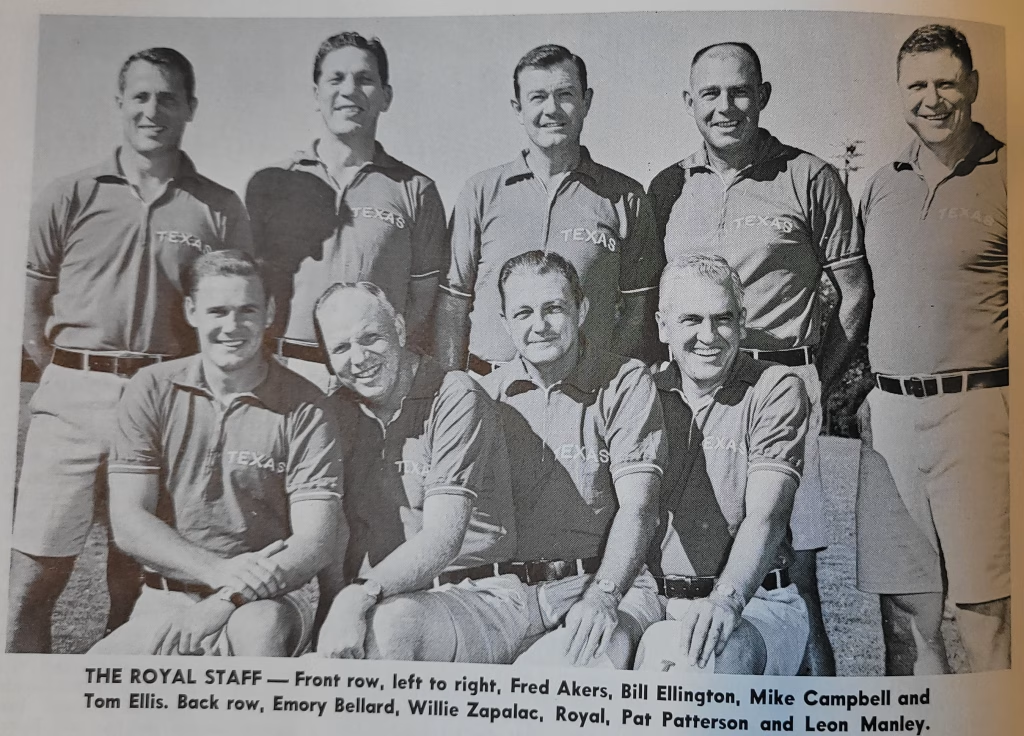
Powell has his own entertaining story from that Lubbock night. He replaced starter Bob Stanley on the D-line when Stanley was felled early. According to Powell, the intense and demonstrative Diron Talbert, all 6-5, 240 pounds of him, was less than satisfied about where and how Powell lined up. “Diron was an amazing physical specimen,” Powell testifies. “Rawboned, sinewy, tall, a vicious football player, hands the size of dinner plates.” When the UT stoppers came off the field, Mike Campbell, UT’s defensive boss, asked Powell about Talbert’s ranting tirades. Then Campbell doled out some savvy advice.
“Well, do what he says. Otherwise, he’ll want to kill you and I can’t get out there and save you.” Young Powell acquitted himself well and the Horns controlled the game, allowing Tech two “garbage” TD’s in the final quarter of a 31-21 verdict.
The beatdown of Indiana’s Hoosiers might have provided the Longhorns with a breather and a heap of optimism as the Texas-OU game loomed. Bradley, though, tore up a knee, would miss the big battle at the Cotton Bowl and big picture, simply would not be the same. Nine would-be starters, including Super Bill, were on the shelf for the duel in Dallas and then Texas donated four turnovers inside its 30-yardline.
The Sooners broke an eight-game Texas winning streak in the bitter series, emerging with an 18-9 triumph.
A week later in Austin, Arkansas came-a-calling. Bradley played with a heavily taped right knee. But he was ineffective, dumped for 53 yards in losses. The Hogs reined in Gilbert, limiting him to three yards per carry on 18 attempts. Arkansas won, 12-7. Royal’s best friend, Frank Broyles, had bested him three straight years, by a total of ten points.
With the season at its midway point, Texas was 2-3. “It was little things,” Gene Powell sighs now. “We just could not get a break. It seemed like we were snakebit.”
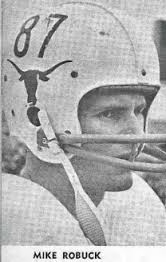
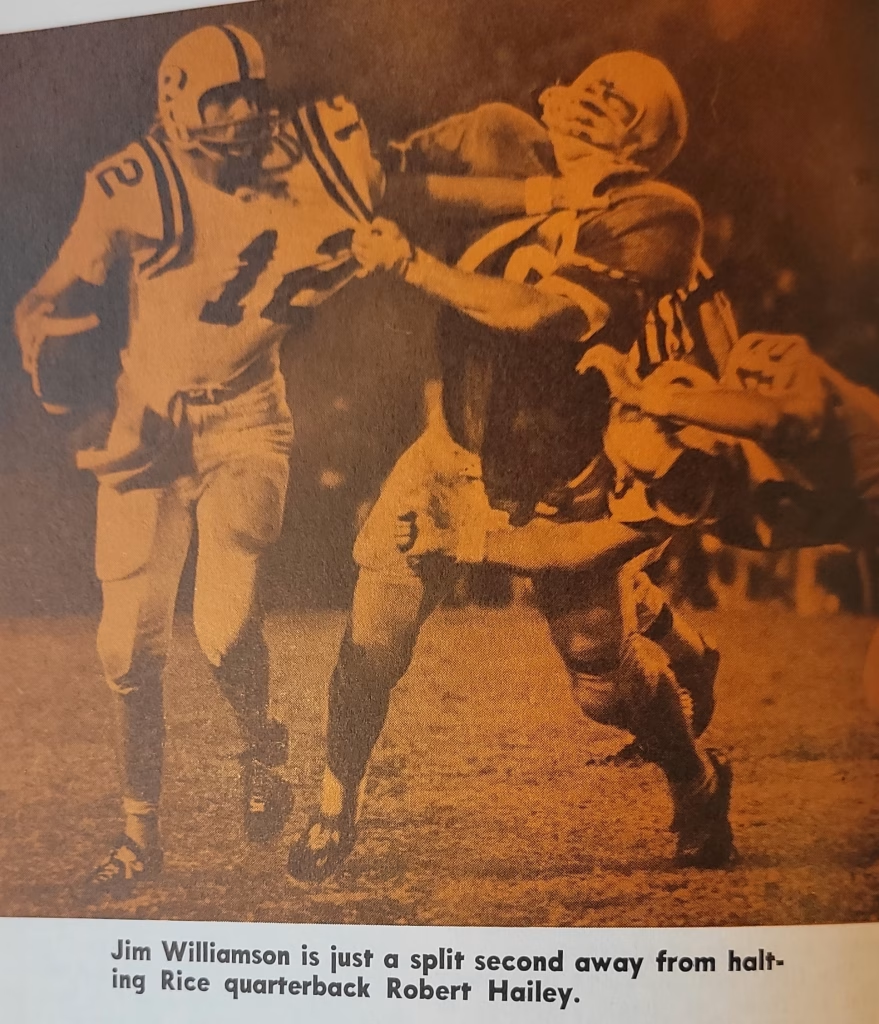
Texas utilized a 90-yard TD return of a deflected pass by soph lineman Mike Robuck as the difference in its next outing. The Horns held off a pesky Rice team in Houston, 14-6, but the snakebite fangs returned a week later when Texas took on a very good SMU team at Memorial Stadium. The Horns seemingly had victory in hand, leading 12-10 with three minutes remaining and a third-and-one at the Mustangs’ 33. Bradley fumbled the snap and the Ponies got the ball. They drove to the UT 16 and hit a winning field goal with seconds to play. Nobody knew it yet but that provided what would be the margin to propel SMU to the SWC trophy and the Ponies’ first Cotton Bowl berth in 18 seasons.
The Longhorns, with a second straight four-loss season — or worse — insured, could have checked out in favor of visions of Christmas vacation sugarplums dancing in their heads. They didn’t. Three Southwest Conference challenges remained.
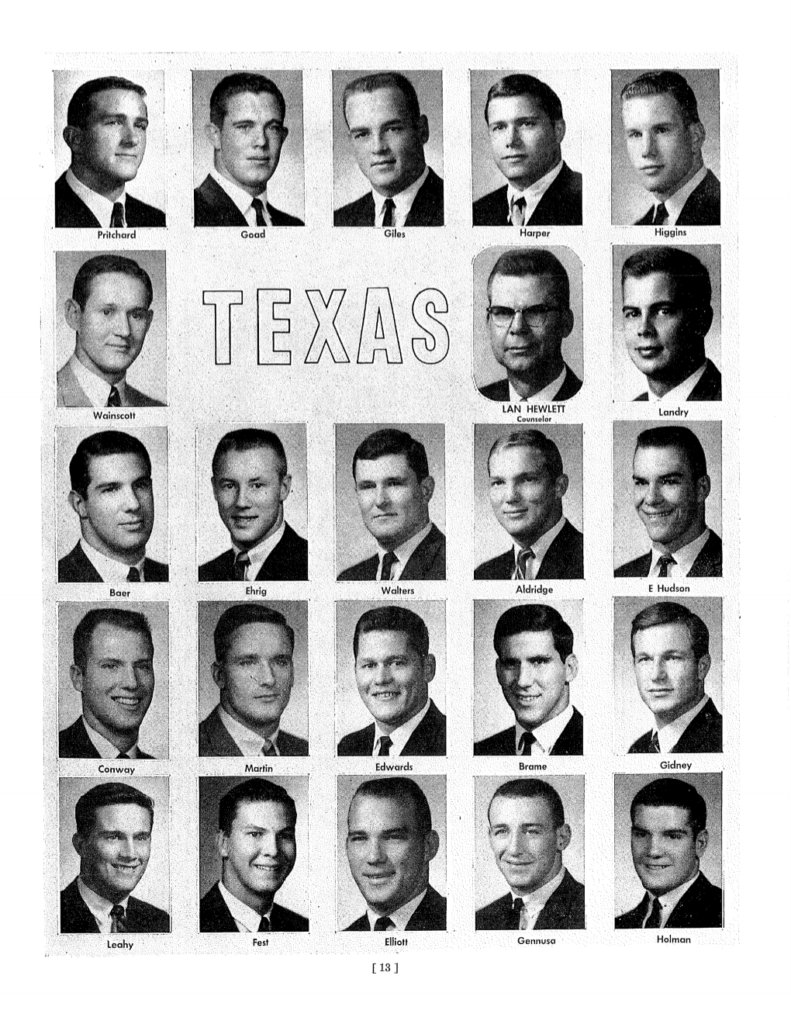
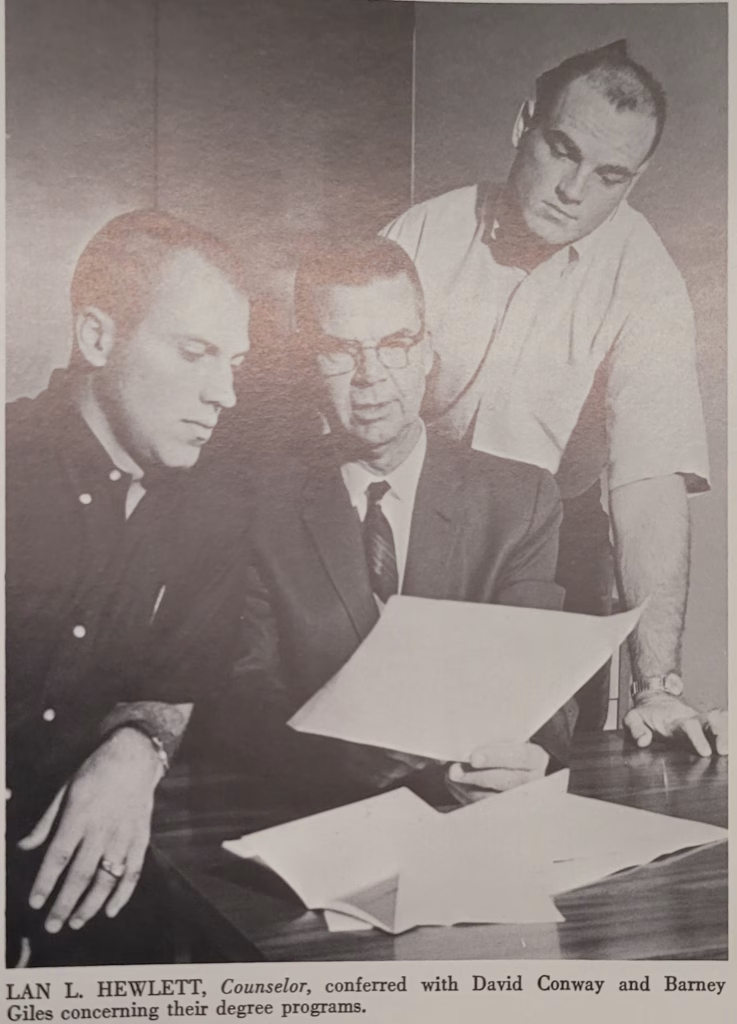
In Waco, Chris Gilbert ran over, around and away from Baylor’s Bears, amassing an incredible, record-setting 245 yards on the ground in a 26-14 “W.” A week later, the Gilbert traveling circus hit Fort Worth. This time the soph set a UT mark in the workhorse category, hauling the ball 32 times. The gritty workday brought 117 yards and Linebacker Joel Brame along with soph stud Corby Robertson and company stuffed the Frogs. Kicker David Conway nailed field goals of 52 and 44 yards, absolute boomers for the era. Texas 13, TCU 3.
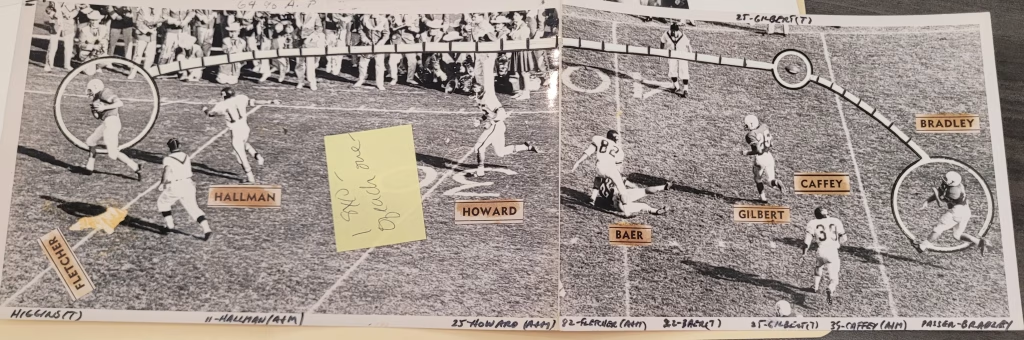
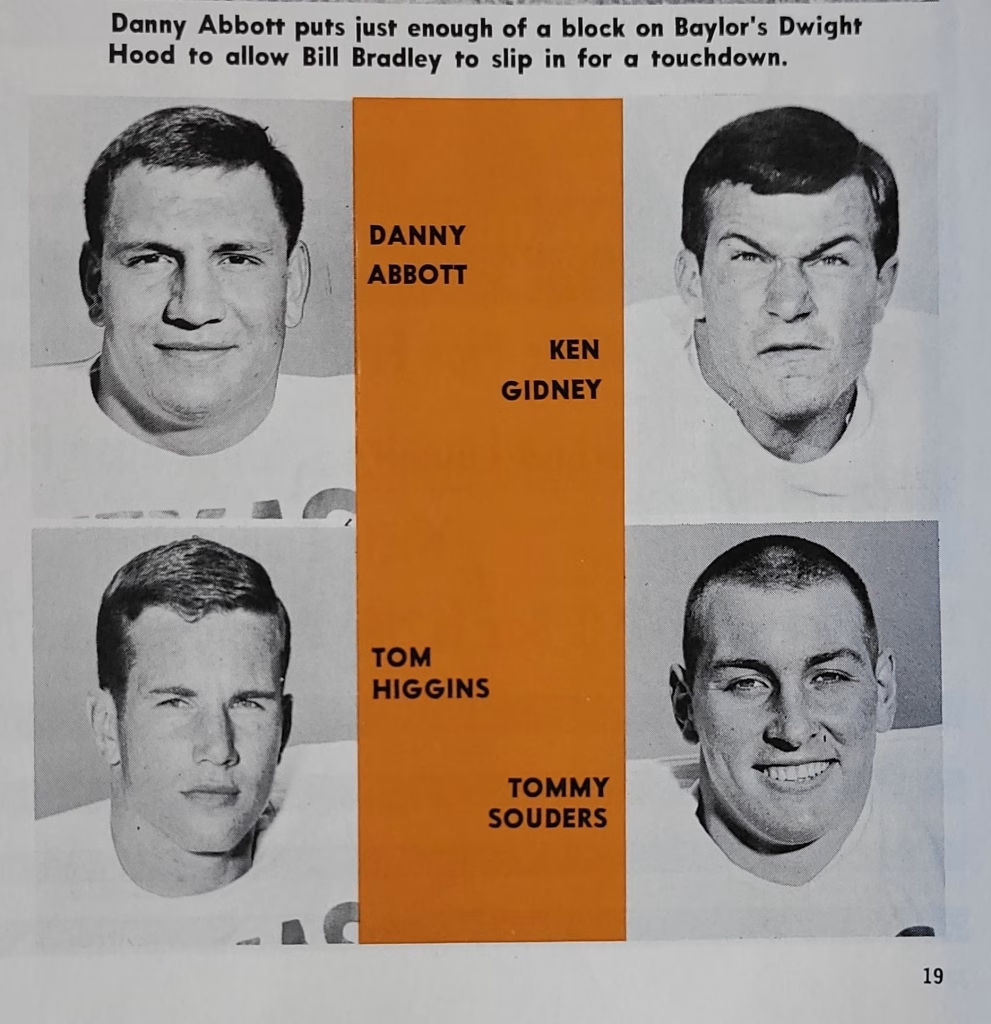
Thanksgiving in Austin brought an array of burnt orange treats to match the pumpkin pie. Gilbert rolled to his fifth straight 100-yard day. Bradley hit his longest pass play of the season, connecting with Tom Higgins for a 61-yard TD. Conway kicked a pair of field goals and the defense gobbled up a safety. The Longhorns, 22-14 victors, had whipped aggy for the tenth consecutive year. If life were imitating art, it’s worth noting that late autumn’s biggest radio hit was “Good Vibrations,” the Beach Boys’ latest sunny smash.
What it all meant was that the Horns had righted a ship that appeared to be taking on water in late October. Coach Mike Campbell had again steered the defense to smooth sailing as a unit. Achored by seniors such as Talbert, LB Fred “Flex” Edwards, future NY Jets lineman John Elliott and DB Les Derrick, the crew allowed but 11 points per game. Only Texas Tech, in a 31-21 defeat, mustered more than two touchdowns. And as previously noted, the Red Raiders had trailed, 31-8, before notching two meaningless scores against UT’s backups.
The robust finish by Texas brought an invitation to play in Houston’s Bluebonnet Bowl. The opponent, Ole Miss, would be bringing a proud SEC team coming off an 8-2 season. With bigger stakes five years earlier, the two heavyweight coaches, Royal and Mississippi’s Johnny Vaught, a one-time TCU star, had slugged it out in the Cotton Bowl. Texas won that one, 12-7, in a slight Vegas upset.
Texas fans were justifiably excited about the coming potential of Gilbert and Bradley for two more seasons but savvy followers realized this would be the final game for a somewhat underappreciated defensive all-timer in Talbert. He was the last of three Texas City brothers to star for Royal in his first decade at Texas. Don, Charlie and Diron are all now enshrined in the UT Hall of Honor.
A few more words about Diron. He went on to stand out professionally, first with the Rams, then for a decade in Washington, where he was named one of the 70 greatest Redskin players. Talbert tormented NFL quarterbacks, notching 85 sacks.
But Diron is still remembered by former Texas teammates as a man not just to be respected but feared. Even by his compadres. More than a few have told me that they took extra steps, different routes around campus, even sometimes checking to see if he was roaming the vestibules at Moore-Hill Hall where the players resided.
“You did not mess with him,” Gene Powell states. “Not anywhere.”
“He was not warm and fuzzy. He had his friends, Tommy Nobis among them,” Powell continues. “But those guys were at a different level. Diron could just play; nobody could handle him. He was a large neanderthal who could really play football.
“Diron didn’t come to Texas for an education. He came to play football and I don’t think he would mind me saying that,” Powell continues. Then he lets out another chuckle. “He was a caricature of himself.”
You might ask Roger Staubach about Talbert. He and Diron and the Cowboys and Indians had an intense, edgy rivalry that peaked in the ’70s when both players were at their best.
But back to the Bluebonnet Bowl, a week before Christmas ’66. It was a coolish day in the upper 50s and Longhorn fans jammed Rice Stadium with close to 70,000, setting a mark for Houston’s bowl game that endured through the mid-’80s.
Those UT backers were rewarded. The Horns put it all together in a dominant win.
“We really felt great, beating the snot out of Ole Miss,” Powell crows. Behind a line led by All-SWC hoss Howard Goad, Chris Gilbert slithered for more than 150 yards and Offensive MVP honors. Super Bill lived up to his moniker, breaking the century mark on the ground for the first time The 19-0 margin might well have stretched, had the Horns not lost an astonishing seven turnovers.
Coach Campbell’s “D” held a heretofore potent Mississippi offense to 200 yards. “Flex” Edwards made tackles all over the field to merit Defensive MVP status. And Les Derrick put his name into UT’s record book with an unheard of three interceptions. (Note: that remarkable feat was bettered two years later…by Bradley, who had moved to safety in the second half of the ’68 season.) Talbert, in his final afternoon as a Longhorn marauder, terrorized the Rebs with nine tackles. And you can bet they all hurt.
So the ’66 season, Royal’s tenth in Austin, ended well, on a sizable uptick. The college football world — particularly the orange-blooded denizens — were bullish on Bradley, Gilbert and the coming season. Bumper stickers, emblazoned with ” ’67: Year Of The Horns” soon peppered traffic across the Lone Star State. After just a brief, brief absence from the upper echelon of pigskin society, Longhorn boosters were bragging again. But would it all be warranted, come autumn of ’67?
That’s another story.
(TLSN’s Larry Carlson is a member of the Football Writers Association of America. He teaches sports media at Texas State University and lives in San Antonio, his hometown.)