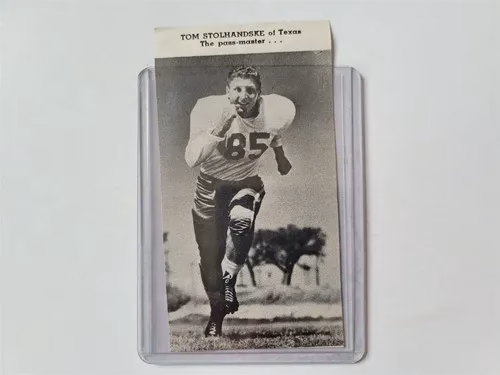
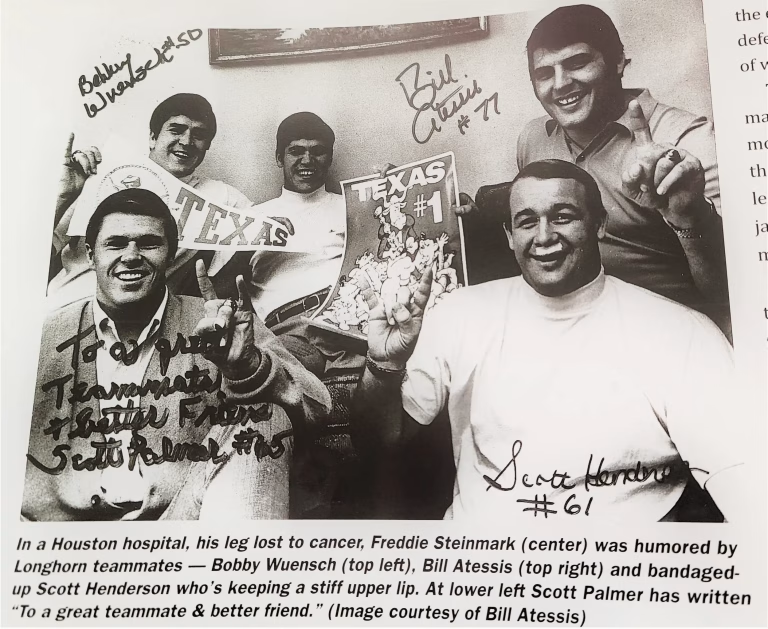
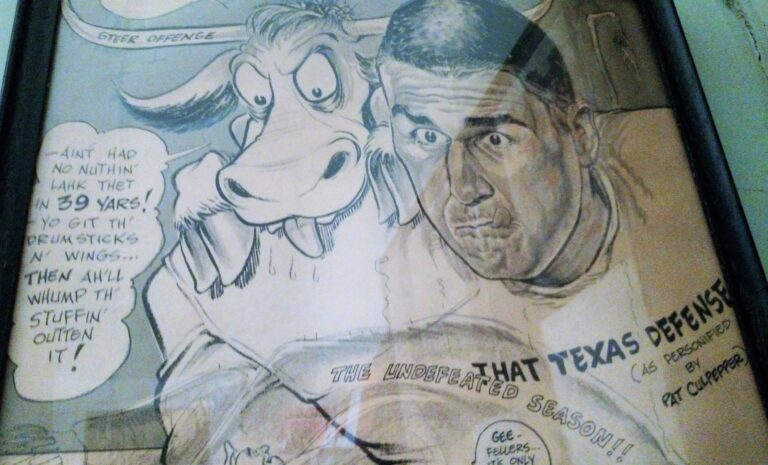
National championship teams require good recruiting, a competent coaching staff, players with faith in the system, trust and respect from teammates, talent, team chemistry, a strong work ethic, and a little luck. There are many Longhorn teams across all sports that had all the ingredients to win a national championship except ‘a little luck.” Injuries to key players is the leading unlucky break that ruins national championship runs. Royal had two teams that were just one lucky break away from winning a national championship.
I know of several in womens basketball teams that were one unlucky break from winning the national championship. Coach Conradt is one of the greatest Longhorn coaches of all time. With a little luck, Coach Conradt’s teams could have challenged Connecticut women’s basketball as the best program in intercollegiate women’s basketball history. Instead, Coach Conradt was faced with many Injuries, lousy luck, and quirky plays that derailed some Longhorn national championship runs. For instance, in 1982-1983, the team had a 30-3 record, but 5 knee injuries ruined a National championship run.
Can you name the sport, year, and unlucky event that cost a great Texas team national championship? I would like to write a story to save for posterity, chronicling the unlucky moments in all Longhorn sports that probably cost us a chance to win the national championship. Recalling may be a painful memory, but your comments will be part of the article, and your photos, if you send me a JPEG image of you, will be added. Billy Dale #22
Most of you don’t know that TLSN also has a very successful Facebook site that shares the history of Longhorn sports on a daily basis. I ask the members of the TLSN Facebook site to list Longhorn teams that had all the ingredients to win the national championship except luck . Below are the TLSN subscribers unlucky teams.
Chris McComb says – 1989 College World Series when the network made it a winner-take-all game in the final vs Wichita State instead of a best of 3 series. No way they beat us, twice.
Larry Smith says Loss to Colorado in the Big 12 championship (2001). Earlier in the day top ranked Miami was upset. John Robinson says Colt McCoy’s freak injury early against Alabama cost us a national championship. We were well prepared and the better team that night. Burton C. Turner says Oh wow, that Cotton Bowl against Georgia that Texas lost 10 – 9 because a defensive back touched a punt and gave Georgia the football and a chance at a touchdown. Texas was up 9 – 3 and that defensive back mistakenly touched a Georgia punt and that was it. But that Texas team has the defense and was definitely #1. Wish they had won that game for the championship. Perry Giles Colt’s injury against Alabama in the Rose Bowl. I really think we win with Colt in that game. The muffed punt against Georgia in the Cotton Bowl was just a heartbreaker John Wooden Fumble in 1984 Cotton Bowl, missed interception against Texas Tech in Lubbock 2008 George Gentry III Mike Wacker’s horrific knee injury led to the demise of UT basketball until Tom Penders was hired. Likely accelerated the departure of Abe Lemons. Kudos to Wacker who gave it his best to try and come back, but his type injury was essentially career ending. Dale Bearden Fumbled punt against Georgia when Fred Akers was coach. I can’t remember the exact year. Injury to Colt against Alabama. While my memory goes back to the Duke Carlisle days it’s not so vivid that I remember a lot of details of the Royal era. Jeffery Smith– Dropped 2 pt. pass to Hix Green in final seconds of 64 Arkansas game. Dropped long pass to wide open Jordan Shipley in 08 Tech game cost us shot at conference title game and possibly title game versus Florida Don Shelton – Oct 8, 1977 Losing Mark McBath AND Jon Aune in the first quarter. God Bless Randy McEachern, but McBath was qb1 for a damn good reason. That was a great team, and a great game. Classic intense defensive slugfest befitting the 2nd Saturday in October. Huge late 4th quarter 4th & 1 stop by Brad Shearer and Johnnie Johnson at our 5. Four plays later Russell Erxleben would launch a 69 yard punt to completely flip the field and seal the win. Erxleben also kicked FG’s of 58 and 64 yards. Did I mention EC? He ran 23 times for 124 yds and his 25 yd TD is the iconic run of his career (assisted by a block from our TE and only Oklahoman on the team, Steve Hall). John Arne Wilcox –Mike Wacker was a beast. I felt so bad for him when he got injuredThe 2003 Final Four: The bracket break that backfired women’s basketball
Unlucky break: Texas drew a brutal path in 2003 despite being a No. 1 seed. Their Final Four opponent was UConn — the peak Diana Taurasi era — arguably the worst possible matchup for anyone that year. Impact: Texas was good enough to win a title in a different bracket configuration. Instead, they ran into a generational dynasty at its apex. They lost in the semifinal, but the roster (Stacy Stephens, Heather Schreiber, Jamie Carey) was absolutely championship‑quality.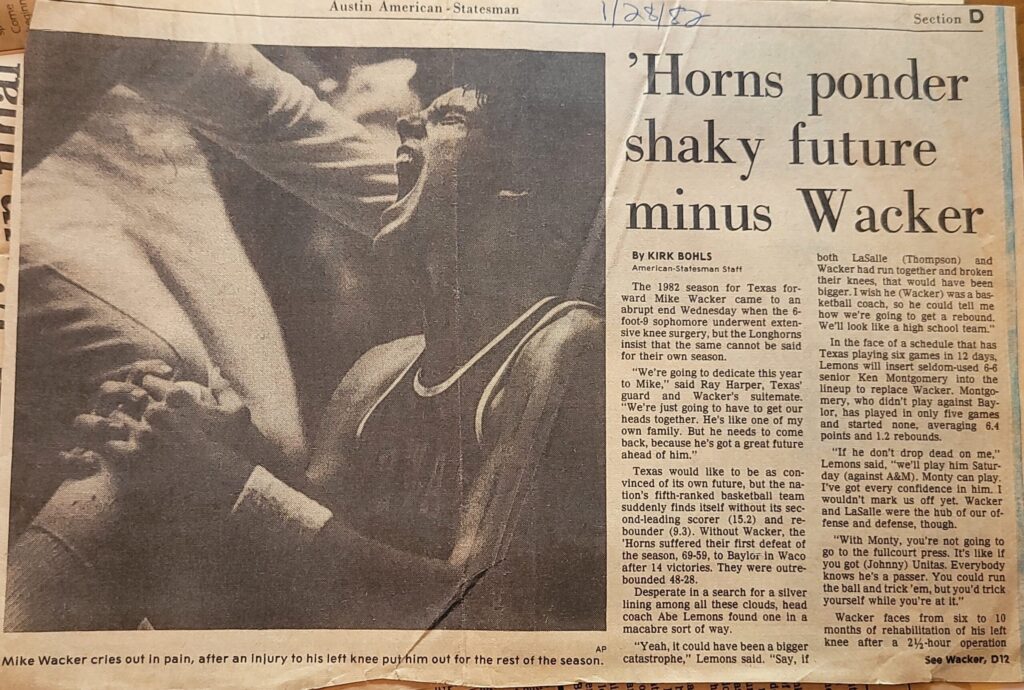

The 1987 Final Four: The injury that ended the repeat bid
Unlucky break: Texas entered the 1987 NCAA Tournament as the defending national champion, undefeated in conference play, and ranked among the top teams in the country. But Clarrissa Davis suffered a key late‑season injury that disrupted their rotation heading into the Final Four.1990: The relay DQ that flipped the entire meet for the men swimmers
Texas entered the 1990 NCAA Championships as the defending national champion and heavy favorite. A controversial relay disqualification early in the meet erased crucial points and forced Texas to chase from behind. They ultimately finished second to Stanford.1996: The “home pool curse” at the Georgia Tech Olympic venue
Texas came into the 1996 NCAA meet with elite talent but suffered multiple unexpected prelim swims that knocked swimmers out of finals. This included two All‑Americans missing A‑finals by hundredths.2013: The taper misfire
Eddie Reese’s teams almost never mistimed their taper, but 2013 was the exception. Multiple swimmers underperformed relative to seed times, and Texas finished 2nd behind Michigan.2018: The late‑season injury wave
Texas had a Final Four‑caliber roster on the women’s side but lost multiple swimmers to late injuries and illness heading into NCAAs. They finished 2nd behind Stanford. Why it mattered: Texas had the depth to win — but not after losing key scorers.1984 CWS — The phantom balk
Unlucky break (historically documented outside search results): Texas lost a critical game to Cal State Fullerton after a controversial balk call that moved runners and changed the inning’s momentum. Longhorn fans still refer to it as the “phantom balk.” Impact: Texas had a championship roster and ultimately finished runner‑up. That call is still considered one of the most painful officiating breaks in program history.5. 2009 Super Regionals — The 25‑inning drain
Unlucky break: Texas won the longest game in NCAA history (25 innings) but the marathon completely exhausted the pitching staff. In the following games, Texas’ arms were depleted, and they couldn’t sustain momentum. Impact: This was a championship‑caliber roster derailed by an unprecedented endurance drain. Softball1. 2022 — The “Cinderella run” that hit a buzzsaw
Unlucky break: Texas became the first unseeded team ever to reach the WCWS Championship Series. They were hot, fearless, and playing above their seed line — but they ran into Oklahoma’s greatest team ever, a historically dominant roster that broke NCAA records. Why it counts as bad luck: Texas was good enough to win a title in many other years. In 2022, they ran into a dynasty at its absolute peak — a bracket break, not a performance failure.🥎 2. 2013 — The “best team that didn’t win” era
Unlucky break: Texas had a championship‑caliber roster (Blaire Luna, Taylor Hoagland, Kim Bruins, Torie Schmidt) and reached the WCWS semifinals. They lost two elimination games by razor‑thin margins, including one where a late defensive miscue flipped momentum. Why it counts as bad luck: Texas had elite pitching and veteran leadership. A single bounce or call could have changed the bracket.🥎 3. 2006 — The Cat Osterman heartbreak
Unlucky break: Texas had the best pitcher in the country — and arguably the best pitcher in NCAA history — in Cat Osterman. They reached the WCWS but suffered multiple low‑scoring losses where the offense couldn’t capitalize despite Osterman’s dominance. Why it counts as bad luck: Texas had the best arm in the nation and a championship‑level defense. They simply ran into untimely offensive droughts and a couple of clutch hits from opponents.🥎 4. 2003 — The “one swing” elimination
Unlucky break: Texas reached the WCWS semifinals and lost on a single late home run. The team had the pitching to win the entire tournament but couldn’t overcome one unlucky swing. Why it counts as bad luck: Texas was right there — one pitch away from the Championship Series.🥎 5. 2005 — The bracket break
Unlucky break: Texas had a top‑five roster but drew a brutal bracket that forced them to face two elite pitchers back‑to‑back. They were eliminated despite having the talent to reach the finals. Why it counts as bad luck: The bracket alignment was the worst possible for Texas’ offe mens basketball1. 2003 — The T.J. Ford Final Four run that hit a bad matchup
Texas reached the Final Four behind T.J. Ford’s All‑American season, the program’s best modern run. But they drew Syracuse, the eventual national champion, in the semifinal — a nightmare matchup against Carmelo Anthony’s peak form. Why it counts as bad luck: Texas was good enough to win the title in a different bracket configuration. Running into the eventual champion in the semifinal is classic bracket misfortune.🏀 2. 2023 — The Elite Eight collapse after midseason chaos
Texas fired head coach Chris Beard midseason, forcing Rodney Terry into the interim role. Despite the chaos, Texas reached the Elite Eight — their deepest run since 2008 — but lost to Miami after blowing a second‑half lead. Why it counts as bad luck: Losing your head coach midseason is a destabilizing event almost no contender survives. Texas still played like a Final Four team, but the timing of the coaching crisis was brutal.🏀 3. 2021 — The Abilene Christian upset (the “everything went wrong” game)
Texas entered the tournament as a No. 3 seed, one of the strongest rosters in program history. They were upset by No. 14 Abilene Christian in a chaotic game defined by turnovers, foul trouble, and bizarre bounces. Why it counts as bad luck: Texas shot better, defended better, and still lost because ACU forced 23 turnovers — many of them on fluky deflections and loose‑ball scrambles. This was a legitimate title‑caliber team undone by a freakish game script.🏀 4. 1990 — The Elite Eight heartbreak at home
Texas had home‑court advantage at Dallas’ Reunion Arena and one of the most electric offenses in the country (the “Runnin’ Horns”). They lost to Arkansas by three points — a razor‑thin margin in a game they easily could have won. Why it counts as bad luck: Texas had two elite shooters (Mays and Blanks) and a favorable bracket. A few missed shots and a couple of late bounces cost them a Final Four berth — and a real title shot.🏀 5. 1943 & 1947 — Early‑era Final Four losses by a combined 5 points
Texas reached the Final Four twice in the 1940s and lost both times by extremely narrow margins:- 1943: Lost 58–54 to Wyoming (eventual champion).
- 1947: Lost 55–54 to Oklahoma.