James Means’ TLSN celebration of life page is complete with photos and quotes from friends
|
Chris Fisher, a Longhorn graduate, reflects on how playing high school sports transformed his life and how, as a coach and teacher, he channels those experiences to positively shape the futures of young minds. His response is to a poem by Thomas S. Jones, Jr. that says, “The Lad I Use to Be”.
|
“Sometimes across the fields of yesterday, he comes to me—The little lad just back from play, the lad I used to be. And yet, he smiles so wistfully; once he has crept within,
I wonder if he hopes to find the man I might have been.”
|
|
I am not a former Longhorn athlete, but I am a TexasEx. I thoroughly enjoy each newsletter you send out, connecting the past to the present and sharing the full legacy of Longhorn athletics.
|
|
Your reflection on the role youth sports and college athletics played in shaping your life led me to reflect on the journey sports has taken me. I am a high school football coach at Ridge Point HS in Missouri City, TX. I coached former Longhorn football player Cameron Townsend. I also was a backup offensive lineman at Waxahachie High School in the early 90s. Football and sports have been part of my life for as long as I can remember.
|
|
I am entering my 26th year of teaching and coaching, and I know my career is much closer to the end than it is to the beginning. I know how sports have shaped my life and given me opportunities I would not have had otherwise. I also know that if it were not for my time at UT, I would not be who I am today. I have so many foundational memories from my time as a high school athlete, my days of walking the 40 acres, and how they led to great memories of working with students and athletes as they prepare for their own journeys into discovery.
|
|
Sports is an avenue that reveals to kids that they are capable of accomplishing their goals. Sports provides the simplest form of immediate feedback: you either did it or you did not. Both results provide valuable learning opportunities. The longer our experience in sports, the better we get at applying these lessons as our lives grow in responsibility and complexity. We learn from our successes and our failures. We keep going.
|
|
This past school year I was awarded my campus Teacher of the Year. It was the first time I had ever received such an honor, and I know that it is due to the lessons I learned over the years from playing in sports, coaching sports, and how it all started when I decided to pursue teaching and coaching while a student at the University.
|
|
Thank you for sharing the legacy of Longhorn athletics. Thank you for sharing your personal stories and reflections on how they shaped your life. I too know who that little lad is, and I believe he is smiling wistfully at the man he became.
|
Leigh Ann Fetter- Swimming
|
A record-breaking swimmer at the University of Texas, Leigh Fetter-Witt was a fifteen-time NCAA Champion. Not only did she win the 50-yard freestyle all four years in college (1988-91), she also became the first woman ever to swim the 50-free in under 22 seconds. Simultaneously holding the American record in the 50-yard and 50-meter freestyle, she became only the third woman in NCAA history to win the same event four times. She represented the United States as a freshman at the 1988 Summer Olympics in Seoul. She finished fifth in the final of the women’s 50-meter freestyle. Returning to Texas, she won the 100 free her last three years and was a part of three national championship Teams. In 1989 she received the Female Athlete of the Year Award in Swimming, and 1990 she was the recipient of the Honda Award for Swimming, again recognizing her as the outstanding college female swimmer of the year. She became a member of the Longhorn Hall of Honor in 2003. Fetter later became head swim coach for the Greater Nebraska Swim Team and Lincoln Southwest High School men’s and women’s teams.
|
|
1988 Leigh Ann Fetter women’s swimming |
In sports, intangibles like “heart” are qualities that a computer cannot quantify.
|
|
It’s not about your size, but the intensity with which you play. Players who may be considered small or slow but possess heart can elevate team chemistry and significantly contribute to overall success of a team. In my experience, especially in the 1960s, heart often proved a better measure of athletic performance than speed, size, or raw talent. Coaches Bryant and Royal understood the value of heart in a winning formula and secured multiple national championships with players whose greatest asset was their passionate commitment to the game.
|
|
Both coaches sought recruits with dreams of greatness, aggressive traits, and natural instincts to hit. Athletes whose hidden traits concealed in the heart include grit, courage, attitude, passion, and a will to win— qualities that turn players into fierce defenders of their teams’ turf. Royal said, “I like recruits with Billy Goat instincts who can inspire their teammates.” He favored high school athletes who refused to run out of bounds, instead planting their cleats in the turf and driving a face mask straight upfield. He valued self-starters, noting, “If you spend time waiting for these promising boys to deliver, pretty soon you’ll be wearing a straw hat at Christmas.”
|
|
Bear Bryant also recruited like Royal. In the book “Junction Boys” by Jim Dent, Coach Bryant says he doesn’t mind if a player is a little short in talent or stature if he can compensate for it with a big heart. Bryant said, “I can reach a kid who doesn’t have any abilities as long as he doesn’t know it.” Bryant also believed that “What matters…. is not the size of the dog in the fight, but the size of the fight in the dog.” “Life’s battles don’t always go to the stronger or faster. But sooner or later, the man who wins is the one who thinks he can.”
|
|
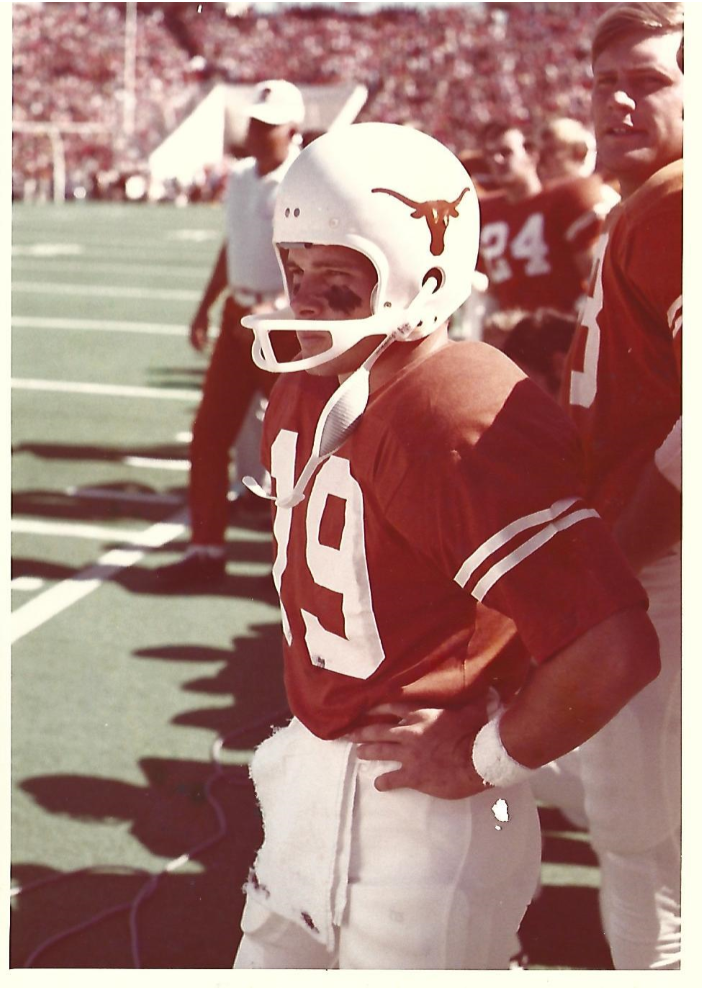
I understand that viewing heart as a central part of recruiting may seem old-fashioned—even antiquated—to some. Still, I miss the recruiting process before computers reduced talent to one-to-five-star ratings. In the 1960s, heart mattered as much as speed or size. Looking at college football today, I wonder how many players from Coach Royal’s three national championship teams would be overlooked as recruits in 2026. It is no secret that, since Royal’s three titles, the Longhorns have won only one national championship using computers. That team, led by Vince Young and guided by Coach Brown’s leadership and coaching, defeated USC by playing with One Heart—a chemistry that transcends physical ability.
|
|
Quite frankly, I do not believe a modern-day recruiting Freddie Steinmark would receive serious scholarship consideration. His greatest strengths came from the heart and could not be quantified. He was not especially fast, quick, or tall. What made him unforgettable, in my view, was something no stopwatch or scale could measure: his game-day intelligence, faith, strategic mind, and big heart.
|
|
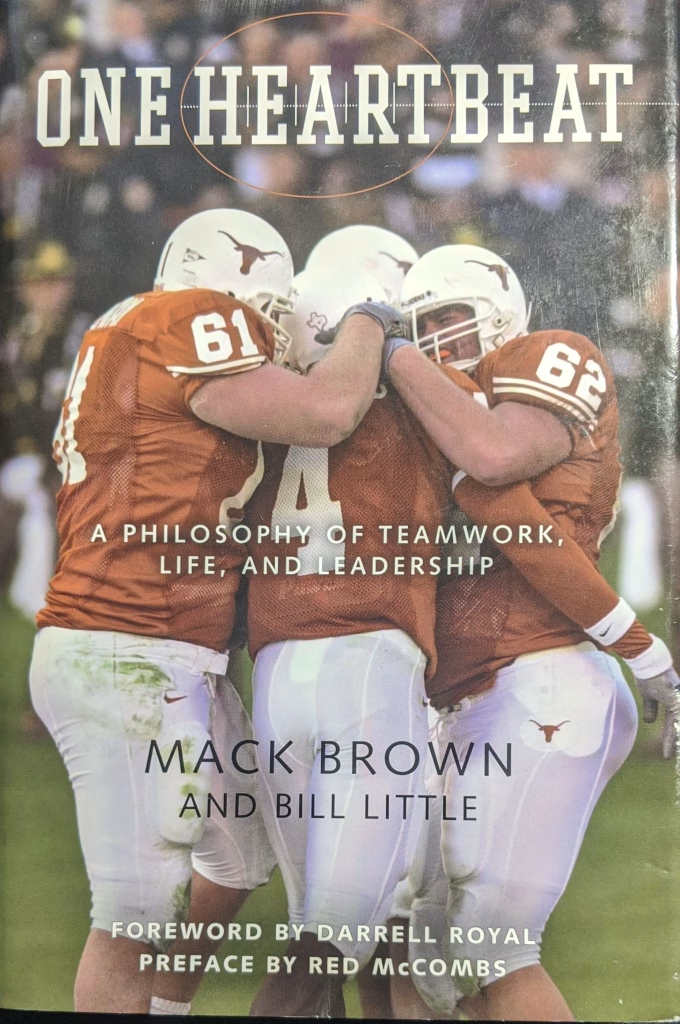
The photos below shows Mack Brown touching the iconic image of Freddie Steinmark before exiting the tunnel for a game in Austin; a copy of the book authored by Bill Little and Mack Brown discussing teams who play with One Heart; and Dean Campbell, a punt return specialist who stood just 5 feet 5 inches and weighed 155 pounds yet played an important role during Coach Royal’s national championship years.
|
|
Mack Brown and Freddie Steinmark photo |
1988-1990 Tennis All-American Joanna Plautz
|
|
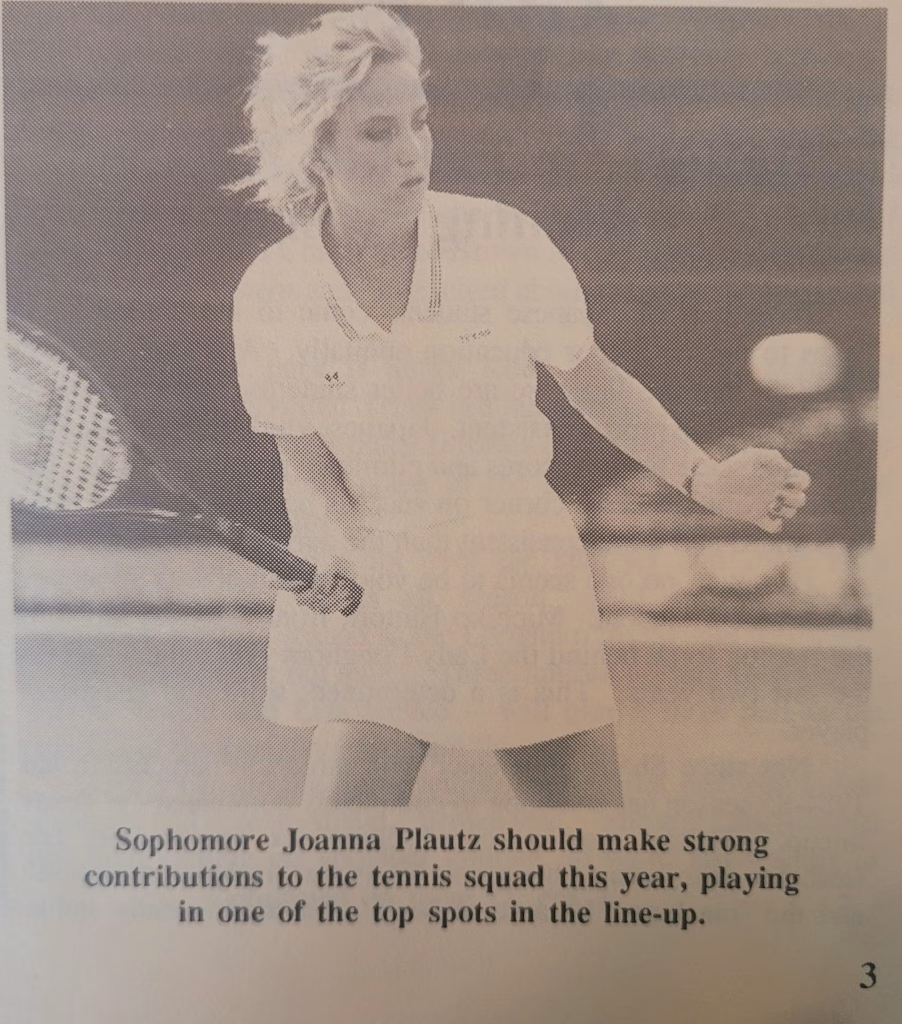
Joanna Plautz was a key member of the first Longhorn tennis team to reach the Final Four. She fondly recalls, “We were the underdogs who overperformed thanks to our camaraderie and grit.” That remarkable achievement came in 1990. Joanna has always embraced the motto LONGHORN STRONG! A dedicated and spirited team player, she earned All-American honors twice. I recently learned from some former Longhorn athletes that Joanna has faced significant health challenges over the past five years. Please keep her in your thoughts and prayers. If you would like to reach out, she has a Facebook page, or you can email me to request her contact information, as I prefer not to share her email publicly. I am Billydale1@gmail.com
|
|
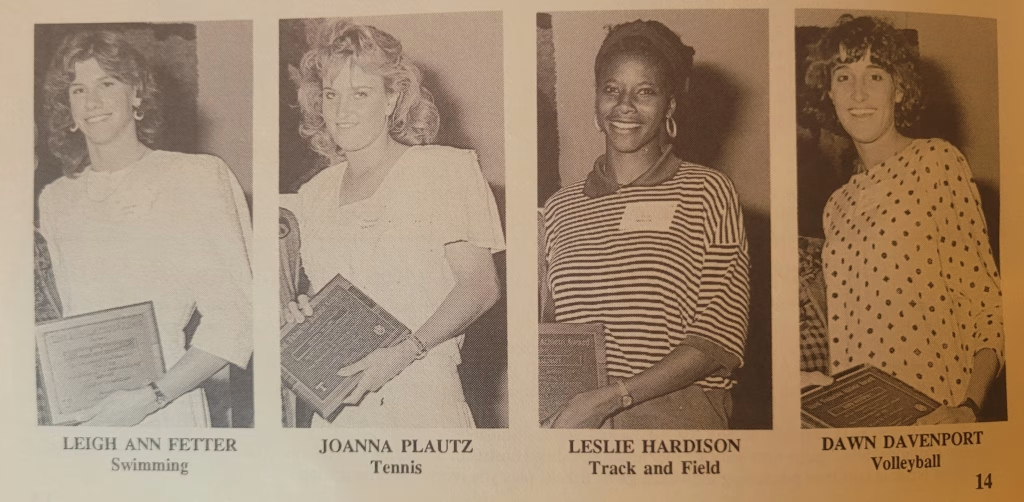
Photo of Joanna Plautz as the tennis winner of the Most valuable player award along with Fetter swimming, Hardison track, and Davenport volleyball.
|
Babe Ruth and the Longhorns
|
|
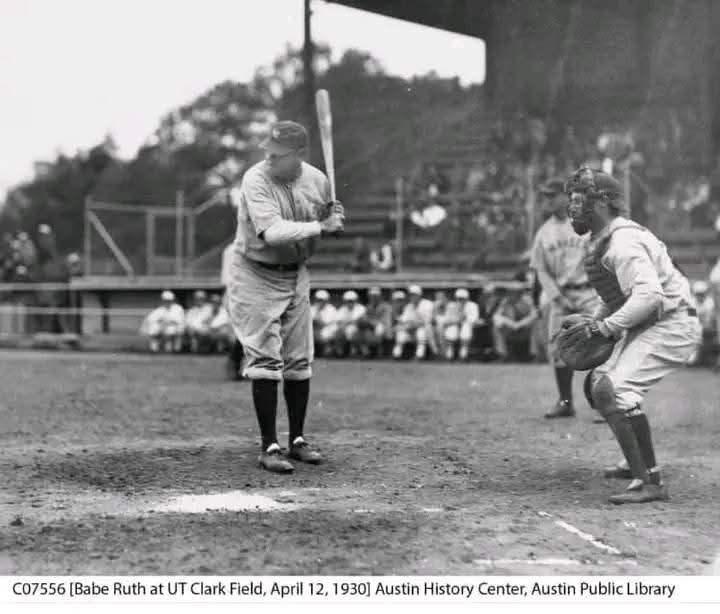
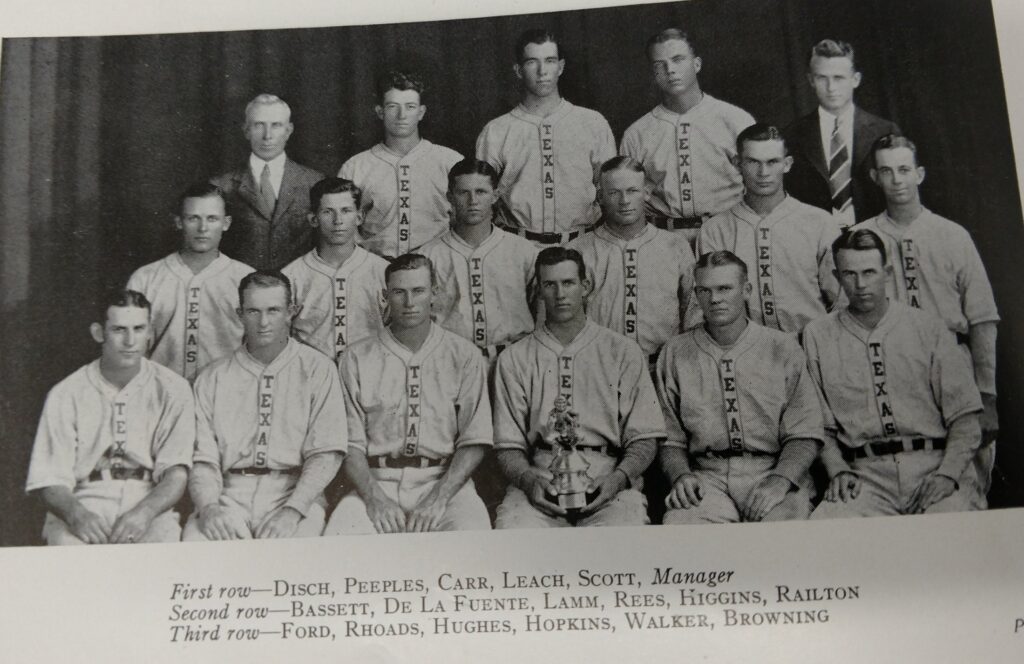
In the early years of professional baseball, teams often prepared for the season by practicing against college squads. Texas was among the selected teams, and on several occasions, members of the New York Yankees faced off against the Longhorns. The photos below feature Babe Ruth at bat against Texas, a portrait of Coach Disch, and the 1930 team that played the Yankees in front of 6,500 Longhorn fans. Babe Ruth delivered a three-run double in the ninth inning, securing a 4-2 victory over the Longhorns.
|
|
Oscar Peeples is called to pitch against the Yankees but arrives late because he was managing overflow traffic in the stadium parking lot.
|
|
In the photos below are Babe Ruth at bat against the Longhorns and the Longhorn team who played the Yankees.
|
|
Above 1930 Babe Ruth at bat against Texas and below the team that played the New York Yankees |
|
|
|
|
|
|
|
The T-Ring – A Symbol of Finishing the Task
|
|
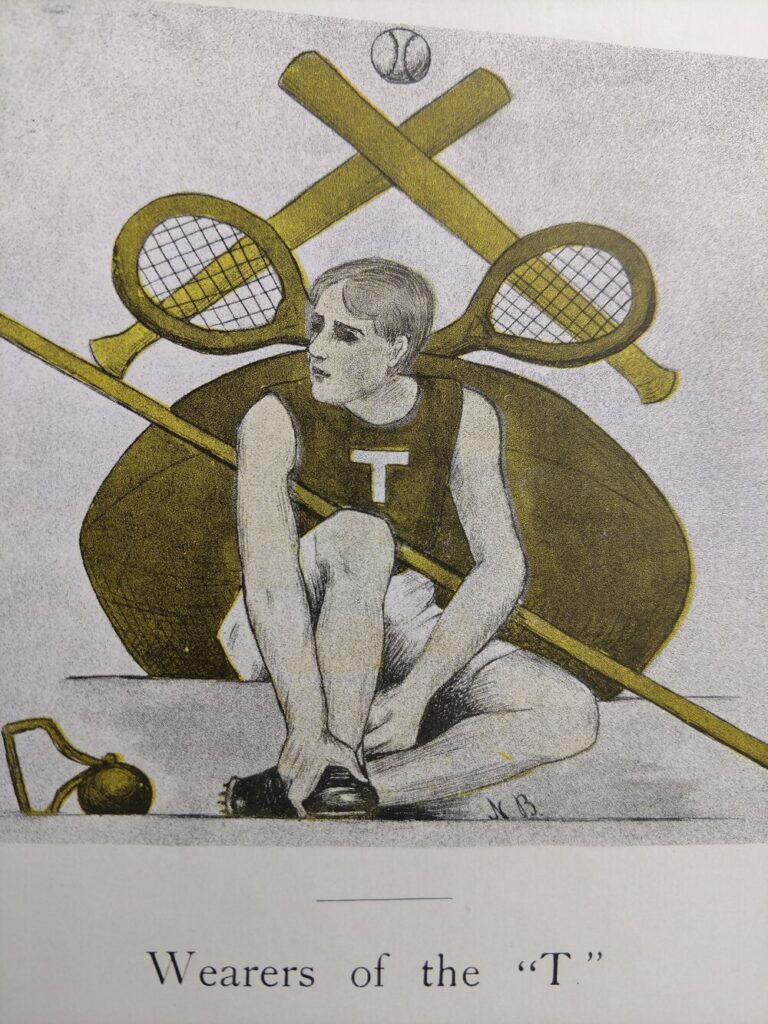
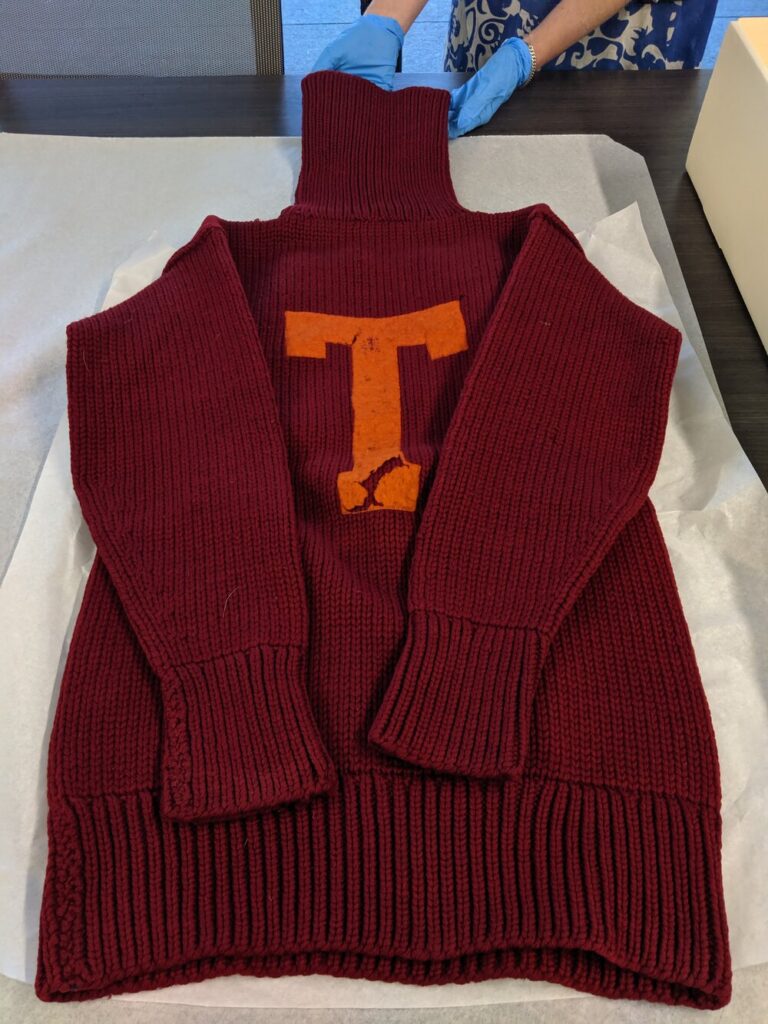
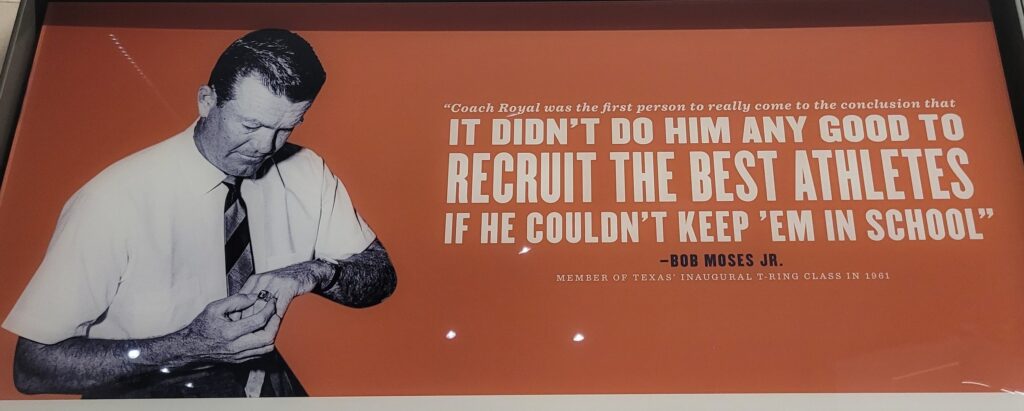
Coach Royal started the T-ring tradition to honor athletes who both played football and graduated from Texas. In Jenna McEachern’s book 100 Things…, she notes that Royal paid for the rings out of his own pocket. When asked why, he explained, “The players need to know it’s important to me. I want those boys who graduate, even if the only reason they do is to make the ol’ SOB pay for the ring.”
|
|
Coach Royal was committed to academics. He knew that his duty went beyond athletics. He was responsible for ensuring the players were prepared for life after football. That is why he hired the first Academic Counselor in the nation. While he took great pride in winning football championships, he took incredible pride in celebrating players’ scholastic championships. As a result, four out of every five players who lettered for Royal graduated.
|
|
Bobby Gurwitz said, “Having played at The University is like a badge of honor. I don’t carry a card that says I played at Texas. I wear that ‘T’ ring that Coach Royal gave us, and that is identification enough.”
|
|
Keith Moreland stated, “I’ve got a National Championship ring for baseball and a World Series ring, and the ‘T’ ring is just as important to me as those other two.”
|
|
Dwight Jefferson says the T-ring says, “I finished the task.”
|
|
Head coach Mack Brown embraced that tradition when he arrived at Texas in 1998 and stressed its importance, often stating that the Texas experience is incomplete without the T-Ring. “We’re excited about how hard our guys work in the classroom,” said Brown. “Seeing them earn their degrees and pick up their T-Rings is as rewarding as all the victories they’ve helped us get on the field.”
|
|
Dallas Griffin, who was named the Anson Mount Scholar/Athlete, which recognizes the nation’s premiere scholar-athlete, who was named to the Outland Trophy list for the nation’s best interior lineman, confirms his feeling about receiving the T-ring when he says:
|
|
“I don’t want to take anything away from the National Championship ring or other season rings, but this ring embodies the whole college experience for me.” That is why it is so special.” .
|
|
Frank Denius, in his book On the Way, captures the essence of the T-ring for many recipients. He says, “There is a purpose in our hardships because they demand persistence and determination to overcome. Moreover, adversity and difficulty often draw out qualities in a person that otherwise might never be realized and incorporated into useful life.” I agree with Frank Denius.
|
|
I agree with Frank Denius- Many student-athletes every year overcome injuries, obstacles, and other hardships to fulfill their dreams of earning their T-Ring. This group of men and women possess a unique spirit, focused commitment, and an irrepressible passion for having an equity stake in Longhorn traditions that honors the past, shapes the present, and empowers the future.
|
|
As I look at my T-Ring 50-plus years after earning it, Frank Denius words resonate with me. Looking into the burnt orange stone on my finger with the white ‘T’ in relief is like looking into a crystal ball that reflects my past that determined my destiny. My reflection in the T-Ring confirms that overcoming hardship in my formative years was an important benchmark that prepared me for the journey ahead. The T-Ring validates my “four long, hard, years of studying , football practice, dealing with game day pressure, and a work ethic that help me cross that perilous bridge that DKR built for all players and mentioned in the poem The Bridge Builder” by Will Allen Dromgoole.
|
|
TlSN has helping hands when they are needed!
|
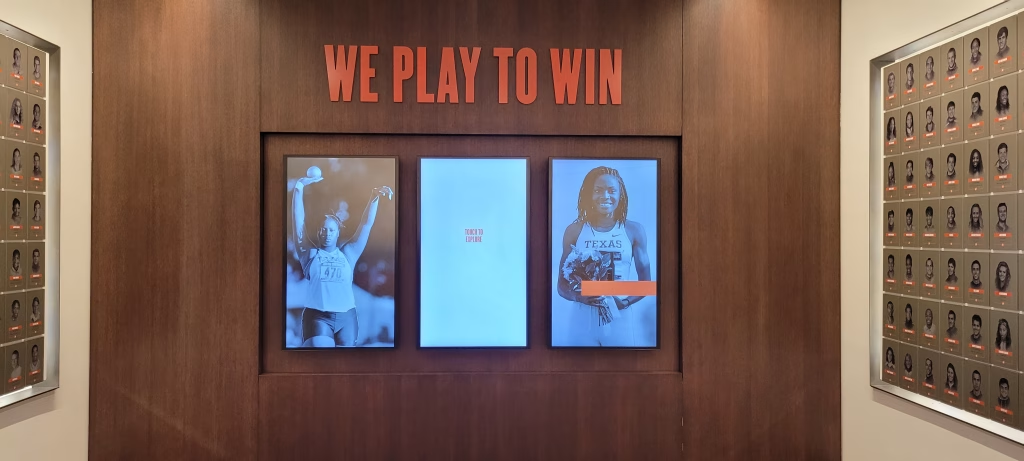
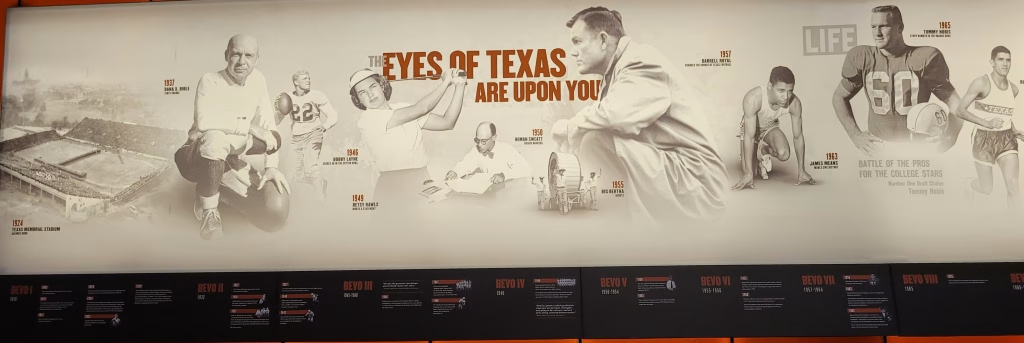
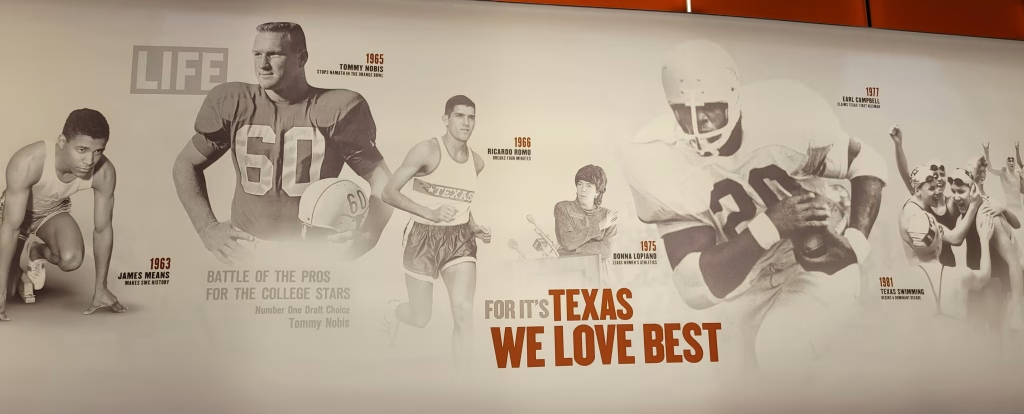
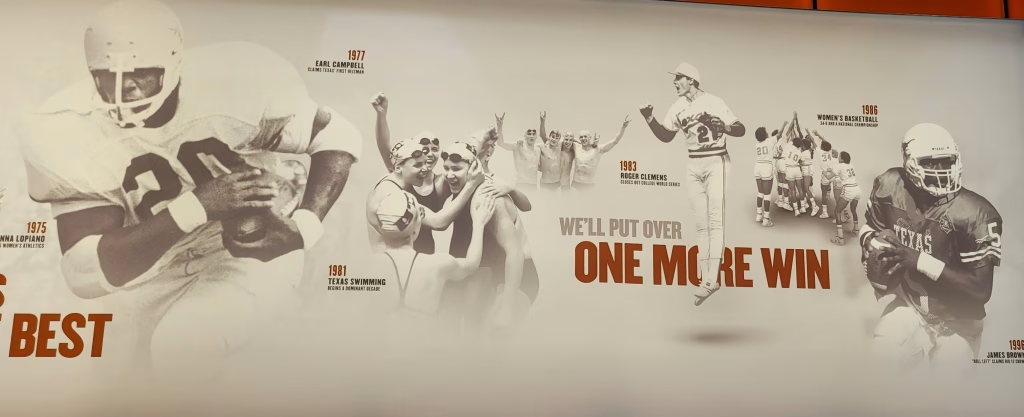
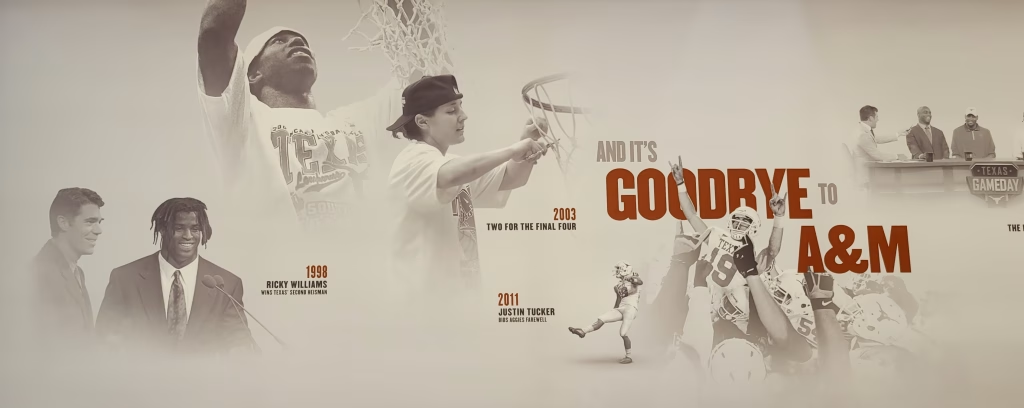
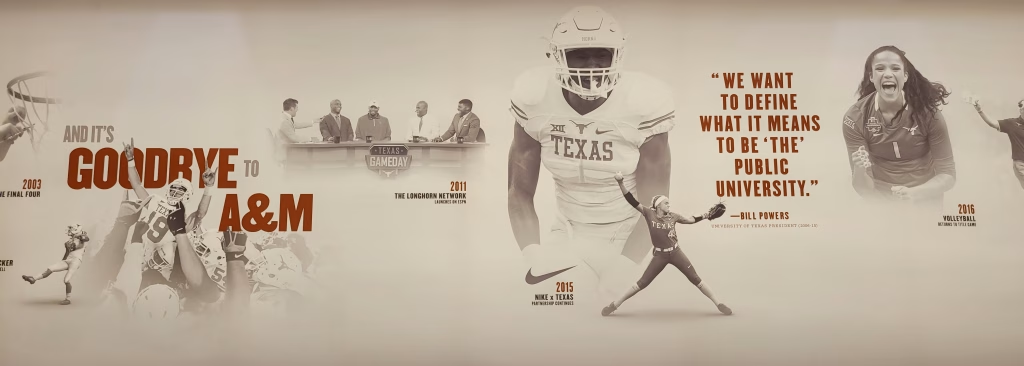
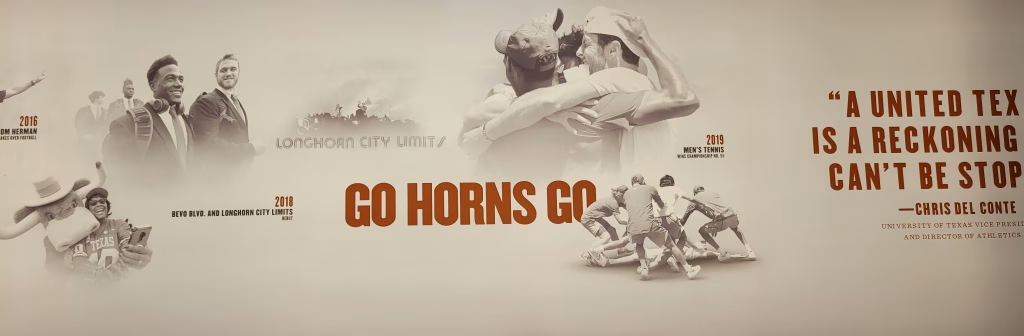
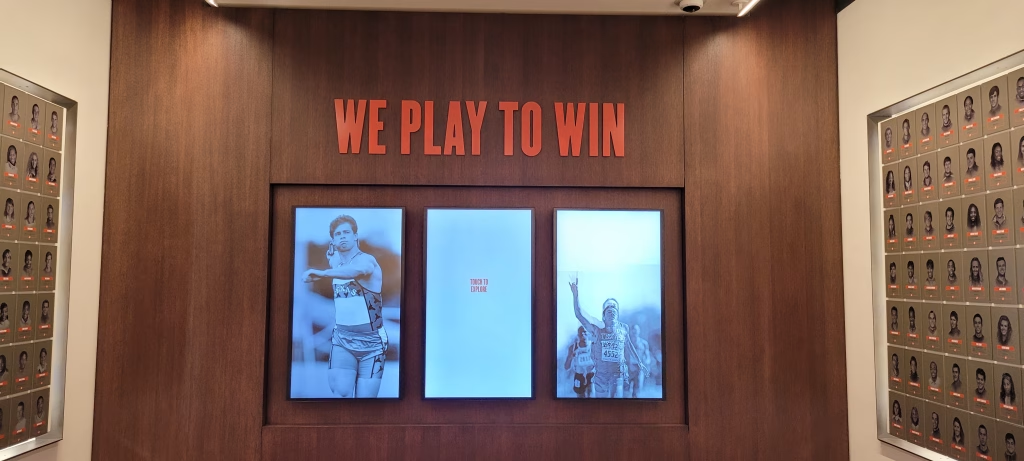
The highlights below are displayed at the North DKR entrance (open to the public), inviting visitors to connect with and appreciate the rich history of all Longhorn sports.
|
|
|
|
|