
Magazine Covers and Memories- By Professor Larry Carlson
By Larry Carlson for https://texaslsn.org
I guess it comes with, uh, …experience. Number of years tromping around the graying granite planet, aka the big blue marble.
I’ll see some old footage of James Street dashing for the Arkansas end zone, Archie Manning sprinting out in that gangly, loose-legged way before he accelerates…maybe I’ll see that famous old clip of Elvis, windmilling one arm while giving the crowd a dead-leg. Or I’ll see Earl Campbell, stomping and stiff-arming his way through and over terrified defenders.
My response is no longer to jump up in glee. It is to get instantly choked up. If, that is, I am alone, and alone, therefore, with my reflections. Seeing those moments in time is seeing the snapshots of our own lives, like somehow watching game film of our own life and times.
It is seeing one’s own past telescoped in an instant, slightly comforted by the keen take of author William Faulkner, who opined that “The past is not dead. It’s not even past.”
The Mississippian’s musing provides some comfort and reassurance during, shall we say, the fourth quarter. Even so, it promotes, rather than prevents, more involuntary welling of the eyes.
It happened again over the weekend, watching a Paul McCartney documentary, “Man On The Run.” It focuses on Paul’s long, winding road, post-Beatles, with his first solo project, the self-titled McCartney album that produced the amazing “Maybe I’m Amazed” and proceeds through the Wings decade. Seeing and hearing was, for me, like a time-travel from high school through college, on to covering Longhorn football for KVET Radio and navigating both calm and roiling seas getting through this thing we call life. And I thought, fondly, of how personal the arrival of Texas Football magazine was each July of my youth.
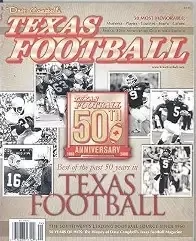
Dave Campbell’s “bible of the state’s football,” long before his own name was stamped, possessively, on the cover, was keenly anticipated by this Longhorn fanatic as a kid, then teen, then collegian.
The year 1960 had brought me the life changer that came in the form of attending three home football games for the Texas Longhorns. I was seven and I was smitten.
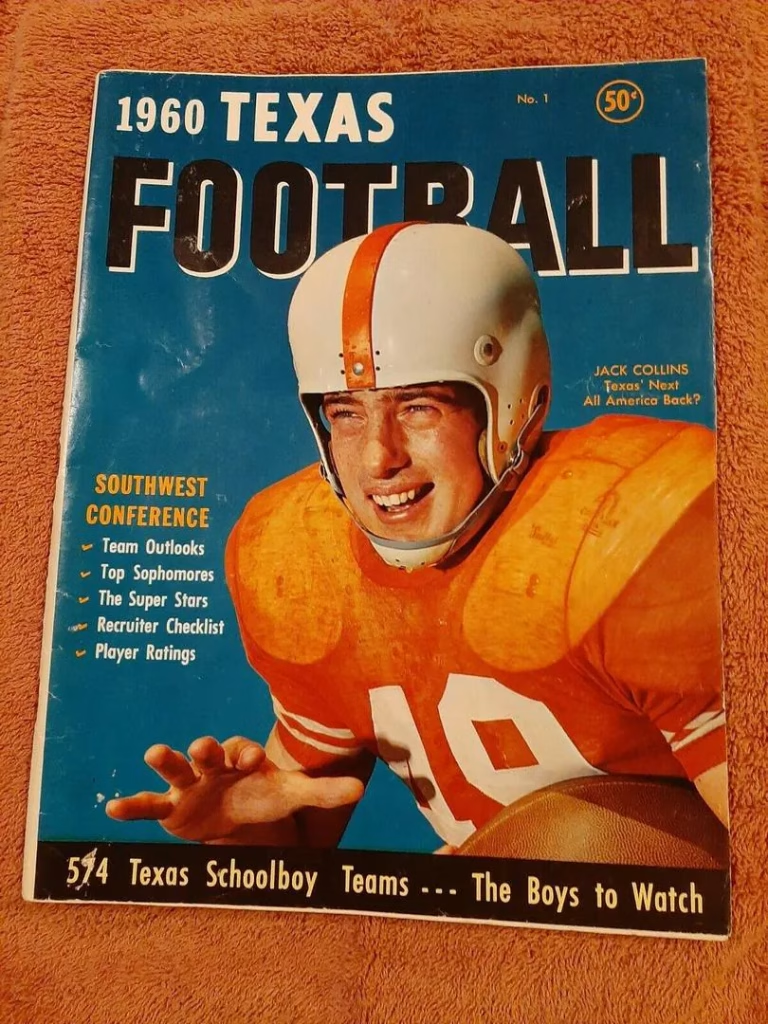
That same calendar year also brought the inaugural issue of Texas Football, featuring UT star Jack Collins on its first cover. Somehow, though, I had missed it on the newsstand.
But by summertime ’61, things had changed. As third grade awaited on the horizon, I was now not just an avid Texas fan, I was a voracious reader.
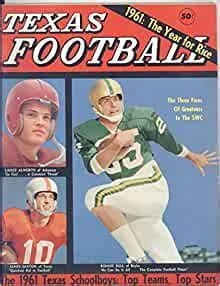
That copy featured UT’s Jimmy Saxton along with Ronnie Bull of Baylor and Arkansas star Lance Alworth on its cover. The season preview, the upcoming sophomore feature (UT’s was on big Scott Appleton of Brady), the Saxton story and so much more. I learned about blue-chippers in recruiting, the ’61 signing class that would go 30-2-1 as varsity men…I learned a lot. And I memorized the three-deep UT roster, looking up hometowns on the Texas road map when Daddy and I weren’t discussing them. As a native son, UT grad and South Texas oilman who had criss-crossed the Lone Star State, my father was a matchless source of all I wanted to talk about and learn.
I read and re-read every page of that magazine, even the junk about UT’s conference foes. Politically incorrect comedian Dennis Miller, years later, would describe someone’s copy of the Kama Sutra as having “more dog ears than a bad Korean buffet.” That magazine was utilized for years, as I would check back on the high school derring-do of prospects who became Longhorns. Mr. Dave Campbell had created a heckuva resource.
In July ’62, it stung my just-turned-nine-years-old heart when TCU quarterback Sonny Gibbs appeared on Texas Football’s cover. For at least two weeks, I had walked up the street to the new ice house, Mr. M’s (that’s probably a convenience store to you if you’re not a San Antonian) every day, and having searched the magazine rack with no luck, asked the clerk when they would get more magazines. I was told that magazines arrived on Tuesdays and Fridays. But I was either obsessive or optimistic, because I would still check each day. I wanted my Texas Football magazine. Figured either Pat Culpepper or Johnny Treadwell, UT’s star linebackers, might brighten the cover. By the way, my parents had steadily cussed the construction and opening of “the ice house.” They said it would bring traffic to our brand new neighborhood that bordered ranchland in what was still, very briefly, the wilds of north San Antonio’s suburban edge. My sisters and I liked Mr. M’s, though. One thin dime for a Coke or Dr Pepper. Or a Big Red or Frostie Root Beer, with the little old elf man on the bottle. Good accompaniment to Little Eva’s “Loco-motion” and “Sheila” by Tommy Roe on our transistor radios.
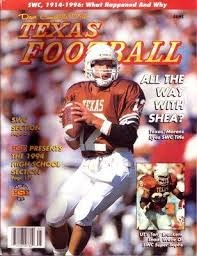
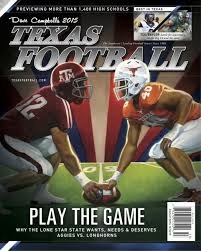
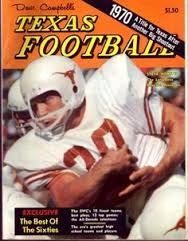
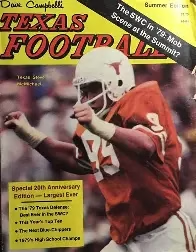
I digress. The coverboy in that scorching summer of ’62 shockingly turned out to be a villain, that big (6-7) ol’ Gibbs, who had thrown a bomb for a TD when lowly TCU spoiled the Horns’ season, 6-0, in front of the eyes of Texas and my family when top-ranked, 8-0 Texas couldn’t overcome the cheapshot hits that took Jimmy Saxton out of the game.
Looking back, I’m surprised I didn’t tear off the cover. But it turned out to be another page-turner that Daddy and I read and re-read.
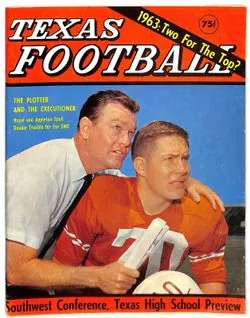
In July ’63 — after bothering the Mr. M’s guys repeatedly — I was rewarded with a cool cover photo of Scott Appleton, in his number 70 jersey, and Coach Darrell Royal in his sideline uniform of the era, a white shirt and tie. Together, they stared intently into the unseen distance. Like a younger and older John Wayne, ready for the outlaws. Turned out, they were seeing UT’s first national championship trophy, fewer than six months on the horizon.
The arrival of Texas Football always signaled that it was okay to forget about the morning paper’s box scores from baseball and start dreaming of Longhorn football. As it was with the Gibbs cover, some ’60s covers were duds. Baylor coach John Bridgers posing with receiver Lawrence Elkins just wasn’t quite a fitting encore to Royal & Appleton. Donny Anderson did look pretty cool on the ’65 cover, with a bright blue West Texas sky as the backdrop to a closeup of “the Golden Palomino.” Besides, Tech — even with Anderson in the backfield — posed no threat to the mighty Longhorns in his three years on the South Plains. Royal, likely intending his remark for “off the record,” later said of Donny, a future two-time world champ with the Green Bay Packers, “He never drank a drop against us.”
From an orange-blooded perspective, Texas Football’s cover appeal soon spiraled down to whale dung depths when A&M players Mo Moorman and Edd Hargett ran up front on back-to-back annuals that heralded the ’67 and ’68 seasons. The Hargett pick at least made sense, the Aggies having won in ’67 (with a 6-4 record) what would be their lone Southwest Conference title in three decades. But Moorman was the big man on a team coming off a 4-5-1 campaign. (Note: Linebacker Brad Dusek became the third A&M coverboy in six years when he adorned the ’72 cover, in spite of the Farmers coming off their 13th losing season in the past 14 years.)
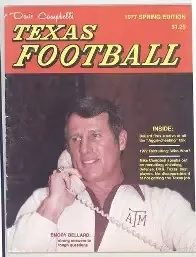
The Longhorn coverboy choices made perfect sense in those first two decades of Texas Football magazine, the golden era to this writer. Big Diron Talbert certainly warranted a three-man cover in ’66 along with two other star defenders, John LaGrone of SMU and Greg Pipes of Baylor. Talbert, who followed Don and Charlie as the last and perhaps best and meanest of the Texas City brothers, went on to a decorated pro career, first as a member of the Los Angeles Rams’ Fearsome Foursome, then as a Cowboy-scalping hellion for the Washington Redskins.
And you could have likely made money had you bet on James Street and Steve Worster for cover-star status in the ’69 and ’70 issues. Both photos were action shots, though, and looked a little grainy if the reader wished to be picky. Still, those issues are prized today, the Horns coming off of memorable seasons that foretold more titles, more individual accolades for two wishbone immortals.
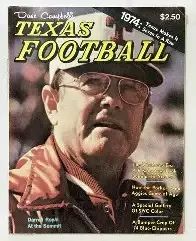
Similarly, Glen Gaspard (’73), Russell Erxleben (’78) and Steve McMichael (’79) had established themselves as stars over their entire careers and were easy choices for cover status. And Coach Darrell Royal had the ’74 cover to himself, having led the Longhorns to six consecutive SWC crowns. In hindsight, perhaps Royal was the victim of the old “cover jinx” made infamous by Sports Illustrated. And was actually, in all likelihood, a second-choice cover pick after preseason Heisman favorite Roosevelt Leaks was severely injured in spring practice. The ’74 Horns would be upset by Texas Tech and Baylor, ending UT’s stranglehold on championships in the Southwest. And while Gaspard — ringleader of a terrific Texas defense — got his own cover, Erxleben shared his with kicking rival Tony Franklin, who always resembled an inept, pudgy, mustachioed German soldier on a Hogan’s Heroes episode.
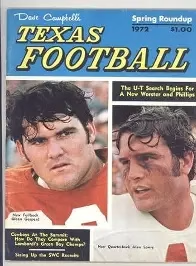
Texas football Gaspard and Lowry 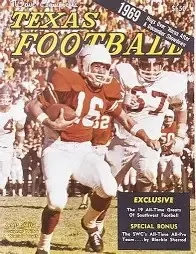
James street 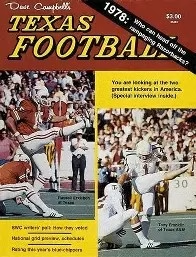
Texas football punter
What really makes no sense in hindsight — and didn’t at the time, either — is the absence of several Longhorns from the cover of what quickly had become entrenched as America’s best known regional football publication.
No Tommy Nobis?
No Earl Campbell?
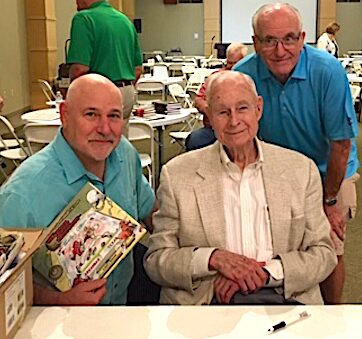
For some things there are just no explanations.
But…Longhorns managed to merit cover stardom on half of the first 20 issues, ’60-’79.
Those were the ones I most looked forward to.
Even though they don’t appear in sepia tones of long, long ago, the covers from those years, those complete magazines are — like yesteryear’s film, video or music — apt to trigger emotions. Seeing them, sometimes even thinking of them, is like peering into a past life, maybe even into the times of lives now passed. Sweethearts and loved ones no longer in our orbit.
Those old Texas Football magazines were powerful.
Paul McCartney has probably never seen a college game.
But he always had the writing chops to select a key word whenever he needed to.
“Yesterday.”
(TLSN’s Larry Carlson is a member of the Football Writers Association of America and teaches sports media at Texas State University. His two favorite Beatles’ songs — no easy task — are “Please Please Me” and “Things We Said Today.” His favorite Wings tune ix “Band On The Run” and his chosen Paul and Linda song is “Too Many People.”)


Wow , great reading on a Monday morning here in SEC country … while enjoying a new UT baseball season that looks very promising 🤘🤘🤘. Thanks , Brad