
1972-1982 women swim coach’s Ramenofsky, Keith Bell, Pat Patterson, Ray Woods, and Paul Bergen
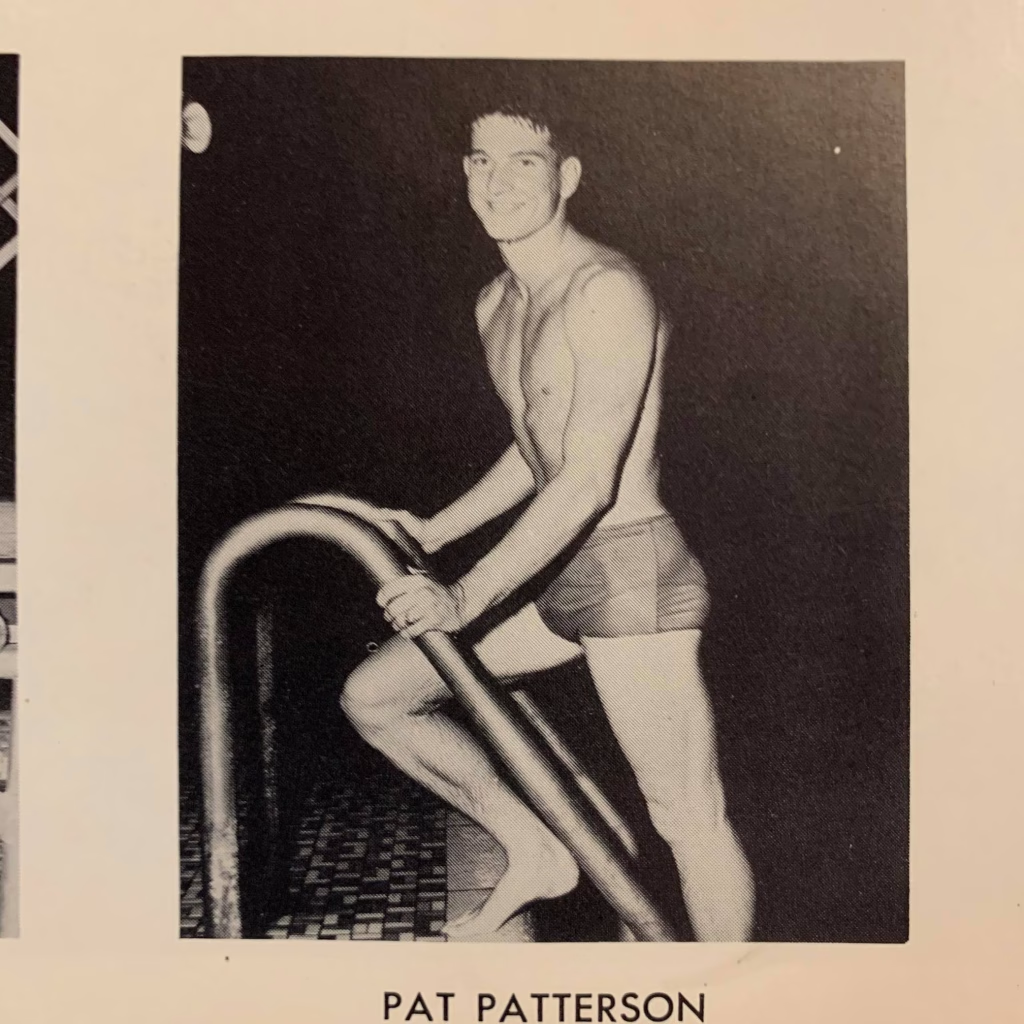
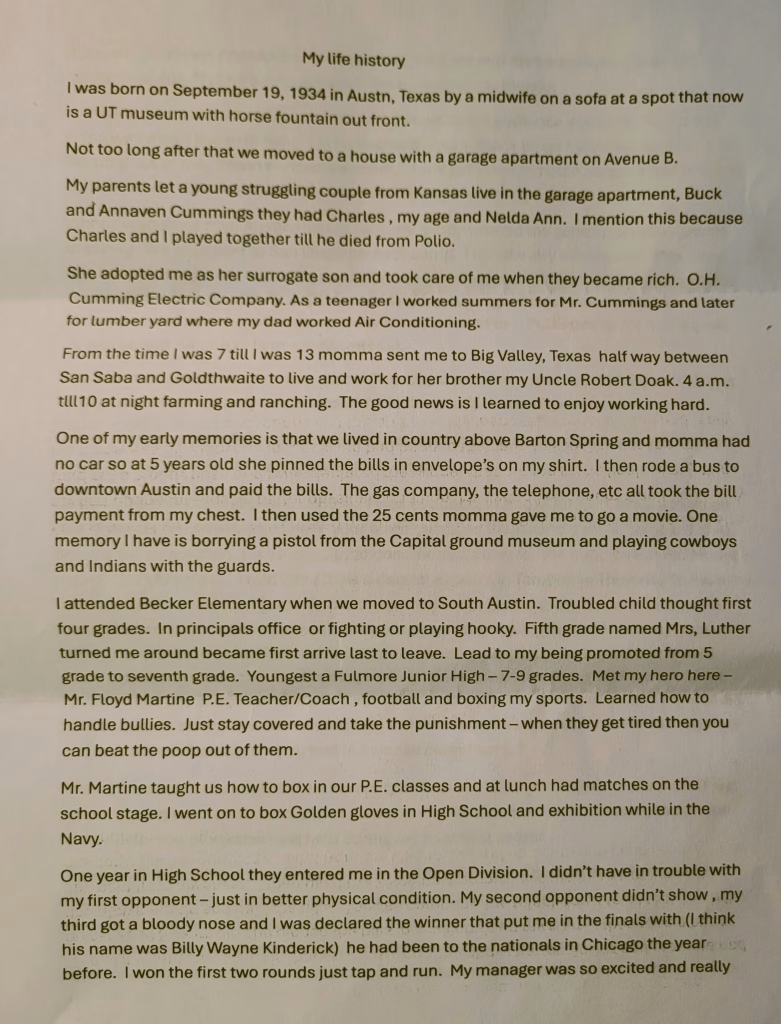
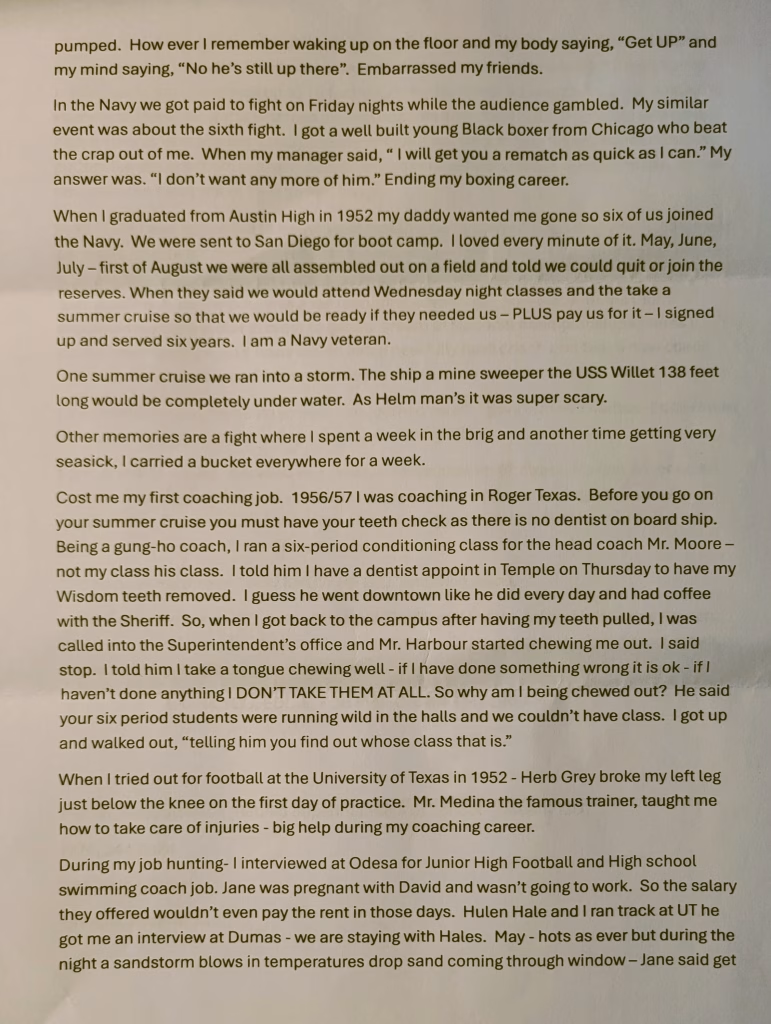
Coach Patterson’s autobiography is below: With resolve and strength of will, Coach Patterson was instrumental in moving Texas swimming into an era of prominence.
From Eugene Watson- “Wow, what an incredible posting of one of the most important figures in the history of the development of “swimming” competition in the state of Texas. Personally, I spent my first three years coaching high school swimming at UT with Coach Pat. I had just returned home from three years in the Army in 1970, moved to Austin, and Pat allowed me to work many of the state high school and college meets.
Over the years, after my 27 years of high school coaching, I owe Pat ALL of my gratitude for taking me under his “wing” and giving me his undying support. ONE OF A KIND GUY and a friend, even today,” 10-2025 Eugene Watson
Below is the link to Coach Pat Patterson’s podcast.
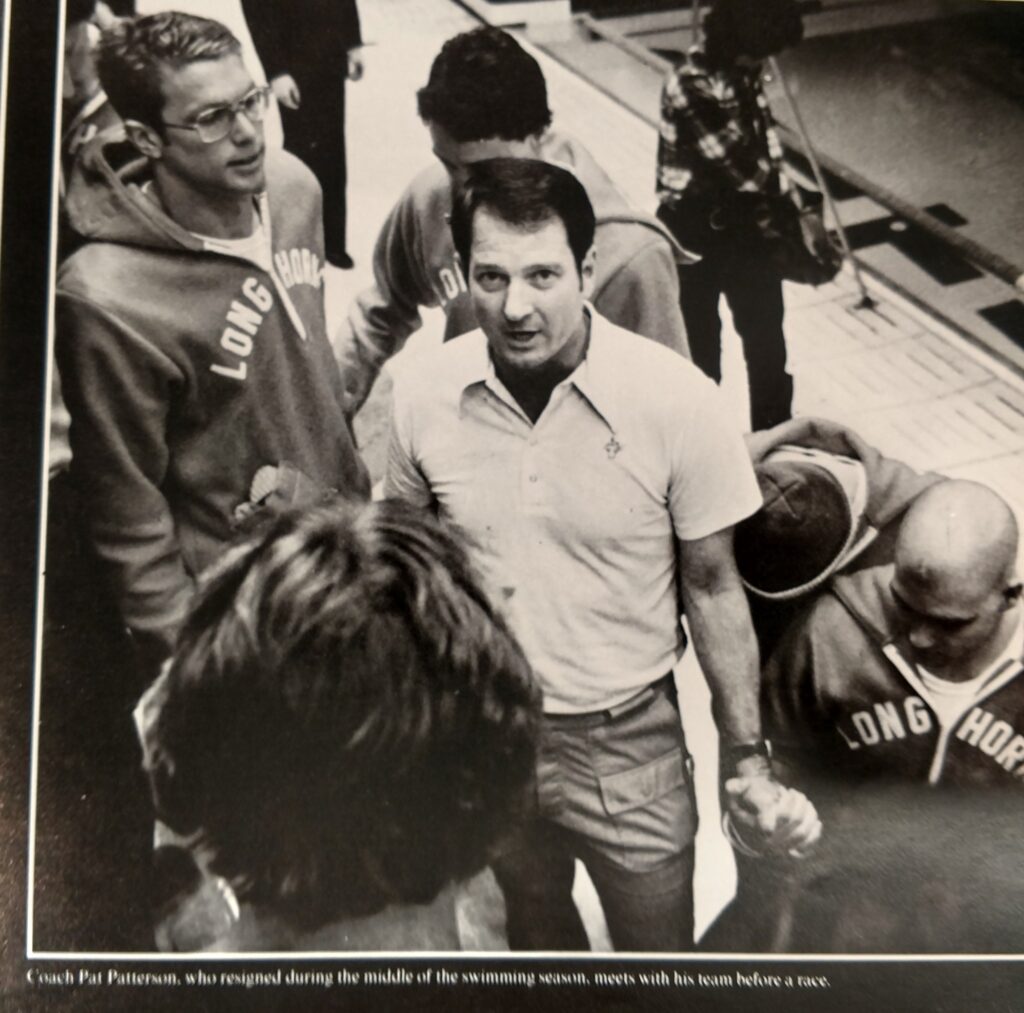

Pat Patterson and Coach Reese 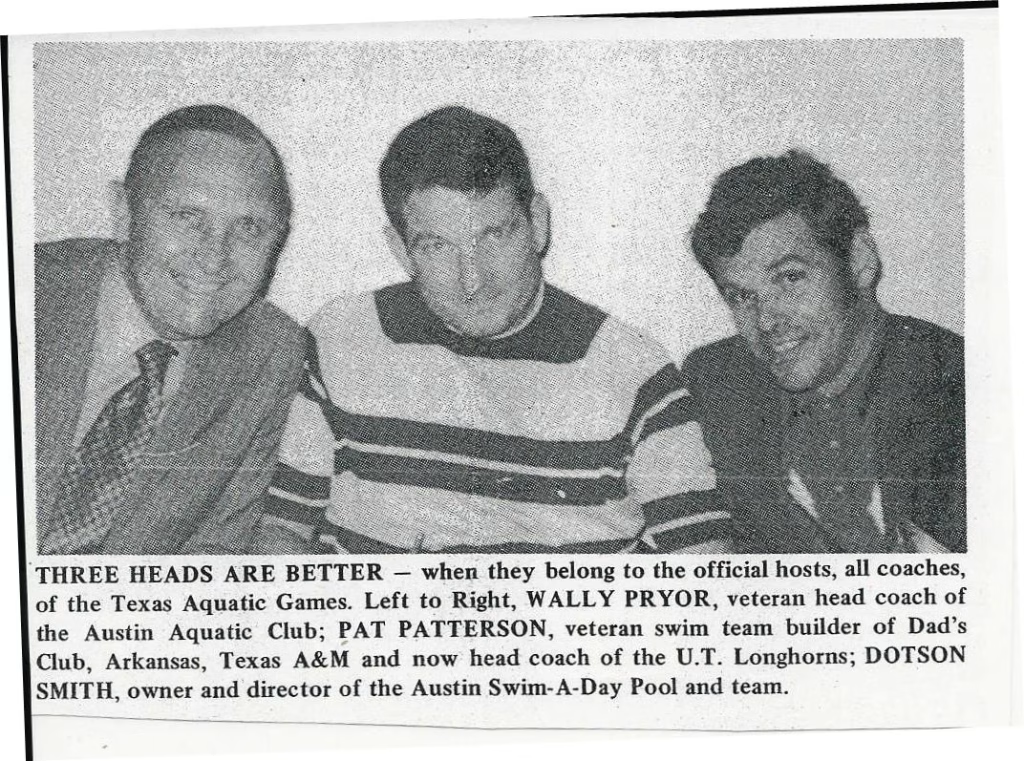
Wally Pryor, Coach Patterson, and Dodson Smith 
Pat Patterson shooting his age. 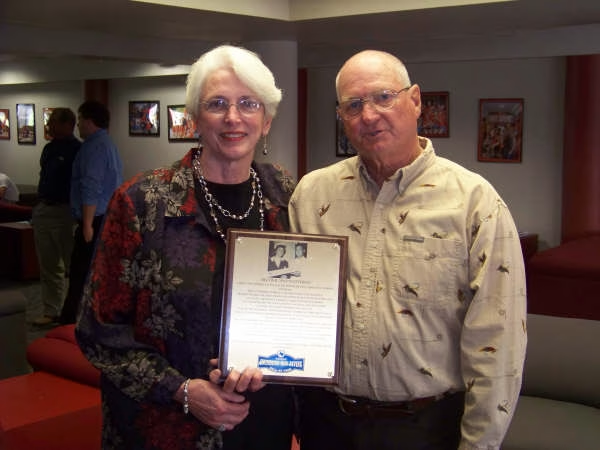
Joan ???? and Pat Patterson holding a frame photo of them from the 1970’s. 
Pat Patterson 90th birthday party sign 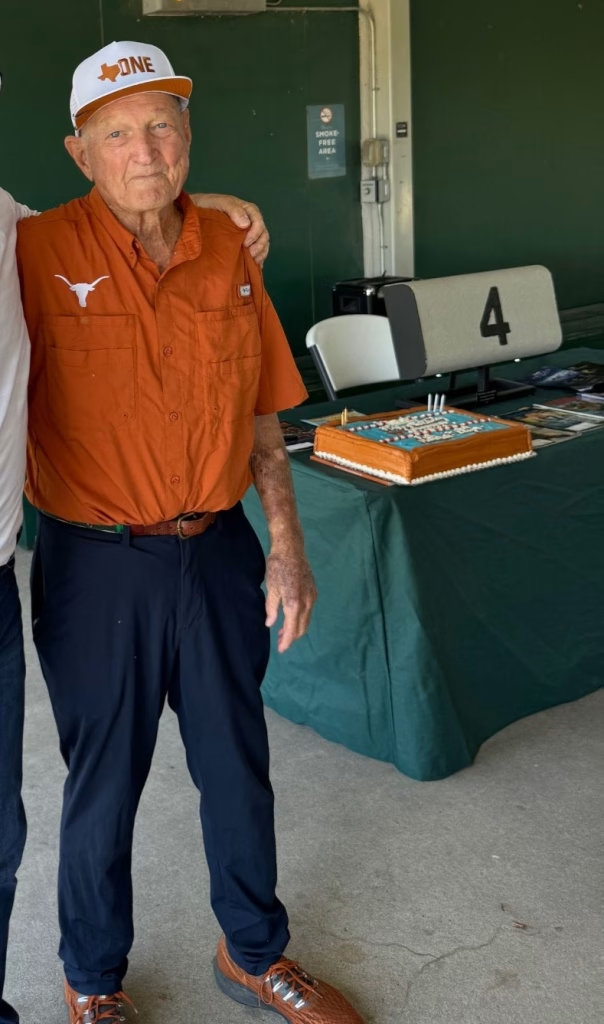
Coach Pat Patterson golf 
Coach Pat Hall of Honor Induction 
2025 Coach Patterson playing golf 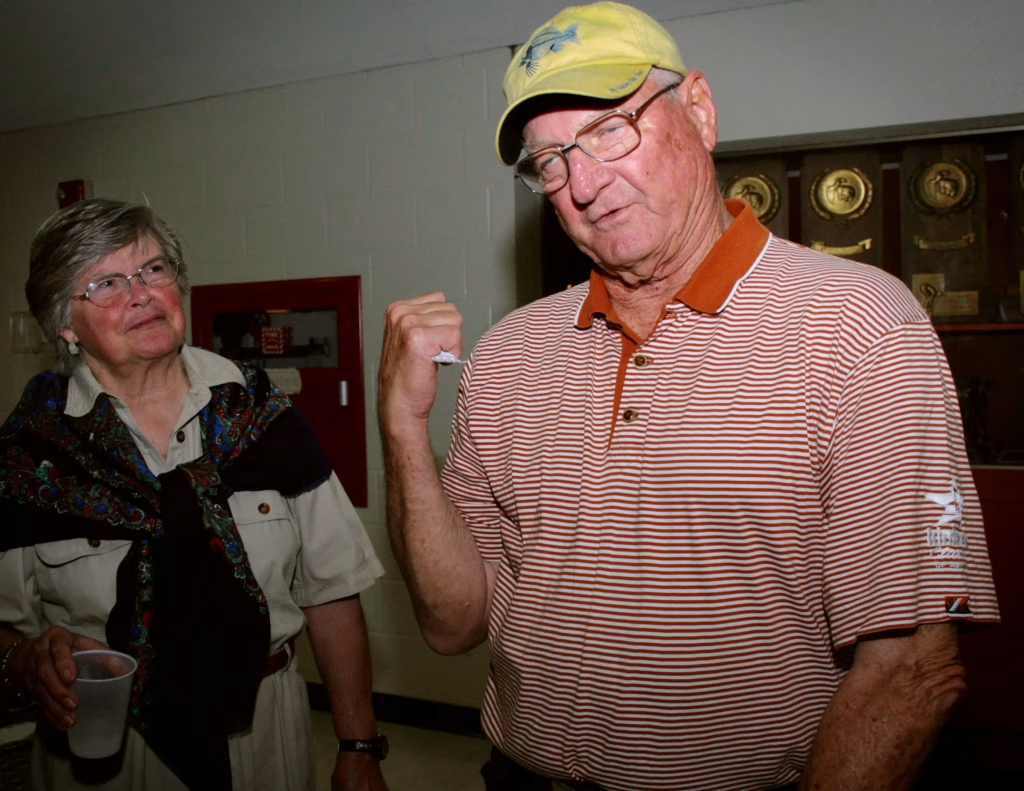
UT _award ceremony_ pat Patterson Hall of Honor
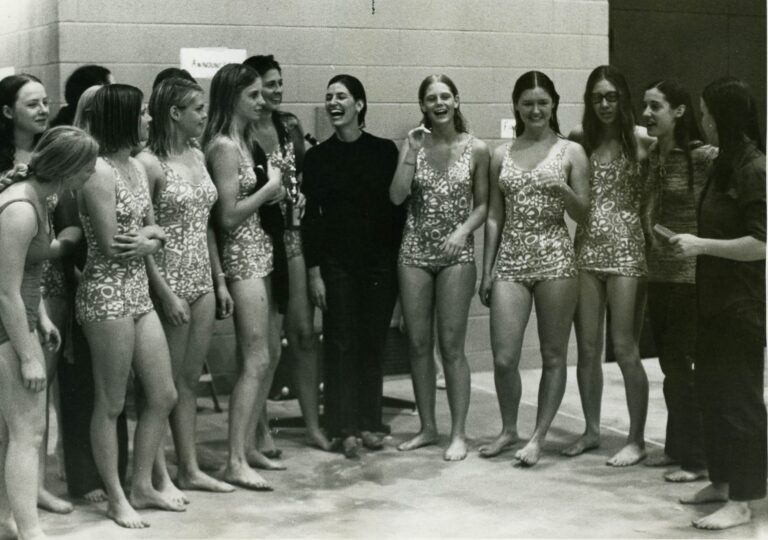
Ruthie S. Premack sent TLSN the following comments about women’s swimming in 1977. I can’t confirm her comments, but they sound legit so here are her comments about the 1977 swim team .
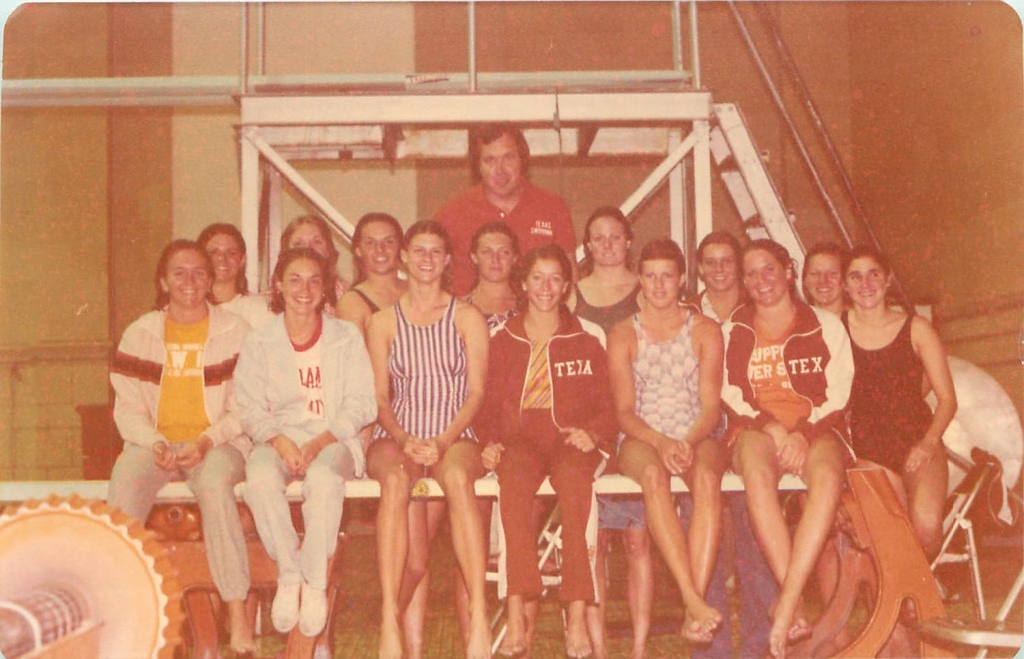
Photo above compliments of Ruth Stier
Just as a reminder Title IX was signed in 1972 and in 1975 regulations for Title IX were implemented. However, The 1977 Texas women’s swimming team did not yet have a varsity head coach, because there was no official varsity women’s swimming program at UT in 1977. The women’s team was still operating in a pre‑varsity, club‑style structure, coached within the broader Texas swimming ecosystem rather than under a dedicated NCAA‑level women’s head coach.
The key figure overseeing women’s swimmers in that era was Coach Pat Patterson,
Ruthie says,
I would like to forward you the below photo I took of the women’s swim team. We think it is from 1977. Tommy Tate was the Coach. The only people I remember from the women’s swim team are Audrey Supple, Lisa Kelsey, Ann Girardeau, Leslie Gardell and Diane Hurd. (If you are interested, Maybe someone in your world can recognize and name the other swimmers?)
==================================================
Also, You probably already know this bit of Longhorn history:
But just in case…. The men’s swim team had the cheerleader group called the “Bevo’s Babes”. As a 3 year letterman/ manager of the team, I had the idea for a mirror group for the women’s swim team.
I had forgotten that part of my life. Then, the “Steer Studs” came up at the family Thanksgiving last year.
I did not keep any of the marketing / invitation posters we put up around campus referring to the “Steer Studs” when we organized and ran it. The materials and ads (maybe we put one in the Daily Texan?) said things along the line of “Interview to be a Women’s Athletic Supporter” or “You too can be a Steer Stud” and then included the interview day/date/times, and location — which was of course at the then new Swim Center.
The names of the “Steer Studs” I was friends with (and can remember the names of) were: Shad Jefferies, David Pederson, John Stavinoha and Kim ???…. We chose around 20 UT male students. The Steer Studs decorated lockers, provided baked goods, and attended & cheered home swim meets for the women’s swim team- much like what the “Bevo’s Babes” did for the men’s swim team.
Too bad I didn’t think to take a group photo of the “Steer Studs”. However, I did an AI search and found the below materials.
About the “Steer Studs”: AI did not get everything right…. Surprise, right? It was actually the swimmer named xxx Londrigan who thought of the name. It was not a use of my last name – although the synonym was noted and another source of humor. “Steer” was parallel to the Bevo in the “Bevo’s Babes” name. The AI search was a fun search down a memory lane I had not thought about in years.
If this interests you, Maybe you want to make a mention of the “Steer Studs” on your website?
Thank you for your efforts.
Ruthie S. Premack- formerly Ruth Stier e years letterman manager for the UT women’s swim team.
CALLING ALL “STEER STUDS” OF 1977 TO COME FORWARD AND SHARE YOUR STORIES. A Longhorn steer stud refers to a mature, exceptionally well‑bred Texas Longhorn male—typically a bull used for breeding—known for long, symmetrical horns, strong muscling, and classic breed coloration. The images above show several examples of what breeders consider stud‑quality Longhorn males: wide horn spread, clean lines, and distinctive speckled or patchwork coats.

Coach Patterson’s history as the men’s swim coach is available at the link.
https://texas-lsn.squarespace.com/patterson
Pat Patterson’s podcast link is below:
Melvin R. “Pat” Patterson was a pioneering figure in Texas swimming, both as an athlete and coach, with a legacy that spans high school, collegiate, and club levels.
Here’s a deeper look at his impact:
- Three year letterman and UT Team Captain (1955): Patterson arrived at the University of Texas with no prior competitive swimming experience, yet became the first Longhorn to break 50 seconds in the 100-yard freestyle.
- One of the leading scorers at the 1955 SWC championship meet.
- Texas Head Coach (7 Seasons): During his tenure, he led the Longhorns to 21 Southwest Conference Championships and coached 12 All-Americans.
- Multi-School Coaching Career: He also coached at Texas A&M, Rice, and Arkansas, and elevated the Dad’s Club in Houston to national prominence in the late 1950s.
- Spring Branch ISD Innovator: Patterson founded the district’s swim programs and guided Memorial High School to multiple state titles.
- UT Swim Center: He played a key role in the design and construction of the University of Texas Swim Center, a cornerstone of UT’s aquatic excellence.
- Educational Leadership: After coaching, Patterson transitioned into school administration, serving as principal and superintendent at Westlake High School and later at Sweeny High School.
Family and Legacy - Patterson and his wife, Jane, were deeply involved in Texas swimming and education. Jane was also inducted into the Texas Swimming Hall of Fame and coached multiple sports across Texas.
Pat Patterson’s story is one of transformation, leadership, and enduring influence—from breaking barriers in the pool to building institutions that shaped generations of athletes and students. - Hall of Honor inductee 2010
- During his seven seasons as a head coach at Texas, he produced 21 SWC Champions and 12 All-Americans
- Was instrumental in the formation and development of the University of Texas’s first women’s Swimming team.
- With design direction from Coach Patterson, the dream of a new state-of-the-art swimming facility is close to reality
Coach Pat Patterson 1971-1977
1974-1975
Pat Patterson is the right leader at the right time, as Coach Patterson struggles to convince the UT administration to increase coaching salaries, travel expenses, and scholarships, and upgrade the swimming facilities.
THE PAT PATTERSON TRUE STORY
Almost a secret until this letter to the Longhorn Hall of Honor selections committee.
Rooster Andrews and Wally Pryor were also on the cc list for the letter below from Tex Robertson. This letter represents a historic moment for the Longhorn swimming program, so I retyped it in a readable, larger font.
From the Honorable Johnny Crawford Longhorn T Men President
March 10, 2000
Dear Crawf,
Greetings and love to Jerry, you, and Charley (2nd place ain’t bad.)
We’ve delayed recognizing Pat Patterson in the Hall of Honor for too long. In my 65 years of U.T. ism and wet-mindedness, I think Pat is the most deserving of all the past Honorees. Certainly me, even Skippy, and fabulous Coach Eddie, who wouldn’t be with us except for Coach Pat.
Melvin R. “Pat” Patterson had an impressive swimming record. He was a U.T. swimming letterman for three years, 1954-1956. He was one of the top point-getters in 1955 in beating SMU’s early string of Southwest Conference championships. He was elected Captain of the 1956 Longhorn team, which placed second in the S.W.C. Besides that, Pat deserves a place in the Hall for his pick of a bride, Jane Knelp, a nationally ranked swimmer and by far the best female swimmer to attend U.T. during the first ¾ of the 20th century. They were married in 1955 while both were seniors at U.T.
After graduation, Pat continued swimming by starting and coaching the Dads Club Swimming Team of Houston, which became one of the nation’s best age-group teams. Dads Club was the best in the TAGS, an organization that claimed Coach Pat Patterson as its first President.
Pat moved up from the Dad’s Club to the College level as lead swim coach at Rice in 1961. Then to Arkansas with their fancy new pool as their Head Coach ii 1965. For those quick college successes, A&M got him back to Texas as the Head swim and water polo coach in 1968.
In the spring of 1960, after SMU won the S.W.C., Regent’s Chairman Frank Erwin refused to go ahead with plans for the new swimming center unless Texas won an S.W.C. swimming title or got a new coach. In September 1970, U.T. President Mickey Lem and Athletic Coordinator Stan Burnham traveled to College Station and negotiated a release from A&M for Coach Melvin “Pat” Patterson.
Coach Pat was welcomed back to U.T. with great enthusiasm from the swim team, his former teammates, and his old coach, Hank Chapman, who had been promoted to Director of P.E. Aquatics. Pat knew the expectations and gigantic task of returning Texas to the top of the S.W.C. He was not only daunted by SMU’s monopoly of the state’s best swimmers and their 15 straight S.W.C. championships but his inherited team was short in number and talent. Scholarships were half that of S.M.U and A&M. And half his pay and responsibility was teaching P.E. swim classes, a real detriment to the great need of recruiting. Pat spent seven of his eight years of Texas Coaching in the Gregory Gym pool while the swimming center was under construction, according to his designs. Frank Irwin often said the new pool is everything Coach Patterson could wish for and more.
Pat Was U.T.’s first women’s official Sports Coach when several coed swimmers asked U.T. President Lorene Rogers if they could have a team under title Nine. Women’s P.E. Director Betty Thompson asked Pat if he would coach them at Gregory for a start during the 1973 fall semester.
Pat’s persuasion paid off in adding an essential and famous diving Coach to his staff with little or no pay. First, it was former Olympic Champion, Bob Clotworthy who didn’t get along with campus officials. Then it was Mike Brown, a former N.C.A.A. I meter springboard champion who was a huge success and became both men’s and women’s diving coach.
Pad had some great teams that beat the Aggies every year and were 2nd in the SWC each year. His spirited Longhorns improved, but so did SMU with their extra scholarship recruits. Pat produced 21 SWC champions and 12 All-Americans
Now, here is the part of Pat Patterson Longhorn’s contributions that sets him apart from all of us old Hall of Honor recipients.
After eight years of suggesting, asking, and pleading for adequate program support for Coach and diving coach pay and scholarships equal to that of SMU, A&M, or any of the top NCAA programs, Pat advised U.T. officials that he was resigning. He told them that with proper financial support and a new coach, U.T. would regain the SWC title and win the N.C.A.A.
The entire Longhorn team was disappointed, and the exes were shocked that their pride and joy, the hardworking and successful Coach, would resign without notice and leave his world’s best pool and a lifetime job. WETS president Wally Pryor immediately called for an unofficial Coaches search committee along with WETS’ other Director, Dr. Hyl Karbacgm, Tex Robertson, Jose Gilbert, and Coach Pat Patterson. U.T. officials had to consider the recommendation, which was U.T.’s Dr. Ron Brown, V.P. for Student Affairs, and women’s Athletic Director Donna Lopiano, who was looking for a new swim coach. Men’s Athletic Director Darrell Royal was invited but was unable to attend.
Each of the committees had a shortlist; all, including the SMU Coach, had been contacted. All but Pat, who was familiar with the National scene, listed his five recommendations. The committee voted to ask Dr. Brown to go for Pat’s top two, Eddie Reese of Auburn for the men, and Paul Bergen, Cincinnati Age Group Coach for the women.
Donna contacted and hired Paul Bergen for the week, and after a few weeks of negotiation, Darrell Royal hired Eddie Reese. Both coaches, with great U.T. support, recruited with the great swim center, and in the third year, 1981, both teams won their National Championships. We all know the rest of the continued story.
Pat was good for swimming, Texas, and his swimmers and divers. I’ve always been impressed by how our three Longhorns, Rob, Nan, and Bill, matured under Pat’s coaching. Their swimming improved, but so did their attitude, confidence, and willingness to work.
After leaving U.T. in 1979, Pat got a job immediately with ??? School District as a Jr. High Principal earning much more than his U.T. income. He moved up from High School Principal to assistant superintendent until 1986. Moved to Sweeny as Superintendent and retired in 1990.
The Pattersons have four grown children, David, Wendy, Christi, and Patrick. All involved in coaching and teaching. Pat and Jane are retired, living in Sweeny, Texas. Jane is involved almost full-time in church work, while Pat plays golf two or three days a week and earns money as a fishing guide in the Gulf or on private lakes.
Path and Jane are both winners of the Frank Erwin Award. Texas Swimming’s top honor.
Best Wishes
Tex Robertson
c.c. to Coach David McWilliams
Tex was the first very successful coach and tried to run the swimming portion, but Darrell would not let him. Pat Patterson came in 1970 as an Assistant Professor and taught three three-hour classes and five Physical Education Classes. He raised $1,000 for the swim team during his years as the swim coach, with only three scholarships to offer; most other schools had as many as 20. One year, we won 14 of the 18 events and still lost by 110 pts. Every time he went to Darrell, he refused.
After three years, he asked Royal, “Who’s above you?” He said, Frank Erwin. Frank turned the three scholarships into $15,000. That’s why the Swimming Award is called the Frank Erwin Award. After the budget hearing one year, there was $3 million left. Frank said we have had a new swimming pool on the books since 1954. Let’s do that.
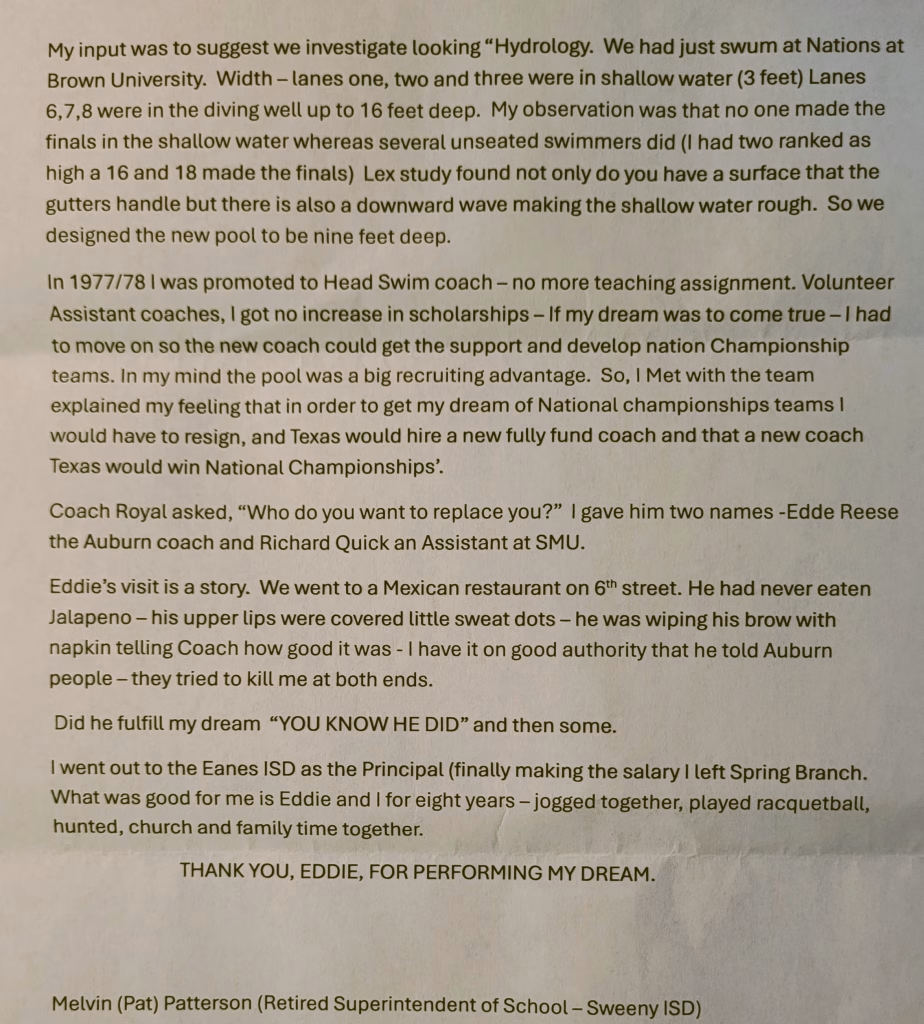
Lex Ackers designed the Joe Jamil pool. It opened in 1977 with much student protest as the added-on projects cost over $7 million. Patterson knew the pool would be a big draw in recruiting. So he asked for more scholarships, and when Darrell turned him down again, he knew it was never going to happen while he was the swim coach, so he resigned and was hired as the Principal of Westlake. By the time they hired Eddie, the number of football scholarships had been reduced, and Eddie received an increase of 14 scholarships. Eddie was very successful in recruiting the best. My relationship with Eddie and his family was awesome. We hunted and fished. Racketball and church together.
Texas women’s Swimming team coach
1972 – 1979: Coach Melvin “Pat” Patterson – The journey to an exciting destiny begins under the leadership of Coach Pat Patterson.


1971 – 1979 Coach Melvin “Pat” Patterson, Women’s Swim Coach
Pat Patterson was U.T.’s first official women’s sports coach. Several coed swimmers approached U.T. President Lorene Rogers, requesting a team under Title IX. Women’s P.E. Director Betty Thompson asked Pat if he would coach them at Gregory Gym, starting in the fall semester of 1973.
Coach Patterson recalls, “I’m not sure if the women’s swimming organization before the NCAA kept records, but we did take teams to the Nationals. I felt like I was being pulled in two directions.”
The Longhorn swimming team began in the small 25-yard Gregory Gym pool. At first, there was no recruiting or scholarships for women swimmers. Athletes made the team by participating in open tryouts each September.
In the early 1970s, the passion for coaching women’s sports often outweighed the desire for money. Coach Patterson says, “Few were paid, and most were volunteers.” Tommy Tate volunteered as a coach, and Mike Brown, a diving coach, initially volunteered as well. Coach Royal once mentioned that the swimming payroll was costly, covering a head coach, assistant coaches for men and women, diving coaches, and staff to run the swim center.
Top songs 1971

Below is the link to Coach Patterson’s induction into the Swimming Hall of Fame.
http://www.tsdhof.org/melvin-pat-patterson

Mike Sorrells served as an assistant coach under Pat Patterson at the University of Texas from 1971-1972. Coach Sorrells was the driving force to separate the state meet into 5A and 4A-and-under divisions, giving more athletes the chance to compete at the highest level. He was voted TISCA Coach of the year in 2001. Over the course of his career he coached more than 40 individual and relay state champions and sent five of his swimmers to the Olympics.
1973 Coach Patterson pending info

front- Micaela Brown, Usher, Bevil, Jackson, Hodges, Robertson, Freeland, second row Elfenbein, Welch, Levine, Dorgan, Boggs, Brunner, Reinbach, third row- Logan, Thornhill
1973-1974 Coach Patterson pending info
1974-1975 – Coach Patterson and Bell – pending info
The First Woman to Receive an Athletics Scholarship at the University of Texas
⭐ Cathy Carlson (Swimming & Diving, 1974–75)
The first official women’s athletic scholarships at UT were awarded in 1974, the same year UT formally launched women’s intercollegiate athletics under Donna Lopiano.
Among that inaugural group, Cathy Carlson is consistently identified in UT archival material and early‑era reporting as the first woman to receive an athletics scholarship at Texas.
She was part of the very first cohort of women whose scholarships were funded through the newly created Women’s Athletics Department — a watershed moment that marked UT’s transition from club/intramural women’s sports into true varsity competition.
🧡 Why this matters in UT history
That 1974 class — with Carlson at the front — represents the moment UT finally put institutional resources behind women athletes. It’s the same pivot point that later produced:
• Retha Swindell’s rise in basketball
• Terry Crawford’s track dynasty
• Jody Conradt’s national prominence
• The full integration of women’s sports into the Longhorn identity
Carlson’s scholarship wasn’t just symbolic; it was the first brick in the structure that became one of the most powerful women’s athletics programs in the country.

Dr. Keith Bell, a graduate student and volunteer coach, was a renowned author of swimming books who swam for Kenyon College.
The Horns claimed first place at the TAIAW State Championship, setting eight records across 14 events and securing first and third in diving. Six members qualified for the AIAW National Championship meet.
Coach Patterson mentioned, “Keith Bell was pursuing his doctorate and had been a notable college swimmer. I was on his committee and saw an opportunity for assistance, so I asked him to coach the girls. The Gregory Gym pool had six lanes, three for the girls and three for the men. We eventually stopped tryouts and limited the team size. Few colleges had women’s teams back then, so early swimming opportunities were minimal.”
1975-1976 – Coach Patterson pending Info
All but one member of the 1974-1975 team returned the following year.

1976 swimming relay champions Kim Peyton, Wendy Boglioli, Jill Sterkel, Shirley Babashoff
1976 – 1977 Coach Patterson pending info

1976- Beery Boggs finishes 6th, 7th, and 10th at 3 different events at TAIAW nationals. Micaela Brown placed 8th in the AIAW National meet in the 3-meter dive.
Coach Patterson’s Reflection Point
Tex was the first very successful coach and tried to run the swimming portion, but Darrell would not let him. Pat Patterson came in 1970 as an Assistant Professor and taught three three-hour classes and five Physical Education Classes. He received $1,000 to coach the swim team during his years at Texas, when only three scholarships were allowed per year; most other schools offered as many as 20. One year, we won 14 of the 18 events, and still lost by 110 pts. Every time he went to Darrell, he refused.
After three years, he asked Royal, “Who’s above you?” He said, Frank Erwin. Frank turned the three scholarships into $15,000. That’s why the Swimming Award is called the Frank Erwin Award. After the budget hearing a year later, $3 million remained. Frank said we have had a new swimming pool on the books since 1954. Let’s do that.
Lex Ackers designed the Joe Jamil pool. It opened in 1977, sparking significant student protests, as the added-on projects cost over $7 million. Patterson knew the pool would be a big draw in recruiting. So, he asked for more scholarships, and when Darrell turned him down again, he knew it would never happen while he was the swim coach. Therefore, he resigned and was hired as the Principal of Westlake. By the time they hired Eddie, the number of football scholarships had been reduced, and Eddie received an increase of 14 scholarships. Eddie was highly successful in recruiting the best talent. My relationship with Eddie and his family was excellent. We hunted and fished. Racquetball and church together.
1977-1978 Coach Ray Woods
Swimmers quickly adjusted to Ray Woods’s coaching style.
Ruthie S. Premack sent TLSN the following comments about women’s swimming in 1977. I can’t confirm her comments, but they sound legit so here are her comments about the 1977 swim team .
Just as a reminder, Title IX was signed in 1972, and in 1975, regulations for Title IX were implemented. However, The 1977 Texas women’s swimming team did not yet have a varsity head coach, because there was no official varsity women’s swimming program at UT in 1977. The women’s team was still operating in a pre‑varsity, club‑style structure, coached within the broader Texas swimming ecosystem rather than under a dedicated NCAA‑level women’s head coach.
The key figure overseeing women’s swimmers in that era was Coach Pat Patterson,
Ruthie says,
I would like to forward you the below photo I took of the women’s swim team. We think it is from 1977. Tommy Tate was the Coach. The only people I remember from the women’s swim team are Audrey Supple, Lisa Kelsey, Ann Girardeau, Leslie Gardell and Diane Hurd. (If you are interested, Maybe someone in your world can recognize and name the other swimmers?)
Maybe you would want to add the Tommy Tate team photo to your website?
==================================================
Also, You probably already know this bit of Longhorn history:
But just in case…. The men’s swim team had the cheerleader group called the “Bevo’s Babes”. As a 3 year letterman/ manager of the team, I had the idea for a mirror group for the women’s swim team.
I had forgotten that part of my life. Then, the “Steer Studs” came up at the family Thanksgiving last year.
I did not keep any of the marketing / invitation posters we put up around campus referring to the “Steer Studs” when we organized and ran it. The materials and ads (maybe we put one in the Daily Texan?) said things along the line of “Interview to be a Women’s Athletic Supporter” or “You too can be a Steer Stud” and then included the interview day/date/times, and location — which was of course at the then new Swim Center.
The names of the “Steer Studs” I was friends with (and can remember the names of) were: Shad Jefferies, David Pederson, John Stavinoha and Kim ???…. We chose around 20 UT male students. The Steer Studs decorated lockers, provided baked goods, and attended & cheered home swim meets for the women’s swim team- much like what the “Bevo’s Babes” did for the men’s swim team.
Too bad I didn’t think to take a group photo of the “Steer Studs”. However, I did an AI search and found the below materials.
About the “Steer Studs”: AI did not get everything right…. Surprise, right? It was actually the swimmer named xxx Londrigan who thought of the name. It was not a use of my last name – although the synonym was noted and another source of humor. “Steer” was parallel to the Bevo in the “Bevo’s Babes” name. The AI search was a fun search down a memory lane I had not thought about in years.
If this interests you, Maybe you want to make a mention of the “Steer Studs” on your website?
Thank you for your efforts.
Ruthie S. Premack
CALLING ALL “STEER STUDS” OF 1977 TO COME FORWARD AND SHARE YOUR STORIES.
The 1977-1978 team competed internationally in Mexico. Individual school and conference records were set by Julie Gray, Lisa Kelsey, Ann Giardeau, Marilyn Fulbright, and Diane Walker.

1978-1981 Coach Paul Bergen recruits and develops 2 Longhorn National Champions
Coach Paul Bergen has a short tenure at Texas but it is long on success.

At the AIAW national championship, the Horns placed 4th.

Paul is the first swimming coach to apply the training methods used on racehorses to the sport of swimming. He serves on the USA coaching staff for the World Championships in 1975, 1978, and 1982, and with Canada in 1986. He is an Olympic coach in 1980, 1984, 1988, and 2000.

Joan Pennington wins five events at the TAIAW state meet and is the high scorer at the National meet.
Team finishes 4th at the national meet.

Joan Pennington won the Broderick Award as the best college swimmer in 1979. She was the high-point scorer, winning four events and setting two American records at the AIAW national championship meet. In 1979 Texas women lit the tower orange. Led by Joan Pennington who won 5 events, Dian Girard with 4 the Longhorns beat Houston for the state titled.
Coach Bergen’s Olympians, who represented the USA


Kim Linehan won the National Championship in the 500 in 1981 and 1982 – 1650 free in 1981 and 1982 – the 200 fly in 1981 and 1982. She was a member of the Olympic team in 1980 and 1984—all American 20 times (looking for a higher-quality photo).
1979-1980- Coach Paul Bergen’s team FINISHES 2nd in the Nation
In 1980, Texas finished 2nd to Stanford by 6 points. It was a bitter pill for Bergen to swallow.
Longhorns set five American and eight AIAW national records. Sterkel was the high-point swimmer, with four first places and four new records. Ten All-Americans returned. In the 1980-1981 season, the team will face strong dual meets against Stanford, Arizona State, Florida, South Carolina, Houston, SMU, and Texas Tech.


The Lady Horns defeat Perennial national power Arizona State, win the TAIAW, and finish within 6 points of the National Championship.


1980-1981- Coach Paul Bergen’s Team wins the National Championship
Coach Bergen is recognized as the National Coach Of The Year in 1981

1981 – Team wins the National Championship. The top swimmer in the nation was Kim Linehan, who set the world record in the 800 freestyle. Pennington burned out this year and announced her retirement. Texas handed Florida its first home dual loss ever, then defeated Stanford and Arizona State. Sterkel set two American records and won all five individual events she entered.

Carol Borgmann wins the National Championship in the 100 IM in 1981 and the 100 IM and 200IM in 1982. All American 18 times
Kim Black is National Champion in the 1650 free. All American 4 times


1981-1982- Coach Paul Bergen’s Team wins the National Championship


1982 – Texas wins its 2nd consecutive national title . Unfortunately, 8 of the top 10 teams chose to participate in the first NCAA championship . In fact, Texas won the AIAW Championship and Florida won the NCAA national championships. The AIAW exited the stage and folded after the 1982 season


Coach Patterson’s influence from 1972-1978 in photo format
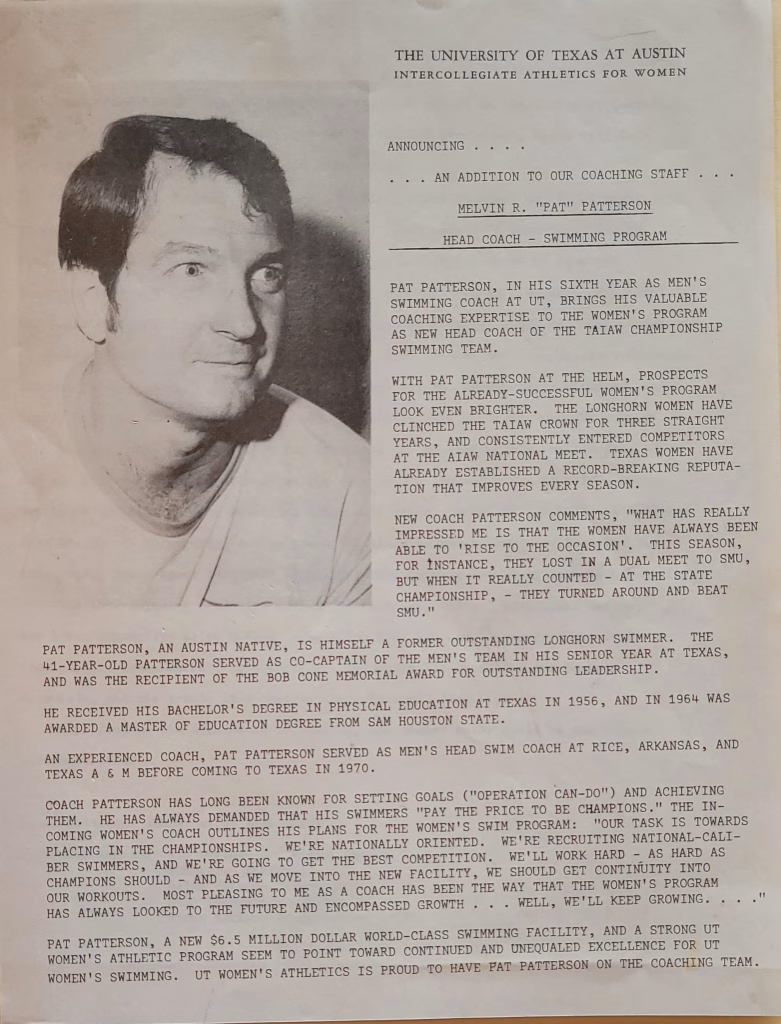
1970 Pat Patterson 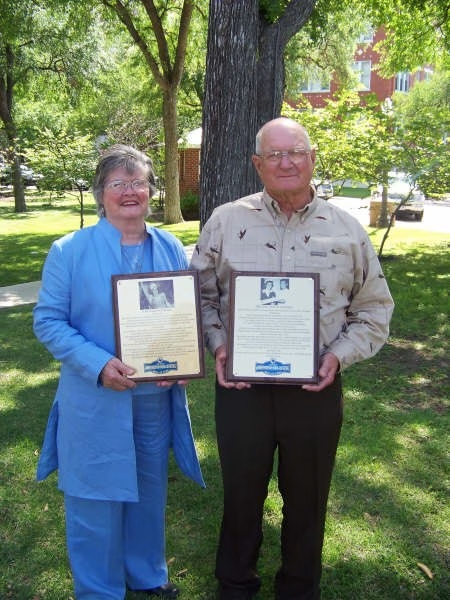
2009 – Jane and Pat Patterson inducted into the TSDhof. swimming 
Jane Patterson 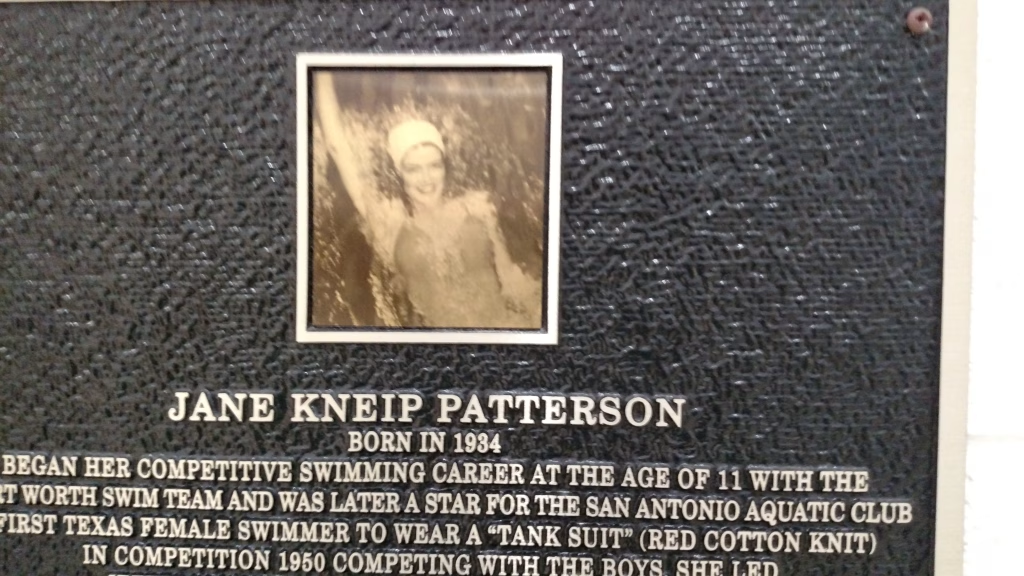
Jane Patterson honor plaque 
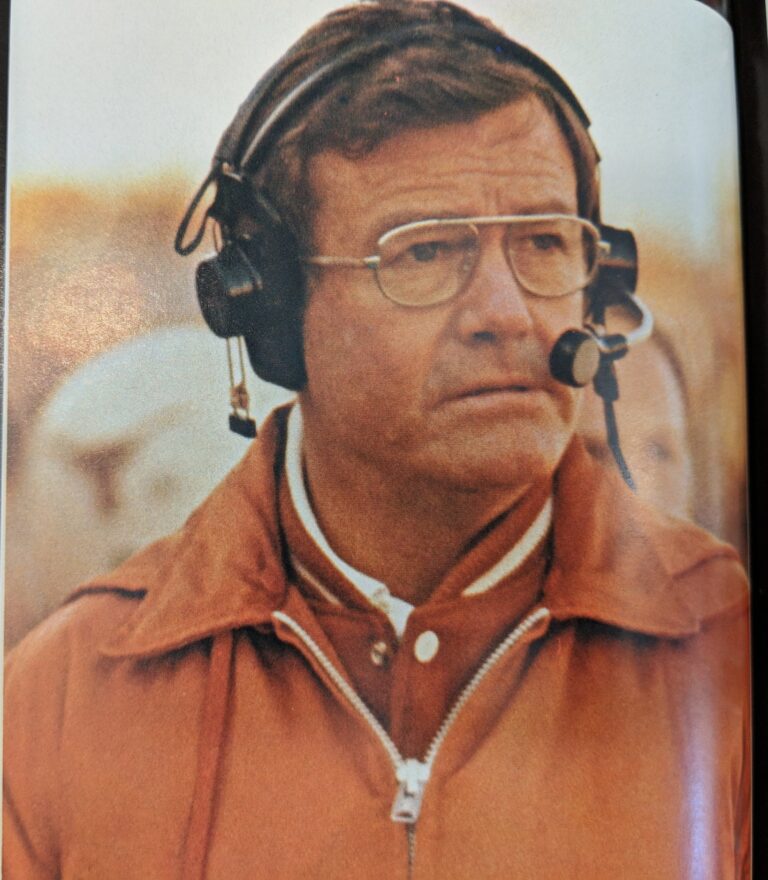
Pat Patterson 
Patterson with Craig Fox, Guy Hogstette , Brent Baker 
1947 Jane Patterson


Wow, what an incredible posting of one of the most important figure in the history of of the development of “swimming” competition in the state of Texas. Personally, I got my first three years of participating in coaching high school swimming, at UT with Coach Pat. I had just returned home from three years in the Army in 1970, moved to Austin, and Pat allowed me to work many of the state high school, and college meets.
Over the years, after my 27 years of high school coaching, I owe Pat ALL of my gratitude for taking me under his “wing” and giving me his undying support. ONE OF A KIND GUY and a friend, even today; 10-2025
Eugene, thanks for your comments. Your comments have been added to Pat’s personal TLSN website at https://texaslsn.org/1971-1981-coach-patterson-wood/
Please review your information on the lady longhorns. You have several of us listed as on the 1977 team when it should be later, 1978 and later. Thank you, Becky (Kast) Hecox
Rebecca, which Lady Longhorn swimmers should be moved from the 1977 team to 1978 or later, so I can make the corrections? Some of the research I use sometimes mixes up years because each swimming season spans two years—1976-1977, 1977-1978, 1978-1979. Often, a senior listed on the 1976-1977 team is mistakenly shown as part of the 1977-1978 team. I go by the latter year for the 1977-1978 season when chronicling Longhorn Sports swimming history. Of course, I make mistakes too, so feel free to point them out and I’ll revise my data. I can be reached at Billydale1@gmail.com.