Fifty Years Ago 1975 football team by Larry Carlson
THE 1975 ‘HORNS: BABY, THEY WERE BORN TO RUN
https://youtu.be/IxuThNgl3YA Born to Run link
When Darrell Royal’s nineteenth edition of the Texas Longhorns opened camp in August ’75, prognosticators were high on the Horns. No other college team in America was going to have a ground game like Texas.
It started with FB Earl Campbell, hell on wheels as a freshman. And Marty Akins was about to become DKR’s first and only three-year starter at quarterback. The feisty senior was a smooth operator and a strong, speedy runner from the triple-option wishbone. As a high school blue-chipper at Gregory-Portland, across the bridge from Corpus Christi, he was both a track sprinter and shot put champion. Veterans Gralyn Wyatt and Jimmy Walker, good blockers and runners, manned the halfback posts.
It was no secret to opponents that the Longhorns were going to run. And run a lot more.
Coincidentally, a young New Jersey troubadour, Bruce Springsteen, was dominating the autumn airwaves. He was the first rocker to appear on Newsweek and Time the same week. From Asbury Park’s battered boardwalk to Austin’s graying Memorial Stadium, a runaway American dream, “Born To Run,” was the ’75 theme song. Amen, Bruce.
Who was going to conduct the precision steamroller for that Longhorn attack, though?
Glad you asked.
All-American Bob “Boots” Simmons was up front at one tackle position to blaze trails. Brothers Will and Charlie Wilcox, and center Billy Gordon made for an all-star unit that also featured Joe Samford and Tommy Ingram as messenger tight ends. Sophomores George James and Dave Studdard showed versatility while stepping in at various posts with senior Rick Thurman mostly out with knee problems and Will dealing with an early foot injury
The offensive line, as it had been through the first seven seasons of the wishbone, would be counted upon as a stellar unit, perhaps the best in college ball.
Opposing defenses would know what was coming when they faced the Longhorns. Stopping it would be a daunting task. That, despite the knowledge that the pass was not a Texas-sized threat. As it turned out, Akins was 31 of 56 for 463 yards that fall, two scores and two picks. On the year.
Sounds like a Quinn Ewers or Arch Manning stat line for one big afternoon in burnt orange.
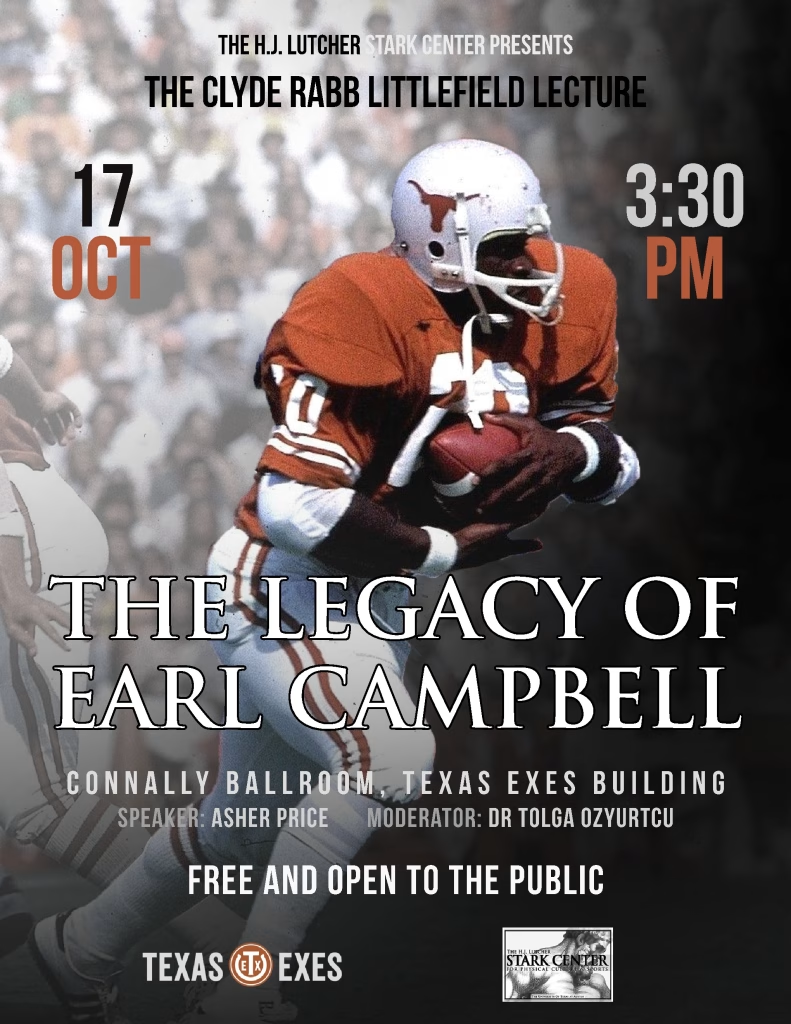
Earl Campbell 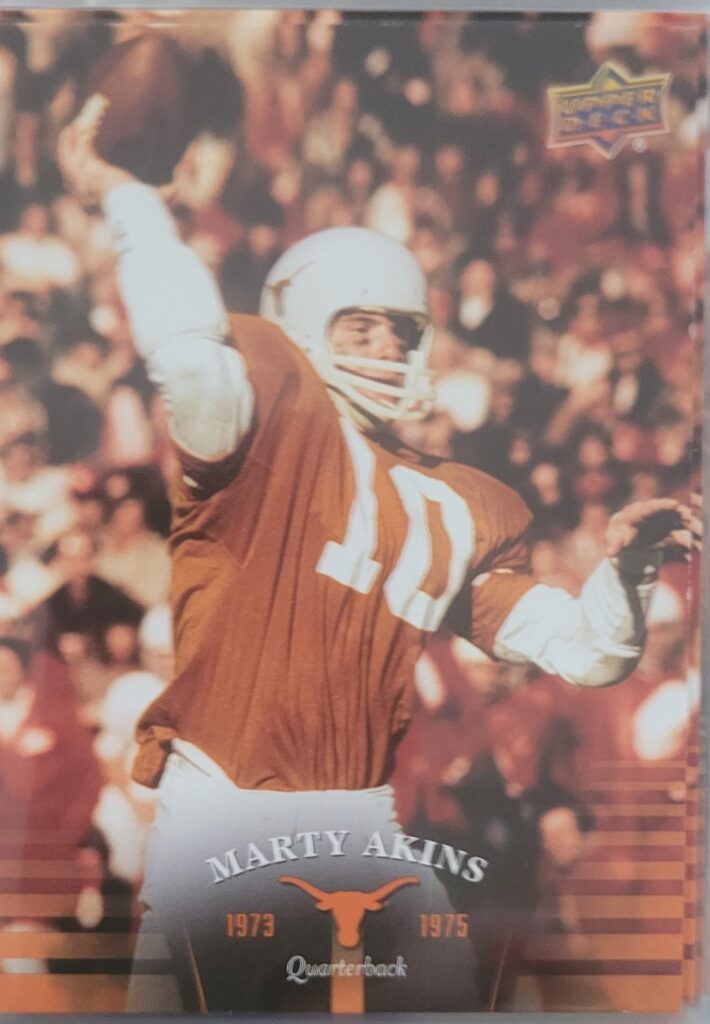
1974 Marty Akins 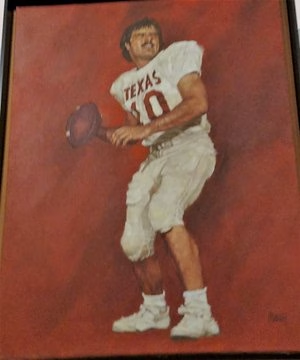
1975 Marty Akins 
1974 Bob Simmons from Temple, Texas 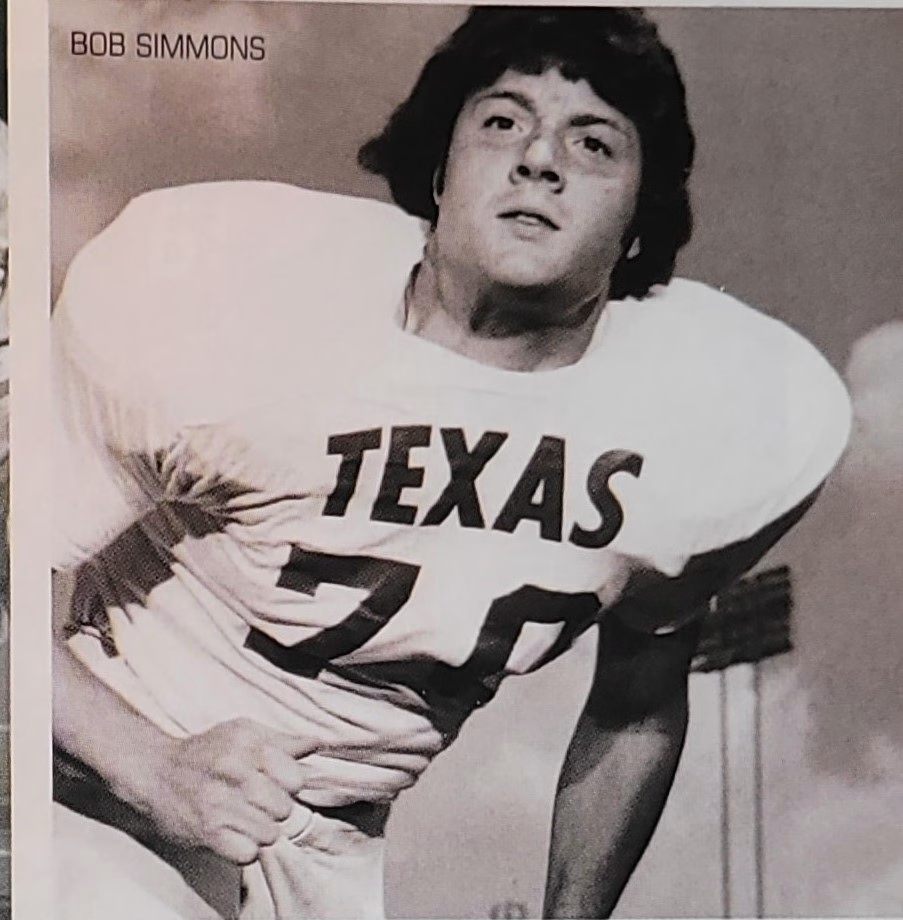
1974 Bob Simmons 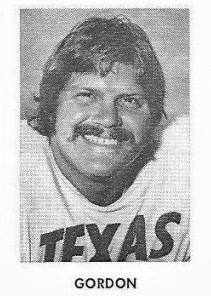
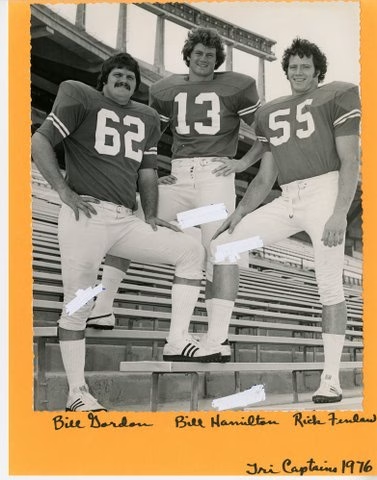
1976 Billy Gordon 
1974 Will and Charlie Wilcox 
1974 George James 
1975 David Studdard 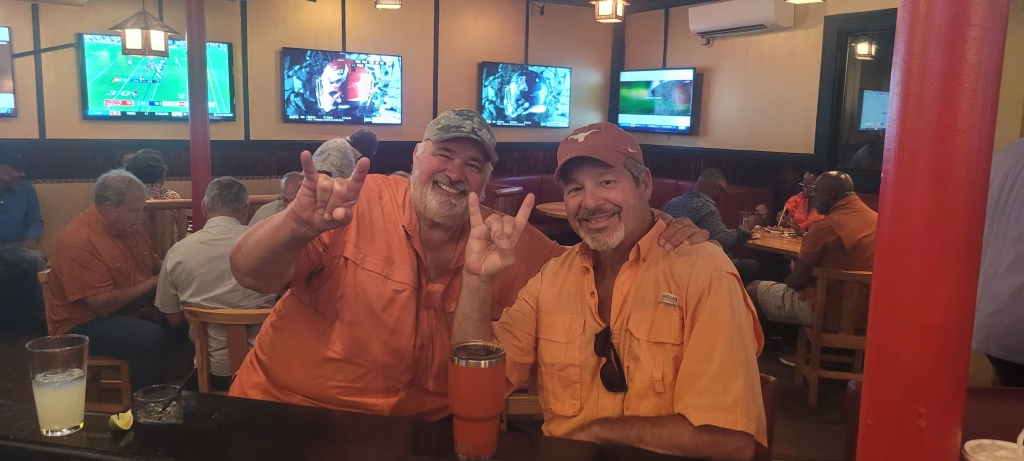
2023 Rick Ingraham , Brad Shearere 
1975 Bill Hamilton 
1976 Raymond Clayborn 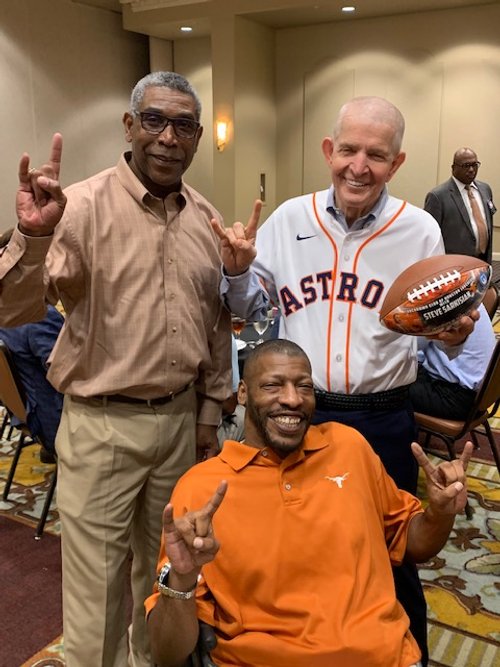
2022 Houston Touchdown Club Raymond Clayborn and JimMcIngvale 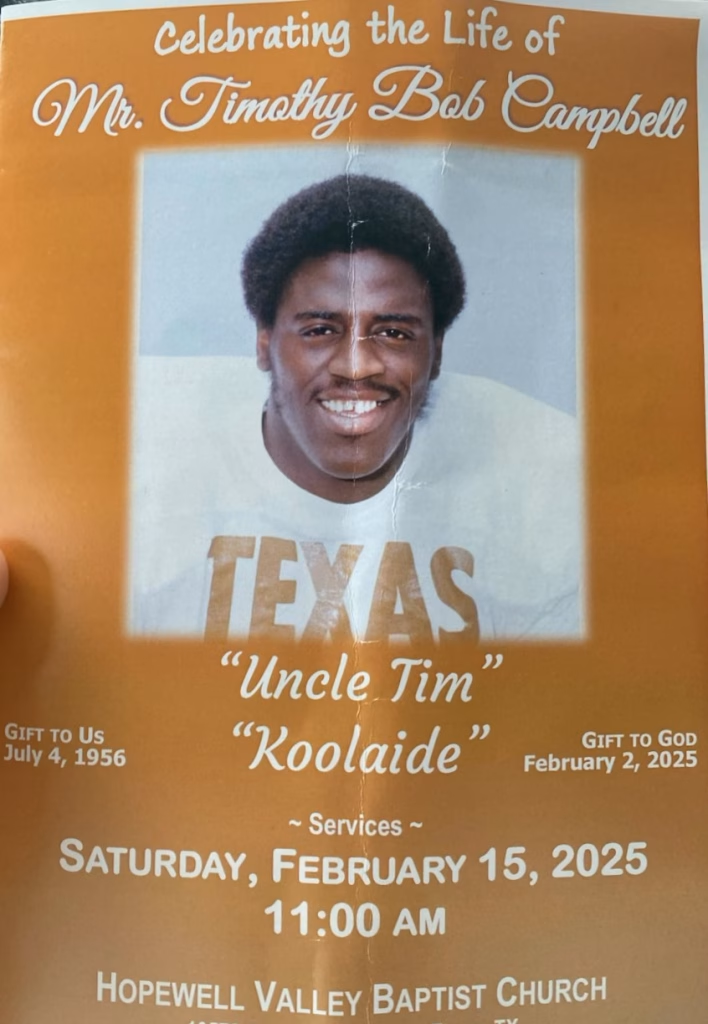
1976 Tim campbell 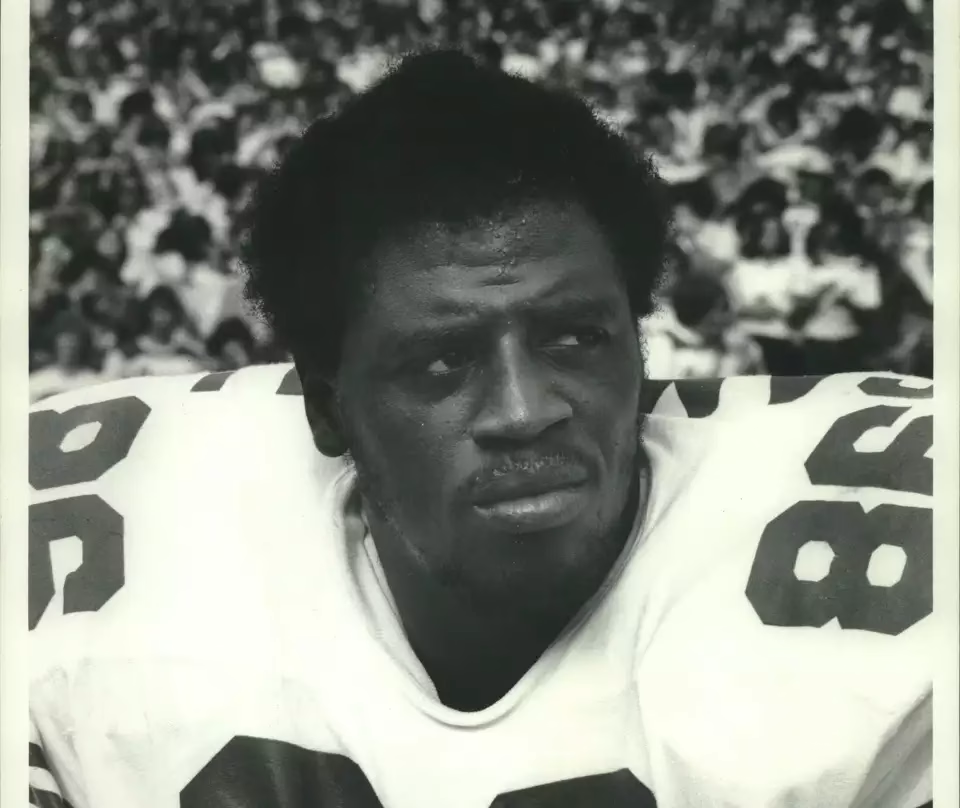
1976 Tim Campbell 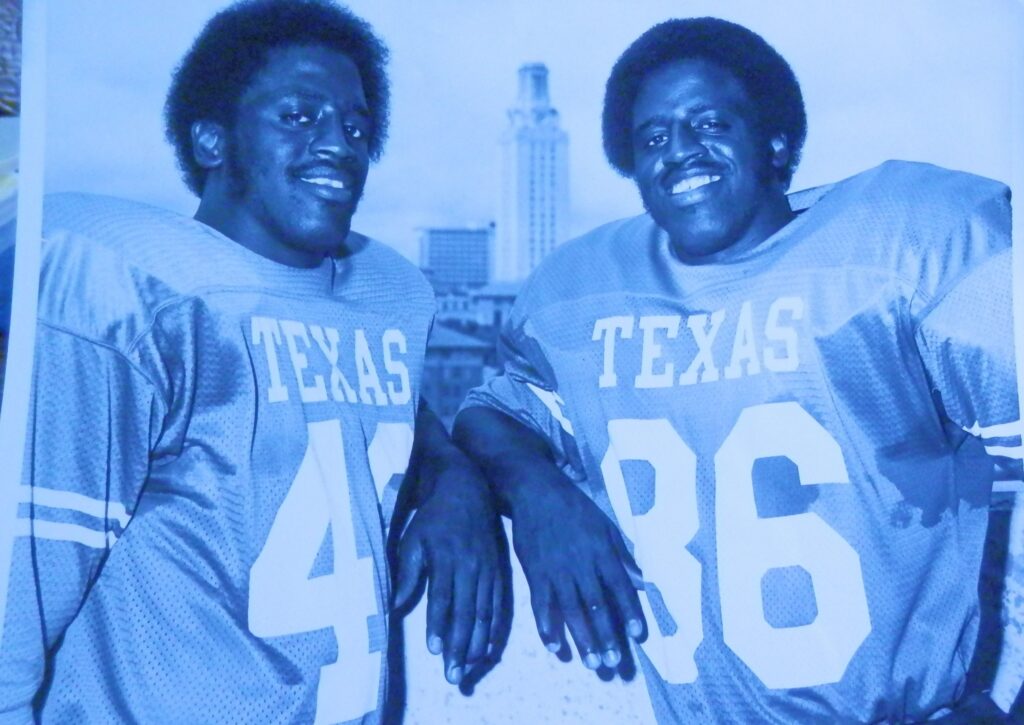
1976 Steve and Tim Campbell 
Charlie Wilcox
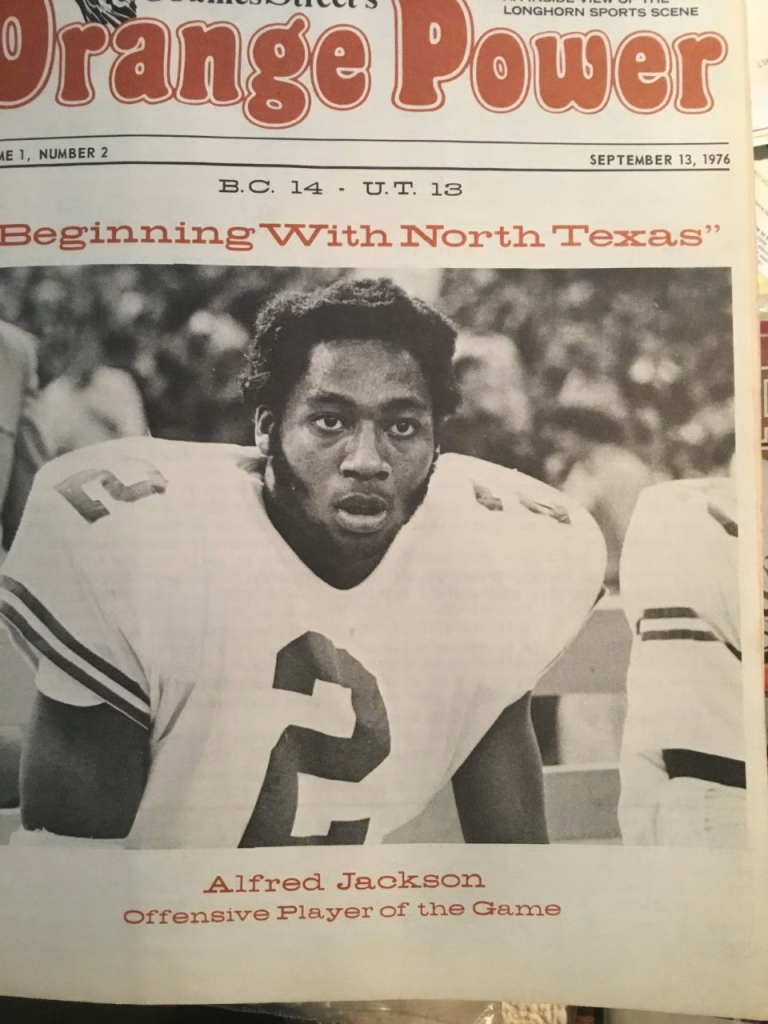
Future NFL star WR Alfred Jackson did most of the pass-catching, hauling in 32 passes.
“Our version of the wishbone was quarterback and fullback-centric,” Samford (second in receiving for Texas with four grabs) recalls, “making Marty and Earl our two primary weapons.”
Spoiler alert for those ‘Horn fans not fortunate enough or “seasoned” enough to remember the remarkable ’75 machine: Big Earl went on to ramble for more than 1100 yards, punishing would-be tacklers with a scorched earth approach. As DKR once chuckled, “Ol’ Earl doesn’t take any prisoners.”
Akins, in his third year in the QB1 saddle, looked even slicker on the keeps and pitches than had his storied UT predecessors at quarterback. And when number ten didn’t breeze past somebody on the corner, he wasn’t shy about contact. “Marty was lika a linebacker playing quarterback,” Samford testifies. “He didn’t lack confidence in anything.”
Akins, who often told reporters he might well become the governor of Texas someday, ran for a magical 777 yards in ’75, in spite of a late-season knee injury. He became the first wishbone QB to be named an All-American.
But behind, er,…in front of every All-America quarterback and fullback, is a talented, rockin’, rollin’ line that makes the offense born to run. Will Wilcox looks back at his senior season of ’75 and says that as younger players, he and Simmons had admired and learned from the play of imposing standouts such as Bill Wyman, Jerry Sisemore, Don Crosslin, Bruce Hebert, Bob Tresch and others. In turn, these seniors had become stars and anticipated a big season.
“We were confident and felt like we were capable of doing anything we were asked,” Wilcox says, then reels off a lengthy list of O-line teammates he credits. Will and his brother, Charlie, who passed away last year, came out of Houston’s Spring Woods High and are the only brothers to have ever started together on the Longhorn O-line. The ’75 Horns, by the way, had twin Campbell boys — Tim and Steve — joining Earl on the squad. Tim, a spindly 185-pound freshman defensive end, would lead the Horns in sacks.
The Horns opened at home, routing the overmatched Colorado State Rams, 46-0. The defense swarmed for the shutout and eleven Longhorns carried the ball. Campbell and Akins averaged eight yards per carry for a combined 183 yards in limited duty.
Next up was a long flight to Seattle, home of Husky Stadium, often dubbed “The Greatest Setting In College Football.” While boats scudded around Union Bay on Lake Washington, Texas took care of business, pulling away in the third quarter and bringing home a 28-10 win. The Longhorns pounded the rock an astonishing 72 times for 440 yards.
Big Earl raced 61 yards for one of his three TDs and rolled up 198 yards. Marty ran for 140 and “Sailin’ Gralyn” scooted for 75 yards.
Not everything was cool in Seattle, though.
“I suffered a highly unusual injury…the arch of my foot was crushed when one of our own backs stepped on my heel when I was driving on a block,” Will Wilcox painfully remembers. The injury kept him out of several contests and parts of others but he kept returning to pulverize opponents.
The Steers blasted Tech, 42-18, and Utah State, 61-7, to warm up for Oklahoma in mid-October.
In the annual State Fair cage match, Texas seemed poised to emerge from a 17-17 tie and snap a four-year losing streak to the Sooners. But a facemask penalty kept Oklahoma alive and OU prevailed, 24-17, thanks to a 33-yard Horace Ivory TD. Texas had lost 16-13 the previous season and Wilcox ackknowledges the toll taken by the L’s.
“Those bitter losses hit us all very hard and had a dramatic impact on us as a team fairly early each season.”
Nevertheless, the ’75 crew bounced back after OU. In hostile Fayetteville one week later, the Horns held off Arkansas 24-18 after the Hogs tightened the scoreboard count with a last-minute touchdown. The UT O-line was fierce, blasting away at the Razorbacks and controlling the game. Akins had a 55-yard burst among his 151 yards, Campbell bulled his way for 83 yards and Walker added 64 steps.
For those observers who appreciated excellence in execution, the smashmouth but ultra-professional work ethic of the men on the Texas forward wall was a joy to behold. It was businesslike, perhaps a portent of things to come, since both Samford and Wilcox would later work as certified public accountants.
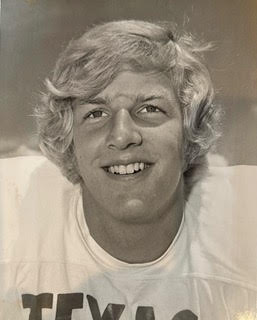
JOE SAMFORD
When interviewed for this story, those gents eagerly cited the teaching and influence of not just Darrell Royal but line coaches Willie Zapalac, Leon Manley and Spike Dykes. Samford went so far as to refer to Zapalac as “a stud,” adding “His confidence rubbed off on all the offensive linemen.”
According to Wilcox, those mentors’ encouragement to be poised under pressure made its mark. And he pointed out that all those coaches were present for his entire UT career.
“I’d say we were quietly confident,” Samford allows, “and highly motivated by great coaching.
“As a unit we didn’t tend to show much emotion and generally walked up to the line of scrimmage after breaking the huddle with deliberation,” Wilcox adds. “Then we got spaced out and set to go.”
The key to the wishbone’s success at UT has long been attributed to the emphasis on repetition through drilling.
“It was the coaching, pure and simple,” Wilcox told TLSN.
“We just practiced so hard. So much of that firing off the ball, staying low and hitting was automatic for us, like breathing and walking.”
Samford echoes the opinion. “Our blocking scheme was pretty simple. For the most part, it was buckle up the chin strap and beat the guy in front of you,” Joe confirmed. “Simple breeds confidence and we were very confident. We had the coaching in Zapalac, Manley and Dykes.”
Then Samford couldn’t resist a final thought. “I do wish we had changed up the snap count every once in a while. We always went on “one” and everybody in the stadium knew it,” he cracked.
So UT was spotting defenses the count. It didn’t matter.
On the other side of the ball, Coach Mike Campbell, in his 19th year as DKR’s right-hand man, was endlessly tutoring the burnt orange defense, aiming for excellence. Half of Texas’s opponents in ’75 did not score more than one TD.
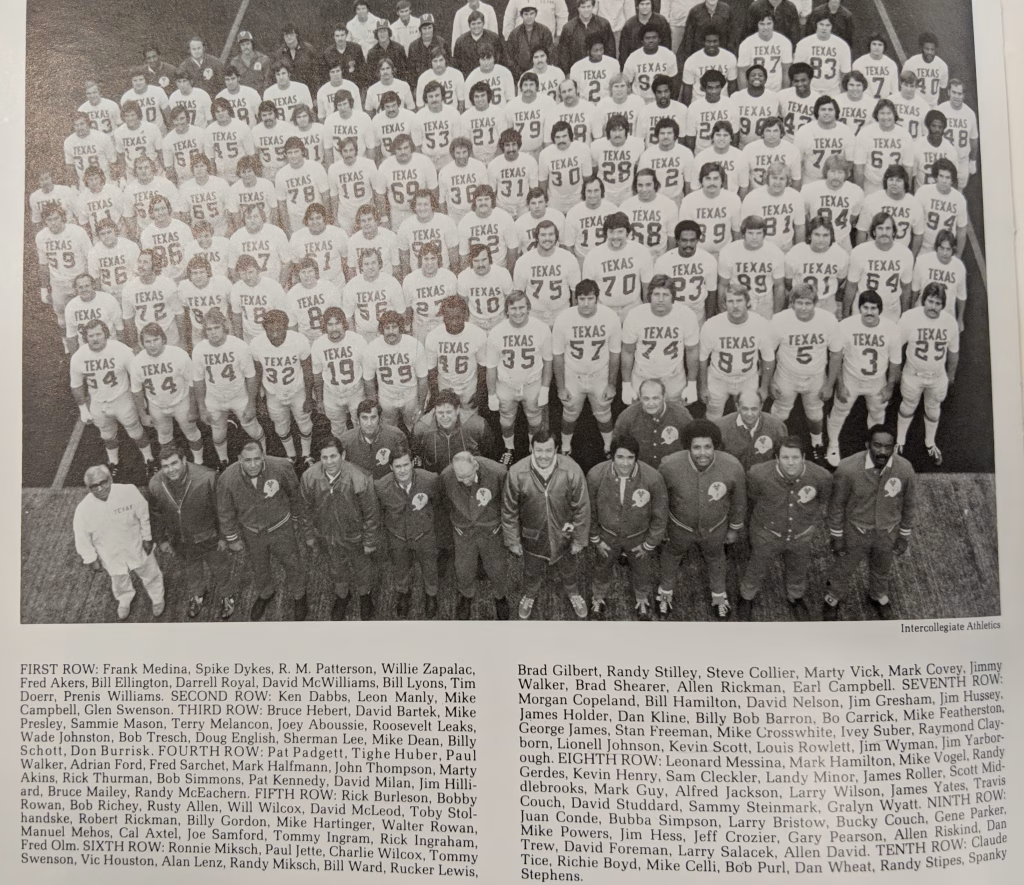
In hindsight, it is notable that five defenders — Rick Fenlaw, Lionell Johnson, Bill Hamilton, Brad Shearer and Tim Campbell — totalled more than one-hundred tackles each. That group was bolstered by other standouts such as Raymond Clayborn, Paul Jette, Rick Burleson and Jim Gresham, Steve Collier, Fred Sarchet, Adrian Ford, Robert Rickman and Earnest Lee, among others.
Following the heartbreak of the loss to OU and the bounce-back victory at Arkansas,Texas dispatched conference foes Arkansas, Rice, SMU, Baylor and TCU.
Ominously, though, Akins injured a knee against TCU in Austin and the Horns struggled to a 27-11 win over the lowly Horned Frogs.
The good news for Texas was that Akins would have 13 days to recuperate before the Horns traveled to College Station for a game that looked to decide the SWC title and Cotton Bowl berth. Texas (9-1, ranked #5) and the Ags (9-0, ranked #2) would do battle as the nation’s marquee game on Black Friday.
Come kickoff, Texas fans were holding their collective breath about Marty Akins. If the Horns lost him, there was only a freshman backup, better suited to the passing game than the wishbone. Mike Presley, an excellent QB in his own right, had elected over the summer to forego his final season of eligibility to focus on his studies. His calculation might well have changed the fates, as it were.
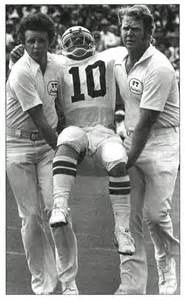
Joe Samford’s memory of that day is clear. “I can still see Bob Purl and Randy Stipes carrying Marty off the field after a cheap shot by A&M.”
A&M’s All-America cornerback, Pat Thomas,leveled Akins with a knee-high tackle on UT’s first play from scrimmage. The senior QB returned for nine plays before the knee could no longer hold up.
Some fifteen years later, Akins was interviewed by Austin writer Kirk Bohls for a book, “Long Live The Longhorns.
Said Akins, “(Thomas) came in and hit me right on the knee. Was it planned? I think so.”
Mortified Texas fans concurred, all in vain. The Aggies led, 10-0, after one quarter and the Horns’ offense was stuck in park. Raymond Clayborn injected life into UT’s hopes, scoring on a 64-yard punt return to make it a tight 10-7 at intermission. Texas, with a 47-yard FG by super freshman Russell Erxleben, had hopes midway through the fourth when they pulled to within seven at 17-10. But the worn-down Texas defense could not prevent a short Farmer field goal that iced things with three minutes left.
The Longhorns had only been able to muster an unthinkable six first downs and totalled just over 100 yards rushing against a stout Maroon “D.” Campbell, keyed on all afternoon, got 40 yards on 15 carries as Texas was held to under fifty snaps. A&M had beaten a Darrell Royal Longhorn team for just the second time in 19 tries.
Now the unbeaten Ags would travel to Little Rock. A Southwest Conference title, a Cotton Bowl trip and a national championship were all in reach.
The Aggies lived down to expectations, at least in the eyes of Texas. Arkansas blasted the Cadets, 31-6. The three-way, rock/paper/scissors SWC tie for first put the Razorbacks in tall cotton and would send UT to Houston for an afternoon date with Colorado in the Astro-Bluebonnet Bowl.
A&M’s consolation prize was a matchup with Southern Cal in the Liberty Bowl, where the Trojans buried the Ags, 20-zip.
“So…we were less than excited to play in the Astro-Bluebonnet Bowl,” says Samford from his East Texas home at Lake Palestine. “And it showed up in a double-digit deficit at halftime to a huge Colorado team.”
The UT coaching brain trust had come in with a plan to play Akins but not really from a full wishbone set. His knee couldn’t take it. (Note: It was later reported that CU Coach Bill Mallory instructed his players to stay away from the QB’s tender knee. Akins wasn’t going anywhere in a hurry.)
Texas did seem lacking in motivation in spite of a partisan burnt orange crowd. An Akins pass (he was 4-5 for 55 on the day) to Alfred Jackson earned UT its only first half TD as they trailed, 21-7, at halftime in the dome.
What ensued, though, lives on in Longhorn lore. “In the second half, the defense shut them out and the offense found its rhythm and we beat them, 31-0, in the second half,”
Samford gleefully recalls. “Earl was Offensive MVP and his brother, Tim, was Defensive MVP.”
It was a rousing finish to a helluva season.
As a footnote, let’s get this on the record. A superlative offensive line bludgeoned opponents all season long, paving the way for Earl, Marty and company to run for 3,413 yards and pile up more than 4,000 yardsticks in total “O.”
To us in the grandstands and press boxes or at home by the TV or radio, that stellar O-line made it all look simple. Line up, whip your opponent.
About a zillion Longhorn backers have wondered about recent UT offensive lines in the Steve Sarkisian era. The perception that Texas just doesn’t man up and get it done is alive and viral.
Will Wilcox has been there and done that as a bulldozer, though, and he doesn’t think that line play success is anything simple. Or ever was.
“We also felt the pressure and the challenges on short yardage and the goal line,” Wilcox says. “Great opponents always fight back and it is a battle. You don’t always win,” he reasons.
“The important part is to push on and just get it done. When it’s ingrained in you, you don’t think about it. You just do it.”
Texas of ’75 did it. The Horns finished 10-2, ranked sixth in the nation, highest among SWC teams. Arkansas was one rung back and A&M tumbled out of the top ten.
Bob Simmons, Earl Campbell and Marty Akins were honored as All-Americans. On the All-Southwest Conference first team they were joined by Will Wilcox, DB Raymond Clayborn, DT Brad Shearer and LB Bill Hamilton.
The 1975 squad was UT’s last great wishbone team, one that could beat anybody and everybody, and usually did. They stomped hoofprints all over fallen opponents.
Baby, They Were Born To Run.
“The Boss” said so.
(TLSN’s Larry Carlson is a member of the Football Writers Association of America. He teaches sports media at Texas State University and lives in San Antonio.)
by Larry Carlson https://texaslsn.org
Jay Arnold shares his memories of the 1975 team.
Thank you for honoring that ‘75 team, Larry. That was a great group of tough athletes and good guys. The Wilcox brothers, Ray Clay, Billy Gordon, Bob Simmons, and Jimmy Walker were all fighters. Same with Adrian Ford, Rick Fenlaw, Dr. Bill Hamilton, Paul Jette and others on their great D. Adrian is still fighting against the tough opponent of cancer and is fighting hard.
Once again you have captured and memorialized some great Longhorns and the early days of one of the greatest in Earl. I thank you and Billy Dale for your efforts in capturing the history and facts of Longhorn teams and players over a wide span of years. As I’ve said before, Billy’s vision and your knowledge, writing skills, and love of the Longhorns has captured history and Longhorn lore that would have been lost forever. Thank you both. Jay Arnold
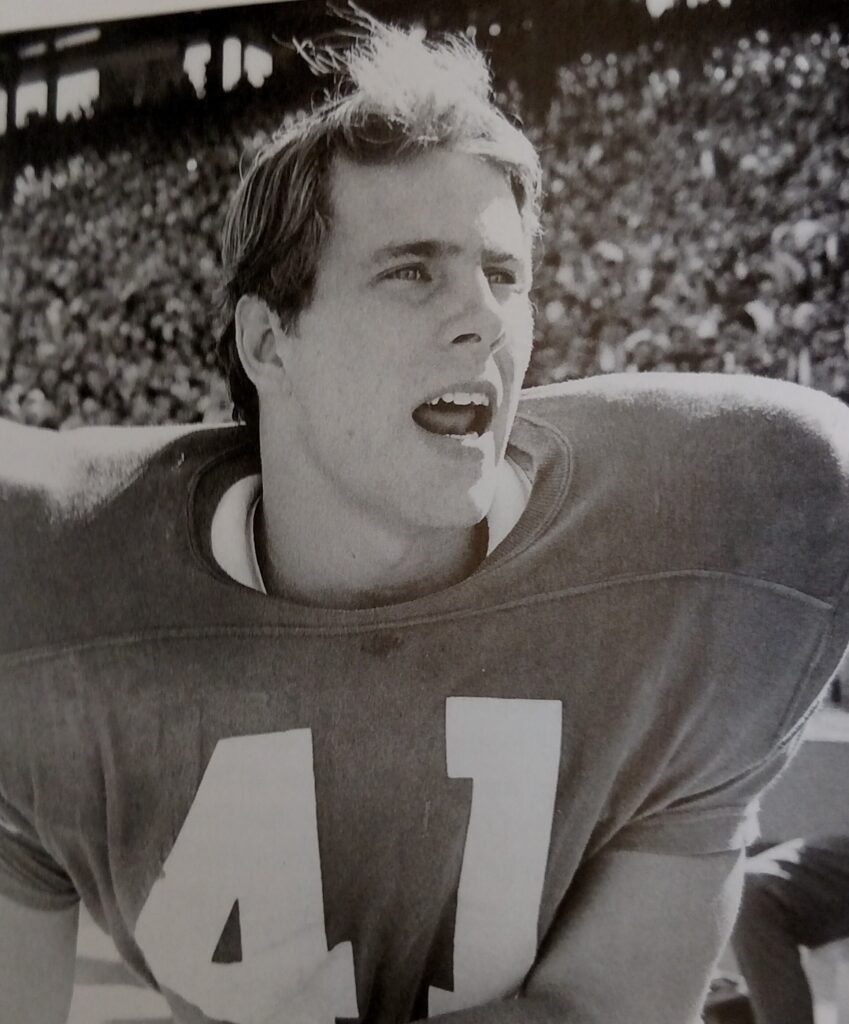
1972 Jay Arnold 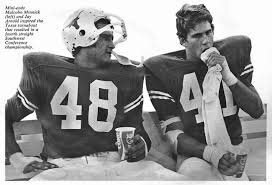
Jay Arnold, Malcolm Minnick is #48- 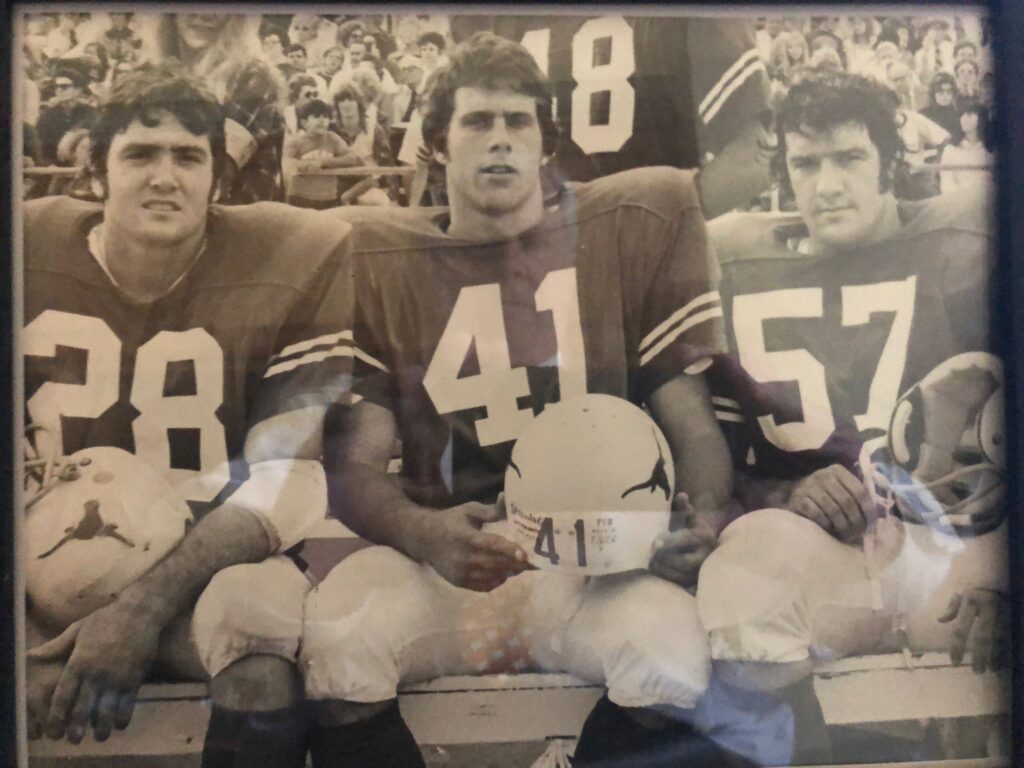
1973 Gary Yeoman Jay Arnold Bob Tresch 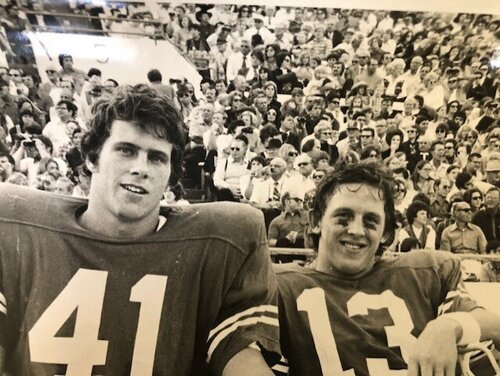
Jay Arnold and Jimmy Moore 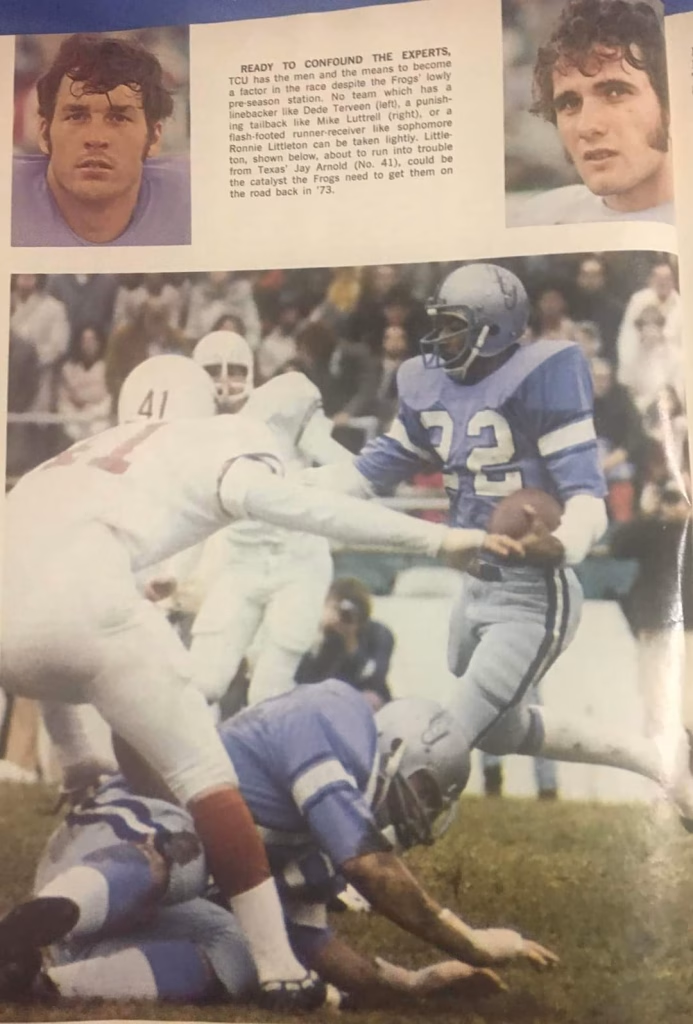
1972 Jay Arnold
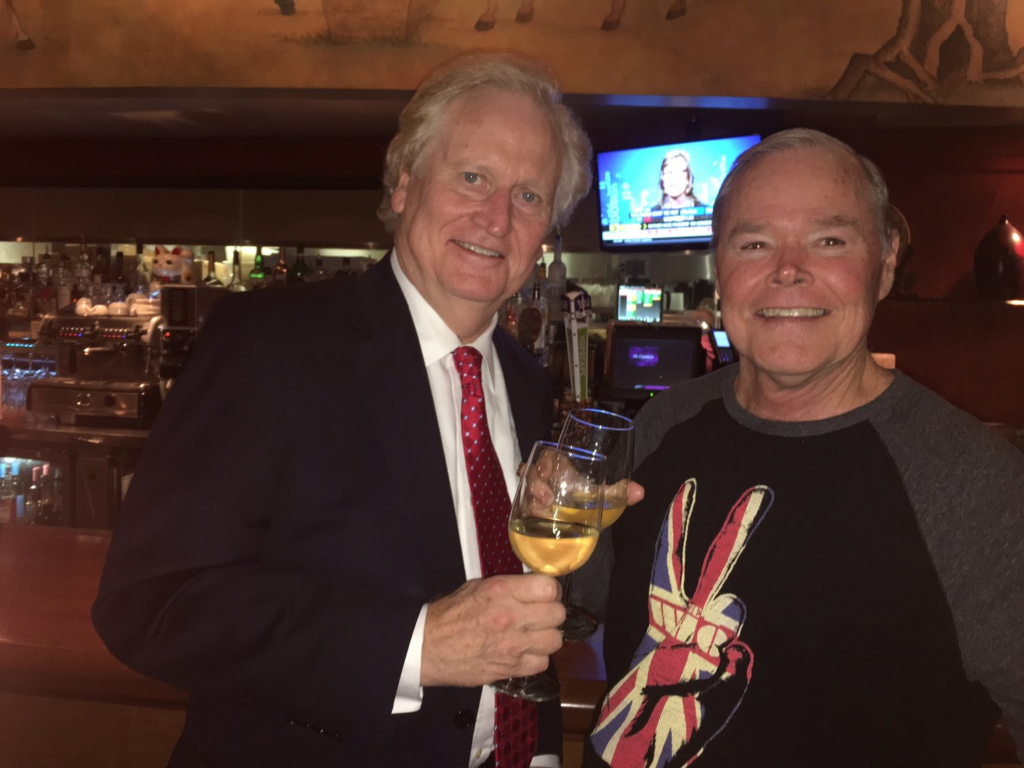
Benny Pace and Billy Dale toasting the TLSN 501 c 3 
Larry-hatchetman 
Longhorn Larry 
Cowboy Larry Carlson 
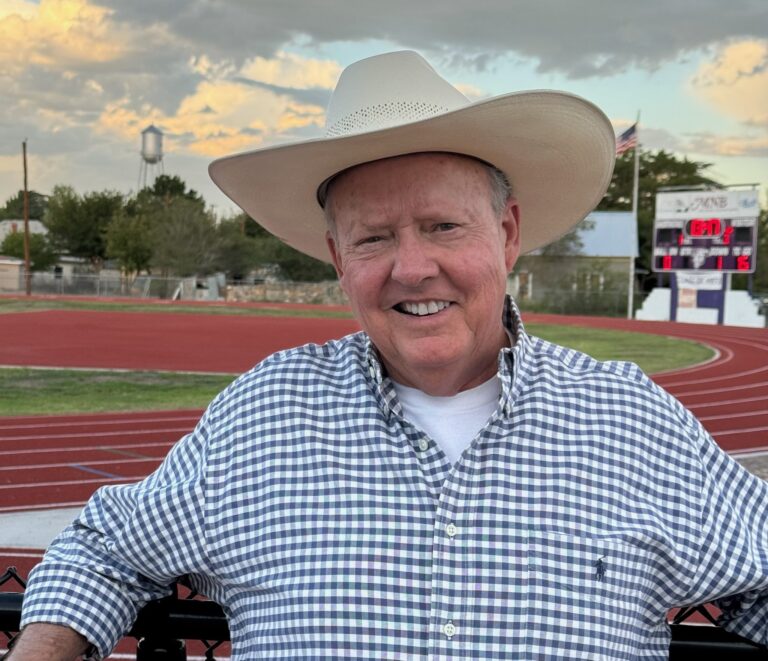
Muscle man Carlson