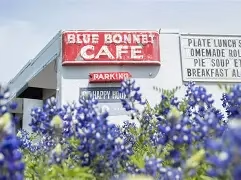
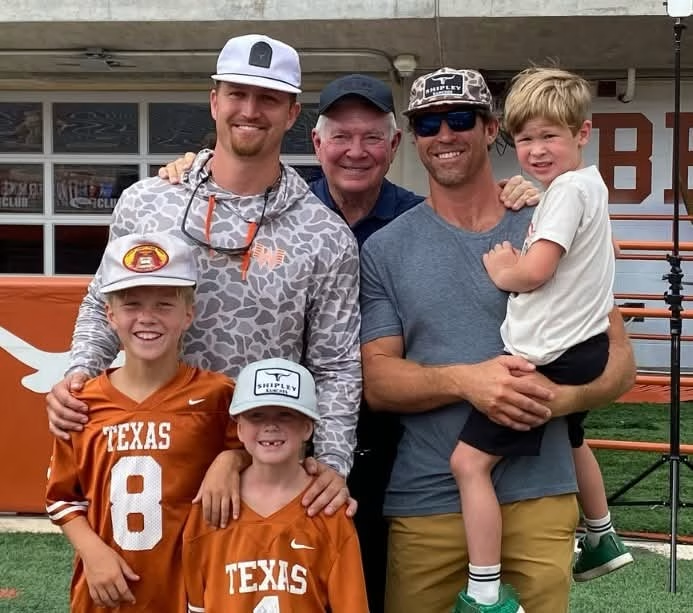
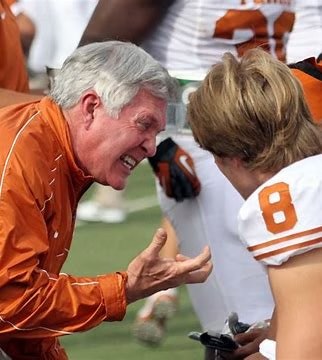
Lunch at the Bluebonnet Darrell Royal and Mack Brown at the Bluebonnet Cafe, Marble Falls, Texas

Essay One: A New Day, and Other Things Coach Royal Cannot Abide
The Bluebonnet Cafe sits on the main drag in Marble Falls, and by half past eleven the pie case is a serious document. Mack Brown got there first, the way he always did, and took the corner booth by the window, and ordered coffee for two. That was the arrangement. He did not tell the waitress the second cup was for a dead man.

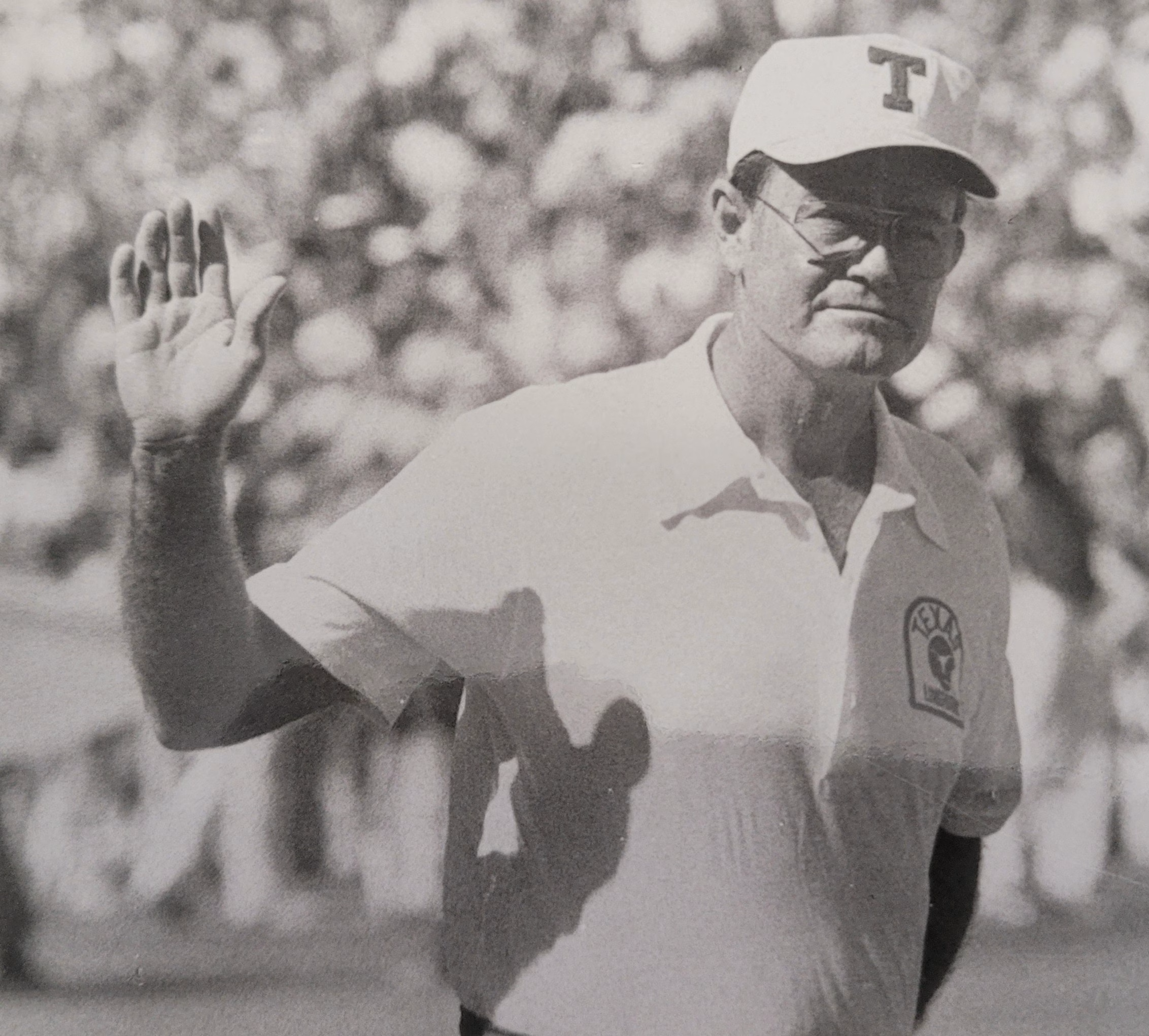
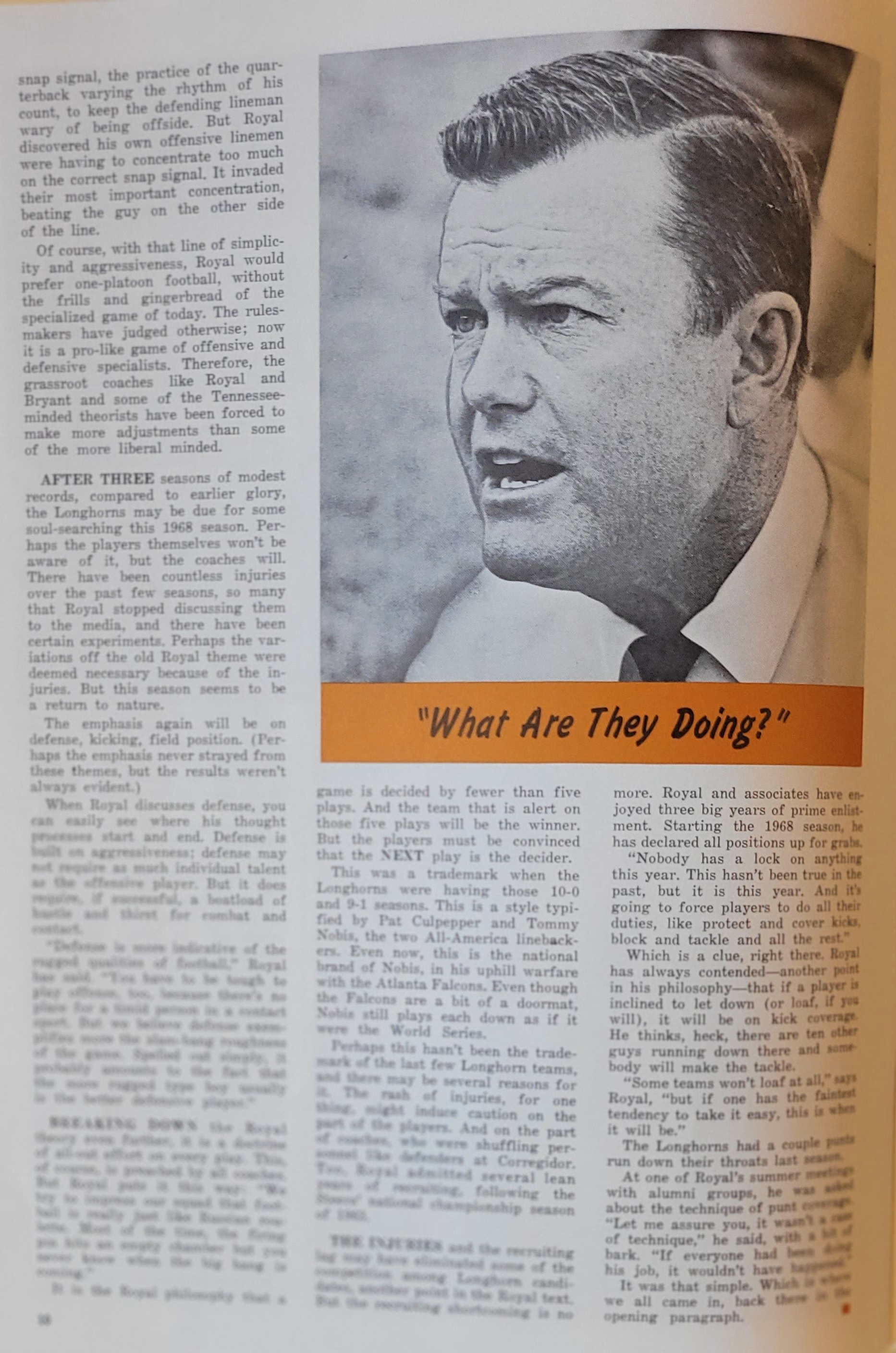
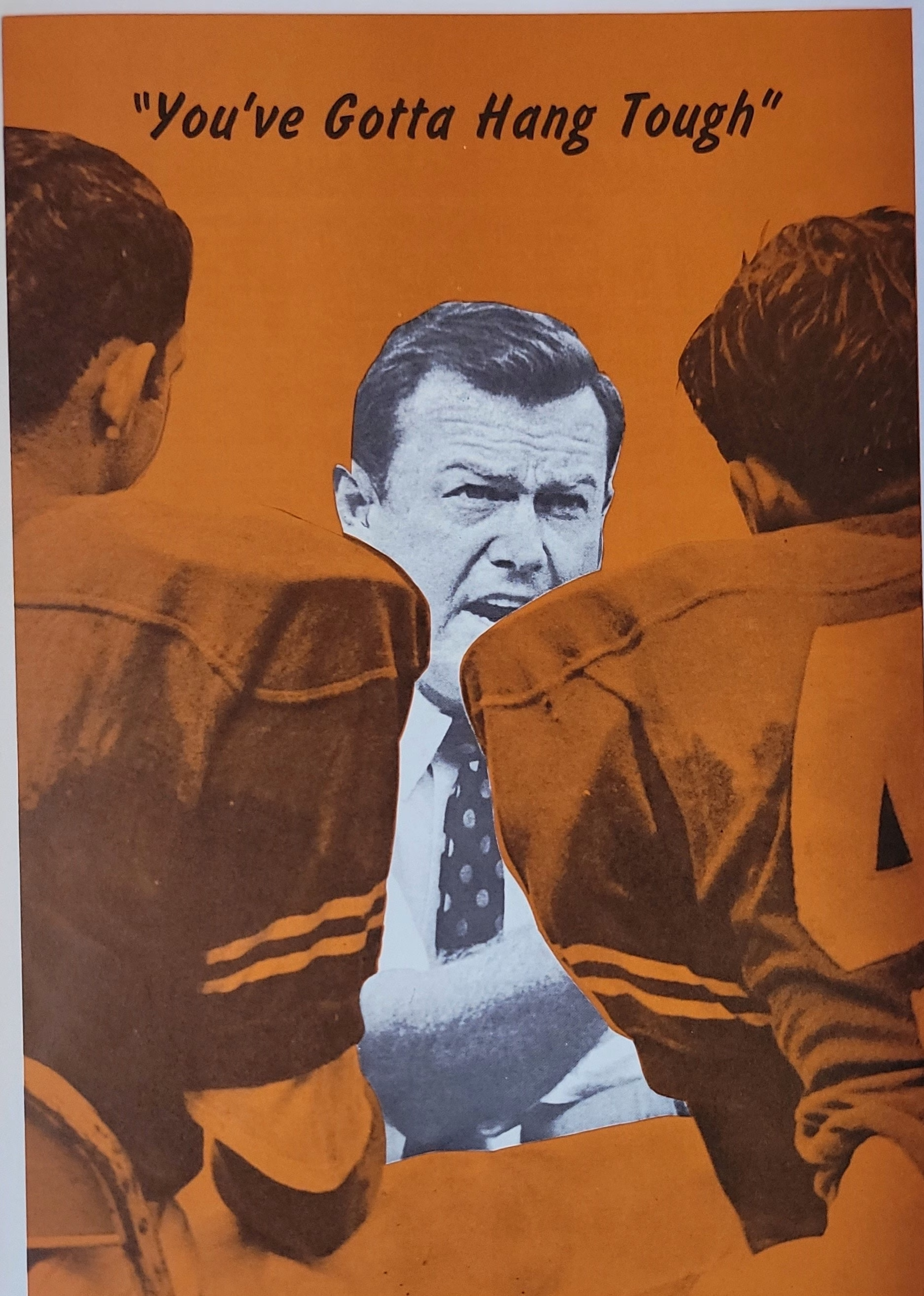
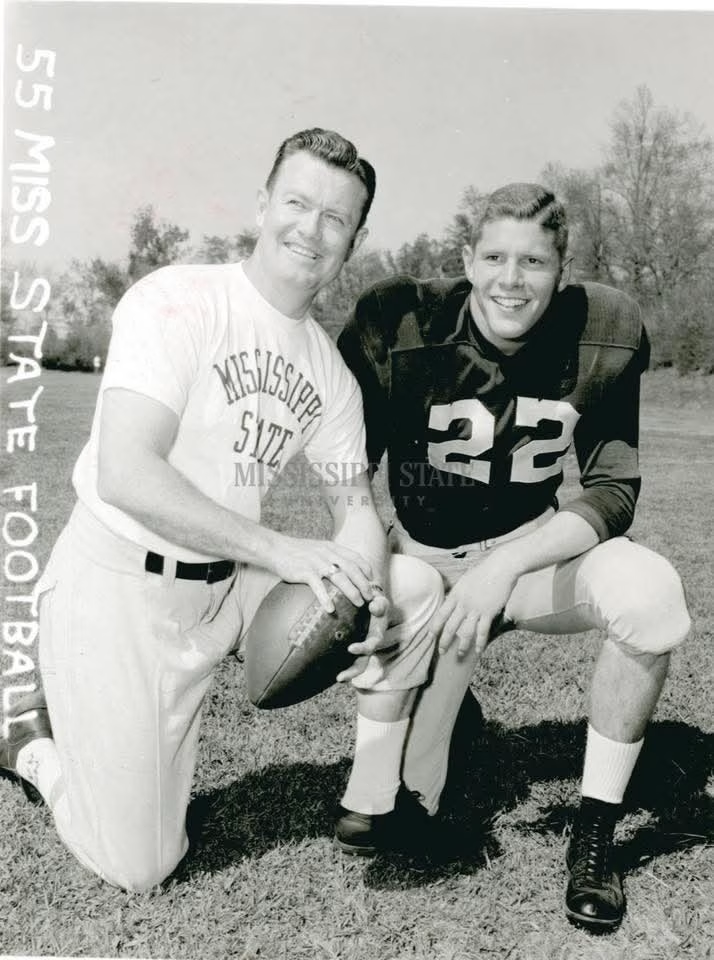
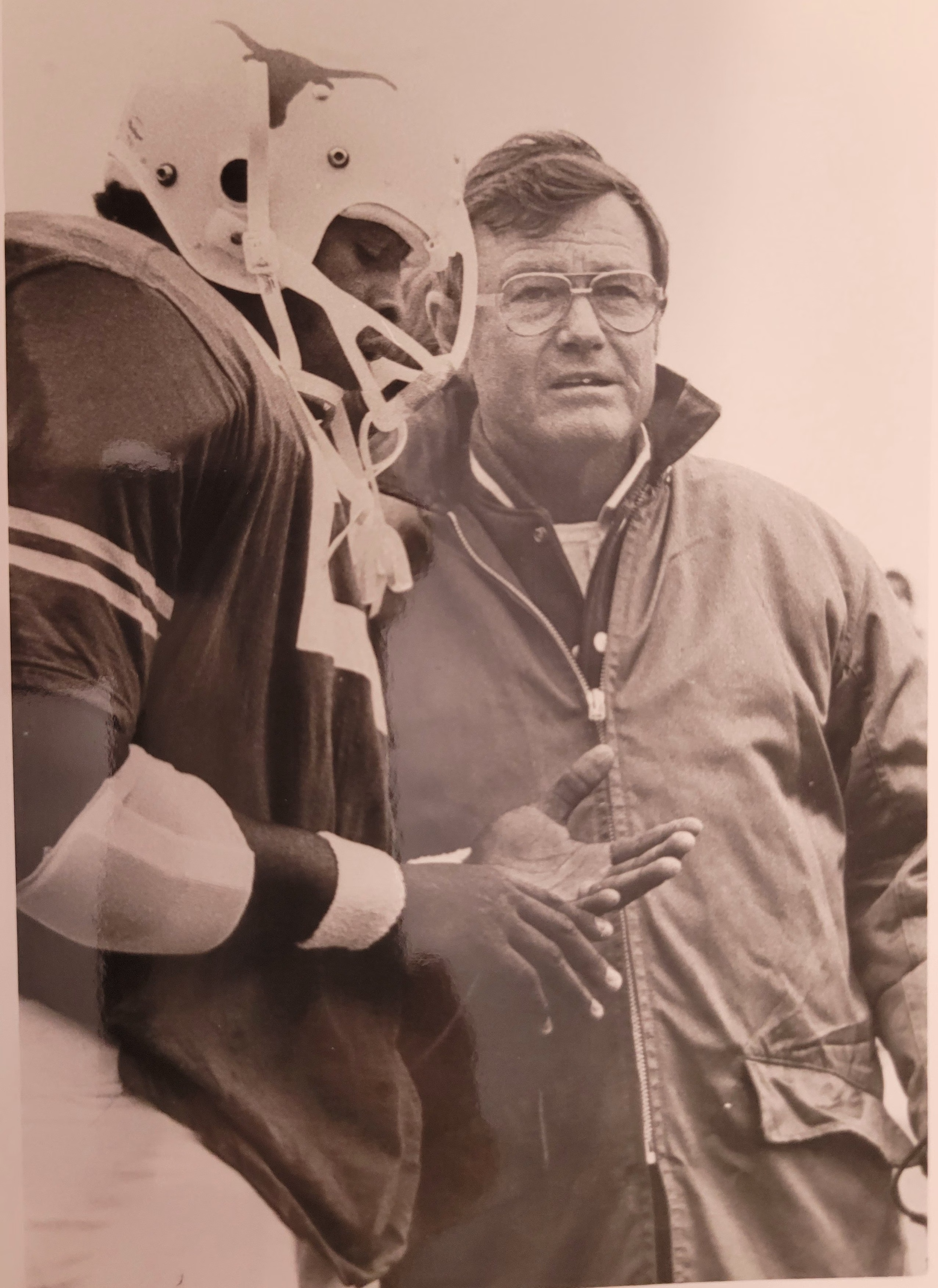
Darrell Royal came in a few minutes later wearing the golf cap. He still walked like a man who used to punt.
“You’re early,” Royal said.
“I’m always early. You taught me that.”
“I taught you a lot of things. Sit down before somebody sees you talking to a booth.”
Mack slid the second cup across. Royal wrapped both hands around it like it was February.
“They let you keep the cap,” Mack said.
“I negotiated the cap. Peter didn’t care. Edith cared. She said a man ought to look like himself or not come at all.”
“How’d you swing this, anyway? The lunches.”
“Worked out a deal. Peter runs the front gate, does the paperwork, keeps the ledger. But between you and me, Edith’s the one moving the furniture up there. She’s taking it over an inch at a time, the way a good woman does, so slow you don’t notice till the couch is where she wanted it.” Royal sipped. “I get down here now and again. The rule is I talk to you and I talk to Willie. That’s the whole roster. You’re under oath, by the way.”
“I haven’t told a soul.”
“Don’t. Willie won’t. Willie couldn’t tell a straight story if you spotted him the first half.”
The waitress came. Royal ordered the chicken fried steak out of habit, then remembered, and told her to make it whatever Mack was having, and she wrote it down without looking up, which is the great mercy of a Texas cafe.
“Tell me about football,” Royal said. “That’s what I come for. Well. That and the pie.”
“Where do you want me to start.”
“Start with the money. I hear they’re paying the boys now. Out in the open. Checks.”
“They are. It’s called the portal and it’s called NIL, and a kid can earn on his own name now—television, endorsements, the whole thing.”
Royal was quiet a second. “I don’t hate that,” he said, and Mack looked up, because he’d expected the opposite. “I don’t. A boy fills a stadium a hundred thousand deep on a Saturday, and everybody in that stadium ate a hamburger somebody sold’em, and the boy got a bus token and a handshake. That was never right and I knew it wasn’t right when I was living. Pay the kid.”
“So what’s the part you hate.”
“The leaving,” Royal said. “The up and leaving. In my day a boy signed and he stayed, and you had four years to make a man out of him whether he wanted the appointment or not. Now he throws two interceptions and by Wednesday he’s enrolled somewhere with better weather. There’s no getting told no. A boy needs to get told no by somebody who’ll still be there Thursday. That’s the whole job, Mack. That was always the whole job.”
“It’s a different game.”
“It’s a bus station. Everybody’s got a ticket and nobody’s got a hometown.” He put his fork down. “I’ll tell you what I don’t hold against the players. Not one thing. They’re nineteen. Nineteen-year-olds have been doing exactly what you’d expect since the Book of Genesis. You don’t get mad at the river for going downhill.”
“But you’re mad at somebody.”
“Oh, I’m mad at somebody.”
“I can see it in your neck. Your neck gets a certain way.”
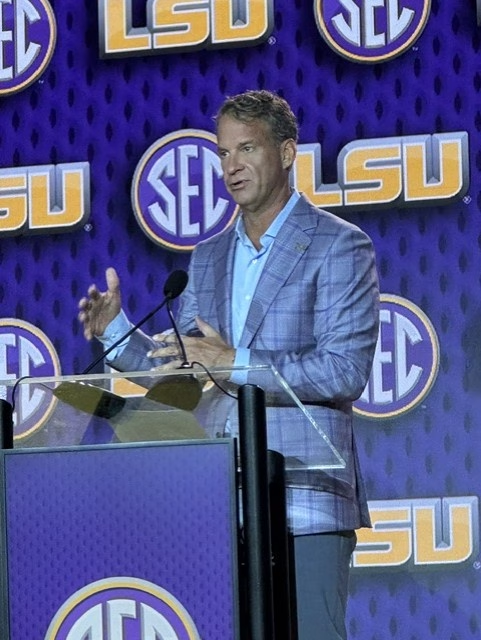
“It’s that Kiffin,” Royal said.
Mack set his coffee down slow. “Lane.”
“Down at LSU now, I understand. Which is about right. That fella’s had more addresses than a fugitive.”
“He’s a good coach, Darrell. You’d have to give him that. Offensive mind, quick as anybody.”
“I’ll give him the mind. I won’t give him the man.” Royal leaned in. “You know what he does? He’ll charm a mama in her living room on a Tuesday, tell her she’s raised a fine young man, eat her cobbler, and be recruiting off somebody else’s roster by Friday like it was a used car lot. He treats it all like a joke he’s in on and you’re not. I don’t like a man who winks that much. A wink is a fine thing but you got to earn each one.”
“You never even met him.”
“I’ve met the type. I coached against the type. The type usually had a whistle and a grudge and a wife who apologized for him at parties.” Royal shook his head. “I’m not saying he’s a criminal, Mack. I’m saying if you handed him your watch to hold he’d tell you a wonderful story while he was pawning it. Bad guy. I said it and I’ll say it in front of Edith.”
“You’re a hard grader.”
“I graded James Street on a curve, and James Street could’ve talked his way out of anything — talked us to a national title on a busted play, near enough. So it’s not that I can’t love a rascal. I can love a rascal all day. I just want the rascal to mean it.”
Mack laughed in spite of himself, and a man two booths over glanced at him laughing at nothing, and Mack picked up his phone and pretended, which is what you do.
“All right,” Mack said, lower. “My turn. You said I get questions.”


“You get questions.”
“What’s it like. Up there. Honest.”
Royal thought about it the way he thought about a fourth-and-short, which is to say without any visible hurry and with a plan already made.
“It’s a lot like two-a-days if two-a-days didn’t hurt and nobody quit,” he said. “The weather’s decided. Nobody’s knee is bad. And you get your people back. That’s the thing they don’t tell you and it’s the only thing that matters. You get your people back.”
“Who do you run with.”
“Broyles,” Royal said, and smiled for the first time all the way. “Frank’s up there and we still argue about the ’69 game, which I won, which he will dispute through all eternity, which is heaven’s definition of a friend.”
“The Big Shootout,” Mack said. “Number one against number two, and President Nixon was there to declare Texas national champions. Do you talk to him?”
“No,” Royal said. “Haven’t seen him around the place.”
He let that sit a second, then went on. “Mike Campbell’s with me. Best defensive mind I ever stood next to, and up there he’s finally got a defense that can’t get tired, so Lord help the angels if we ever scrimmage. A few of my boys. Some Longhorns who went too early. I sit with those ones a good while. You owe them that. You always owed them that and now there’s time to pay it.”
“That’s—” Mack started, and didn’t finish, and drank his coffee.
“Don’t get misty in the Bluebonnet. They’ll cut you off the pie.”
“Who else. You always had the music people around you down here. That whole crowd out at the house.”
“Oh, the music’s the best part,” Royal said, brightening like a porch light. “It never rains on a picking session and nobody’s ever too tired to play one more. Waylon’s there—Waylon Jennings, and he’s exactly like he was, ornery and generous in the same breath. Buddy Holly, and let me tell you, that boy is delighted about all of it, delighted, like he got the extra time as a personal favor and means to spend every minute of it. Chet Atkins sits in the good chair and makes it all sound easy, which is the hardest thing there is. Bob Wills hollers. Hank—Hank Williams—Hank comes and goes. Hank was always coming and going, even now. And Jim Croce, who I never got to meet down here, and that’s the one that gets me, because he’s just a sweetheart, and he had so much left.”
“Sounds like a hell of a Friday.”
“Every night’s a Friday. That’s sort of the point of the place.”
“Anybody surprise you? Anybody up there you didn’t figure on liking?”
Royal made a face, the one he used to make when a referee explained a call at length.
“Lennon comes around,” he said.
“John Lennon.”
“John Lennon. And I want to be fair to the man, because they tell me he was important, and I believe them. But he’s—” Royal turned his cup a quarter turn. “He’s a little strange, Mack. He’ll say a thing that sounds deep and then just sit in it, waiting, like he set a trap and you’re the rabbit. I’m a play-action man. I don’t care to be the rabbit.”
“What do y’all even talk about.”
“We talk about the other one. McCartney. Paul. He’s still down here, still going, and every so often somebody’ll say, well, someday Paul’ll come up and the band’ll be the band again. And the whole crowd gets to grinning about it. And they turn to Lennon, because it’s his to say something about, you understand.”
“And?”
“And he won’t. He won’t say a thing. He just gets this look, off past everybody, and all he’ll give you is—” Royal did the accent, badly, fondly. “‘Imagine that.’ That’s it. ‘Imagine that.’ And then he won’t say another word about it the rest of the night.”
“Huh,” Mack said.
“I’ve turned it over. I think it means he can imagine it just fine. I think that’s the trouble with him. He can imagine near about anything, and it’s a lonesome way to be, if you ask me, which nobody did.”
The pie came. Peach for Mack. Royal looked at the peach a long, honest moment.
“Can you taste it,” Mack asked. “Up there. Down here. Either.”
“I can taste this,” Royal said. “They let me taste this. That was in the deal too. A man can’t come all the way to Marble Falls and not have the pie. Edith saw to it. Peter wanted to argue and Edith looked at him and that was the end of the argument.”
He ate a bite. He closed his eyes.
“Same Tuesday next?” Mack said.
“Same Tuesday. And Mack.”
“Yeah.”
“If you ever line up against Kiffin, you keep a hand on your watch.”
“I’ll keep a hand on my watch.”
“And don’t you dare tell anybody I was here.”
“Nobody’d believe me if I did.”
“That,” said Darrell Royal, reaching for the second bite, “is exactly why it works.”
Lunch at the Bluebonnet
Essay Two: The Season Ahead, and the Company He Keeps
Marble Falls, Texas
July in the Hill Country will cook a man in his own truck, and the Bluebonnet Cafe runs the air conditioner like it has a grudge. Mack Brown was already in the corner booth, second cup poured, sweating a ring onto the table for a fellow who couldn’t feel the heat anymore.
Royal came in out of the glare and slid down across from him and took off the cap and set it crown-down beside the sugar.
“It’s fixing to be a season,” Royal said. “I can smell two-a-days from where I sit, and I sit a considerable distance.”
“You want the team.”
“I want the team. Start me at the top. Tell me about the Manning boy.”
Mack took his time, the way you do when you actually like the answer. “Arch. He’s a good kid, Darrell. Genuinely. Raised right, no swagger on him he didn’t earn. Lively arm—he can make every throw and a couple you shouldn’t try. And the pedigree, my Lord, the pedigree. Uncle Peyton, uncle Eli, granddaddy Archie. That boy was reading coverages at the Thanksgiving table since before he could drive.”
“Pedigree’s a funny thing,” Royal said. “I’ve seen it saddle a boy heavier than it ever carried him. Everybody in the stadium knows the name, so the boy’s got to be twice as good just to be even.”
“He handles it. Doesn’t seem to weigh him.”
“Good. Now—” Royal pointed his fork, though there wasn’t anything on it yet. “All that talk last year. About how the boy didn’t want to throw it. Didn’t care to call the pass. You remember that noise.”
“I remember it.”
“Nonsense,” Royal said. “Pure nonsense. Now, I’ll be the first to own it — I’m the fella who said three things can happen when you throw the ball, and two of ’em are bad. That line has chased me around longer than my own name has. But you want to know the truth of it? I only ever said that on account of who I had taking the snaps.”
“Meaning what.”
“Meaning you hand me a Manning — or for that matter a Colt McCoy — and I never say a word like it in my whole life. With an arm like that, two of the three things are good and the third one you can live with. I coached to my personnel. Any man who tells you he coached to a saying and not to his players is lying, or he lost. Usually both.”
“You’d have run him ragged in the wishbone, though.”
“I’d have run him ragged and he’d have thanked me at the reunion. Every one of them does. That’s the racket.”
The waitress came, and Royal ordered the chicken fried steak before he caught himself, and then told her whatever Mack was having, and she wrote it without looking up, God bless her, and left.
“Tell me about your coach,” Royal said. “Sarkisian.”
“Sark,” Mack said, and here he leaned in, because this was a professional appraisal and he wanted it on the record. “One of the best play-callers I have ever been around. And I’ve been around them all. The man sees the whole field like it’s a chessboard laid flat, three moves out. He’ll set you up in the first quarter for a thing he doesn’t cash until the third. Rhythm, sequence, the way one call makes the next one work—it’s as good as I’ve seen.”
Royal chewed on that, and on nothing, for a while.
“Then he’d better figure out the red zone,” he said.
“Darrell.”
“I’m serious as a heart attack, which, I’ll remind you, I am something of an authority on. You can march a team eighty yards like a brass band and it don’t mean a thing if you get down inside the twenty and start admiring your own scheme. The field shrinks in there. The safety help sits down on you. All that room you were painting with just—closes up like a screen door. And a fellow that clever, sometimes he wants to be clever right when the moment’s begging him to be simple.”
“You think he overthinks it.”
“I think sometimes he’s got so many good ideas he can’t bear to pick just one. That’s not a knock, Mack. That’s a rich man’s problem. But I’ll give you the whole thing in one sentence, same one I gave my boys — you can’t be aggressive and confused at the same time. And a defense packed in down there is praying you’ll be a little of both. Too many looks, too many checks, and eleven fellas start half a beat behind their own feet.”
“So keep it simple.”
“Down there on the goal line I’d take a plain, mean, downhill idea run by boys who believe it over the prettiest idea in the notebook every day of the week. Points is points. Nobody ever asked me was the touchdown elegant.”
“I’ll pass it along,” Mack said, dry.
“You will not. You’ll keep your oath and let the man discover it his own self, which is the only way anybody learns anything worth knowing.”
The plates came. They ate a minute in the good quiet of two men who’ve said the important things and can afford to wait on the rest.
“All right,” Mack said. “Now the part I actually wait all week for. Who’ve you been keeping time with up there. And don’t give me the football people again, give me the rest of them.”
Royal grinned. “You want the politicians.”
“I want the politicians.”
“Well. Lyndon’s up there.” He said it the way you’d mention weather that had opinions. “Lyndon Johnson is exactly as advertised and then some. That man is still bigger than the state of Texas, and heaven has not shrunk him one inch. He gets ahold of your lapel and your elbow both, and leans in over you like a courthouse, and by the time he lets go you’ve agreed to something and you can’t rightly recall agreeing to it.”
“He works you.”
“He works everybody. He works Peter,” Royal said. “I have watched Lyndon Johnson talk Saint Peter into extending visiting hours, into moving a fella up the list, into things I didn’t know the list could do. Peter’ll come away rubbing the back of his neck like he’s not sure what just happened to him, and Lyndon’s already three conversations down the road. It is a marvel. It is the best thing on the schedule.”
“Who else.”
“I’ll tell you the surprise. Eisenhower.” Royal said it warmly. “Ike. I’m getting to know Dwight Eisenhower, and he is the most restful man I’ve met on either side of the ground. Calm as a farm pond. Plays a little golf, thinks before every word like each one costs him a nickel, and when he does talk you find you leaned in for it. Fella ran the whole invasion and carries it lighter than I carried a two-loss season.”
“And Truman? You always had a soft spot for the plainspoken ones.”
“Harry’s—” Royal weighed it, kindly. “Harry’s a little opinionated for my taste. And understand, coming from me, that is a diagnosis. Harry’s got a verdict ready before
you’ve finished asking, and he’ll give it to you at volume. Good man. Honest as a fence post. But you don’t so much have a conversation with Harry as receive one.”
Mack laughed, remembered himself, picked up the phone, put it back down. Nobody was watching. It was July. Everybody was asleep in the heat.
“You want the best line I’ve heard up there,” Royal said. “The whole time.”
“Always.”
“Somebody got Lyndon going on the current fella. Trump. And Lyndon leaned back, took his time, and said—” Royal set it up the way he’d set up a play he was proud of. “Said that fellow’s about as unhinged as a barn door in a windstorm.”
Mack about lost his coffee.
“Now,” Royal said, holding up a hand, fair-minded, “that’s Lyndon’s read, not mine, and Lyndon graded everybody hard, including himself, at three in the morning, out loud, whether you asked or not. But I’ll say this—the man knew a hinge from a door. That was his whole life’s work, hinges. Which way a thing swings and what’s holding it on. So I gave the line its due and I kept my own counsel, which is more than either of them would’ve done.”
“That’s the most diplomatic I’ve ever heard you.”
“I’m dead, Mack. It settles a man.”
The pie came. Peach again for Mack. Royal looked at it the honest way.
“Same Tuesday?” Mack said.
“Same Tuesday. Watch that red zone for me. And if you happen to see Arch throw one of those, he shouldn’t try and complete it anyway—”
“I’ll think of you.”
“Think of me,” Royal said, and took the first bite like it was the only thing anybody up there or down here had ever gotten exactly right. “And don’t tell a soul
Lunch at the Bluebonnet
Essay Three: The Company You Keep, Here and Hereafter
Marble Falls, Texas
The Bluebonnet had a lull between the church crowd and the early-supper people, which is the hour the pie is freshest and the booths are yours. Mack Brown had the corner, second cup poured, and he stood halfway up out of habit when Royal came through the door, then sat back down before anybody noticed a grown man rising to greet an empty seat.
Royal set the cap crown-down by the sugar and slid in and looked at Mack a good while, pleased about something.
“I heard,” he said, “they honored you at a basketball game up at North Carolina.”
“They did,” Mack said. “Yes. Very nice. Sally cried a little. I might have too.”
“That’s fitting. That’s a man’s due.” Royal nodded, and then he tilted his head the way a dog does at a strange noise. “Now help me with the rest of it. They ran you off, and to replace you they went and got — let me be sure I have this right — Bill Belichick. His girlfriend. And Bobby Petrino.”
“Darrell.”
“I’m just reading you the roster back. That is a football staff and a reality program sharing the one building. I didn’t know you could recruit a girlfriend to a two-deep, but the modern game, Mack, the modern game.”
“Bill’s a tremendous coach. Six Super Bowls. There is nobody who’s done it better.”
“In the professional ranks, where the men are grown and paid and can’t transfer to Clemson over a bad Tuesday. College is a different animal. College you’ve got to get in a seventeen-year-old’s living room and convince his mama you’ll raise him better than she did, and I am trying, Mack, I am trying with all my heart to picture Bill Belichick in a hoodie on that sofa telling somebody’s grandmother about his feelings.”
“He’ll adapt.”
“And Petrino!” Royal went on, delighted now, unstoppable, a man rolling downhill. “That fella has been fired and hired and fired so many times he ought to get his mail forwarded to the exit. He’s a heck of a play-caller, I’ll give it, but you leave your motorcycle helmet on around that one, is all I’m saying.”
“I have a lot of friends there,” Mack said, in the even, gracious voice he used for boosters and press conferences and, apparently, dead legends. “A lot of good people. I wish them all well.”
“Sure you do. You’re a gentleman. It’s your worst quality.” Royal leaned in, mischief all over him. “Now be a man and tell me. You and Sally. Have you met the girlfriend?”
Mack looked at his coffee like it might have an exit in it.
“My daddy,” he said finally, “had a rule. If you can’t say something to praise a person, you button your mouth up and you pass the potatoes. I intend to pass the potatoes.”
“That,” Royal said, “is the most eloquent thing a man ever didn’t say.”
“I’m changing the subject.”
“I figured you might.”
Mack set the cup down and got his footing back, because turning the questions on Royal was the one reliable way to steer him, and after a couple of these lunches Mack had learned to reach for it like a man reaching for the wheel.
“Tell me about the coaches,” he said. “The old greats. You’ve got to be running with the whole coaching tree up there. Who’s in the group?”
Royal sat back, and something crossed his face that Mack didn’t expect — a little rueful, a little careful.
“I’ll tell you a thing that surprised me,” Royal said. “Some of them aren’t here.”
“Aren’t —”
“Aren’t here.” He let it sit. “I won’t say which. It’s not my ledger, thank the Lord, and I’ve got sins enough of my own to keep me humble on the subject. But you show up expecting the whole Hall of Fame and you notice a name or two missing at supper, and you learn not to ask Peter about it, because Peter gets a look.”
“All right, then. Who is there.”
And now Royal brightened, because this was the good part, the part he came down the mountain to tell.
“Hayden Fry,” he said. “Hayden’s in my regular group, and he is exactly the same, still got a scheme for everything and a saying for the scheme. Eddie Robinson — now there is a giant, Mack, a giant, won more games than about anybody who ever lived and carries it like it weighed nothing. We sit with Eddie a lot. You come away better for it. Knute Rockne comes around — Rockne! — and I have to remind myself not to just stare at the
man like a tourist. And Gene Stallings, bless him, Bear’s boy, solid as a section of highway. That’s the core of it.”
“That’s a table.”
“That’s a table. But I’ll tell you the two I look forward to.” Royal’s voice went soft and fond. “Fred Akers. Fella followed me at Texas, took my chair while I was still warm in it, and you’d think that’d be a hard thing between two men. It isn’t. Not up there. All that’s gone. We just talk ball now, two old coaches, no chair to fight over, and I find I like him enormously, which I maybe didn’t let myself do at the time. And Spike Dykes. Lord, Spike. West Texas in a man. Spike Dykes could tell you a story about a dust storm and a defensive tackle and by the end of it you’d have learned something true about your whole life. I’d rather listen to Spike than most folks who charged admission.”
“Anybody up there you can’t quite figure?”
“That Leach fella,” Royal said. “Mike Leach. Interesting one. Interesting one. Half the time he’s drawing up an offense nobody’s got an answer for, and the other half he’s off on the pirates.”
“The — pirates.”
“Pirates, Mack. Buccaneers. Blackbeard and them. He can go an hour on the economics of a pirate crew, how they voted, how they split the take, and you find yourself nodding along thinking, well, that is more democratic than the Big Twelve. Then he blinks and draws up a mesh concept and you realize the man was teaching the whole time. Strangest teacher I ever met and one of the best.”
Mack was laughing now, the real kind, and he didn’t even bother with the phone.
“And then,” Royal said, and here he set his coffee down for effect, “my goodness, there is Lou Holtz.”
“Lou’s up there.”
“Lou is up there running around trying to keep everybody motivated. In heaven, Mack. In the one place a soul is finally allowed to relax, Lou Holtz is going table to table with a little speech about believing in yourself. He motivated the archangels last Thursday. They did not require it. He gave it anyway.”
“That’s Lou.”
“That man talks more than a color announcer on a two-hour rain delay,” Royal said. “He will fill any silence God ever made and then apologize for the silence. And you know the worst part? By the end of it you’re fired up. You’re ready to run through a wall you don’t even have anymore. He gets you. Every single time, the little fella gets you.”
The pie came. Peach for Mack. Royal considered his the honest, unhurried way.
“Same Tuesday?” Mack said.
“Same Tuesday.” Royal picked up his fork. “And Mack — give the folks at Carolina my regards. Even Bill. Especially Bill.
Tell him a fella down in Texas said the sofa’s the hardest yard in the whole game and he’ll find that out by October.”
“I thought you were passing the potatoes.”
“I’m dead,” Royal said, taking the first bite. “I get one plate. Pass me the potatoes and let me keep my pie.”
Lunch at the Bluebonnet
Essay Four: What the Job Costs, and What It Pays
Marble Falls, Texas
A gray afternoon, rain sitting off to the west deciding whether to bother, and the Bluebonnet near empty. Mack Brown had the corner booth and the second cup poured and he wasn’t hurrying anybody. Some Tuesdays were for football. This one had a different weather to it, and both men felt it before either said so.
Royal came in quiet, set the cap crown-down by the sugar, and looked out at the coming rain a while before he spoke.
“You ever think,” he said, “about what that job takes out of a man. Our job. That one.”
“Every day for a stretch there,” Mack said. “Then I made myself quit thinking about it, which is its own kind of thinking about it.”
“It’s a wonderful job,” Royal said. “Best there is. And it will hollow you out like a gourd if you let it, and at Texas it doesn’t so much let you as insist.”
“Texas is different.”
“Texas is different,” Royal agreed. “Everywhere the pressure’s a weight on your chest. At Texas it’s the air itself. You breathe it whether you want to or not. Every barber in the state has a better idea than you do and half of them are right, which is the part that wears you down. Winning there doesn’t buy you peace. It buys you a higher place to be judged from.”
“You saw good men break on it.”
“I saw good men break on it who’d been just fine everywhere else.” Royal turned his cup a slow quarter. “Look at the ones who came after. David McWilliams, salt of the earth, Texas in his bones, loved the place — and the place loved him right up until it didn’t. John Mackovic could flat coach; he’d won and he’d win again elsewhere. Charlie Strong, fine man, built winners at Louisville. Tom Herman lit it up at Houston. Every one of them a real coach with a real record, and Texas took each one and found the exact spot where he’d give, and pressed on it till he did. It isn’t that they weren’t good enough. It’s that the place doesn’t grade on good enough.”
“It’s a machine that eats its drivers.”
“Well now, that’s a little dark for the Bluebonnet,” Royal said, “but I won’t argue the shape of it.”
The waitress drifted by and Royal, from pure habit, near ordered the chicken fried steak before he remembered, and waved her the same as Mack, and she went off unbothered.
“You got out early,” Mack said. “People forget that. Fifty-two.”
“Fifty-two, and let me be clear about the leaving, because folks have written it a dozen wrong ways since.” Royal set both hands flat on the table. “Nobody showed me the door. I want that on the record with you, of all people. I wasn’t run off and I wasn’t used up in the way they like to tell it. I walked out on my own two feet with my own mind made up, while I was still young enough to have a life on the other side of it. That’s a thing a coach almost never gets to do — leave when he chooses instead of when he’s told. I got to. I’ve been grateful for it every day since, including the ones I’ve spent dead.”
“How’d you know it was time?”
“I’d learned the only thing about this business worth carving over a door.” Royal said it slow, because he meant it slow. “You don’t have to explain victory, and you can’t explain defeat. When you win they don’t want the reasons and when you lose there aren’t any that’ll satisfy. I’d spent my whole life either not needing to explain or not being able to, and one morning I realized I was tired clean through of standing at that podium doing the one or bracing for the other. So I quit. Simple as that, and hard as anything I ever did.”
Mack sat with it. The rain made up its mind and started, soft, on the window.
“You know what I wanted,” Mack said. “Underneath all of it. More than the wins, even, though Lord knows I wanted those. I wanted to be remembered as a man who won and did it clean. Honest. Ethical. That the trophies came without an asterisk on the man who held them.”
“That’s the whole game,” Royal said. “That’s the only trophy they can’t vacate. I wanted the same. Win, yes — win like your hair’s on fire — but win as a man your mother could read about without wincing. Everything else rusts.”
“I told my kids that,” Mack said. “After the championship. Right after — the confetti still coming down, and I got them close and I told them: don’t you dare let this game be the thing that defines you. Not this. You will be defined by whether you’re men of character. By whether you’re loyal husbands and good fathers. By what you make of yourselves when the crowd’s gone home and nobody’s keeping your stats anymore. The ring is the smallest thing you’ll take out of here.”
“And?”
“And most of them heard it. Not that night, maybe. But over the years I’ve watched them turn into exactly the men I hoped for. Fathers. Businessmen. Coaches their own selves.
Fellas who show up when somebody’s sick. That’s the part nobody puts on the highlight reel and it’s the only part I’d trade a game for.”
“That’s the pay,” Royal said, and his voice had gone warm and low. “People think the pay is Saturday. Saturday’s the bill. The pay comes twenty years on, when some fella you used to run gassers till he cried walks up with gray in his hair and a good wife and a boy of his own, and he can’t hardly get the words out to thank you. You take a whole heap of two-a-days and defeats you couldn’t explain and you set it against that one man, and the books balance. They more than balance.”
“Watching them become a team,” Mack said. “Watching a hundred different kids from a hundred different porches quit being separate and start being one thing. There’s nothing like it. I’d do the whole job again just for the becoming.”
“Just for the becoming,” Royal said. “That’s well put. You always could say a thing.”
They let the rain have the window a minute.
“Since we’ve gone and gotten serious,” Mack said, “let me ask you a serious one about up there. Who do you talk to when you want to talk about this — the weight of it, the character part. Not ball. The other thing.”
“Churchill,” Royal said, and Mack blinked.
“Winston Churchill.”
“Winston Churchill. I know how that sounds coming from an old ball coach from Hollis, Oklahoma. But we found each other over exactly this, him and I — the question of what a man is made of when the scoreboard’s against him and there’s no earthly reason left to keep standing up. He knows a thing or two about that. Ran a whole civilization on it.”
“The never-give-in fella.”
“Never give in,” Royal said. “Never, never, never — he corrected me the first time, kindly, when I said surrender. ‘Give in,’ he says, ‘that’s the word, Coach. A man surrenders once. Giving in is a thing he’s tempted to do every single morning.’ And that landed on me, Mack, because that’s coaching. That’s the whole spine of it. Courage isn’t the big speech. It’s getting up Tuesday, and again Wednesday, when Saturday went bad and everybody knows it and you’ve still got to walk into that meeting room and mean it.”
“You and Churchill. Talking courage.”
“Talking courage and character, an Oklahoma dirt farmer’s boy and the man who saved England, and I’ll tell you the funny part — we mostly agree. Comes down to the same handful of things whether you’re holding a nation or a locker room. Tell the truth. Don’t quit on your people. And when it all falls in on you, and it will, you stand back up,
because the standing up is the thing they’ll remember and it’s the thing your boys are watching for.”
The pie came. Peach for Mack. Royal looked at his the honest, unhurried way, but he didn’t reach for it right off.
“I miss it,” he said. “The job. Even the weight of it. Is that a foolish thing to say.”
“No,” Mack said. “It’s the least foolish thing you’ve said all year.”
“Same Tuesday?”
“Same Tuesday.”
“Good.” Royal picked up the fork at last. “Tell your championship boys, if you ever get the chance — an old dead coach says they got the message right. The ring was the smallest thing. And tell yourself the same, Mack.
You did it clean. That’s the one they can’t take back.”