
THE MARFA GIANT BY LARRY CARLSON and OTHER BIG HUMAN LONGHORN FOOTBALL PLAYERS
UT’S King-Sized Robert Guevara
By Larry Carlson
When Robert Guevara signed a letter of intent to play football with the national champion Texas Longhorns in early 1970, he was the biggest thing to come out of Marfa, Texas since Liz Taylor.
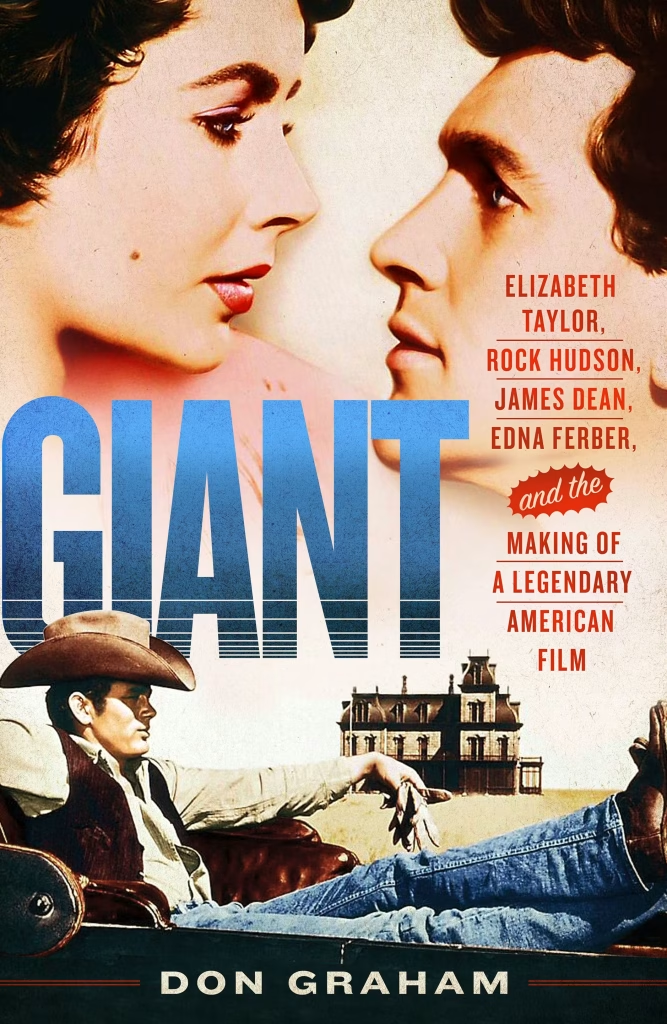
When Taylor completed work on “Giant,” in 1955 and left the tiny town in the Chihuahuan Desert after a months-long summer shoot of “Giant,” she was just 23, buxom, beautiful and violet-eyed. The London-born actress was the entertainment biz’s brightest star. She wasn’t. however, built for the Trans Pecos region of Texas in spite of the Lone Star State’s hospitality and was reportedly quite relieved when it was time to wrap up filming. The movie “Giant” is below
The big movie got big audiences across America when it was released in 1956, starring Taylor alongside Rock Hudson and James Dean. Based on an Edna Ferber novel, it was all about big Texas, with big, stereotypical characters who lived and worked in big, wide open West Texas. “Big” was the key word.
Robert Guevara was only five years old when the stars and crew cleared out of their headquarters at the Hotel Paisano on Highland Street, just steps from the Presidio County Courthouse and Marfa’s classic “tin-man” water tower. Soon enough, young Guevara would grow into his own role, one in which he would be billed as “The Marfa Giant.” It’s the kind of tale you might say was straight outta Hollywood.
Guevara would develop into a strapping young man in his hometown over the coming decade. A tackle for the Marfa Shorthorns, Robert stood out because of his ability and his remarkable size. He chose The University of Texas for a college education with some football mixed in.
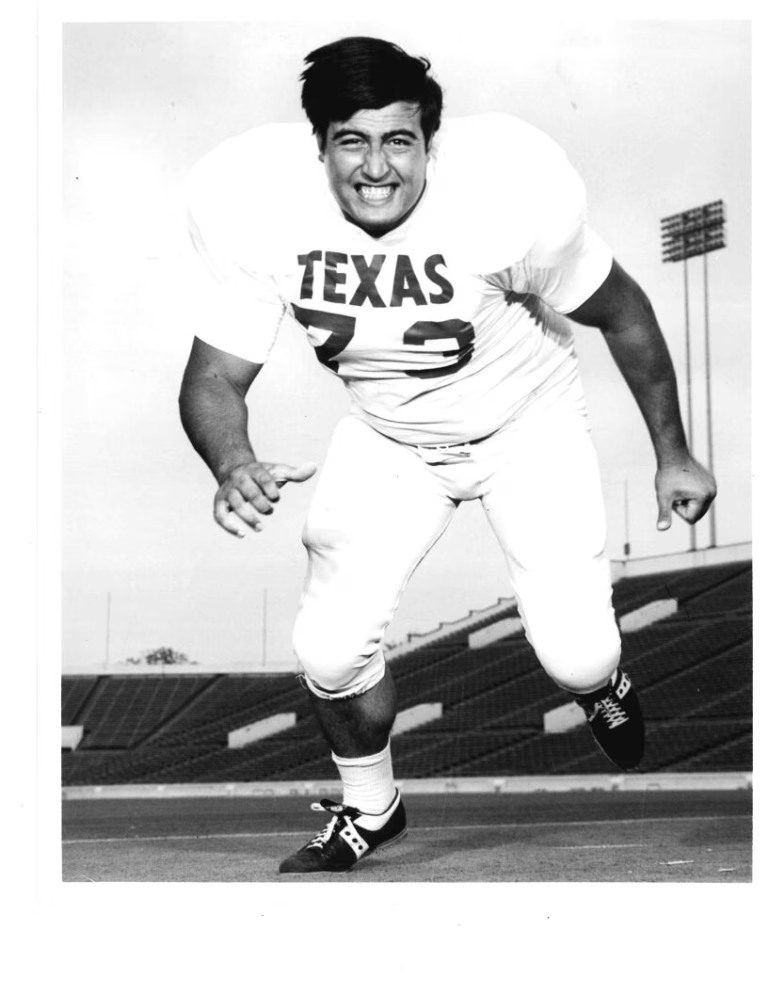
The Longhorns would later list him at six feet six inches tall, 280 pounds.
Consider this: When UT aimed for its fourth straight Southwest Conference title in Guevara’s first year of eligibility, 1971, the Horns’ best player on a stellar defense was, like Robert, a tackle. His name was Greg Ploetz and he would be honored as the SWC Defensive Player of the Year. Ploetz was 5-10 and weighed 205.
https://texaslsn.org/greg-ploetz-painting/
https://texaslsn.org/a-self-portrait-of-cte/
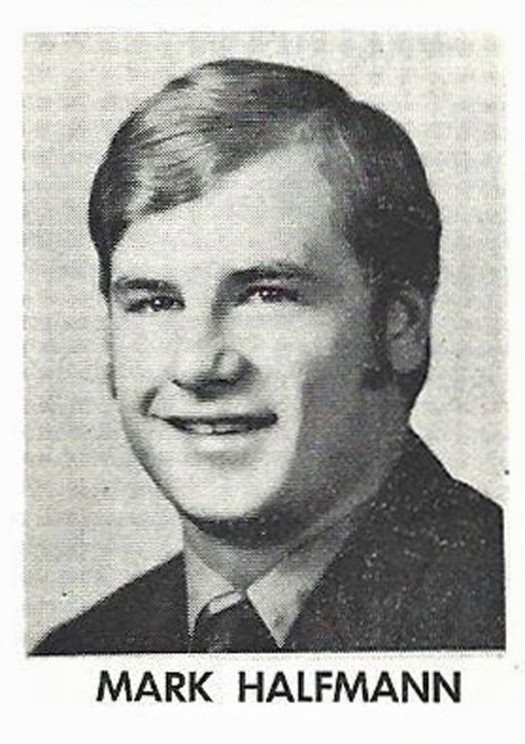
1971 Mark Halfmann 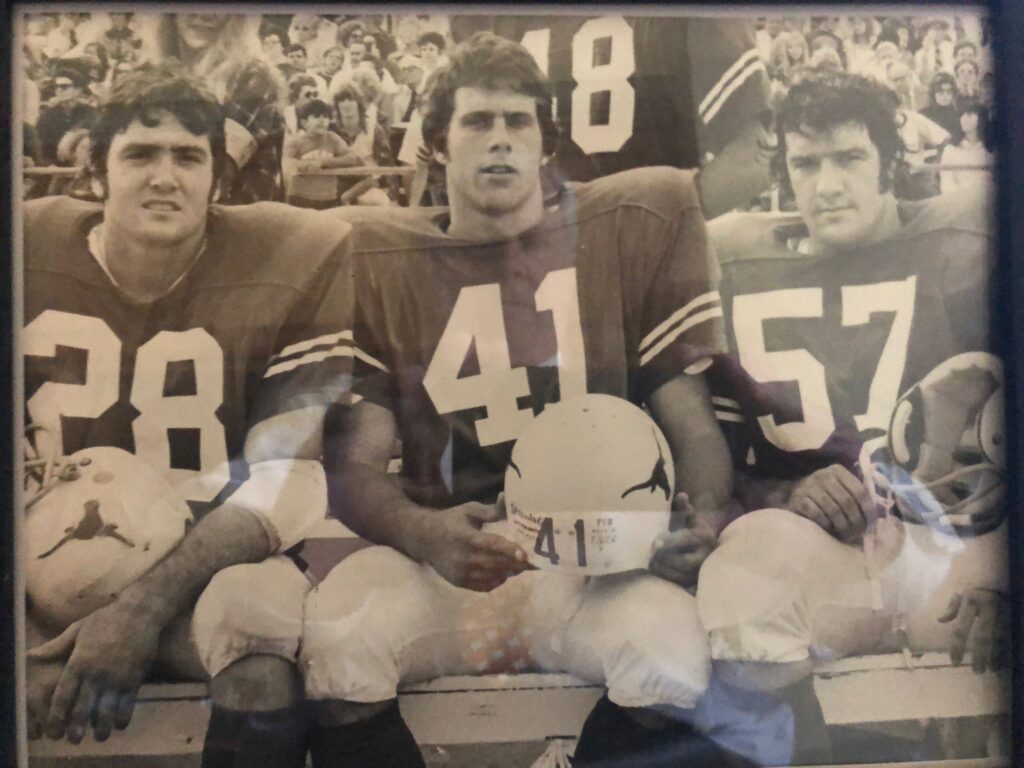
1973 Gary Yeoman Jay Arnold Bob Tresch
Jay Arnold, another distinguished member of the signing class of ’70, fondly recalls Guevara’s bona fides. “Robert ran a 5-oh 40 as a freshman and was a genuine 300-pounder. He was big but not fat,” Arnold says. “He was tough and durable.”
The nicknames came easily and naturally wnen the towering teenager from the small town arrived at the Forty Acres. Darrell Royal, himself, the deified head coach, likely with an assist from funnyman publicist Jones Ramsey, dubbed Guevara, “The Marfa Giant.”
“When Robert arrived, the media had already named him ‘the Marfa Man Mountain,'” recalls Mark Halfmann, a tough, gritty center who checked in at 6-0, 210. “And in person, he deserved that moniker. Nobody had ever come across a player of his stature.”
“Coach (Mike) Campbell called Robert “Man Mountain Guevara,” placekicker Billy “Sure” Schott remembered. Jay Arnold, Guevara’s roommate when they were freshmen, recalls that All-American offensive tackle Jerry Sisemore, the biggest Longhorn — at 6-4, 260 — until Robert joined the squad, kiddingly referred to Guevara as “Cloud.” Translation: He was so big that a teammate standing near him during a late afternoon practice might get the benefit of a fleeting bit of shade.
Arnold still often refers to his late teammate as “The Marfa Mad Dog.” But that pet name might be more alliterative than descriptive.
“Robert was a very good teammate and good natured,” says Bob Tresch, a standout tackle and center. “He was big, strong and very agile for his size.”
Schott, at 5-8, was dwarfed by Robert, as was the legendary trainer, Frank Medina, a five-footer. “I remember Frank Medina saying something along the lines of this about Robert,” Schott laughs, “…that young man doesn’t have a mean bone in his body…and that’s too bad.”
“Robert was very athletic but was almost too nice to play football,” Schott concluded.
But if the Marfa Giant had a reputation as a laid-back good guy and gentle giant, he never had a problem getting down and dirty in the trenches. “Robert got a lot of action as a sophomore,” Arnold says. “I remember watching Robert and Bill Walker running in for the goal line team defense as interior tackles…someone once remarked, ‘Here come the elephants.'”
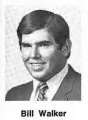
Bobby Giles, a 213-pound offensive lineman describes Guevara as “a hoot” and all around good guy. “I don’t know anybody on our freshman team who didn’t like him…he was big, for sure and mighty hard to block,” Giles testifies. And Giles could vouch for Guevara’s nasty, competitive, football side.
He recently detailed a grueling go-round in practice with Robert. Giles recollected already being in a self-described foul mood after having to mess with Ray Dowdy (like Ploetz, an All-SWC defensive tackle) for 30 minutes before lining up against Guevara. #58 is Bobby Giles.
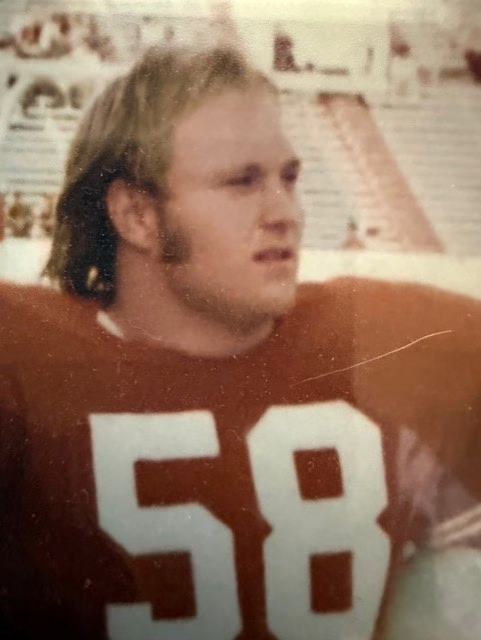
“We break the huddle and come up to the line of scrimmage, get down in our stance and Robert just jumps offside and knocks me into a a somersault. I happened to land in a half-stance with my feet underneath me and I could see his big ol’ size 14s right in front of me. With all the love I could muster, I came up under his chin with my forearm and knocked him on his keister,” Giles says, warming to the vivid memory. “As I recall, we commenced to usin’ personalized expletives while standing nose to nose.
(Then Giles notes that “of course, I was lookin’ up mine at him, and him down his at me.”) “Anyways,” Giles continues, we got separated and the rest of that practice was like the Cotton Bowl for the two of us…he won a few, I won a few and by the time we got finished we were back to bein’ teammates and friends..as the ol’ sayin’ goes, just part of the game.”
One part of the college game that did not come easily to Guevara was the change in weather. It’s a 430-mile cruise from the stately Presidio County courthouse to the dome of the state capitol building. As the terrain changes during the drive, so does the climate.
“He did have trouble acclimating to the Austin humidity,” Halfmann recollected. “Running the six 440-yard laps, he keeled over. The trainers, fortunately, helped him recover quickly.”
Big Bend area aficionados know that the temp in spots such as Marathon, Fort Davis and Marfa can dip into the luscious 50s overnight in August. Ten percent humidity can deliver substantial favors. Arnold, who went on to start two years at defensive end, then transformed into an All-SWC defensive back as a senior, still recalls enlightening exchanges with his freshman roomate about hometowns and geography.
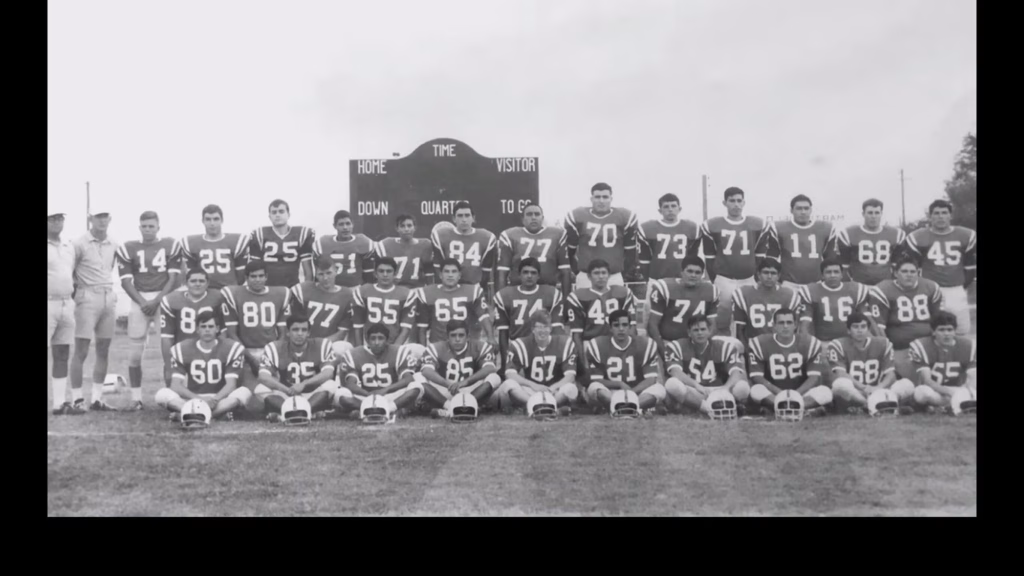
Robert is # 70 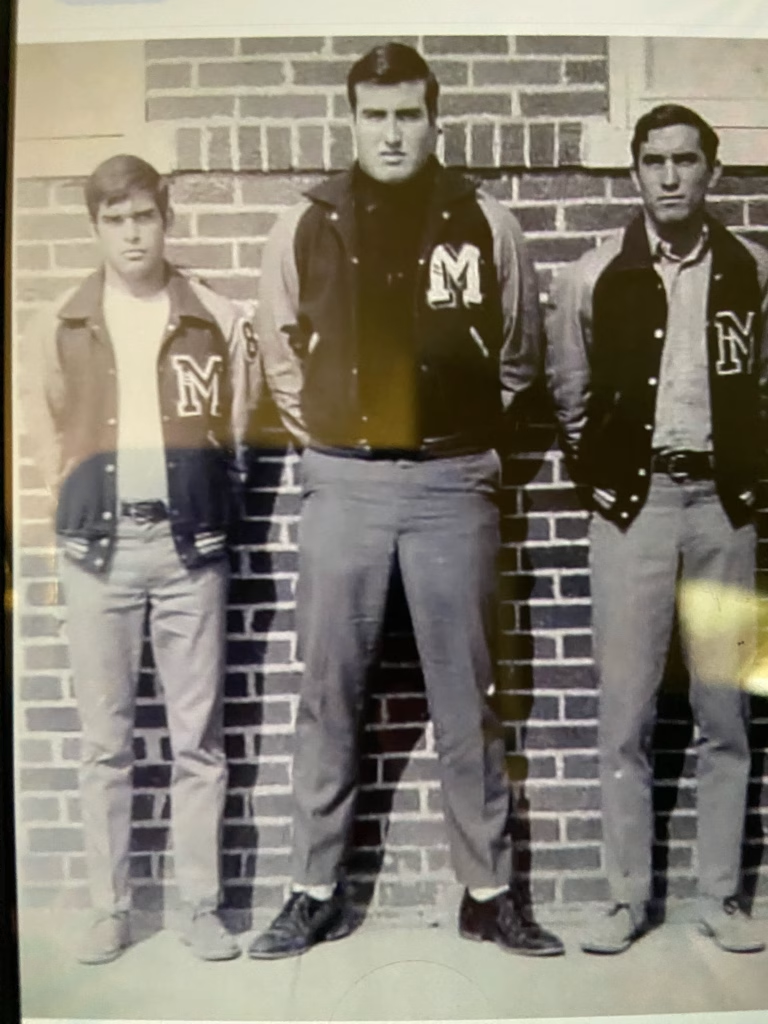
Guess which one is Robert?
Guevara told Jay that Marfa was cooler and much drier than his new college home. He thought Austin was like a steam bath. Arnold admits he had never heard of Marfa, nor had Guevara heard of Jay’s southeast Texas hometown of Liberty.
Arnold fixed that, taking the Marfa Giant to Houston in October of their first semester. They visited several of Guevara’s cousins there, then took in the varsity’s beatdown of the Rice Owls.
With the Longhorns sporting a 31-7 lead going into the fourth quarter (UT won 45-21), the freshmen decided to get an early jump on the drive to Jay’s parents’ home in Liberty. They were in for a treat out amid the vast sprawl of Rice Stadium’s parking area.

“We saw LBJ and probably five secret service surrounding him. Robert and I stopped as they were walking our way,” Arnold says. Jay, never short on friendliness or moxie, shouted out, “Hello, Mr. President.” The Texas teens ended up shaking hands with the former White House resident and Arnold says Guevara talked about it all the way to Liberty, more than an hour east into the steamy Piney Woods.
According to Jay, Mrs. Arnold wasn’t quite prepared that night for the size of her son’s visiting buddy.
“Mama was mortified because Robert was about a foot longer than the bed she had prepared for him.”
As Arnold tells it, she made Robert get up and then she remedied things with a chair, padding and extra sheets and a blanket so the big ‘un’s feet wouldn’t hang off.
Problem solved.
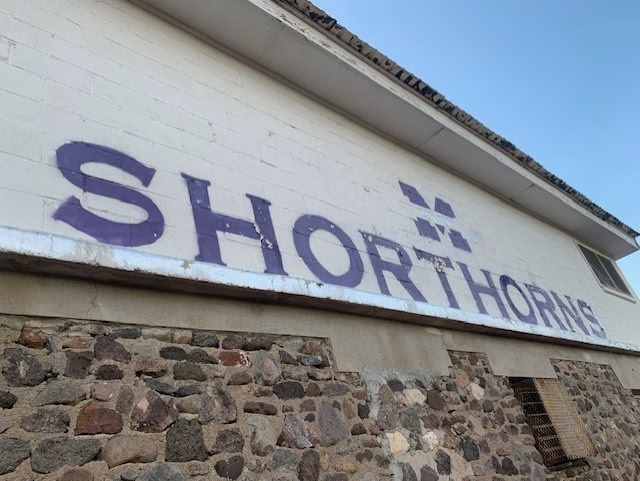
Marfa Shorthorns stadium 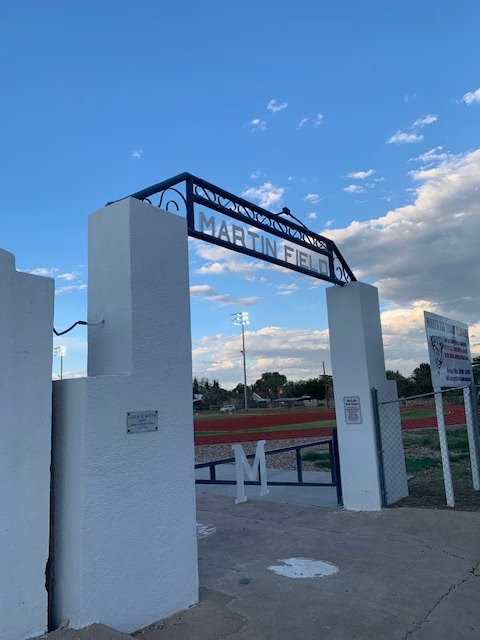
Marfa field 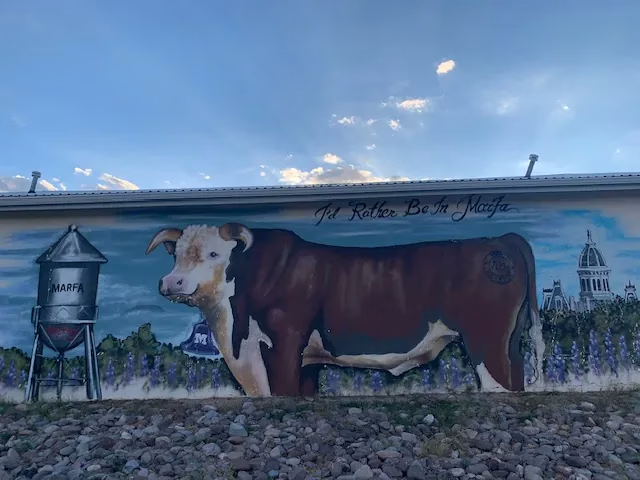
Marfa artwork 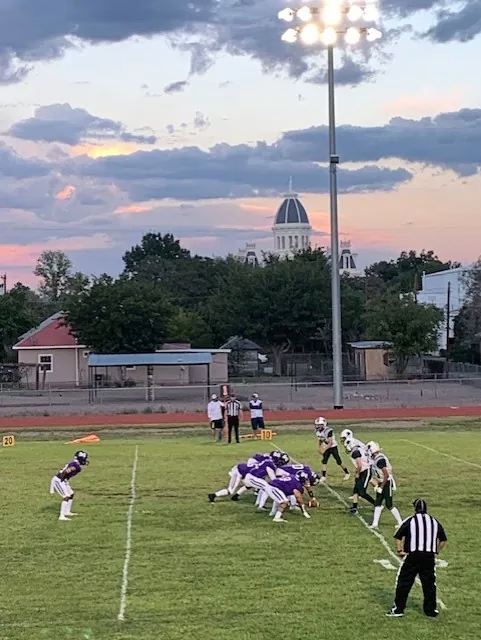
2025 Marfa is 6 man football 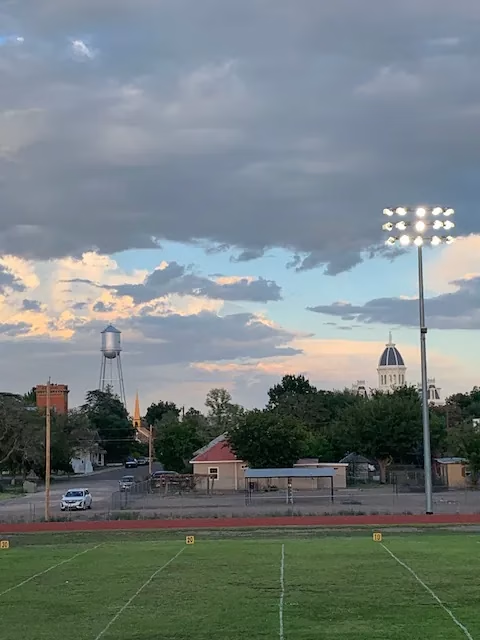
Town of Marfa with stadium in foreground
A pleasant weekend was had, but Arnold recalls that Guevara couldn’t get over one thing about Southeast Texas, where mosquitos carry mockingbirds away.
“On the way back to Austin, he asked what it was like growing up in a swamp.”
If adjusting to climate differences was physically challenging for The Marfa Giant, it was matters of the heart and soul that posed a higher hurdle.
That sticks with Bobby Giles, who hailed from a hometown even farther from Austin, the panhandle city of Amarillo.
“When Robert first got here, he was homesick for Marfa and his dumplin’, Rose, who would later become his wife,” Giles says. “Not knowin’ any better, or bein’ told otherwise, he thought usin’ the phones in the coaches office was a perk of his scholarship…when the first month’s bill came in, there was a thousand dollars worth of calls to Marfa. We thought Coach (Bill) Ellington was gonna have a conniption.”
The presence of a longtime Longhorn follower helped soothe some homesick blues.
Louie Murillo, a longtime “gopher” around the football and baseball programs, a friend of DKR’s and eventually his driver, was 40 when Guevara got to UT. The diminutive, personable man who had grown up in East Austin and boxed as a bantam-weight, had built relationships with countless coaches, players and other officials at the university for years.
“Louie would come to the dorm and visit Robert regularly,” Bob Tresch remembers.
“He loved him.”
“Louie would take Robert to the East Side of Austin to meet Hispanic people such as the owners of Cisco’s Bakery (Royal’s favorite spot for Mexican food) and the coaches at (the former) Anderson High,” Arnold said, looking back fondly. He remembers frequently accompanying Guevara and Murillo. “The coaches out there would get Robert to speak to the high school players and junior high players and even the elementary PE boys and girls. He was a giant of a man. Louie was probably 5-5 or 6.”
The Marfa Giant no doubt inspired many who listened to him and spoke with him on his mission in Austin. He played for the unbeaten UT freshman team, named “the Shorthorns,” just like his high school team. Guevara was a member of the 1971 and 1972 Texas teams. Both squads won the Southwest Conference championship and both played in the Cotton Bowl Classic on New Year’s Day, falling to Penn State and then defeating Alabama. No doubt plenty of good times in the big time for the biggest Longhorn of them all.
Guevara decided to return home before his senior season at UT. He then married Rose Marie in August 1973 and earned a degree from Sul Ross State University. The Presidio County Sheriff’s Department in Marfa was where he began a long, distinguished career in law enforcement. Decades later, he retired from the Texas Parks & Wildlife Department where he worked as a game warden.
Robert and Rose Marie, who had earned a nursing degree at UTEP, had three childen.
After retirement, the Guevaras relocated from West Texas to Katy in order to be closer to family. Robert passed away in 2008 at 57 years old, survived by Rose, the kids and a dozen grandchildren.
But the memories of The Marfa Giant are held tightly by those close to him.
“He is the pride and joy of our family and I just love that he is not forgotten,” says Josh Guevara, a San Antonio engineer and one of Robert’s nephews.
The storied Old Borunda Cafe was shuttered long ago, back in the ’80s. But there are constants. Starry summer nights are still pleasant in contemporary Marfa. The little settlement is still home to the Hotel Paisano, a fine establishment with a classic lobby sporting a Western motif and a Spanish-styled courtyard. “Giant” souvenirs and photos are plentiful. Let it be duly noted that 2026 marks 70 years since the debut of the film.
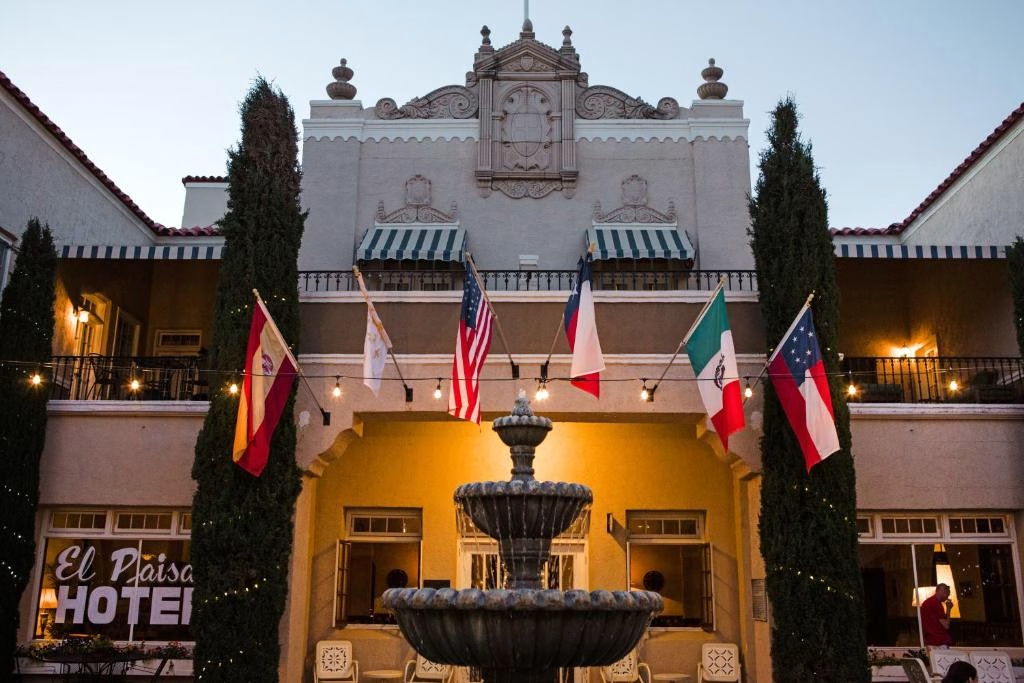
And though Marfa has this century been best known for the Chinati Art Foundation, increased interest in the mysterious Marfa Lights that dance across the southern horizon late at night and a bohemian, Austin-ized vibe that brings in the El Cosmico Music Festival, weekdays remain sleepy and quiet. Most attempts at establishing hipster eateries and taverns have failed. The population, which peaked in the 1930s, continues to slowly shrink. It hovers around the 1,600 mark.
When the Marfa High football team, featuring Robert Guevara and one of his brothers, March, stomped Lilliputian opponents in the late 1960s, the Shorthorns played standard issue, small-town Texas football and sported a squad of more than 30 members. Nowadays, the herd of Shorthorns has dwindled and the team plays six-man football, the field marked into a gridiron that’s 80 yards long, 40 yards wide.
With Marfa’s reputation as “Austin, Away From Austin,” property values soared last decade. It seems to be de rigeur to dress in black, outfits accented by cheekily ironic Western headgear (think LBJ Stetsons).
But on a fine October evening, after you’ve downed an icy margarita at Jett’s Grill, the Paisano’s bar named for James Dean’s “Giant” character, Jett Rink, stroll two blocks over to Martin Field at Marfa High.
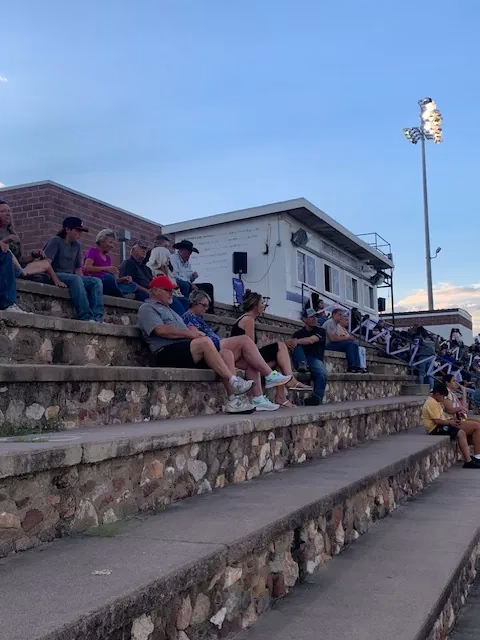
Visit the concession area for Frito pie and get in line for a char-broiled burger that will come off the pit right in front of the Coke stand.
The seven rows of stone seating — all on one side of the field — make it easy to sprawl out, a tad tougher to get comfy. There won’t be as many folks as there were, back in the day, some 60 years ago, when Robert Guevara made his high school football debut. The last two times I visited, fans numbered about 100.
But the refreshing, dry breeze will still snap in the air. Amtrak’s Sunset Limited will still rumble by, F-150 traffic on nearby Highway 90 will whisper in the distance.
And there will be football. Glorious football.
And you can glance up at the magnificent Milky Way, visible to the naked eye, and remember that this is where it started for a Longhorn legend, The Marfa Giant.
He is laid to rest nearby at Cementario De La Merced.
In the land of big dreams , big sunsets and ranches bigger than Yankee states, big heroes and legendary figures never die. They stand sentry in the wondrous nighttime skies, they ride shotgun with the ever present wind. The lore remains, even grows.
The Marfa Giant lives on.
https://texaslsn.org/latin-longhorns/
( TLSN’s Larry Carlson is a member of the Football Writers Association of America. He teaches sports media at Texas State University and lives in San Antonio.
Write him at lc13@txstate.edu )
Journey through Texas “Big Human” Longhorn sports history
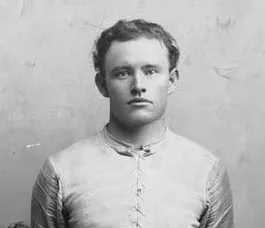
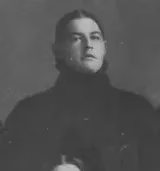
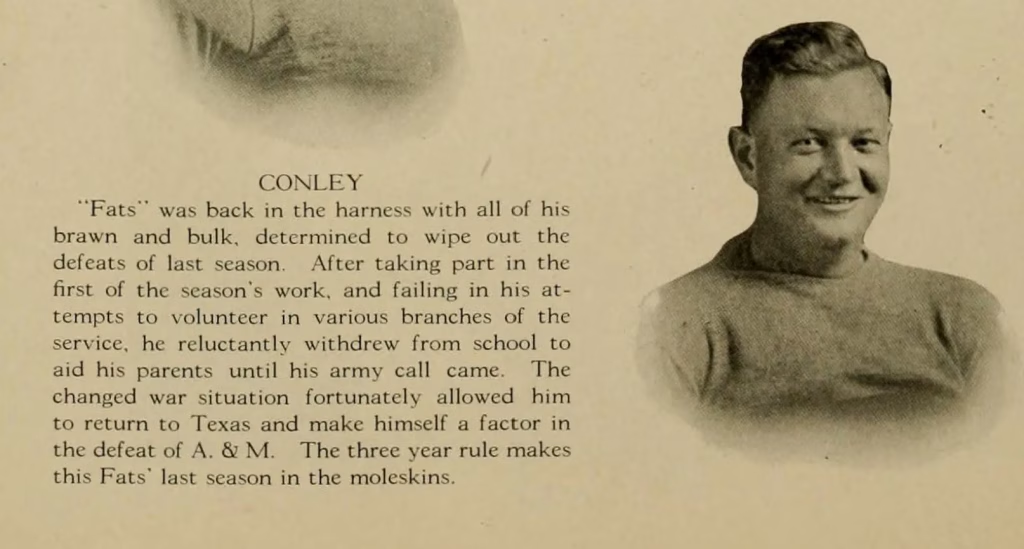
Gordon “Fats” Conley (1916-18) — 270 pounds-
The 1916 Longhorn team was the first in the program’s history to wear uniforms with numbers on the back. Gordon was #9 .
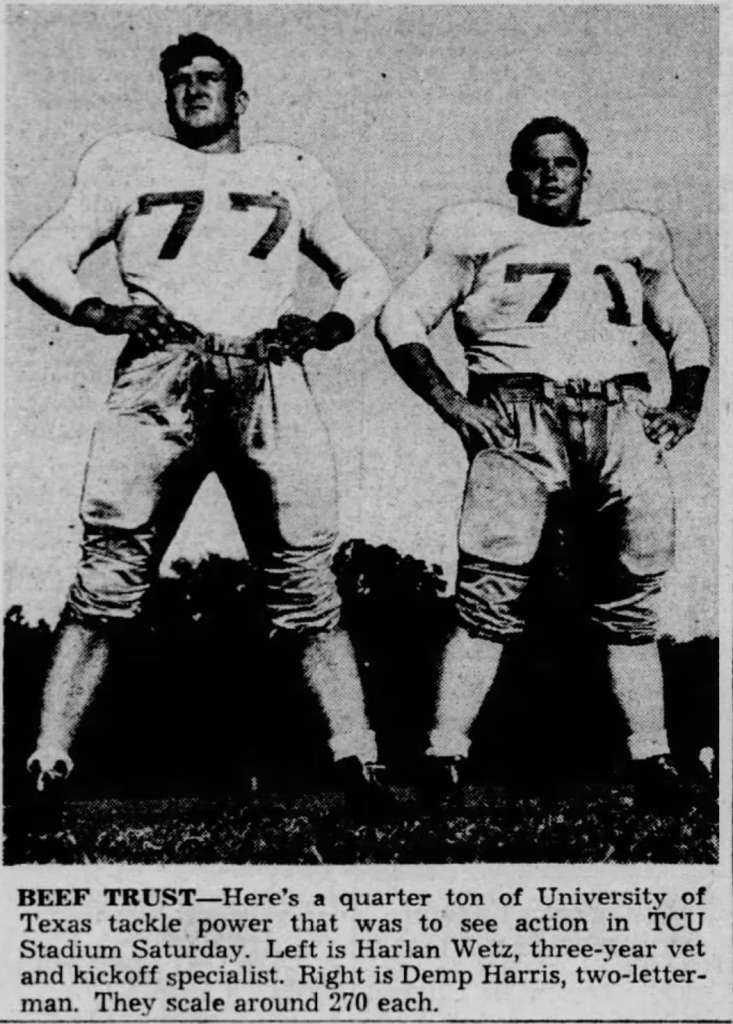
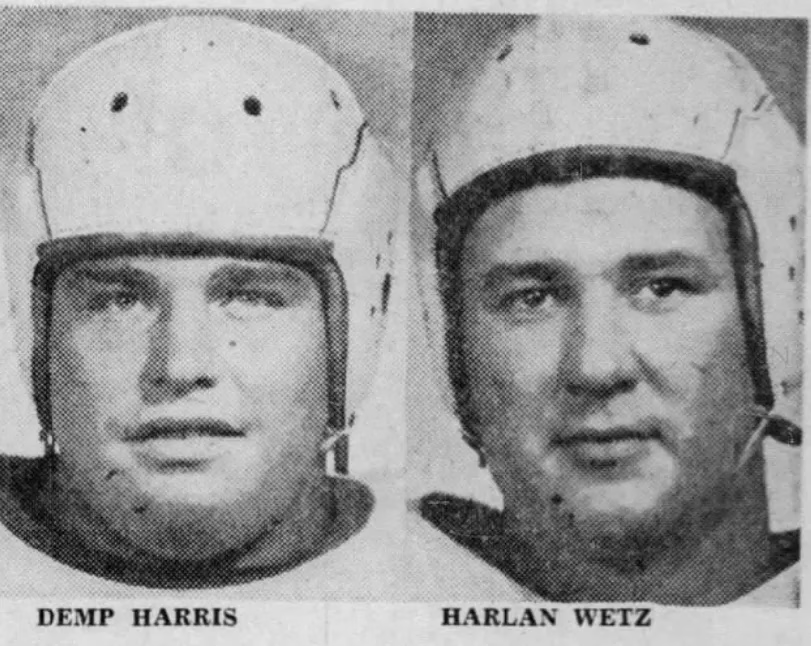
Harlan Wetz (1943-46) — 275 pounds – Henry Harris (1941-42, 1946) — 270 pounders
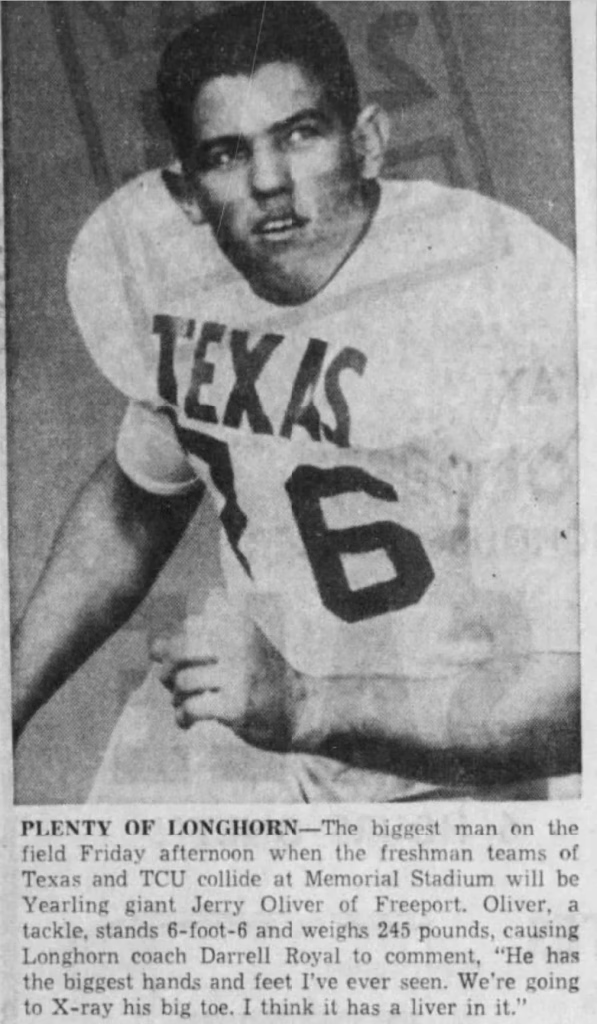
Jerry Oliver (1962) — 270 pounds
The first 300-pounders to see the field at Texas was Ken Hackemack (1986-89) — 305 pounds

Charles Seafous (1986-90) — 308 pounds
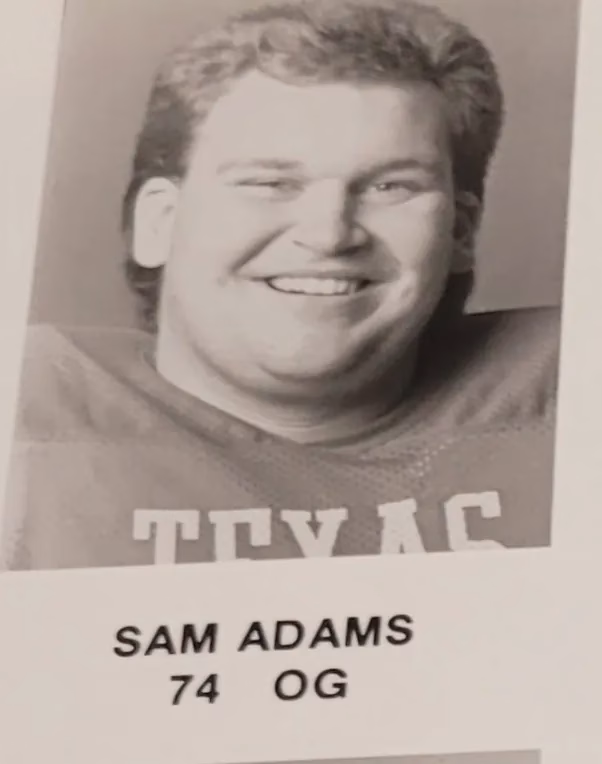
Sam Adams (1988-1992) — 320 pounds
Longhorn sports historian Jonathan Wells says in his very detailed link about big Longhorn humans at the link https://texasandlonghornhistory.substack.com/p/history-of-texas-longhorn-large-humans-baby-myers-keondre-snacks-coburn-leonard-davis?triedRedirect=true, “There was a gradual upward progression in the average weights of Longhorn linemen in the two decades between the early 1970s and the early 1990s. The five offensive line starters for Texas in the 1971 Cotton Bowl averaged 218 pounds, with sophomore right tackle Jerry Sisemore being the heaviest at a listed 241 pounds. Notre Dame’s four starting defensive linemen in that game were ten pounds heavier on average.”
“Twenty years later when Texas faced Miami in the 1991 Cotton Bowl, the Longhorns’ offensive line starters averaged roughly 275 pounds, with the lightest one being center Todd Smith at about 260 pounds.”
“Gene Chilton, who received All-America honors as UT’s starting center in 1984 and 1985 at one time weighed 315 pounds.

Casey Hampton, was the first defensive All-American from UT to weigh above 300 pounds.

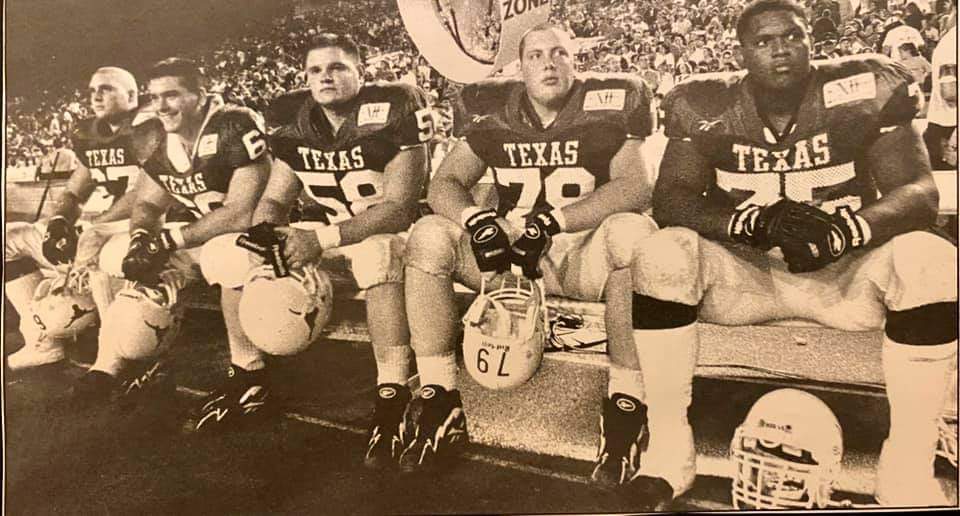

Jonathan Wells says, “In the quarter-century since Leonard Davis was picked second overall pick of the 2001 NFL Draft there have been a few other UT products who entered the pro football ranks with an official weight closer to that of Davis than the 300-pound Blake Brockermeyer.”
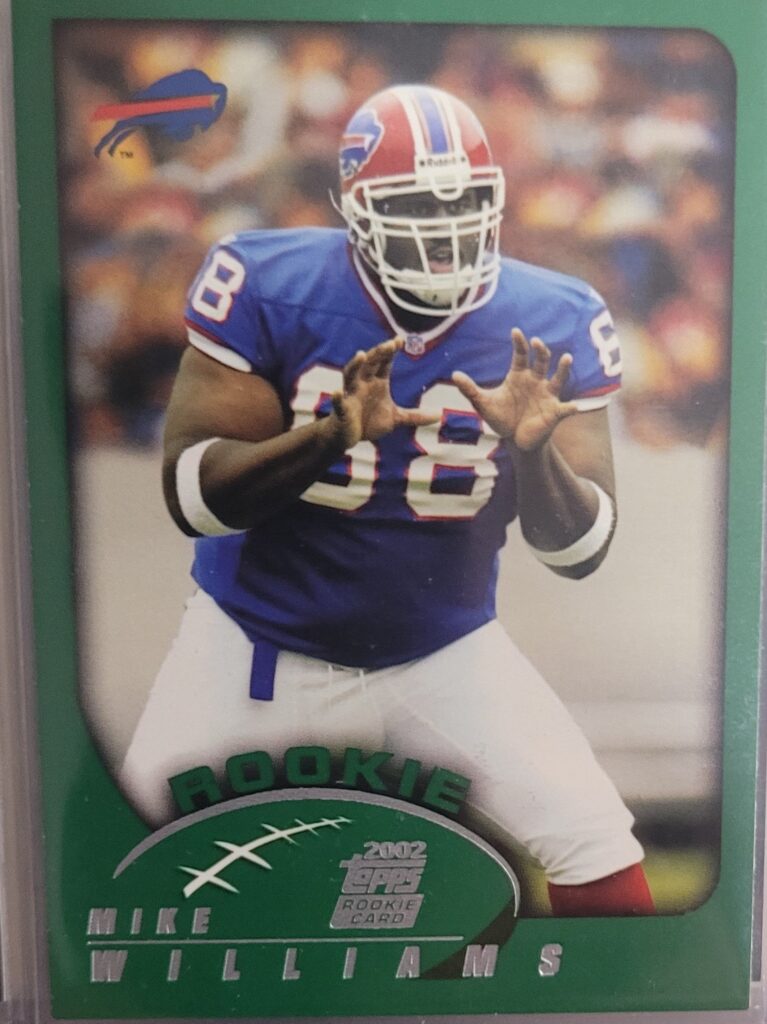
2002 Offensive tackle Mike Williams weighed 370 pounds.
Offensive guard Derrick Dockery in 2003, was 6’6” and 347 pounds.

Jonathan Wells says “In the five full recruiting cycles that have taken place during the head coaching tenure of Steve Sarkisian (2022-26), the Texas Longhorns have signed no less than ten high school recruits who were listed at 335 pounds or more on UT’s signing day press releases. The 2023 class alone included four players weighing 350 pounds or more (three of whom have since left the program)….” , which prompted a tweet in which I jokingly compared that group to the Celestials seen in the 2021 movie Eternals.”


Great stories, Larry. Thanks for sharing.
I remember our high school line barely had guys over 200 pounds.