Lutcher Stark- a Precursor to contemporary Longhorn strength coaches
Reflection Point Lutcher Stark
When you enter the stadium from the west side, you go into Bellmont Hall, named after our first AD. Theo Bellmont, one of the founders of the SWC, was the second-most-influential person on the program from 1910-1935.

In the book “100 Things” author Jenna McEachern says, “Stark influenced the direction and the attitude of The University of Texas in a big way. He had a vision of what this University should be, and like Frank Erwin, he wheeled, pushed, and bullied his vision into reality.” He was a wealthy visionary power broker passionate about making U.T. the best in academics and sports. He was appointed to the Board of Regents in 1919 and served for 25 years, 12 years as Chairman.

Lutcher Stark brought the first student automobile to Texas. This was one of many other firsts that forever changed the landscape of the U.T. Campus.
More than any other person, Lutcher Stark put UT on the path to athletic greatness. During his many years (1919-1944) as a member and chairman of the UT Board of Regents, Stark made countless UT contributions. He served as a regent longer than any other person ever has, and for decades he gave both time and treasure to the university he loved. (Stark, famously, sat on the sidelines with the coach during games).

Stark,” which is German for “strong,” personifies Lutcher Stark. Lutcher Stark was first associated with the team as a wealthy student around the 1900s. An ardent sports fan, Lutcher was interested in all sports, but he particularly loved football. In 1910, his senior year at UT, Lutcher was the football team manager, a job that included assisting with negotiations to determine which teams the squad—then known simply as the Texas Varsity or Steers—would play using his wealth as a backstop for funding team activities.
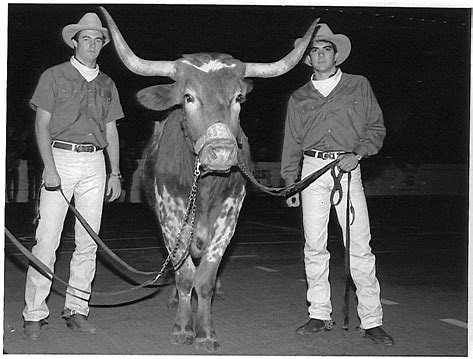
Lutcher Stark donated his money to special Longhorn causes. Leather Chaps for the Cowboy organization, modern uniforms for the Longhorn Band, Construction of Texas Memorial Stadium, purchases of rare books, The Stark Library, and the 17th bell for the belfry of the new Main Building.

In 1910, his senior year at UT, Lutcher was the football team manager, a job that included assisting with negotiations to determine which teams the squad—then known simply as the Texas Varsity or Steers—would play. Following graduation, Lutcher remained vitally involved with the Texas team, and in 1913 he donated warm-up blankets for the players with the word “Longhorns” embroidered on them. Shortly after that gift, the UT team became known officially as the Longhorns.
Weight lifting
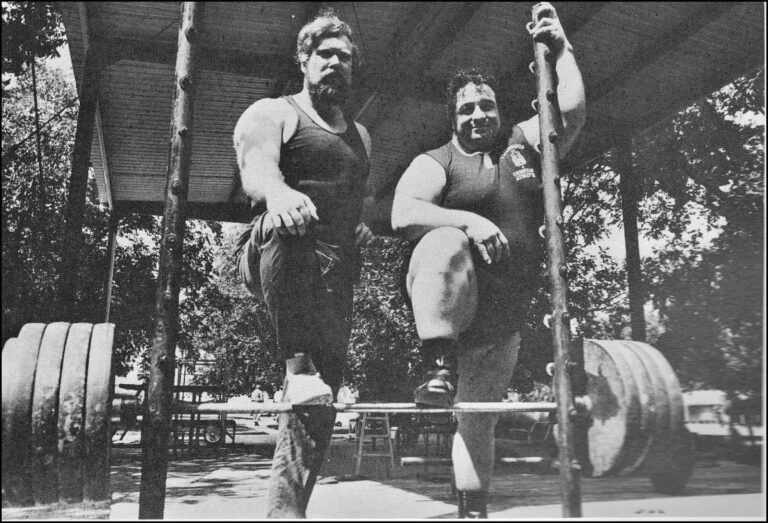
Stark’s weight had increased to more than two hundred pounds (a bit too much for his 5’7” frame), and so he decided to do something about it. He went to Philadelphia and took a course on physical training under the guidance of the top man in the field, Alan Calvert, who preached the benefits of weight training for general fitness as well as for athletes, at a time i when almost all “experts” believed that weight training would make a person “muscle-bound.” Lutcher could hardly have made a better choice in a trainer. Young Lutcher spent two months with Calvert in Philadelphia and returned home forty pounds lighter, twice as strong, and with a firm belief in the benefits of weight training—a form of exercise that would totally transform sports and physical fitness over the next century.
Stark’s experiences with Alan Calvert continued to shape his life—and the athletic and recreational programs at The University of Texas. Soon after his return from Philadelphia, Stark met L. Theo Bellmont, who was then the director of the Houston YMCA. Stark had much in common with Bellmont, who was also a weight trainer, and he convinced the Board of Regents that Bellmont should be appointed as UT’s Athletic Director. In that post, Bellmont oversaw Athletics as well as the Physical Education and Physical Training programs for regular university students.
But at some point in the ‘30s, Regent Lutcher Starks’s power was challenged.
To many U.T. Power players, it was clear that his program management was handicapped compared to rivals with more professional coaching and management.
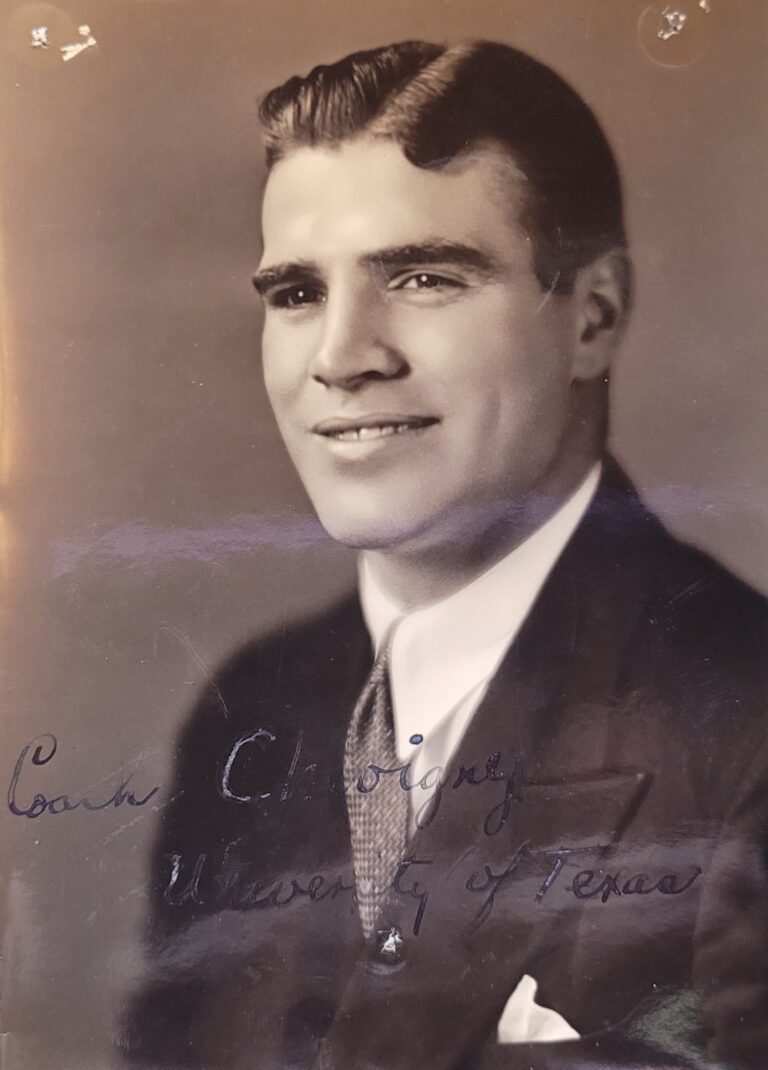
When D.X. Bible was hired, it was the new Longhorn power players’ first attempt to replace Stark’s management style. Bible’s hire was driven by a group of boosters (Stark’s wealth was dwarfed by many of the new supporters), and Stark was banished to the stands by Bible. From his time at Texas A & M, Bible certainly knew who Stark was and what his role should be.
Coach Bible had a formula for building the program- “The Bible Plan.” It involved using all the boosters to help recruit the whole state, which was legal, with boosters assigned to regions. He dominated recruiting and built the roster with talent not seen before, a formula that has continued to work for Texas over the years (but too often neglected).
Jan and Terry Todd
Jan and Terry Todd proposed to the Stark Foundation that, because the life of Lutcher Stark was so deeply connected with fitness and sports at UT, it seemed to be a natural fit for the Foundation to provide the funds that would allow Texas to create a library/museum bearing the name of the man who funded the Foundation—H.J. Lutcher Stark.
It is fitting that the vision of Jan and Terry Todd, presented to the Stark Foundation both in writing and in person, resulted in a $3,500,000 gift that encouraged The University to recognize and honor Stark for his service to UT by constructing the H.J. Lutcher Stark Center for Physical Culture and Sports on the Northside of the stadium as a next-door neighbor to Bellmont Hall.
The Facility houses:
-
The Joe and Betty Weider Museum of Physical Culture;
-
Permanent and rotating exhibits related to the history of physical fitness, weight training, and health promotion;
-
The Sports Gallery- Featuring the Ben Crenshaw Golf Collection and including permanent and rotating exhibits related to the role of sports in society and the role of physical fitness and sports at UT;
-
The Reading Room- A large and comfortable room where students, faculty, and visitors can browse through—as well as sit and read—current books and magazines in the areas of physical culture and sports;
for more information on the Stark Center, visit the link:
JAN AND TERRY TODD (squarespace.com)
Also, please visit the two slide shows below to capture Lutcher Stark’s family’s history.